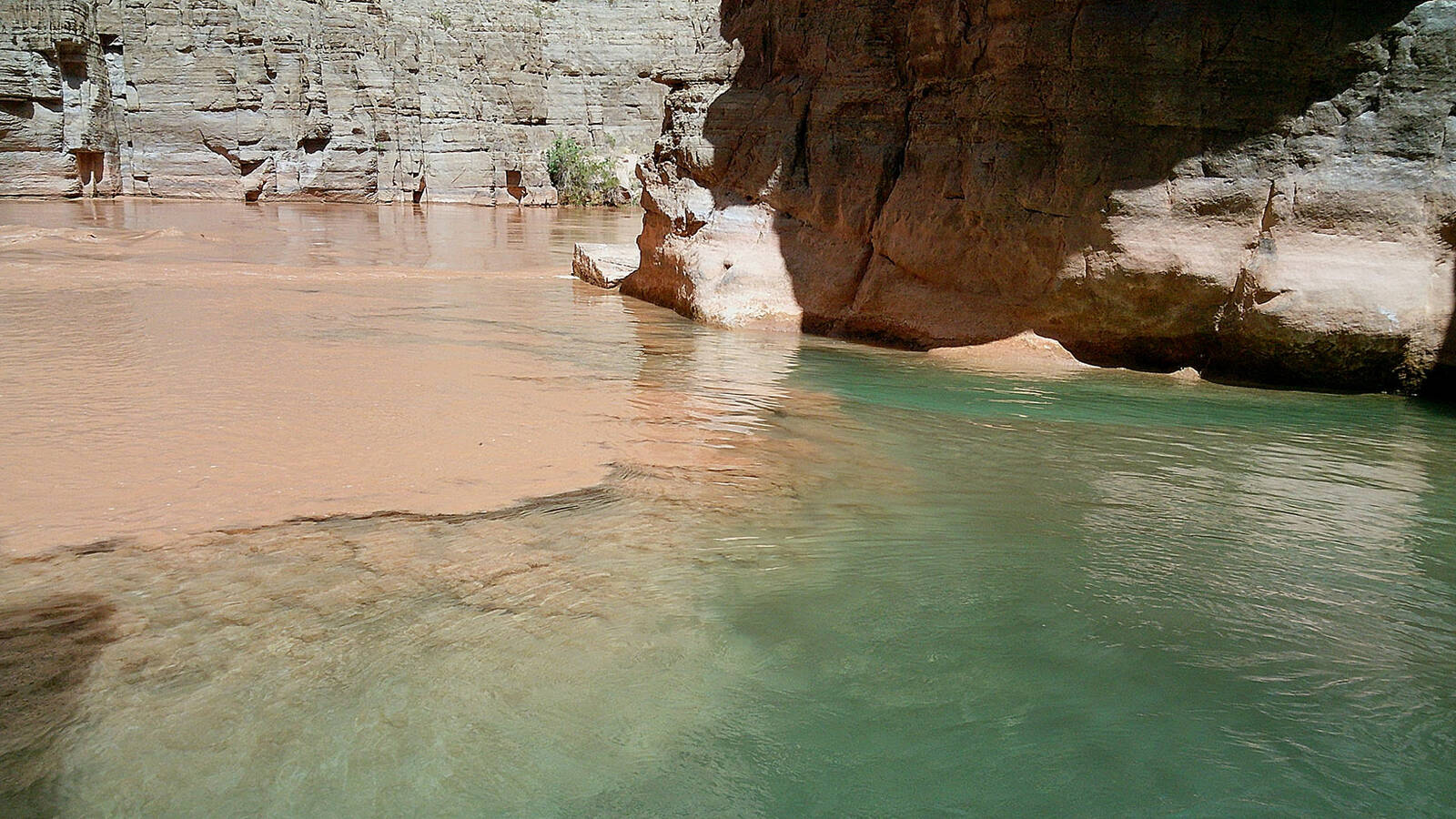
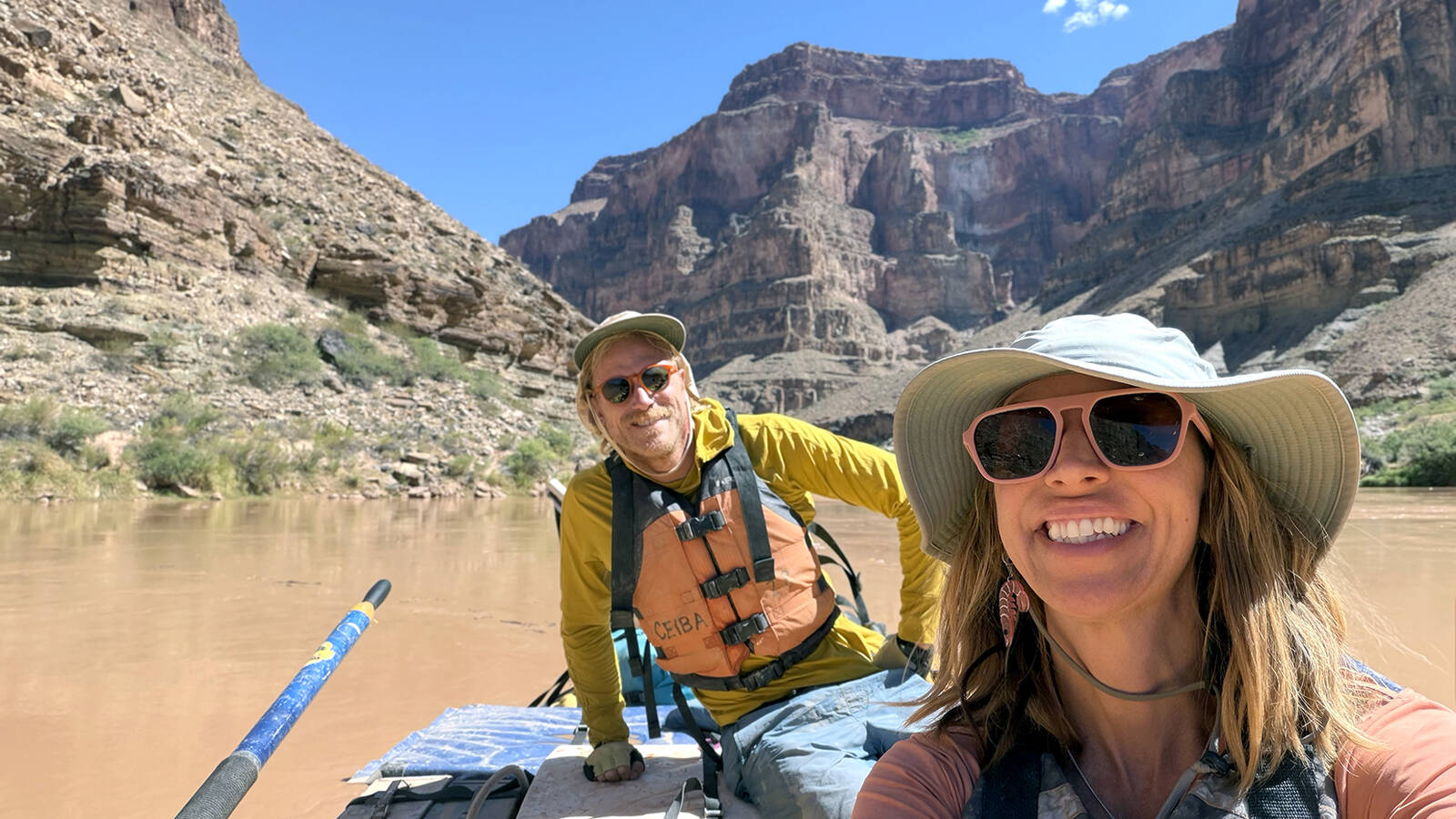
The first raft trip to reach Phantom Ranch the morning after Bright Angel Creek flooded in August included a NPCA staff member on vacation. What she and her friends found still leaves them asking what comes next.
The news broke on a Sunday morning that a catastrophic flash flood had torn through Grand Canyon National Park. As someone who works in media relations, it’s a big part of my job to make sure reporters have the information they need to cover what’s happening at our national parks and that NPCA can be a trusted source for those stories. A headline like this would have caused my phone to immediately ping.
But I didn’t read the story in the news. I watched as it all played out from the bottom of the Grand Canyon.
I was on vacation, my out-of-office email enthusiastically sharing that I was off-grid on a national park adventure. A friend had drawn a group permit to raft the Colorado River and row 226 river miles through the canyon over 16 days. Of the 4.4 million people who visit Grand Canyon National Park each year, only 20,000 see it from the river. I had some butterflies about the trip — the rapids, the heat, the distance from help and the many unknowns — but I knew it was a once-in-a-lifetime chance, and I wasn’t about to let my nerves get in the way. I’d spent 10 years living in Flagstaff, Arizona, hiking the canyon whenever I could, but had never seen it from the river.
Late summer rains in Arizona come in quick, intense bursts, and you can feel the thunder in your bones. Monsoons bring the familiar smell of creosote to the air and, if you’re in canyon country, the risk of flash floods that seem to come out of nowhere.
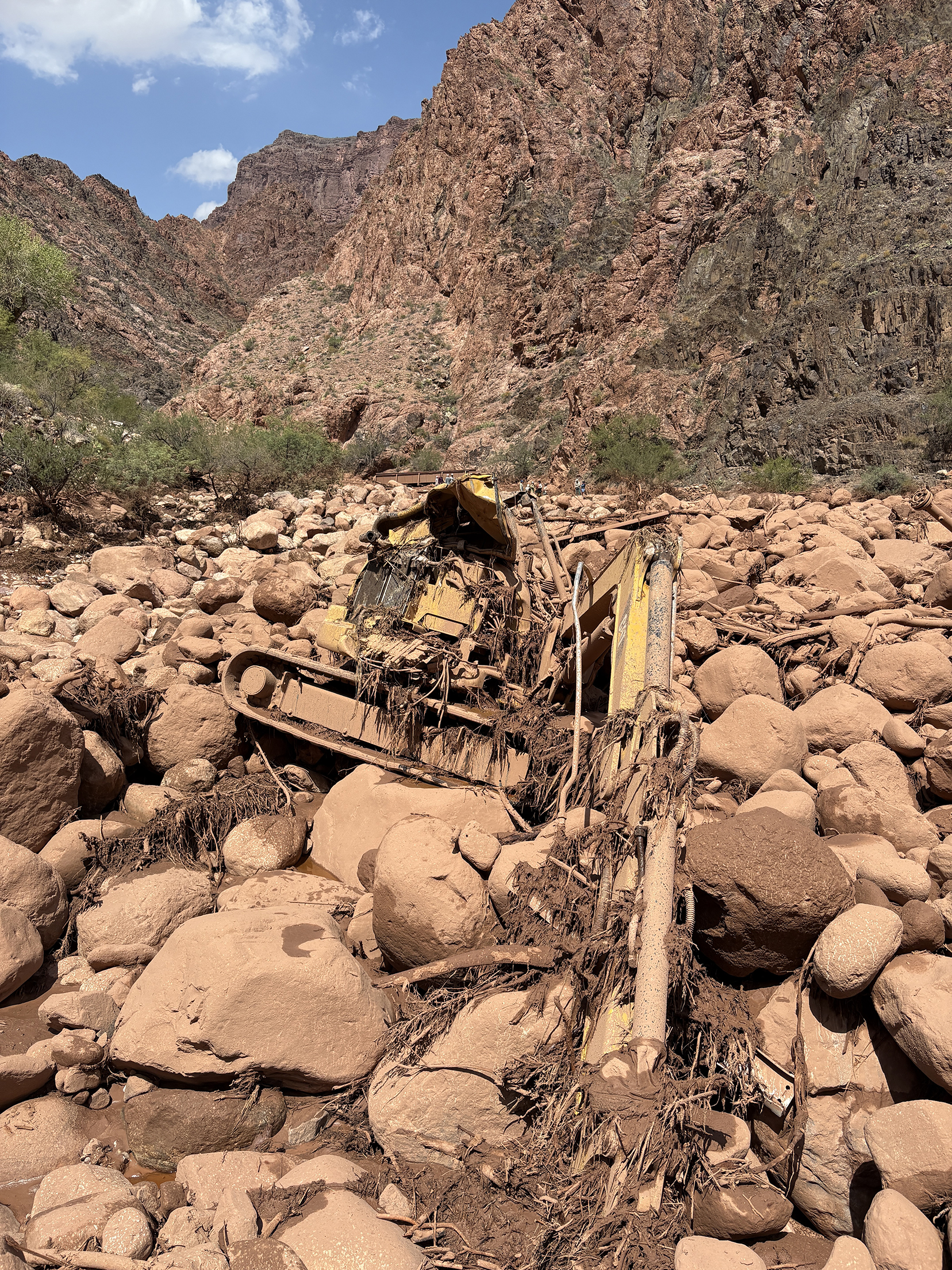
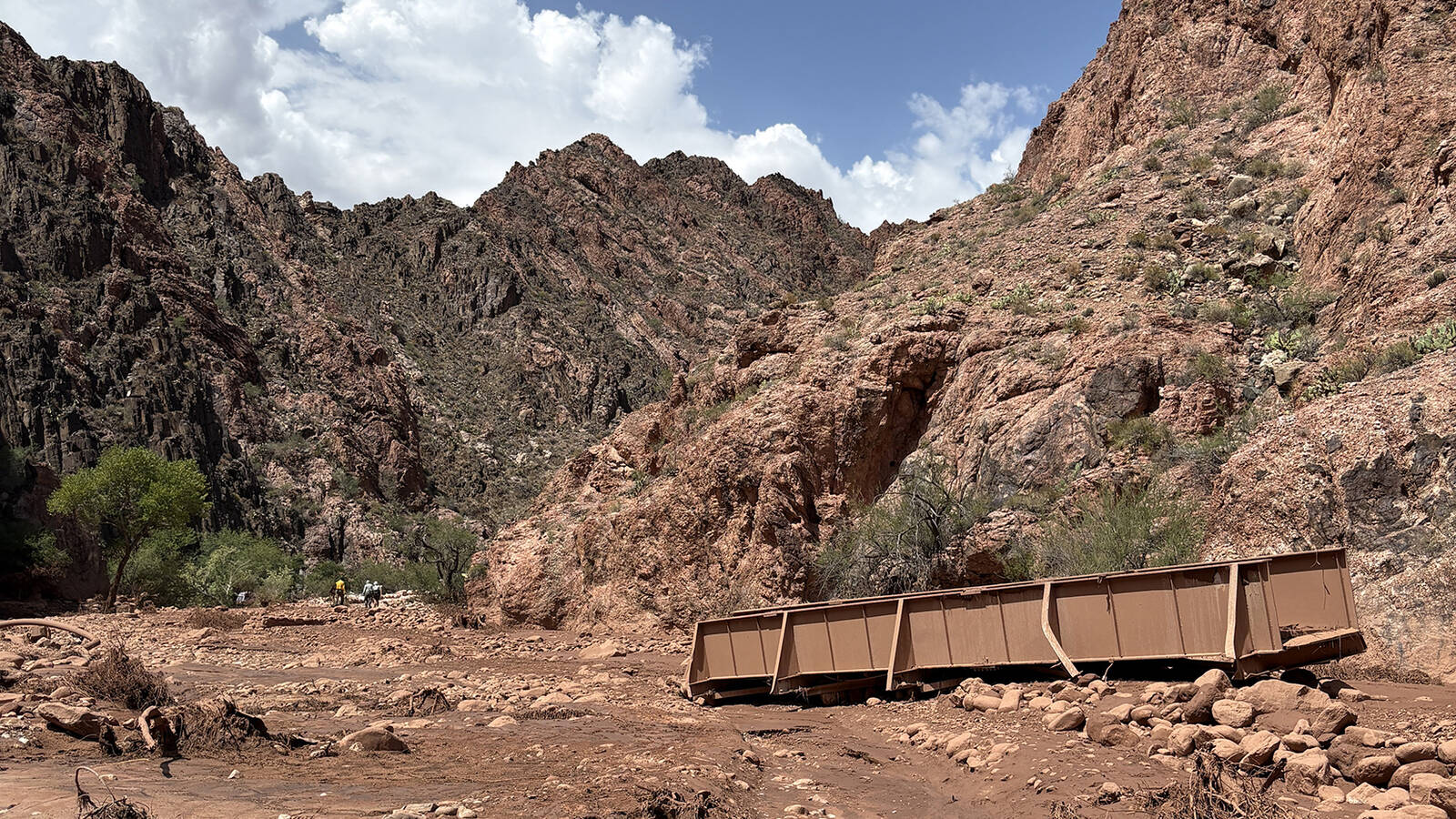
Mangled equipment amid a boulder field that washed down Bright Angel Creek, as seen Aug. 30, 2026, the morning after the deadly flood.
Matt MuchnaThis year was a particularly fierce monsoon season. The Colorado River already ran thick with sediment that had been flowing in from the washes. One slot canyon carried a thin stream of water the color of wet charcoal after running through an area burned by last year’s Dragon Bravo Fire.
Our group of 15 people in seven rafts was on Day 6 rowing through the Inner Gorge, the deepest part of the Grand Canyon, when a violent thunderstorm hit midday. The winds picked up and we pulled over to set up camp early, tying the boats tight as the temperature plunged and the downpour began. It continued on-again, off-again throughout the evening, and we huddled under umbrellas tied down to the rafts. I’ve experienced many a monsoon, but we all kept saying, “This is a big one, huh?” As though the question we were really asking ourselves was: Are we safe?
Related: AP News | Is El Niño making storms and flash floods in the Southwest worse?
We were safe. But we camped just three miles north of Phantom Ranch and heard the sound of helicopters just around the corner. Evacuations, we thought.
The Danger of Flash Floods
That night, we received a text through a satellite phone that there had been a flash flood down Bright Angel Creek and through Phantom Ranch, where the creek meets the Colorado River. The text said the water gauges recorded the creek running at 35,000 cubic feet per second (cfs). It was an impossible number for a creek that typically runs closer to 20 cfs. “That means the gauges blew out,” someone offered as way of explanation. We went to sleep that night knowing something had gone terribly just downstream and willing everyone to be safe.
The next morning, we set off early unsure of what we’d find. When you raft the Grand Canyon, you track the miles with curves of the river and the number of rapids. We knew we had one rapid before we’d arrive at Phantom Ranch.
I’ve experienced many a monsoon, but we all kept saying, “This is a big one, huh?” As though the question we were really asking ourselves was: Are we safe?
But the rapid never came. It was just gone. We then noticed how uncannily still the river was, almost without a current. Water submerged trees along the beaches and hid the high-water lines along the rock walls. We’d later learn that the river was backing up behind the debris flow at Phantom Ranch, which had partially dammed the river, pooling into a new natural reservoir.
When we beached our rafts at Phantom Ranch, we met an unnerving quiet.
The historic Phantom Ranch sits at the bottom of the Grand Canyon along the Bright Angel Trail. If any part of this national park can be described as “bustling,” this is the place. Of the many miles of remote trails, Phantom Ranch is the park’s most popular throughway. Hikers from both the North and the South Rim can meet here and grab an infamous lemonade (with ice!) or mail a postcard that’s carried out by mule from the country’s most remote post office. The historic lodging opened in 1922 with a handful of cabins and a dining hall, designed by Mary Colter in the recognizable design of what many call “parkitecture” using wood, sandstone and natural materials to build an extension of the landscape. Until the 1970s, it famously featured a swimming pool. Phantom Ranch is a destination you can only reach by mule, by foot or by river, and has been a place of respite that has long welcomed travelers to the park.
Today, though, it was empty. We were the first raft group to arrive that morning after the flood. We pulled up alongside two motorized rafts that had arrived just before us, which had been leading a commercial trip down the river before evacuating their passengers earlier. The river guides were staying behind to navigate the boats the rest of the way through the canyon.
A National Park Service ranger came to check on us and look through our manifest, as they were still working to account for everyone who had been in the canyon that day. He told us to sit tight for a few hours, and that the trails and the river were closed while helicopters surveyed the debris field.
It was our group, the river guides, and a handful of National Park Service staff who were surveying what had happened the afternoon before. Is everyone safe? That was the question that hung amid the tension.
A sign quickly handwritten on scratch paper was posted to a bulletin board, announcing that Phantom Ranch was officially closed. We walked toward the mouth of Bright Angel Creek, where the narrow path had widened into a debris-strewn flat that left a gaping mouth of boulders where the creek used to be.
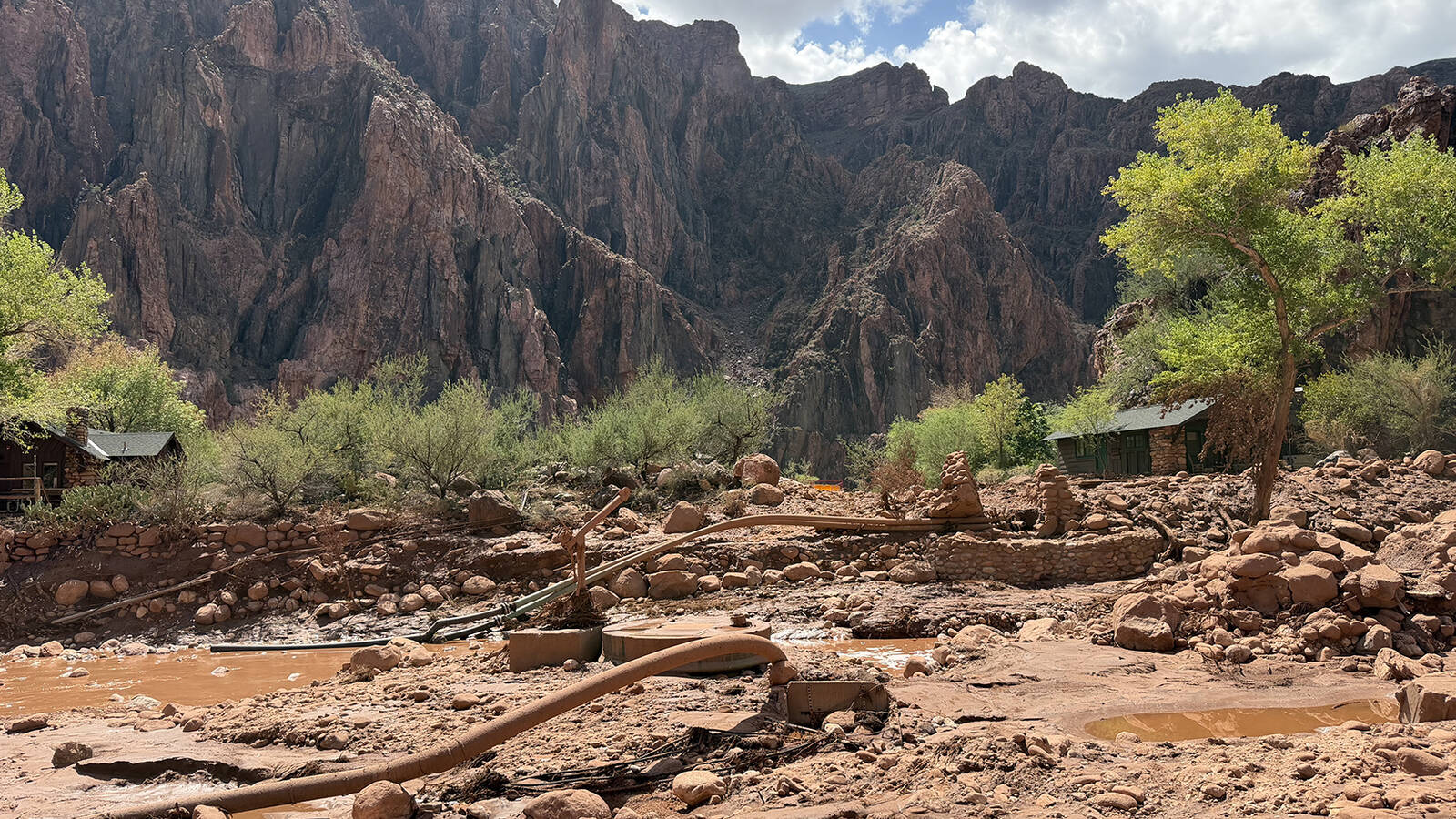
The flood had twisted pipes up from the ground, dislodged a metal foot bridge and pushed it up to the canyon walls. The sun bore down as the temperature neared 100 degrees and the heat made everything look dull and overexposed.
Phantom Ranch has a vibrant riparian micro-climate, with cottonwood trees offering shade that’s otherwise hard to come by. Rock squirrels, mule deer and canyon wrens can be seen here, the only part of the canyon I’d call “lush.” Oasis is the word most people use to describe it. It’s always been a dream-like place to sit with bare feet in the water and listen to the shimmering hum of insects.
Today, it was drained of color. Cottonwoods had toppled and been dragged downriver. The wildlife disappeared. Everything was covered in a thin layer of drying mud. Standing trees had been replaced with downed logs that had come from an entirely different part of the canyon. A ponderosa pine had washed down 6,000 vertical feet from the rim of the canyon.
For four more days travelling downstream, we’d find freezers, cutting boards, backpacker meals, gas tanks, boards and hundreds of fish that had washed out of Bright Angel Creek.
And the Colorado River itself? We walked to its edge. “We have to get our boats through there,” was the thought in the back of our minds. We saw a dislodged bridge floating on the southern side of the river, at the end of a new rapid created by the rock-flow. A refrigerator floated in an eddy, with steel cable and lumber twisting around it. A box trailer was beached just below. Styrofoam peppered the water like snow and continued for miles. For four more days travelling downstream, we’d find freezers, cutting boards, backpacker meals, gas tanks, boards and hundreds of fish that had washed out of Bright Angel Creek. Rebar blended in with the driftwood, which felt like entire forests.
Disorienting. Haunting. Was this river canyon the “sublime spectacle” of awe and dread that John Wesley Powell described 150 years ago?
Arriving on the scene, one of the first things to cross my mind was how to get information out. I was taking photos — someone could use the photos. Were these the first images after the flood? Were journalists following this? Which journalists would be tracking and writing stories this morning, and where were they getting information?
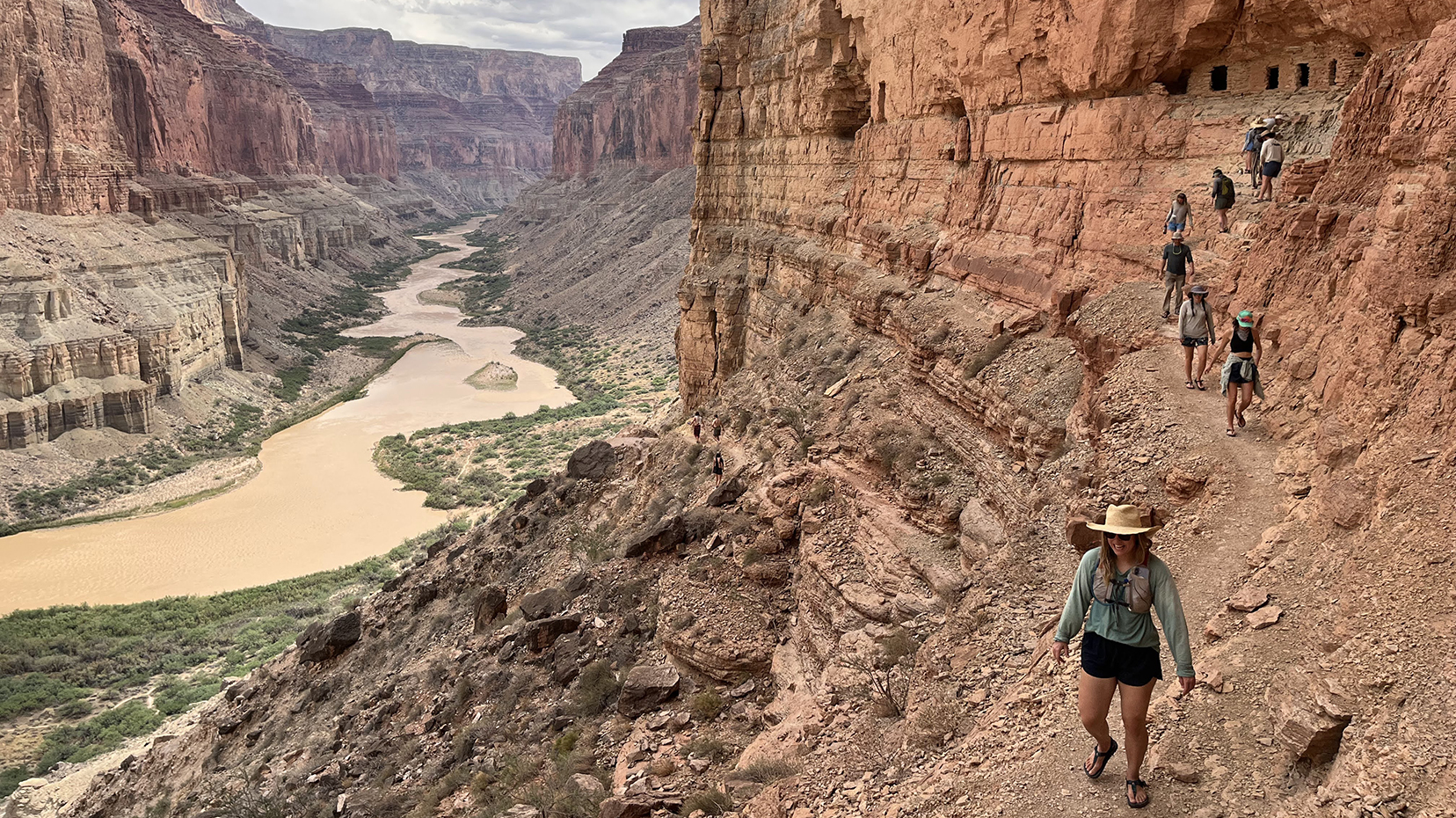
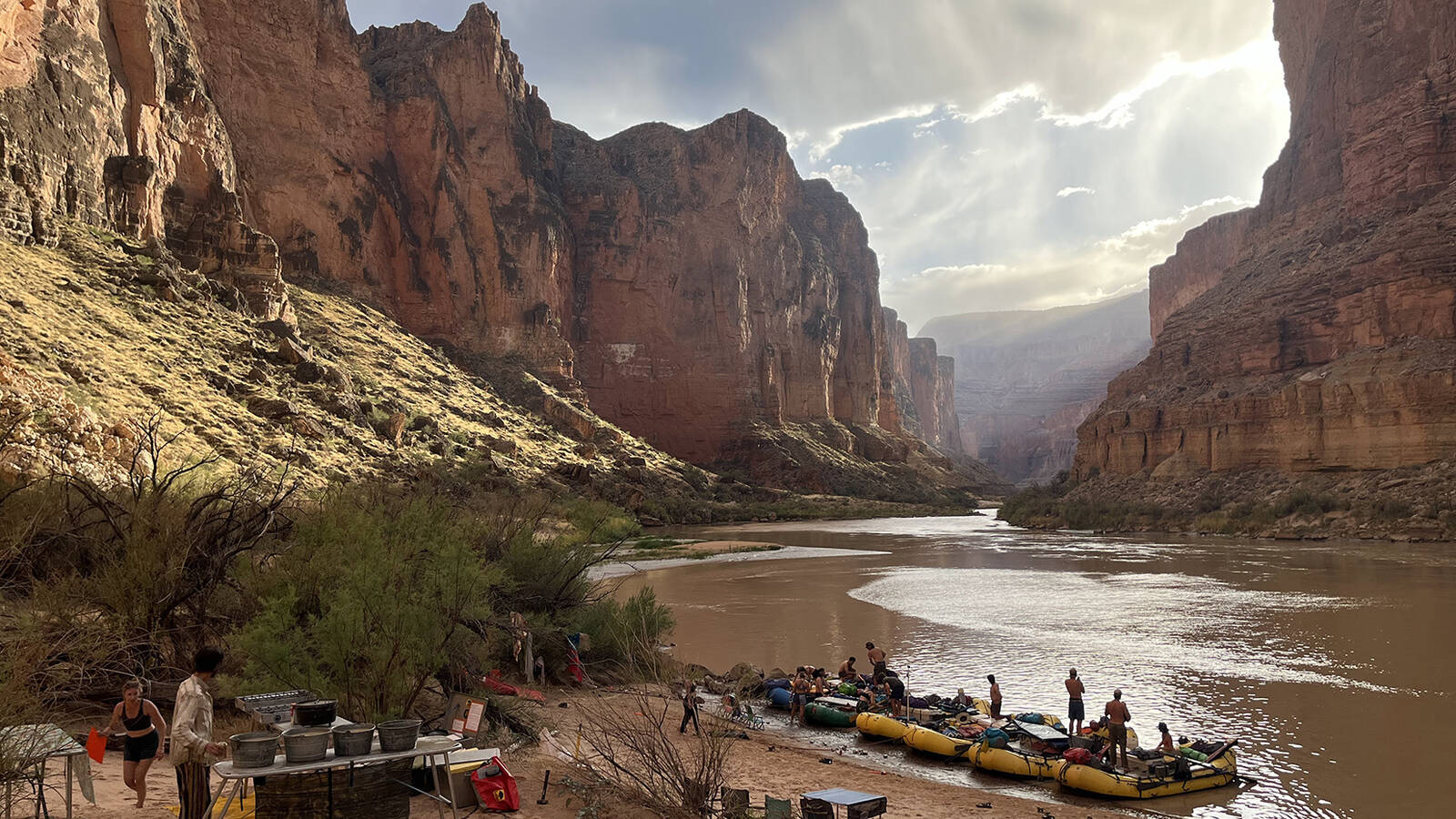
The author’s group hikes to the Nankoweap Granaries in Grand Canyon National Park, two days before the Colorado River flood.
Caitlyn Burford/NPCA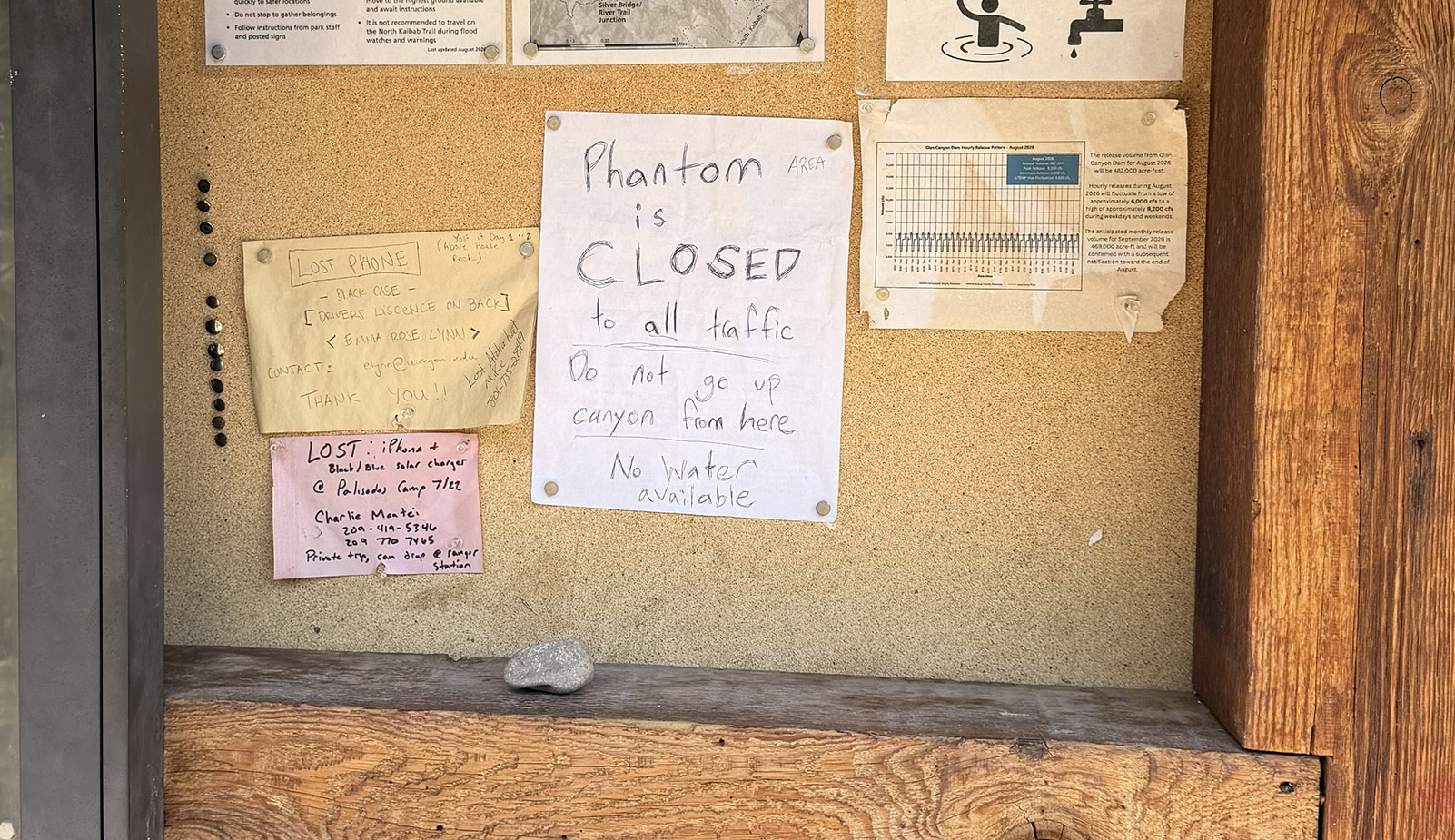
A handwritten sign seen posted Aug. 30 just outside Phantom Ranch the morning after the Grand Canyon flood.
Caitlyn Burford/NPCA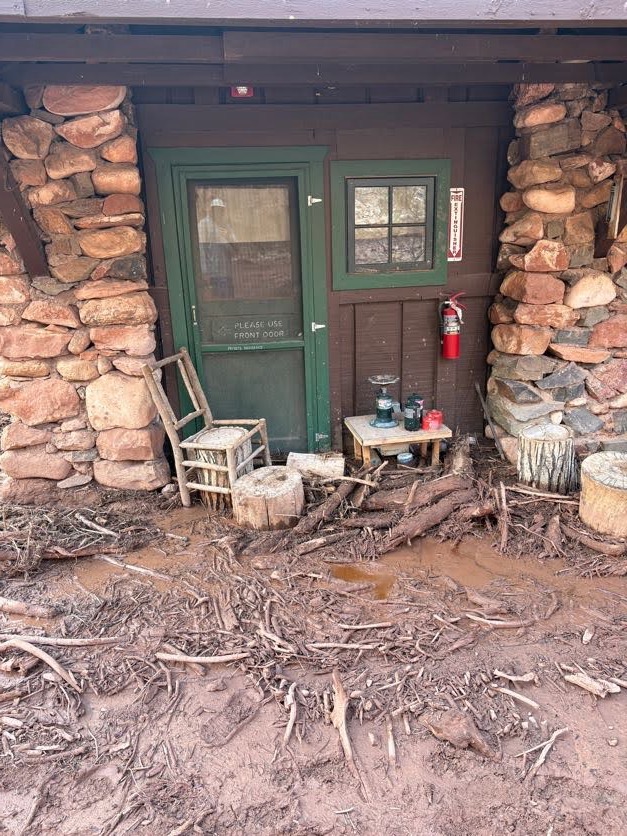
Flood debris at the doorstep of an historic structure at Grand Canyon National Park’s Phantom Ranch, August 2026.
Matt Muchna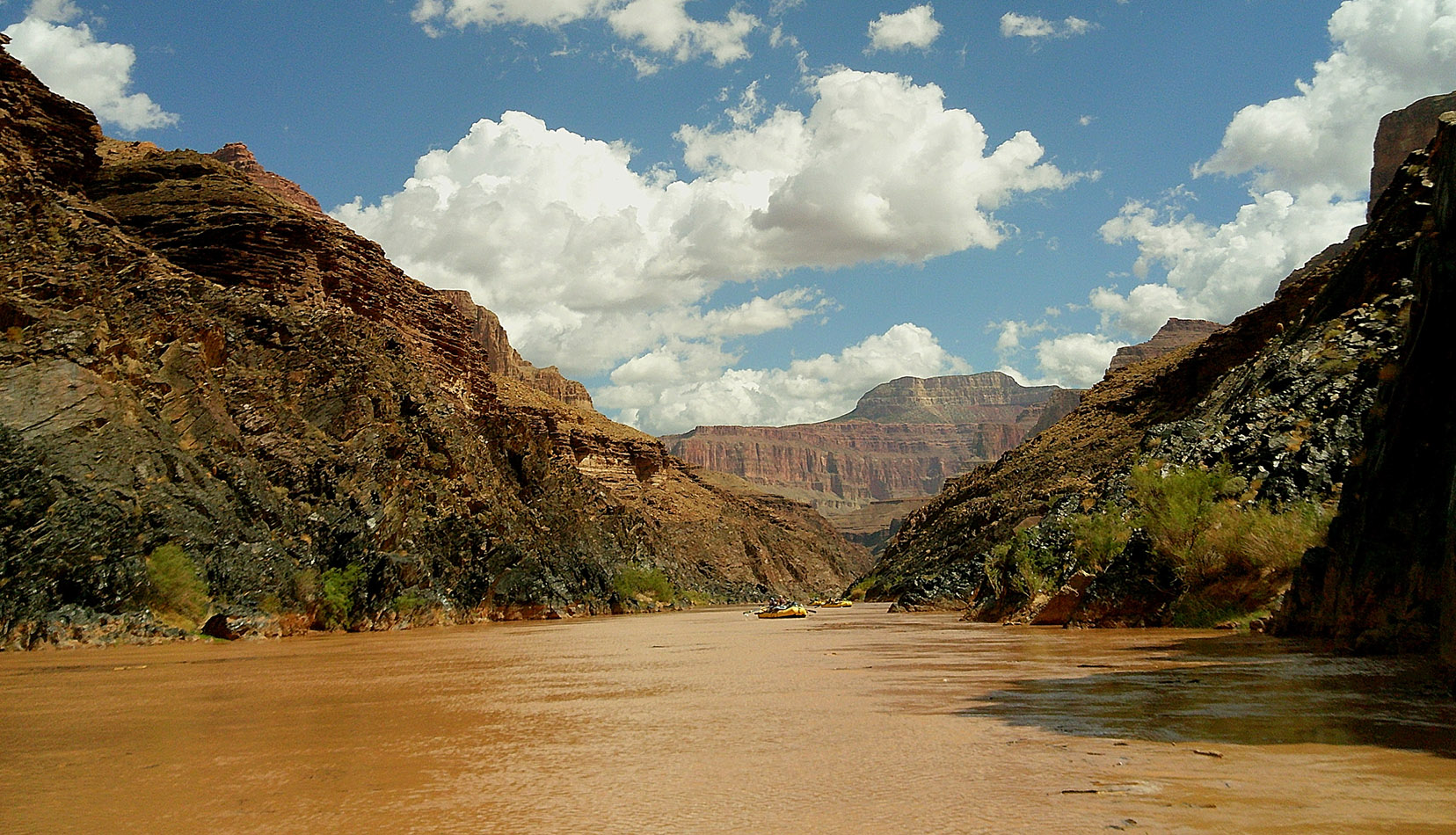
The Colorado River in Grand Canyon National Park, roughly 40 miles downriver from Phantom Ranch after monsoons brought sediment into the river, turning it a muddy red-brown. Photo taken Sept. 2, 2026.
Caitlyn Burford/NPCA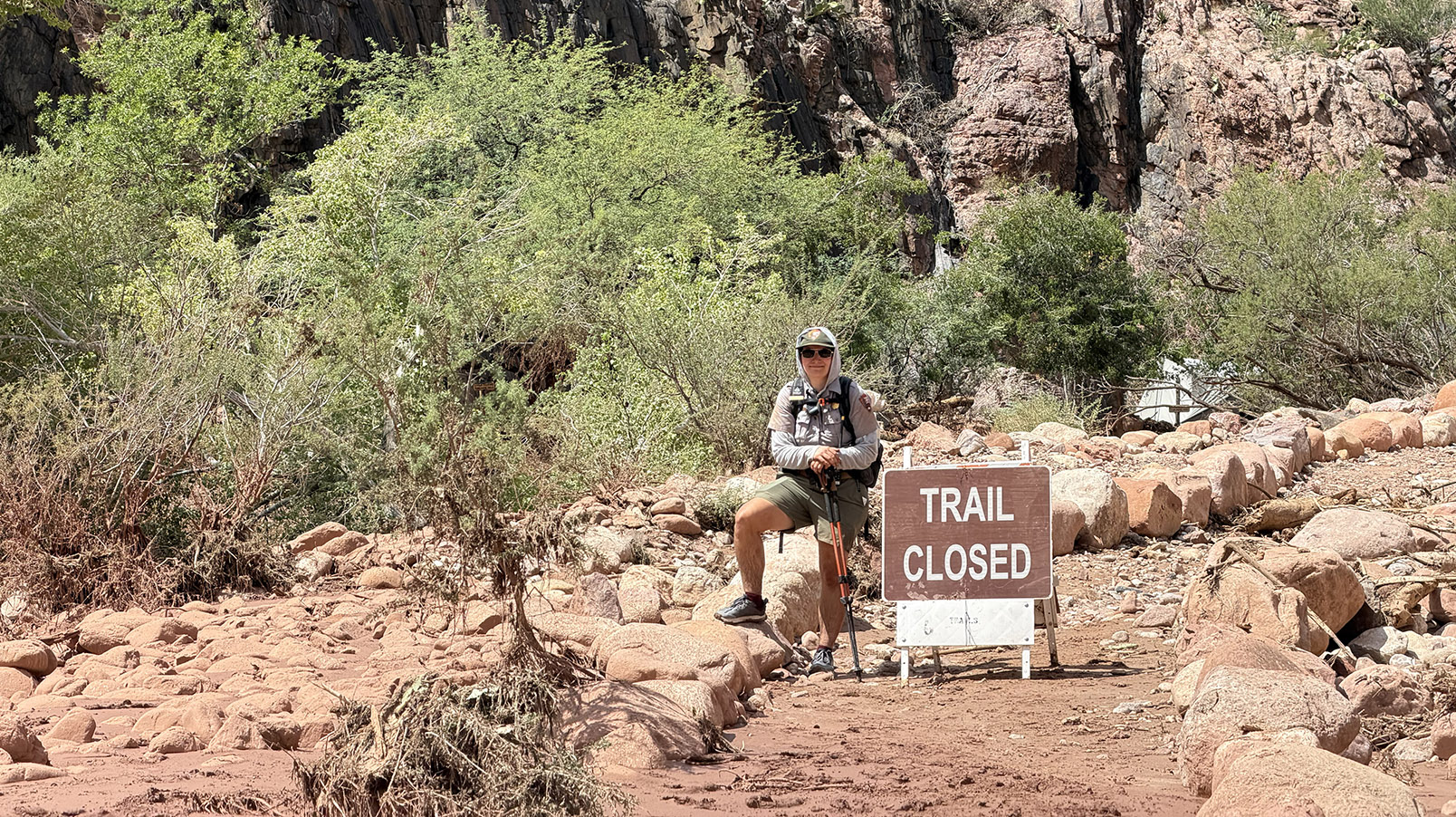
The morning after the Aug. 29, 2026, floods, National Park Service staff surveyed the area and closed trails for safety.
Caitlyn Burford/NPCA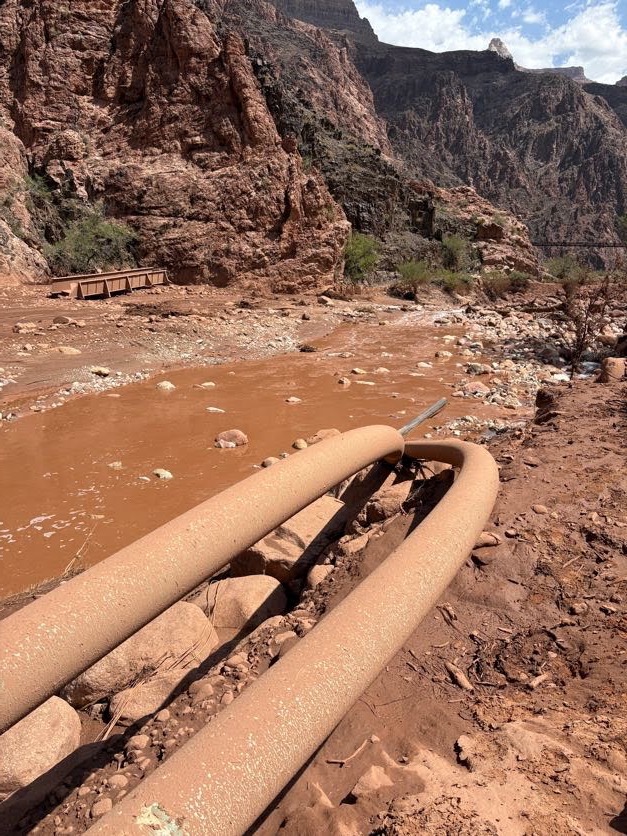
Exposed pipes after the August 2026 flood, with the Kaibab Suspension Bridge visible in the distance.
Matt MuchnaI found it impossible not to dive into work mode. This was a major national park story, and I had a first-hand account of the devastation. My experience could help piece together the truth about what had happened at Phantom Ranch. Working with the news media, I know the impulsion that comes with holding a piece of information, a tidbit or a fact, that somehow might change the narrative and wanting to get it into the hands of someone who could share it widely.
This is especially true for our national parks right now. Since President Trump took office in 2025, the Park Service has faced a new reality, one that promotes secrecy over transparency and relies on a culture of fear to hide just how deep the devastation to our public lands goes. From the loss of 25% of Park Service staff to attempts to erase our national monuments off the map, the administration has made it clear that they view our shared heritage as a cheap thrill. Members of Congress have attempted to auction off public lands to private interests, and the Department of Interior is pushing through reckless mining projects that damage places like Mojave National Preserve. The Trump administration is reviewing wilderness areas, like those in the Grand Canyon, with an eye toward more development.
NPCA is fighting many of these attempts in legal battles and the halls of Congress every day. And for me and our team of communications staff, the way we fight is by getting the truth out. When people know what’s really happening to our national parks, they rally together to defend them.
When people know that 1 in 4 rangers are gone, it begins to chip away at the facade that everything at our national parks is fine and dandy. People begin to question where the scientists and wildlife biologists are, or why the visitor centers are closed and the entrance booths empty. Or why parts of historic public trails have been blocked off in national parks along the U.S. border.
For this story of the Grand Canyon flood, I didn’t know what the headlines would be. I desperately hoped that everyone was safe. I hoped the story would include just how many uphill battles the Park Service is facing right now. I hoped people would read and realize how important it will be to restore Phantom Ranch and this part of the Grand Canyon. I hoped people would understand this will take a long time, and we need to demand that Congress provides funding to support the Grand Canyon’s recovery.
But here’s the thing about park wilderness. There’s very little cell service. I would not get out any texts or photos to reporters for the next 10 days, and by that point, the world outside the canyon would know far more than I did about what happened on Aug. 29.
We’d learn later that three people lost their lives that day. I did not know them, but I felt that hollowing stomach drop in finding out not everyone was ok. The floodwaters rose and created a terrifying reality for so many hiking in the canyon, and I felt the weight of knowing so many people hovered over their cell phones and computers waiting for updates from families and friends. Including my own.
A few hours later, we watched a helicopter fly through the canyon, completing their Park Service survey and telling us the river was open. We could head downriver into the now-transformed Colorado.

What We’ve Lost on the Grand Canyon’s North Rim
Places like Grand Canyon Lodge aren’t just buildings. They hold pieces of our collective stories, where generations have gathered.
See more ›Nearly two months later, Phantom Ranch is still closed. The trail leading from the North Rim down the canyon remains closed, and there is no estimated schedule for reopening. But in late October, there was welcome news of sections of the Bright Angel and South Kaibab trails opening back up.
It may be a long time before visitors can send a postcard from Phantom Ranch, and even longer before the cottonwoods return to this part of Grand Canyon National Park. But the canyon was here long before we were and remains a spectacular phenomenon. The National Park Service is here to steward these public lands. It’s times like these that make it resoundingly apparent that the agency needs full staffing and funding to protect and restore our parks. That’s what NPCA is fighting for, and we’ll continue to share the park stories that connect us to them.
Stay On Top of News
Our email newsletter shares the latest on parks.
About the author
-
 Caitlyn Burford Senior Communications Manager, Pacific, Southwest, Northwest
Caitlyn Burford is the senior communications manager for NPCA's Northwest, Southwest, and Pacific regions, along with NPCA’s work on national energy policy.
-
General
-
- NPCA Region:
- Southwest
-
Issues


-
Press Release
45 Million Acres of Public Lands, Parks Threatened by Proposed End of Roadless Rule Protections
"When combined with the recent administrative actions including advancing mining and oil and gas development on public lands and removing habitat protections from threatened and endangered species, ending the roadless…
-
Press Release
Coalition Files For Preliminary Injunction to Halt, Reverse Park Censorship
The American people deserve nothing less than the full truth at our national parks, and we will not stop fighting until they get it.
-
Press Release
National Parks Conservation Association Joins Coalition Lawsuit to Stop Censorship of History, Science in Parks
Visitors deserve the full picture of history at America’s national parks, as well as key information about climate change, pollution, development, and other environmental threats to these iconic places.