Spring 2026
What the Trees Tell Us
Long ago, Hispanic sheepherders carved names, dates and drawings into Valles Caldera’s aspens. Can a small team of surveyors record the etchings before they disappear?
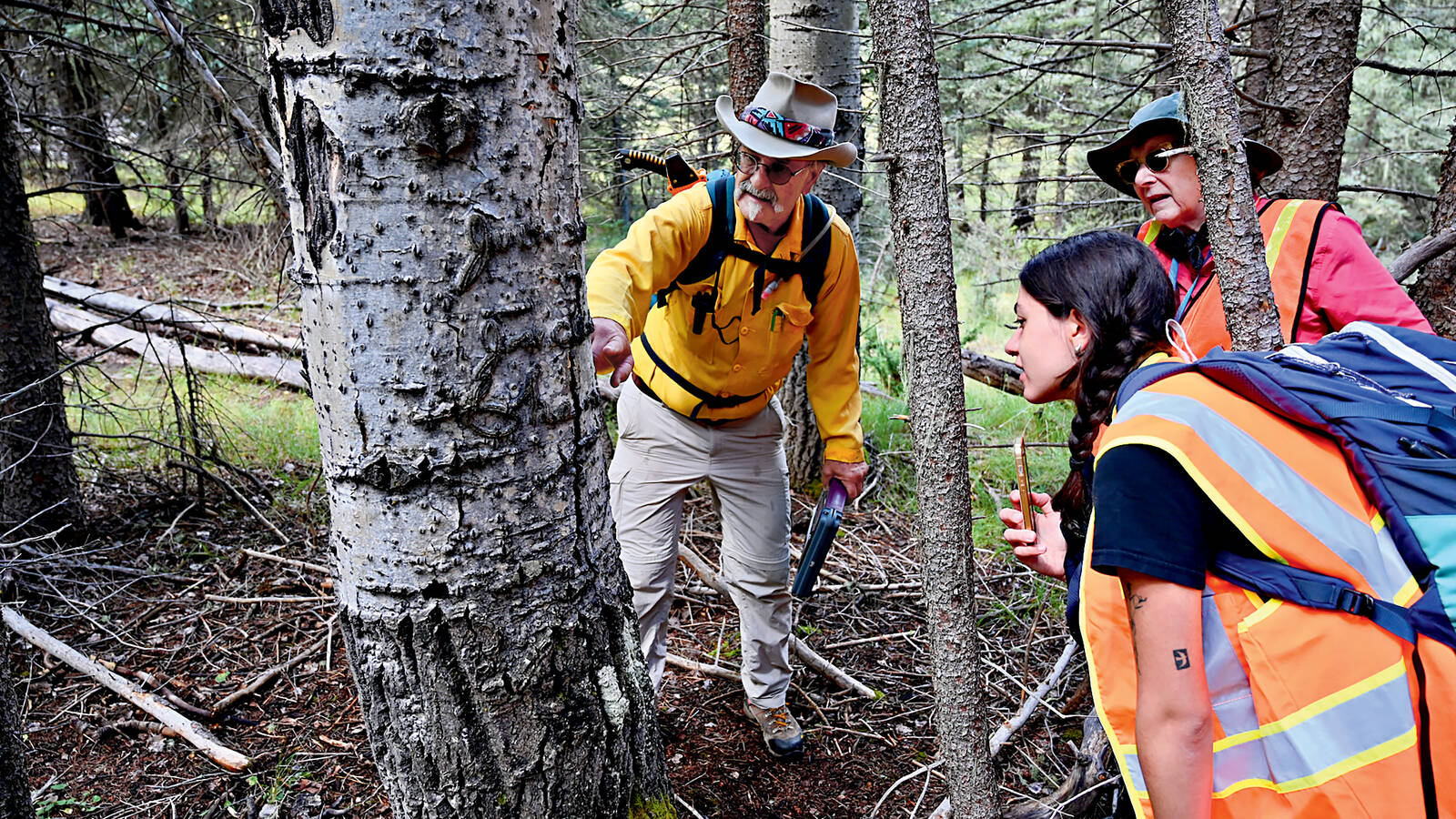
Hundreds of lean, pale-barked trees knit a canopy of shimmering green leaves over the ridge. As Steve Daly hiked through the grove, he glanced over the trees, dismissing most as too slender and thus too young. When he spotted gnarled bark worn from white to dark gray, he strode over a thicket of boot-snagging deadfall for a closer look.
“Hello, old-timer,” he muttered, a hand braced against the bark as he scanned the tree from bottom to top, then turned away. “No, no stories to tell.”
On a sunny afternoon in August, Daly had joined a small crew of volunteers searching for human traces left in aspen bark in a distant corner of northern New Mexico’s Valles Caldera National Preserve. Over 17 years, dozens of volunteers have spent countless summer and fall days inspecting aspen trees, lured by a love of the place and a curiosity about the fragments of history they might find.
For more than two centuries, the land that would be designated as a national park site in 2014 was grazed by sheep, and in idle hours, sheepherders wandered into the forests and etched surnames, town names and dates into the aspens’ bark. They wrote in both English and Spanish, and made drawings as well. Because the sheepherders left few journals, these dendroglyphs, as they’re called, offer a rare record of people who played a key part in the environmental and cultural history of the preserve. Many decades later, the carvings are vanishing as trees are mutilated by elk or die from old age or climate change-induced drought or wildfire. So far, volunteers have found and documented more than 3,000 dendroglyphs, but they’ve only covered around half the park’s 88,900 acres, and they’re racing to document the rest before it’s too late.
“This is a historic resource, and we are losing it,” said Randal Pair, the project’s volunteer team leader, who schedules and plans about four days of surveys per month. That late summer day, he had driven down a rutted dirt road with two other volunteers: Daly, a retiree who also helps maintain trails and monitor archaeological sites, and Trish Weller, who had joined the team that spring. I had ridden with Pair and the volunteers; two staff members, a volunteer for another project and an intern who were all interested in learning more about the dendroglyphs had followed in a Park Service truck.
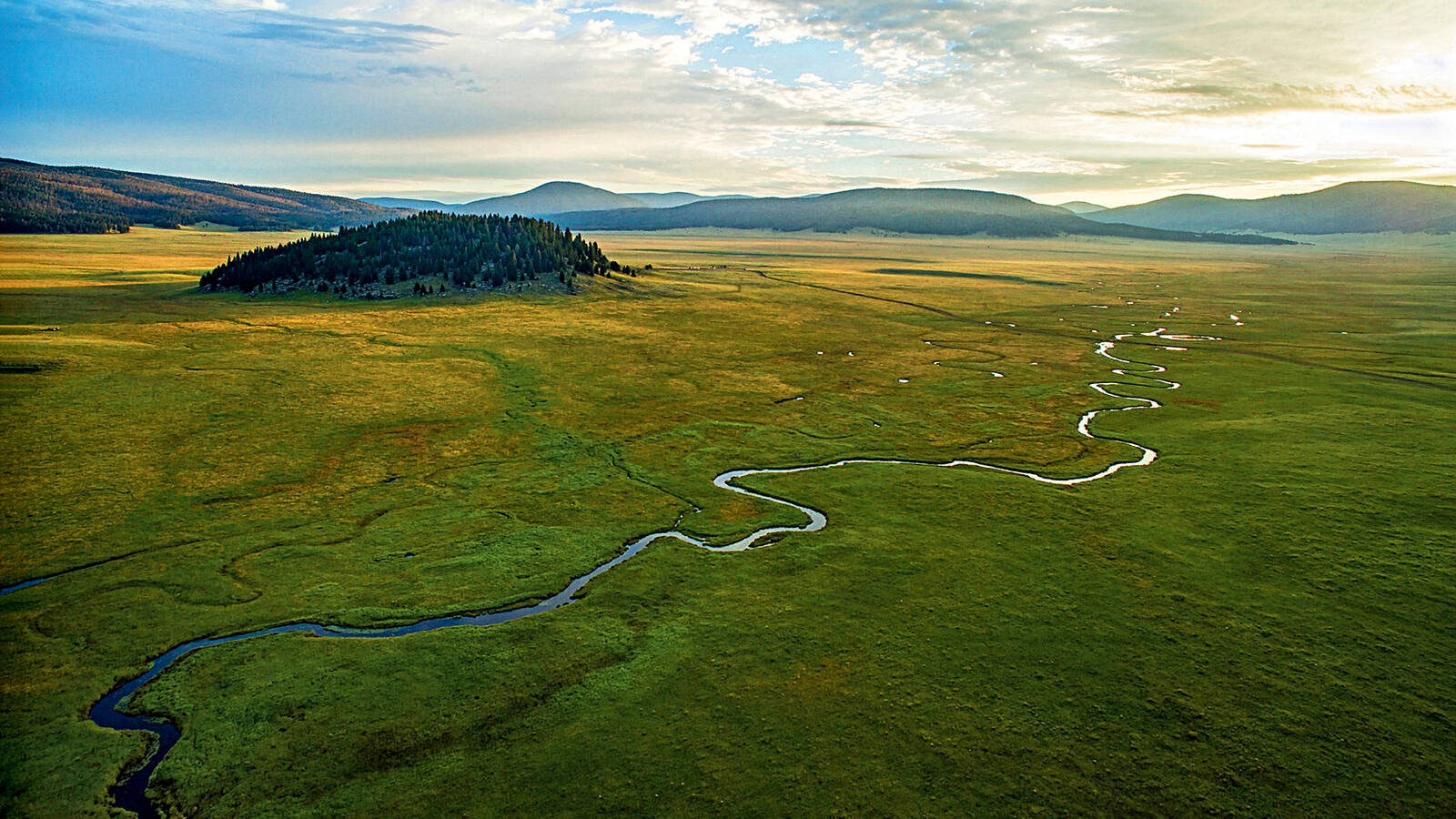
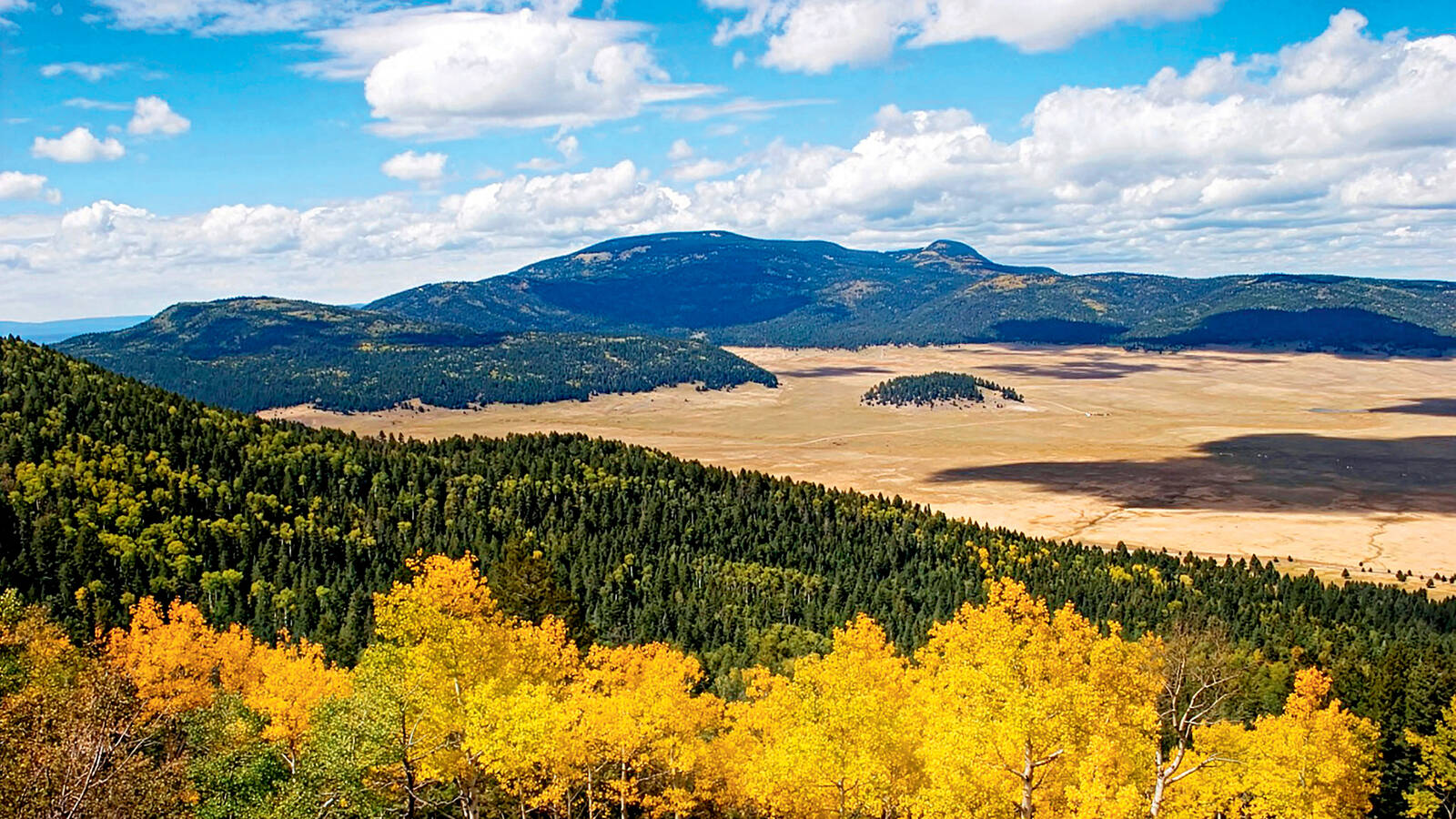
Valles Caldera’s main feature is a collapsed volcano within the Jemez Mountains northwest of Santa Fe. Conifers and aspens hug the rim and cover lava domes, while open grasslands blanket the valleys. Multiple Tribes, including the Jemez Pueblo, or Hemish, long saw the landscape as significant and still hold ceremonies here. Historically, the Hemish and other Tribes hunted, fished, farmed and collected obsidian within and near the caldera, and set small fires that cleared some conifers, opening space for aspens.
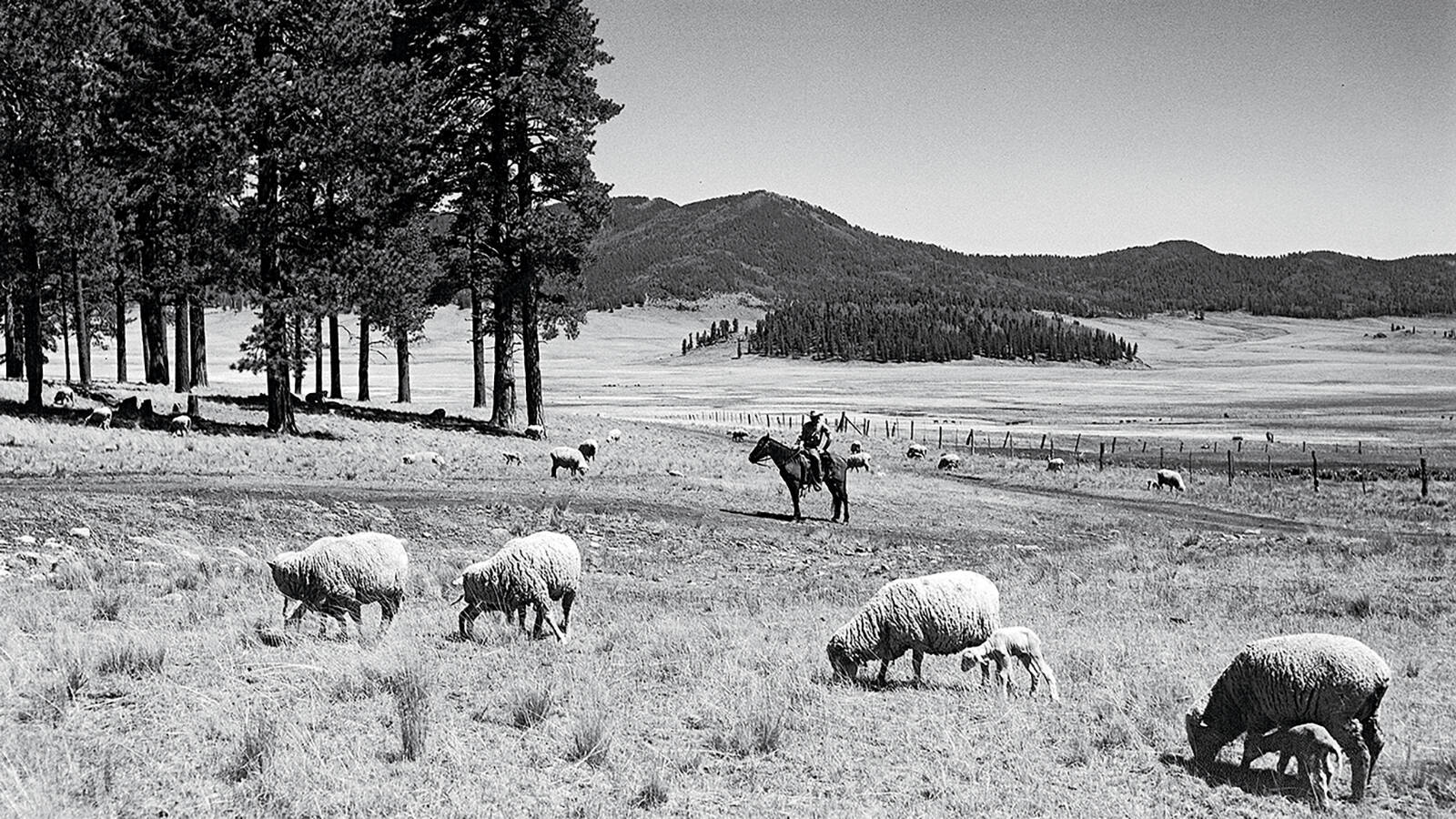
As early as the 1700s, settlers in what was then a territory of Spain began grazing sheep in these high meadows. The practice continued as the land became part of Mexico and then the United States, and it persisted until the years after World War II, when the sheep industry waned. At the grazing peak in the late 1800s and early 1900s, Valles Caldera may have seen 50,000 sheep each summer.
The impact of these massive flocks still shapes the preserve’s ecology. Grass species that sheep disfavored and aren’t as nutritious still dominate the meadows. In addition, the animals’ hooves cut into wet meadows and streambeds, increasing channelization and erosion — and the land never fully recovered. By devouring the grass understory in ponderosa forests, sheep changed the nature of the wildfires that historically sped through those grasses and left most mature trees alive. Without the regular grass-powered fires, brush and smaller trees accumulated, and they have fueled bigger, hotter and more damaging wildfires.
“Sheep aren’t very easy on the land,” explained Craig Martin, who has studied the history and ecology of Valles Caldera and the Jemez Mountains for decades. “They have sharp hooves, and that’s a bad thing for the soil, and when they eat, they tend to eat the entire plant, including the roots.”
Hispanic sheepherders at times found themselves working under a “partido” system, similar to sharecropping, in which “partidarios” rented a flock for a few years and paid the owner in offspring and wool. In theory, the system allowed sheepherders to accrue their own herds, but the vagaries of grazing livestock in the wild rarely worked to the herders’ benefit.

Hidden Names, Hidden Stories
A journey to the depths of Mammoth Cave to record signatures left by Civil War soldiers.
See more ›Daily life was largely uneventful. Sheepherders slept in tents and moved camp about once a week as flocks browsed the grass. Midday hours were often quiet, dull and hot, and the sheepherders would retreat into shady aspen groves.
“It was lonely, it was isolated, and they had a lot of time on their hands,” Martin said. “Most of their day was moving the sheep to a new place and then sitting back and watching what was going on.”
Dendroglyphs, or arborglyphs, are found elsewhere in New Mexico’s mountains and across the American West. A 2010 effort by Forest Service archaeologists recorded 277 carved trees in the San Juan National Forest in Colorado. Basques who found work in the growing sheep industry in the mid-1800s etched trees in California, Idaho and Nevada, including in today’s Great Basin National Park. People across the world, from Australia to Estonia to Sweden, have carved on trees. Because of the prevalence in the American West of aspens, which have a pale, soft bark, the practice flourished there, mostly at the hands of sheepherders. Few of the cowboys herding cattle through Valles Caldera after World War II, for example, left behind dendroglyphs.
When Adam Dean, a park ranger at Valles Caldera, guides public tours to see dendroglyphs, he prompts visitors to ponder the line between protected history, as the dendroglyphs are now considered, and graffiti, which is illegal.
“If you say, ‘Well, this is art,’ what makes modern dendroglyphs, which are of course prohibited, not art?” Dean asked. “People have also said, ‘Are we missing out on future windows to ordinary people’s lives by not allowing carvings?’”
It’s a reasonable question. The National Historic Preservation Act draws some boundaries, typically recognizing certain buildings older than 50 years as historical resources. Dean said that carvings of names, human figures and ranch brands acquire cultural value over 50 or more years, even if time is an imperfect way to assess their worth.
In 1978, contract archaeologists from the University of New Mexico noted the many engraved aspens in Valles Caldera as they surveyed the site of a proposed geothermal power project in what’s now part of the park. It wasn’t until 2008 that the late Anastasia Steffen, who would become the park’s cultural resources program manager, organized the Volunteer Aspen Survey Team. She soon handed off leadership to longtime Los Alamos resident Colleen Olinger.
Olinger, who had worked as a park ranger at nearby Bandelier National Monument and run a bookstore and publishing company that focused on local history, led the volunteer team until her death last April. At first it wasn’t clear whether the work would continue without her, but Pair, who had begun overseeing the fieldwork as Olinger’s knees aged out of the rough hiking required, took on the rest of the organizational tasks. He directed volunteers over the summer to survey a remote corner of the preserve because he knew Olinger wanted to get to those distant aspen groves. The decision was, as he described it, a “yes, captain” moment. Daly and Pair both wonder if Olinger expected the area to be rich in dendroglyphs. If she did, she was right.
“It’s been paying off,” Daly said. “The trees-per-hour ratio has been incredible.”

Mossing Around
Why while away retirement on the golf course when you could become a moss expert and hunt down some of the least studied plants in New Mexico’s national parks?
See more ›Before leaving the truck on our outing, Pair passed out maps of the small area of the park to be surveyed that day. Red stars marked dendroglyphs they had found in the weeks before. Lauren Ray, the park’s visual information specialist, marveled at the nearly trailless landscape as we hiked toward the survey site.
“How many people have seen this part of the park?” she said. “It’s so hard to get back here.”
To search, volunteers spread through the trees, walking in parallel lines about 50 feet apart, as much as brush, deadfall and uneven ground allowed. They had donned bright colors to spot one another through the trees and carried whistles for when, inevitably, dense woods obscured even flashes of yellow and orange.
They stopped to stare at all but the smallest trees, straining to distinguish etchings made by humans from other marks. Aspen bark will form knots where the tree drops a branch, horizontal fissures develop as the tree ages, and bears occasionally leave claw gashes on tree trunks. Over decades, aspen bark blackens, gnarls and peels, splitting carved text. Letters can be swallowed by their own scarring.
It was lonely, it was isolated, and they had a lot of time on their hands.
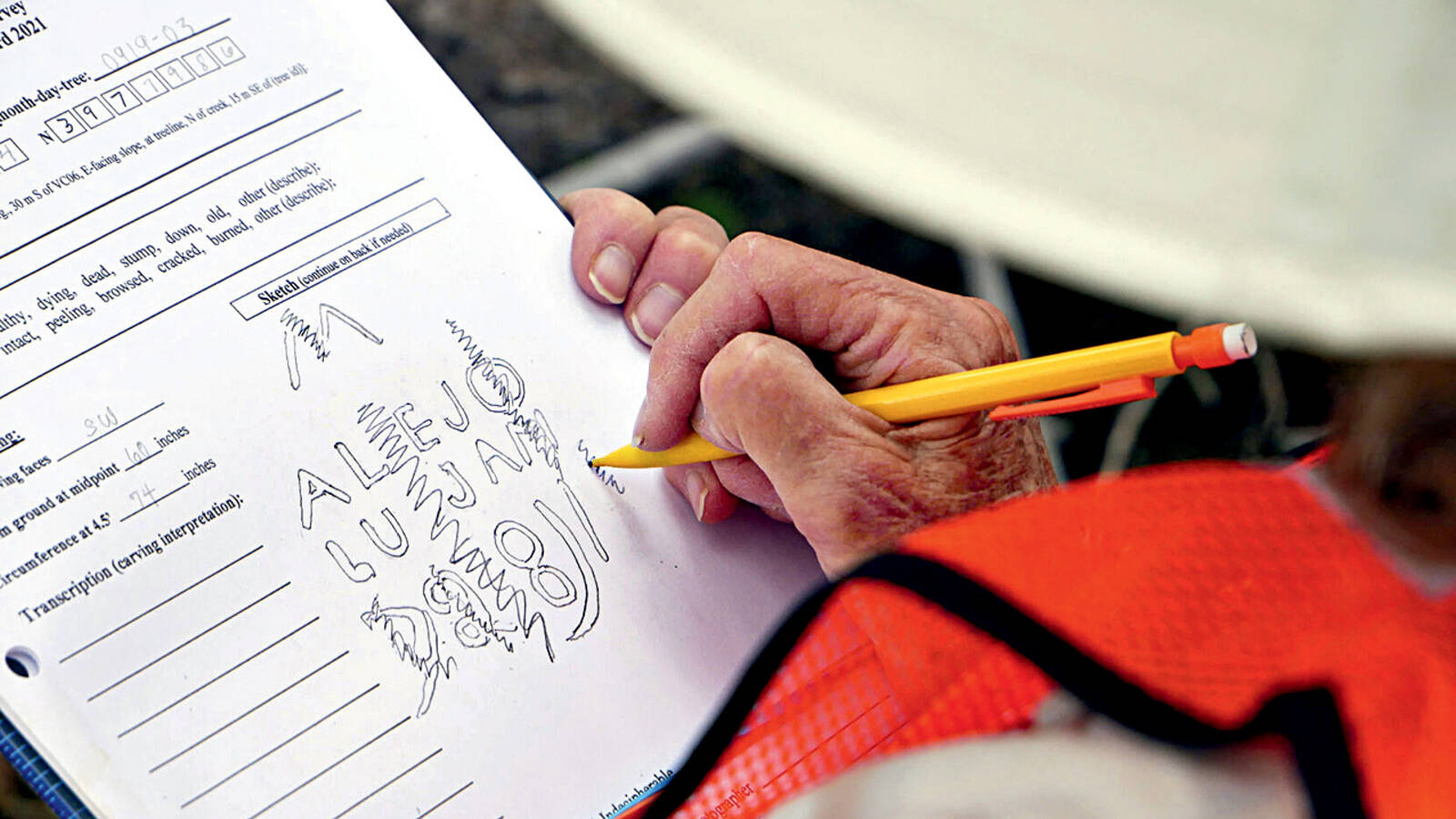
Most often, volunteers find names and dates. The surnames Martinez, Lujan, Trujillo and Sanchez occur repeatedly. Volunteers found the name Alejo Lujan at least 100 times, often alongside the name of a place called Cow Spring. From the repetition, they can infer how the sheepherder worked across the countryside. Dendroglyphs also include religious symbols, such as crosses and possibly Stars of David, as well as images of birds, sheep, horses, arrows, hearts, boots, houses and, once, a mermaid. Volunteers have documented drawings of human heads and bodies, some more risqué than others.
“These inscriptions contain a self-told record of an otherwise little-chronicled peoples: when they were on the land and who they were, along with hints as to why they were there, their values, their humanity, and occasionally their whimsy,” Steffen and Jonathan Knighton-Wisor, an archaeologist, wrote for a Park Service publication in 2016.
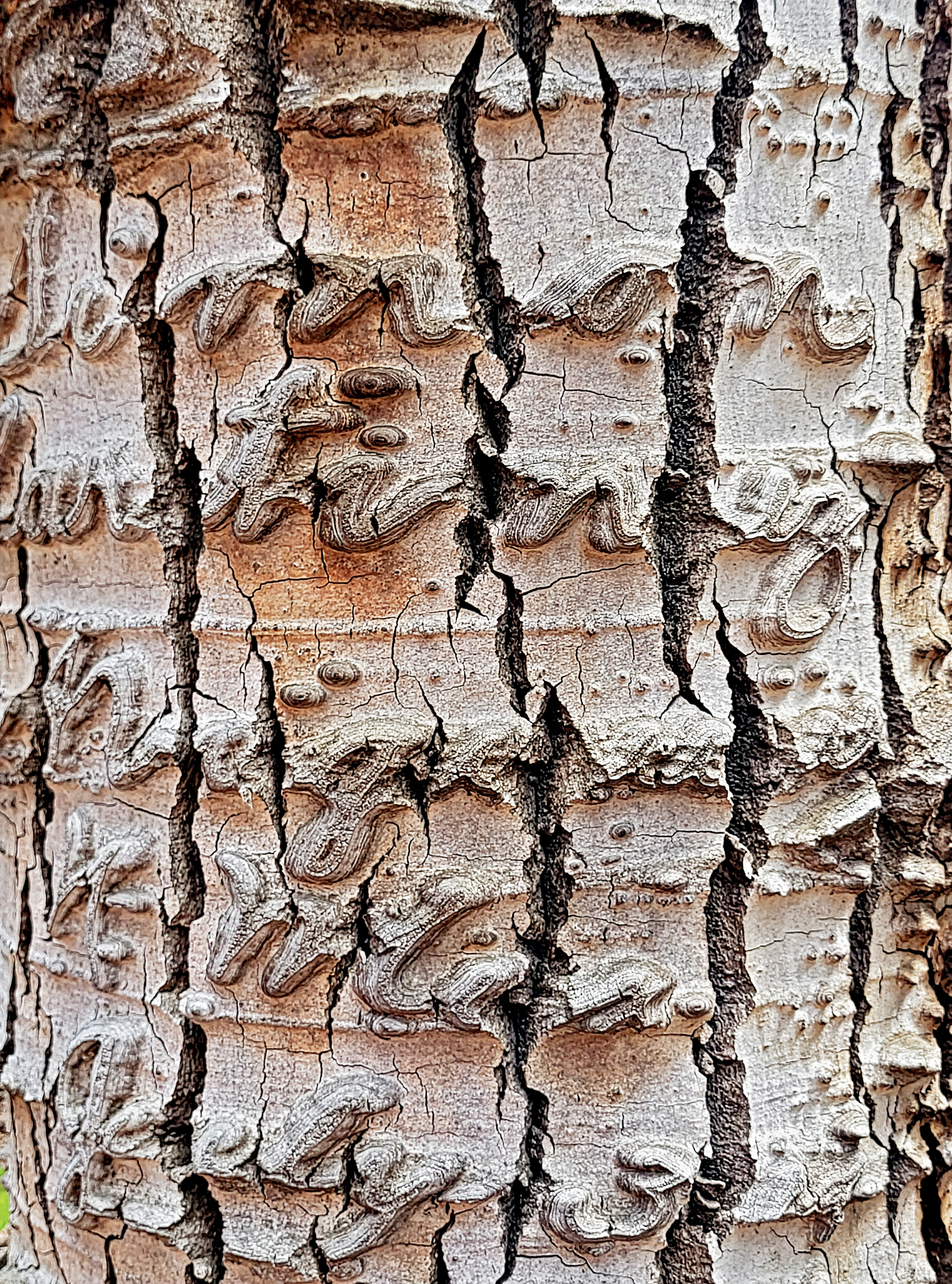
A dendroglyph carved in cursive by Simon Martinez on July 3, 1911.
NPS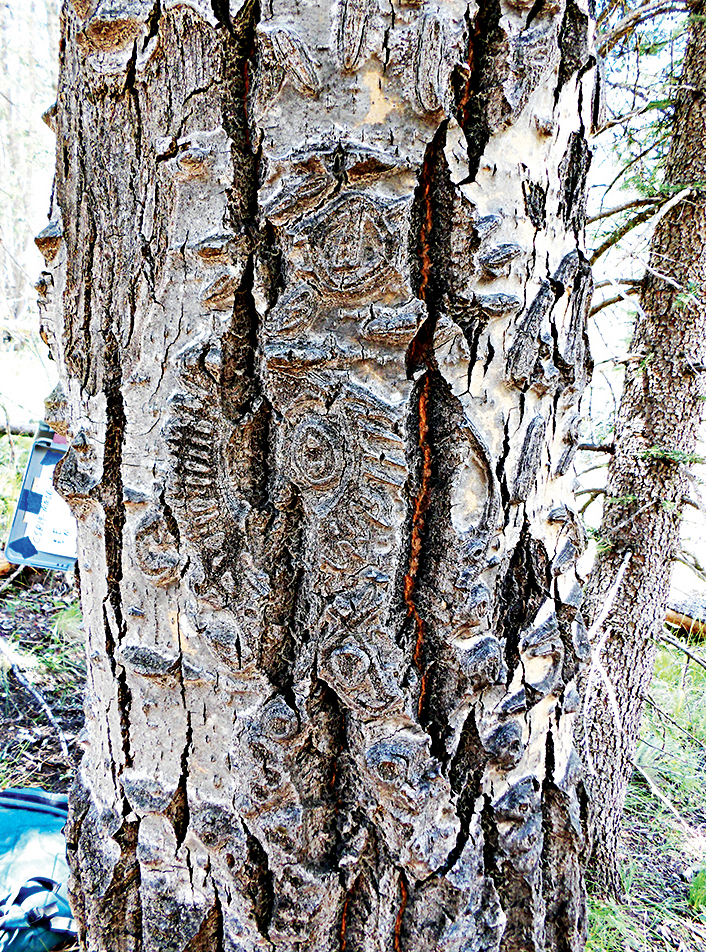
A carving interpreted to represent the Virgin of Guadalupe.
NPSSteffen championed the citizen-science survey to document the carvings as risks to them increased. Most aspens don’t live past a century, and volunteers keep an eye out for older trees. Many of the “glyphs” found this summer were on standing dead trees. As they hiked, Daly, Weller and Pair scanned the length of fallen trees and even sifted through decaying strips of bark loose on the ground. Occasionally, they have reassembled dendroglyphs from pieces of bark. The oldest decipherable date ever found is 1887 — not because the practice began then, but because earlier traces are likely lost.
Other forces are also erasing this record. Searching for remnant sugar in winter, elk gnaw on aspen bark and gouge potential inscriptions in the process. As drought stretches on in the West and climate change takes its toll, aspens die faster, but the bigger threat is wildfires, which, in a hotter, drier Southwest, are becoming more common and more devastating. About 70% of the park’s current area has burned since 2000, and countless dendroglyphs vanished in those fires.
Even after glyphs are found, volunteers wrestle with what they say or depict. When Weller couldn’t read one on a tree, she took a photograph home to revisit on a television screen. Her husband looked at the picture and quickly deciphered the name in front of him. “Well, that’s William Ruiz,” he said. Daly once stepped back from a baffling tangle and then recognized a drawing of the Virgin of Guadalupe.
“That was a cool one,” he said.
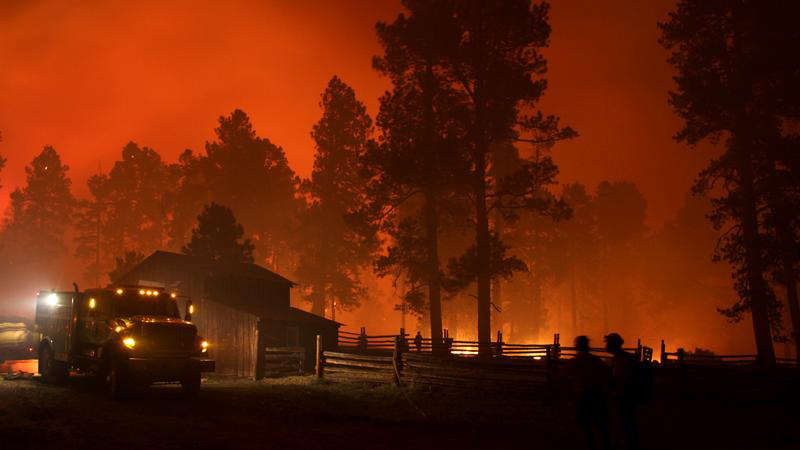
About 70% of the park’s current area has burned since 2000, destroying an untold number of dendroglyphs. Pictured: The Thompson Ridge Fire of 2013.
NPS/KRISTEN HONIGIf interpreting what the sheepherders drew is tricky, determining why they drew it is near impossible. Perhaps they were signaling territories or marking a return to the same pastures. They might have been exercising the impulse to leave a mark that to this day has people scratching names or initials onto trees and rocks. They might simply have been bored.
The last names found on the trees echo those found in surrounding towns, and descendants of these sheepherders likely still live nearby, but connecting the dots is no easy task. Volunteers have combed through census and tax records. Park Service interns have searched databases such as Ancestry.com. As a graduate student in 2012, Knighton-Wisor dug in and was able to match the name Nicolas Gallegos, found several times in the same cursive, to 1920 census records for a local who lived in nearby San Ysidro, married a woman named Adela, and had three children.
“A lot of these, since they’re such common names, could be multiple people,” Dean said.
Once, Daly’s brother-in-law showed a photograph of a name, date and the town name Chimayo to friends from that town. They pulled out a picture of three brothers who had herded sheep in Valles Caldera, pointed to one of them and said, “That’s him.”
“That’s about as close as I’ve come,” Daly said.
Daly is still on the lookout for connections, now searching among the park’s aspens for the family name of a rancher who is descended from a sheepherder and still grazes his cattle just north of the park. Over 17 days of work in 2025, volunteers recorded 153 additional carvings. On our August trip, they did not discover any new glyphs, but Daly had found a couple the week before that he hadn’t had time to record. Pair, who hadn’t seen them but knew they were nearby, sent the Park Service people ahead to look for them. One of the newcomers spotted one, and called him over.
“Holy cow — script!” Pair said as he approached the aspen ringed by dense pine trees.

National Parks
You can read this and other stories about history, nature, culture, art, conservation, travel, science and more in National Parks magazine. Your tax-deductible membership donation of $25 or more entitles…
See more ›Two dendroglyphs adorned the trunk, one in script and the other in block letters. The volunteers and Park Service staff stared and squinted until they could read off a town name, Chamita, and the last name Martinez. Daly measured the dendroglyphs’ height from the ground and the tree’s circumference. Weller grumbled as she sketched one dendroglyph for the official record, trying to re-create how a gnarl in the bark split an A in the block text. Pair photographed the glyphs. He would deliver all the data to park staff at the end of the season.
The team wanted to show the rest of us an example of how lovely these carvings can be, so we walked over to another one they had found and recorded earlier in the summer. Even more than a century later, the lines spelling out the name Simon Martinez and the July 3, 1911, date showed delicate flourishes. While logging that dendroglyph, one of the volunteers present that day looked over and saw the name repeated on an aspen tilted toward the ground, this time in block letters. Was it the same person? Was it his son?
“There’s a story there that we may never know,” Weller said.
About the author
-
 Elizabeth Miller Contributor
Elizabeth Miller has reported on environmental issues in the American West since 2011. She lives in Santa Fe.
-
Press Release
Federal Court Blocks Border Barrier Construction at Big Bend National Park
Congress designated Big Bend National Park to protect our country’s natural wonders, and people come from all over the world to experience its star-filled skies and striking mountain ranges. Big…
-
Press Release
Swing and a Miss: Grand Teton Safe at Home After MLB Withdraws Proposal
"The bases were loaded with opposition, and this news is a grand slam for Teton county communities and the enduring legacy of Grand Teton National Park" -- NPCA Grand Teton…
-
Press Release
NPCA and Partners Appeal State of Alaska’s Decision to Grant an Easement for the Ambler Mining Road
“...the proposed 211-mile Ambler Road would be a disaster for Gates of the Arctic National Preserve and the Western Arctic Caribou herd that crosses it" - Naawéiyaa Tagaban, NPCA Alaska…