Spring 2026
Cleaning House
Remote fisheries once thrived on Isle Royale. But what happens after the last fishermen move away and their camps fall into disrepair?
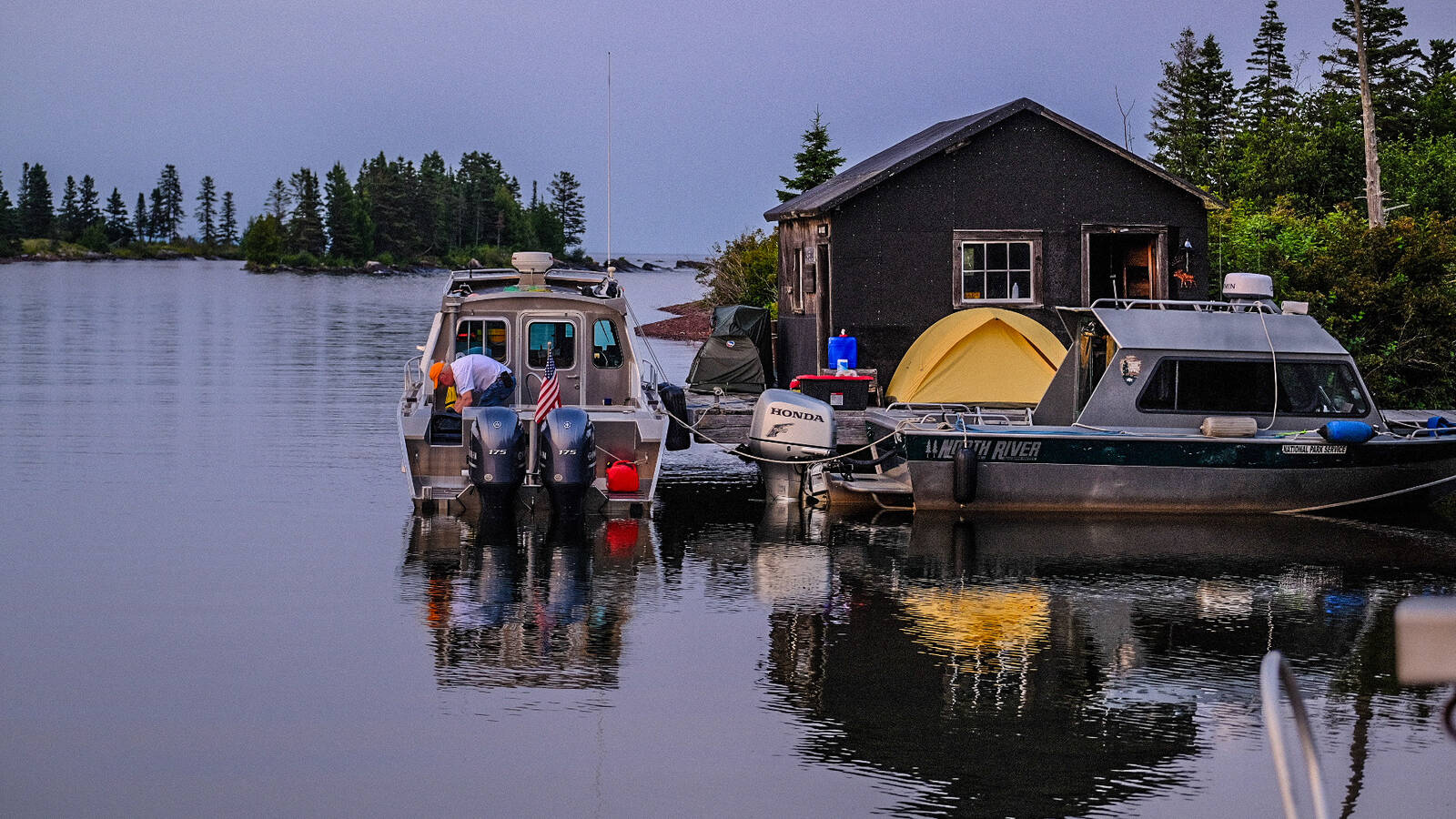
Covered in dirt, dust and, probably, rodent droppings, I had never been more grateful for the cleansing steam of a sauna. This sauna, tar-papered and worn, sat on a dock in an inlet on the southwestern shore of Isle Royale. Its stovepipe needed fixing before we could fire it up, but one of the people on our volunteer team knew exactly what to do. Soon enough, the fire was crackling, and I was near to spontaneously combusting, so I made a quick exit onto the dock.
Behind me, the thick pine forest on the peninsula protected the inlet from the summer wind howling across Lake Superior. Across the inlet, a ridgeline rose to an exposed summit. Below me, the water was so clear I could see the sandy bottom. I waded in and let the 53-degree water wash away two days of grime.
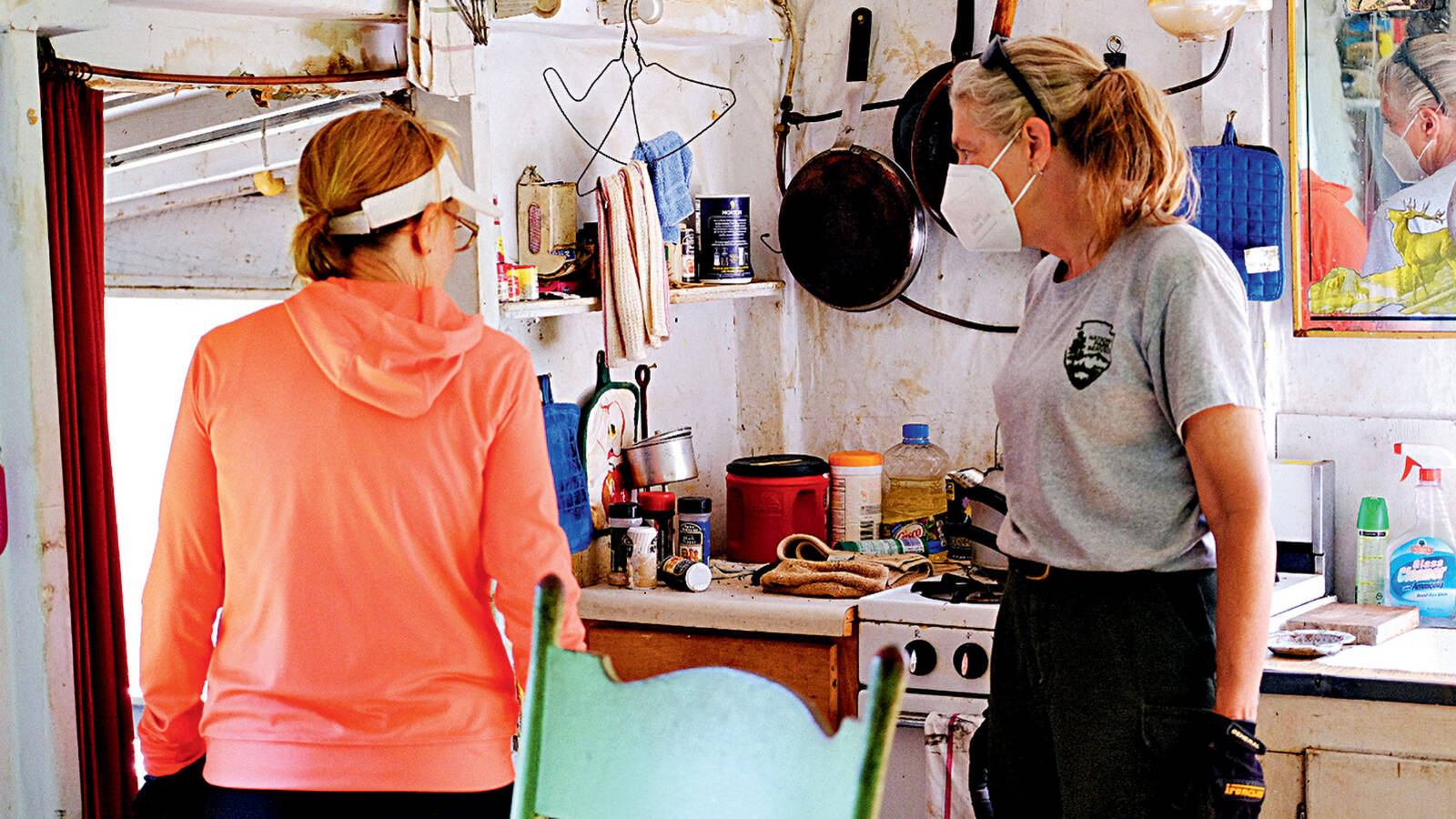
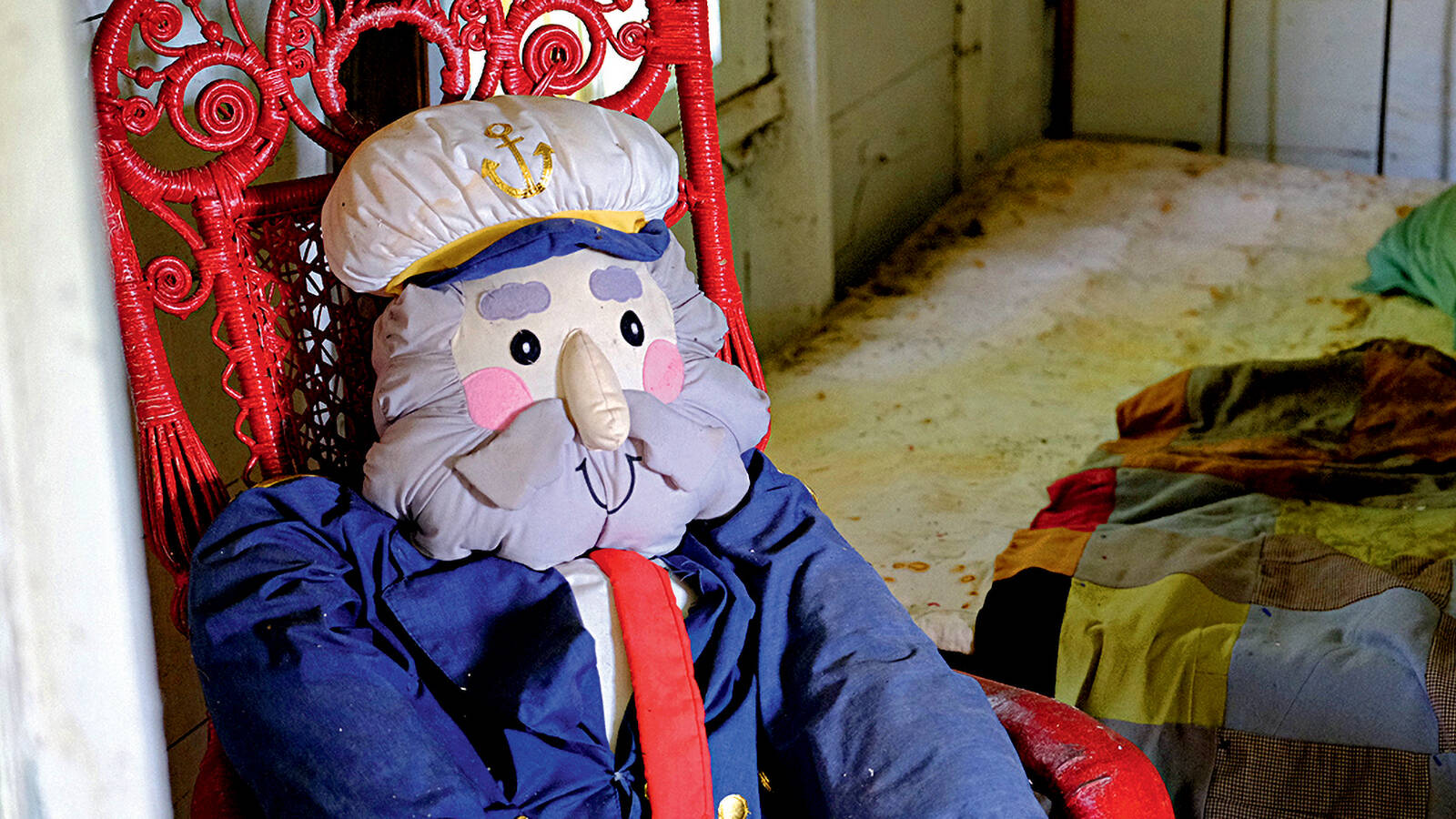
I knew from the get-go that the work of clearing out one of the last remaining fisheries in Isle Royale National Park was going to be dirty. The son of the couple who last operated the fishery died in 2019, and many of the cabins and outbuildings known collectively as Fisherman’s Home were dilapidated and filthy. In the past two days, a group of us had hauled away rodent-nibbled National Geographics, stacks of books, and bags of sugar and flour. We removed beds, box springs, broken chairs, homemade musical instruments and myriad other sundries required to live, work and play on an island in the middle of Lake Superior.
This project was my second cleanup on Isle Royale. Two years ago, I helped scour a fishing camp on nearby Wright Island that dated back to the 1830s. The experience taught me that, while not exactly fun, sweeping up mouse excrement while wearing a respirator could be surprisingly rewarding. These unconventional volunteer stints offer a fascinating glimpse into a rugged, solitary way of life that has all but vanished in the modern world. And they allow park staff to tackle enormous jobs they don’t have the resources to do alone.
“It’s one of the most consequential volunteer activities we do as an organization,” said Tom Irvine, executive director of the National Parks of Lake Superior Foundation, who organized the volunteer trip in collaboration with the park. “It opens the eyes of our board members and others who participate on what this park was and how significant it was for so many people.”
The logistics of this cleanup were complicated. Isle Royale is one of the most remote national parks in the Lower 48. Ninety-nine percent of the park, which consists of a 50-mile-long island surrounded by 400 satellite islands, is federally designated wilderness. Inhabited by moose and wolves, it’s bisected by numerous hiking trails but doesn’t have any roads. Public ferries and floatplanes drop off visitors at the two park entry points throughout the summer, but Fisherman’s Home is inaccessible by land from either entrance. So we arrived from the Minnesota mainland — more than 40 miles away — by private boat. I went with Dave Miller, an experienced Lake Superior navigator who first visited Isle Royale as a child in the 1960s and later became fast friends with many of the fishermen.
Every time I leave, I wonder if this will be the last time.
By all accounts, the park is wild, but it has been seasonally occupied by humans for at least 5,000 years. The Anishinaabe or Ojibwe, who called Isle Royale “Minong” (the Good Place), paddled from what is now Ontario or Minnesota in birchbark canoes to pick blueberries, fish for fat lake trout known as siskiwit, hunt caribou and mine copper. Remnants of Indigenous occupation, from pottery shards to copper pits, have been found scattered across the islands. In 2011, Isle Royale was added to a co-management agreement between the Grand Portage Band of Lake Superior Chippewa and Grand Portage National Monument. Since then, the Tribe has partnered with Isle Royale on dozens of projects, from trail maintenance to wolf reintroduction. In 2019, Isle Royale received the federal designation of “Traditional Cultural Property,” which officially recognizes the island as the ancestral home of the Grand Portage Band (who now prefer the name Anishinaabe).

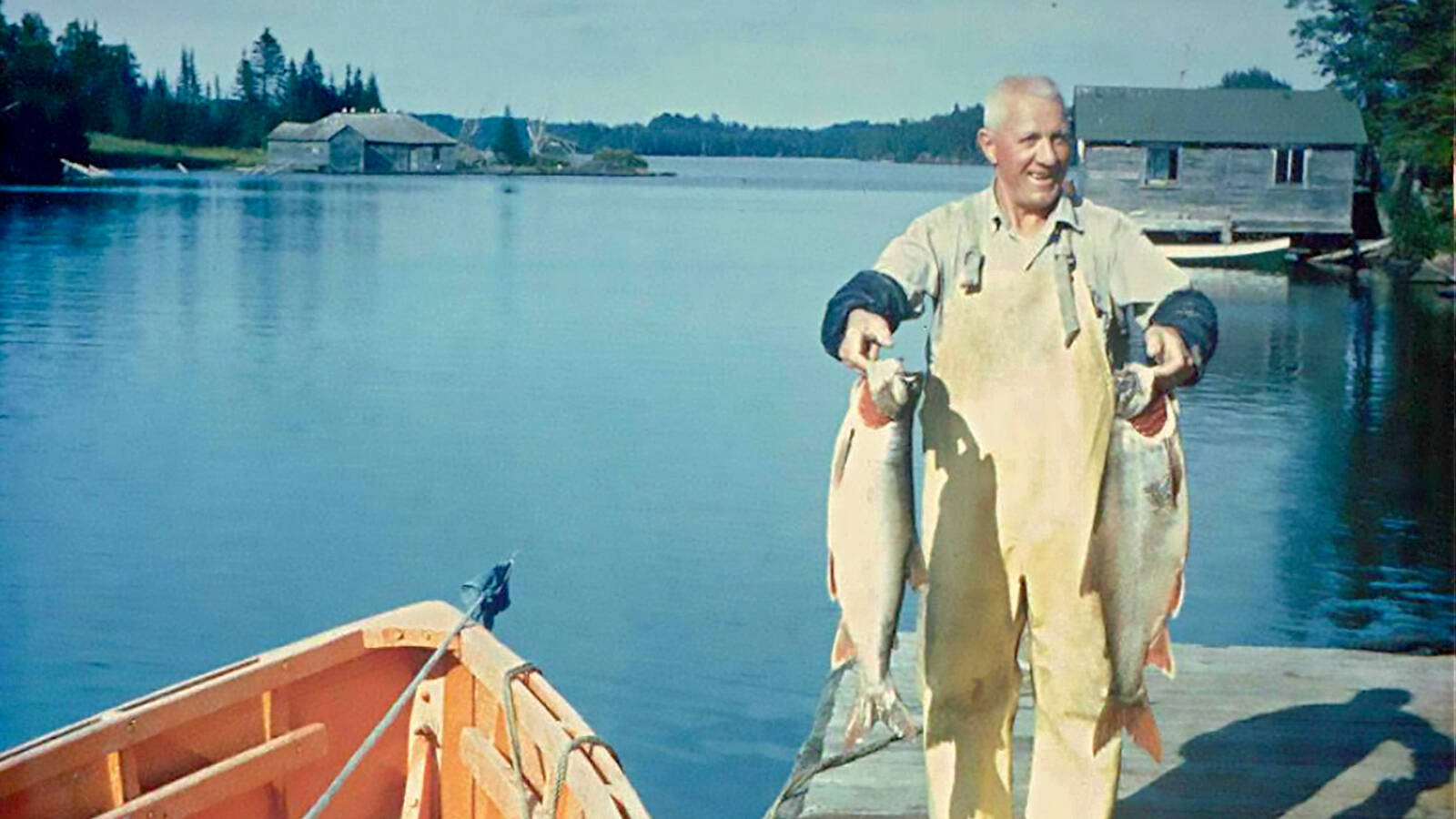
In the 1800s, after the Soo Locks opened Lake Superior to the world, immigrant fishermen arrived. Their population peaked between 1915 and 1920, when more than 100 men — mostly Norwegians and Swedes — plied these waters, catching lake trout that they would sell to the island resorts or send by boat back to the mainland. Most fishermen worked solo or with a few hired men, but at least one fishery hired a few dozen workers per season.
“Isle Royale was a haven for newly landed immigrants,“ fellow volunteer Timothy Cochrane told me. "It was a place to very slowly integrate into the new world.” The author of “Minong: The Good Place,” about the Ojibwe people’s relationship to Isle Royale, Cochrane worked for the National Park Service for decades, starting as a fire lookout and backcountry ranger on the island and retiring from the agency as the superintendent of Grand Portage National Monument.
When the national park was established in 1940, very few of the fishermen owned the land on which they operated their fisheries. The park offered lifetime leases or special-use permits to those who agreed to continue fishing, and many stuck around through World War II, when food was in short supply. But their numbers dropped sharply in the 1950s after the arrival of the invasive sea lamprey, which decimated the lake trout population. By the time Cochrane arrived on the island in the 1970s, there were only five active fishermen left.
It’s still unclear how the park intends to use this historical site, but the cleanup was imperative for safety reasons. It was also important, as Cochrane put it, “to acknowledge the twilight of this enterprise and provide a graceful ending.”

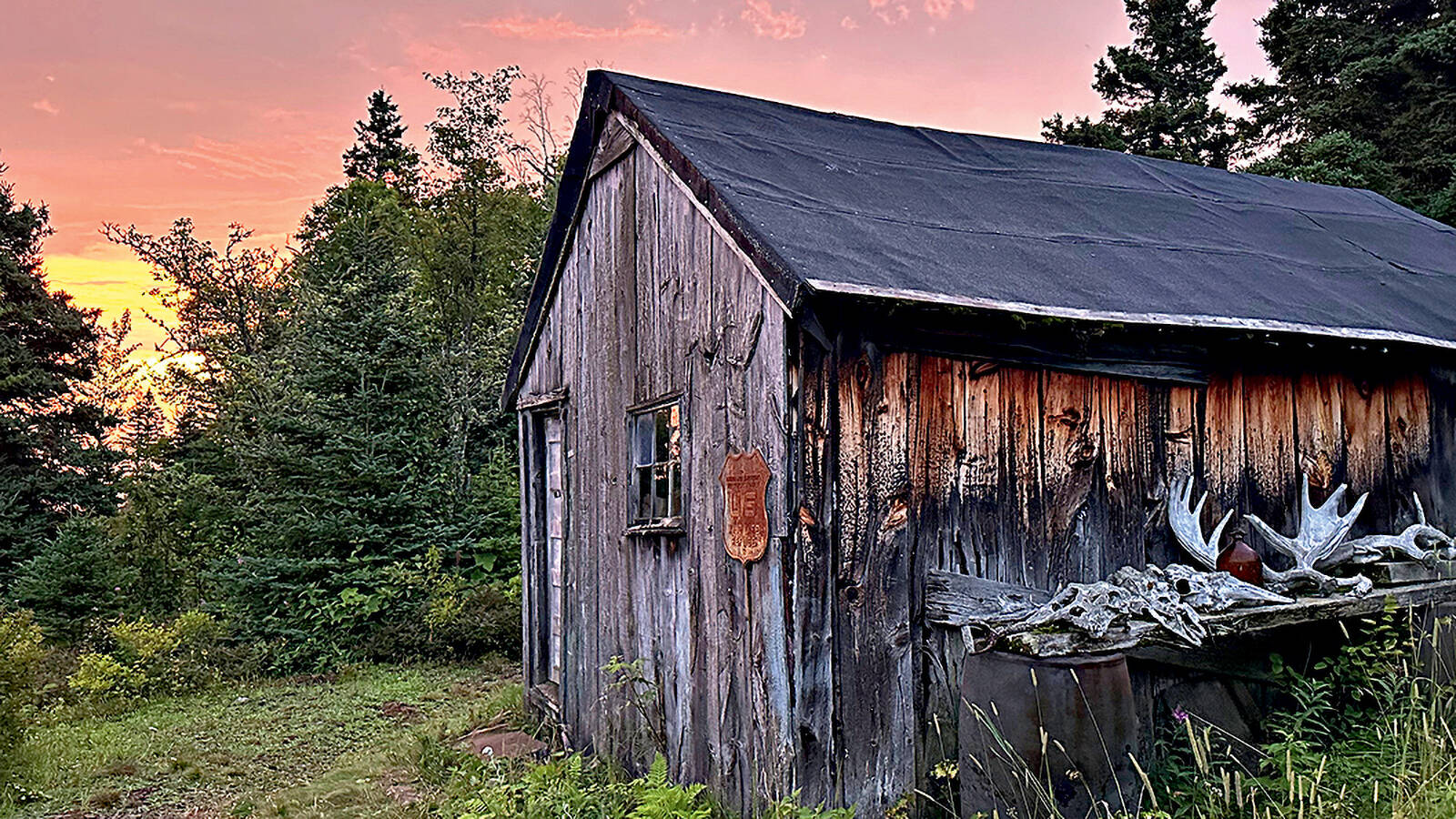
Clearing out a century of accumulated possessions is a weirdly intimate project, one that sheds light on the joy and hardship the fishermen and their families experienced at the edge of one of the world’s most ferocious freshwater lakes. Spread across a peninsula no more than a few hundred yards wide, Fisherman’s Home is made up of two small green cabins, a fish house, a net house, helpers’ quarters, a toolshed, a privy and the sauna. The fishery was founded by Edward Seglem, who had a playful sense of humor — a photo in a book his cousin wrote about the island’s fishermen shows Seglem wearing a big trout head over his face like a mask. In 1937, a couple from Duluth, Minnesota, Sam and Elaine Rude, took over the fishery. After Sam died in 1975, Elaine still summered on the isolated property, planting wildflowers and painting. She left the fishing to her son, Mark Rude, a businessman who lived near Chicago and traveled to Isle Royale as often as time would allow.
“A man with true grit,” as one former ranger described him in an online obituary, Mark Rude was beloved by park employees, Grand Portage Tribal members and fellow fishermen. Resourceful and gregarious, he crafted an effective moose-calling apparatus from an empty coffee can and reportedly loved to drink with friends, a practice evidenced by the large number of Captain Morgan rum bottles in the cabins. For a few years, Rude piloted the Voyageur II, a mail and passenger boat that ran between Grand Portage and Isle Royale. Fisherman’s Home remained an important part of his life until shortly before he died at the age of 80 seven years ago.
Over the course of three days, our crew — which at times included Park Superintendent Denice Swanke, the Grand Portage Band’s director of natural resources, Seth Moore, a few foundation board members and a handful of park employees — loaded dozens of trash bags onto an enormous vintage landing craft on loan from Apostle Islands National Lakeshore. After just a few hours, we’d filled the barge, at which point we started moving the garbage into a cavernous building near the shoreline that had been used to store fishing nets over the winter. Eventually, all the trash would be hauled to the Michigan mainland.
Before we threw anything away, however, a handful of park experts sifted through the detritus to identify and set aside anything that was worth officially preserving. There were some exciting finds, such as a vivid painting of the camp, presumably by Elaine Rude, and a few doors possibly salvaged from a shipwreck. But very little made the cut since the park already has a collection of commercial fishing items on the mainland. Plus, it has Edisen Fishery, a historic site on Isle Royale that’s better preserved and more accessible than Fisherman’s Home. And park staff members are deliberate because, as Liz Valencia, the park’s program manager for interpretation and cultural resources, told me, if they catalog something formally, they are responsible for properly storing and managing it.
By noon on the last day, the cabins were cleared and cleaned. Floors were free of mouse droppings, the moldy bedding was gone, and all the food was out of the cupboards.
Before leaving the island, we had an hour free to roam. It was abnormally hot, so I hiked across the peninsula to swim along the southeast-facing lakeshore. In bare feet, I slid down the algae-covered, jagged rocks and ungracefully landed in the water, thrashing around for a minute until I could stand the tingling cold no longer. After struggling back up, I sat on the shoreline for a while, marveling at the fishing families’ solitary lives.

National Parks
You can read this and other stories about history, nature, culture, art, conservation, travel, science and more in National Parks magazine. Your tax-deductible membership donation of $25 or more entitles…
See more ›Later, as we gathered on the dock to catch our respective rides back to the mainland, there was a somber reverence in the air. “These past few days were almost like going to a funeral,” Cochrane said.
He and I rejoined Miller, who was pensive as he steered his craft out of the inlet. “Every time I leave, I wonder if this will be the last time,” he mused. “Fisherman’s Home became a real special place to me. I enjoyed working hard. Part of the challenge was just getting there.
“But I knew that if the weather was bad, I always had a place to stay,” he said. “It was open arms.”
Isle Royale’s human residents, though few and far between, have always been a special breed, added Cochrane. “People were gracious, friendly and wanted to learn from each other,” he said. “Out here, you had a sense that it was a different world.”
About the author
-
 Stephanie Pearson Contributor
Stephanie Pearson is a National Geographic Explorer and contributing editor to Outside magazine. Her book, “100 Hikes of a Lifetime U.S.A,” published by National Geographic, will be on bookstore shelves in April.
-
Press Release
Atrocious Reported Changes to the ESA Could Threaten Extinction to Park Wildlife, Wild Nature
"This memo appears to suggest that it’s no longer the purpose of the ESA to ensure animals such as grizzly bears, North Atlantic right whales, or Florida panthers are protected"…
-
Press Release
First Mining Claims Filed in Lands Cut from Bears Ears National Monument
"National park units and their surrounding landscapes are no place for energy development, but outdated laws elevate mining above all other uses on these lands. We will continue to fight…
-
Press Release
Groups File Injunction to Stop Development at West Potomac Park
“West Potomac Park is treasured green space and we will not stand for the unlawful destruction of public lands that belong to all of us."