Winter 2026
Battlefields & Beyond
NPCA staff members recommend visiting these eight national park sites to help understand the genesis of the United States.
As the country prepares to commemorate the 250th anniversary of its independence, those interested in learning more about the birth of the United States have a vast resource at their disposal: the National Park System. Indeed, the Park Service cares for some of the most significant Revolutionary War sites, from Minute Man National Historical Park in Massachusetts, the location of some of the war’s first skirmishes, to Colonial National Historical Park in Virginia, site of the war’s final major battle, to the building at Independence National Historical Park in Philadelphia where both the Declaration of Independence and the Constitution were signed. Independence Hall and Yorktown Battlefield would rank high on any list of must-see Revolution-era locales, but we wanted to learn about perhaps less-obvious parks preserving historic sites that played important roles in the country’s creation, so we asked some of the best experts out there — our NPCA colleagues — for suggestions. And they gave us more than a little food for thought, with recommendations to visit parks from New Mexico to Indiana. Here are eight sites that parkgoers can tour to better understand the United States’ origin story.
Chaco Culture National Historical Park
New Mexico
The United States didn’t blink into being with the signing of the Declaration of Independence — the seeds of its existence were sown much, much earlier, said Katie Shea, NPCA’s Tribal policy fellow. “It’s essential to recognize that the nation’s origin story is not solely defined by 1776,” she said.
By the time European settlers began arriving on this country’s shores, entire cultures had already come and gone, and hundreds of others were thriving. At Plymouth, for example, the Wampanoag famously taught the Pilgrims how to interplant the three sisters (corn, beans and squash) for a successful harvest. In what is now Florida, the Seminoles — themselves migrants from northern lands — met, traded and sparred with the Spanish. Across a vast tract that includes modern-day New York, the Haudenosaunee (or Iroquois) Confederacy practiced one of the oldest participatory democracies in the world, the principles of which served as a model for the Founding Fathers.
This Land Is Their Land
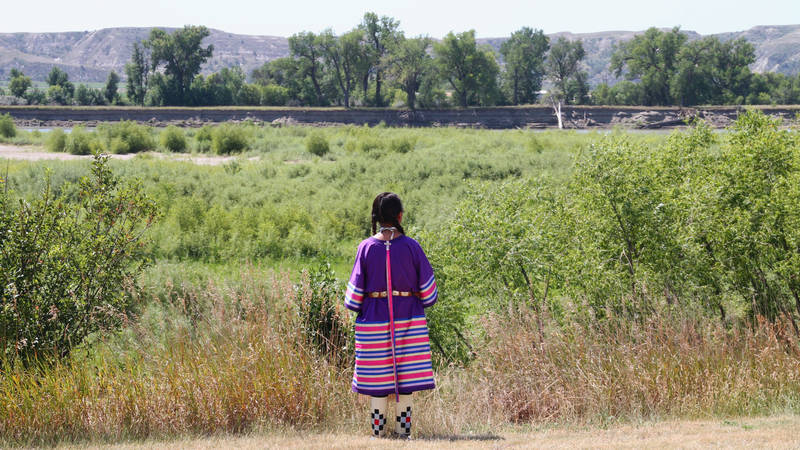
Honor Indigenous history at these 15 sites where visitors can learn about the extensive connections tribes have with today’s national parks.
See more ›Throughout the Park System, dozens of sites “honor the deep histories and enduring legacies of Native nations whose stories predate and shape the United States,” Shea said. She highlighted Ocmulgee Mounds and Nez Perce national historical parks, Effigy Mounds National Monument, and her personal favorite, Chaco Culture National Historical Park.
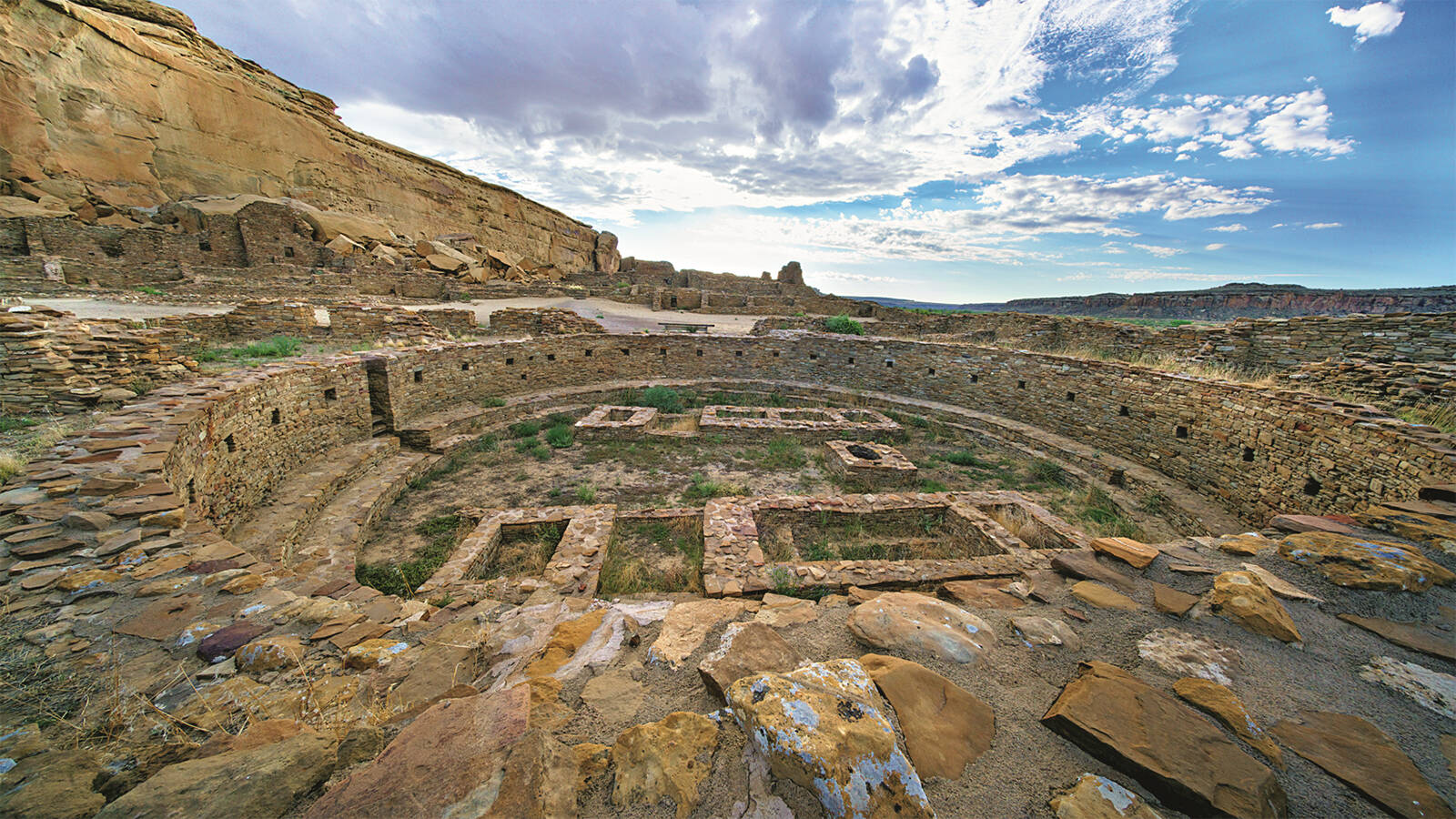
Shea, a member of the Citizen Potawatomi Nation, described her awe at visiting this 34,000-acre site in northwestern New Mexico for the first time in college. “It just has, like, this sense of otherness around it,” she said. During its heyday, around 1050 C.E., Chaco was the center of Ancestral Puebloan culture, serving as a massive hub for trade, ceremony and politics. The inhabitants erected dozens of circular “great houses” — multi-storied architectural wonders complete with hundreds of rooms — linked via roads to a network of some 150 other complexes in the broader region. Everything at Chaco, from the sandstone walls of the buildings to the elaborately decorated pottery to the pendants fashioned from shells from faraway lands, speaks to “the sophistication of people who were here,” Shea said.
She believes visiting Chaco Culture can change the way someone thinks about America’s 250th. “When you have a site like Chaco that’s very well traveled and is very well connected, it kind of gives you an idea of how many people were actually here in North America before people came over from Britain or Russia or France or Spain,” she said. “I think it challenges people to think backwards,” Shea continued, to recognize that there was “a shared fabric of history before the United States came in and became the nation that it is.”
Fort Necessity National Battlefield
Pennsylvania
In 1754, several of the Revolutionary War’s players clashed in an area that is part of today’s southwestern Pennsylvania. Their roles were quite different from the ones they’d play a couple of decades later, though. George Washington, in his first military campaign as a 22-year-old, was fighting the French, his would-be allies during the American Revolution, on behalf of the British Empire, his future mortal enemy, over territory that both colonial powers considered crucial.
WASHINGTON IN AMERICAN MEMORY
The first shots of the French and Indian War, which was fought by France, Britain, and their respective settlers and Native allies, were fired on May 28, 1754, at a site that is now part of Fort Necessity National Battlefield. In circumstances that remain unclear, Washington’s troops attacked a French encampment, and an officer was killed. The French retaliated a few weeks later when they assailed Washington’s encampment a few miles away. After an all-day battle conducted in a heavy downpour, Washington surrendered. He and his troops left on July 4, and the French burned down Fort Necessity.
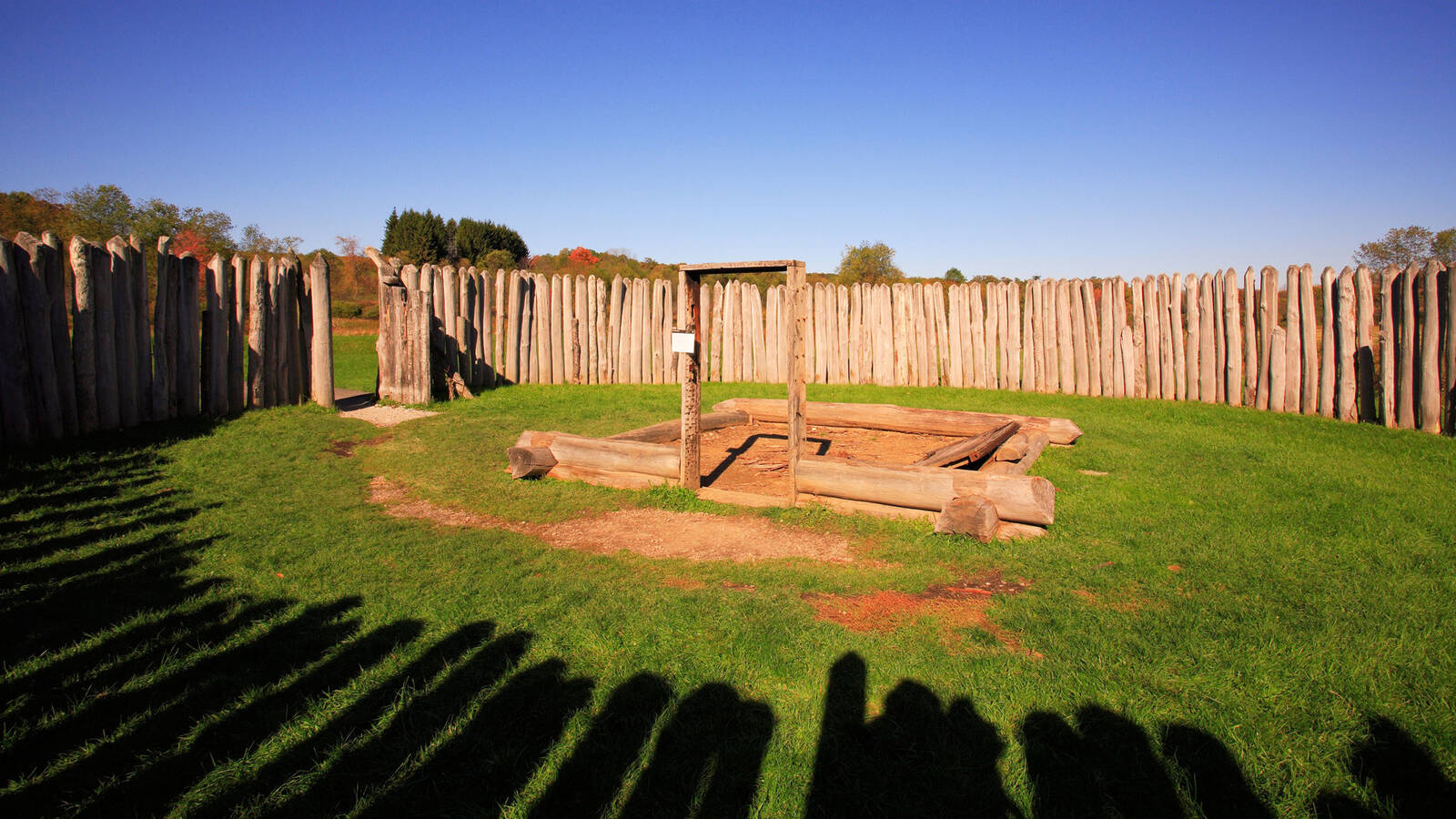
The British would end up winning the larger conflict in 1763, but victory came at a high financial cost. “The British came, and they fought the French, and they spent all this money. I think in part the parliament and the king felt like the colonists owed them,” said Chad Lord, the senior director of NPCA’s environment and energy policy, who several years ago visited the park where the main attraction is a wooden fortification reconstructed based on archaeological excavations.
In subsequent years, Britain imposed a series of taxes on its American subjects, which led to increasingly violent confrontations between colonists and British forces. The French and Indian War “was kind of a catalyst for the actions by the British Parliament, which then the colonists reacted to,” Lord said. “So, I can draw a line to Fort Necessity and say this is where some of the seeds of revolution were sown.”
Salem Maritime National Historical Park
Massachusetts
Much of the Revolutionary War was fought on land, but the battle was raging on the seas, too. Britain had the most powerful navy in the world at the time, while the American naval forces were close to nonexistent, so the colonists resorted to what was known as privateering. Under established rules, private crafts from small whaleboats to large, multi-gun vessels were authorized to attack British ships and seize their cargo, which the boat owners could then auction off.
NEWS OF WAR
“It’s almost like legal pirates, but if they got caught, they were totally screwed and could be shipped to England,” said Sarah Barmeyer, the deputy vice president of NPCA’s conservation programs.
The privateers in Salem, one of the few significant ports that never fell to the British during the American Revolution, made an outsize contribution to the war effort. They attacked Britain’s fleet, disrupting supply lines and trade routes and eroding the British Parliament’s support of the war in the process. Out of Salem alone, 158 privateers captured 445 British vessels.
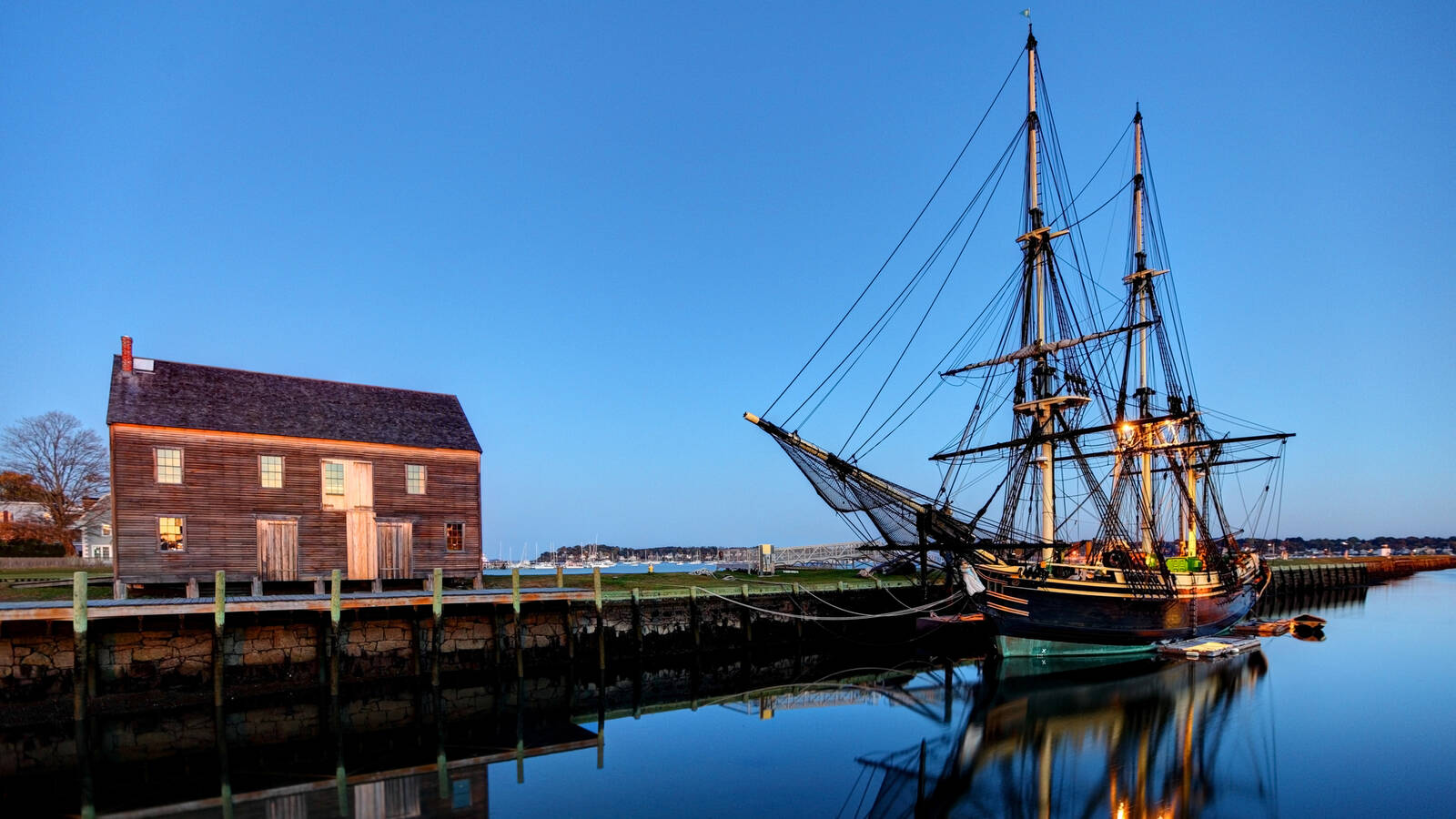
Barmeyer, who stopped by Salem Maritime National Historical Park this summer, said the park’s attractions include centuries-old buildings, a replica of a late-1700s vessel and what she considers a mandatory stop for souvenir hounds. “It’s one of the better gift shops I’ve seen in the Park Service,” she said.
Boston National Historical Park
Massachusetts
Boston National Historical Park encompasses an impressive collection of major Revolution-era sites, but what makes it stand out is that it is deeply embedded in a vibrant city, said NPCA Senior Visitation Program Manager Cassidy Jones, who calls it a “neighborhood national park.”

Home of the Brave
Boston’s national parks lead visitors back in time to our nation’s beginnings.
See more ›Jones, who lived in the Charlestown Navy Yard when she worked as a ranger at two other Boston-area park sites a little more than a decade ago, said she’d watch from her window as nor’easters rolled in and battered the USS Constitution, a three-masted ship built a decade after the Revolution. And on the way to her train stop, she would follow the Freedom Trail, a 2.5-mile red line on the ground that connects most of the park’s attractions as well as other landmarks related to the Revolution and beyond.
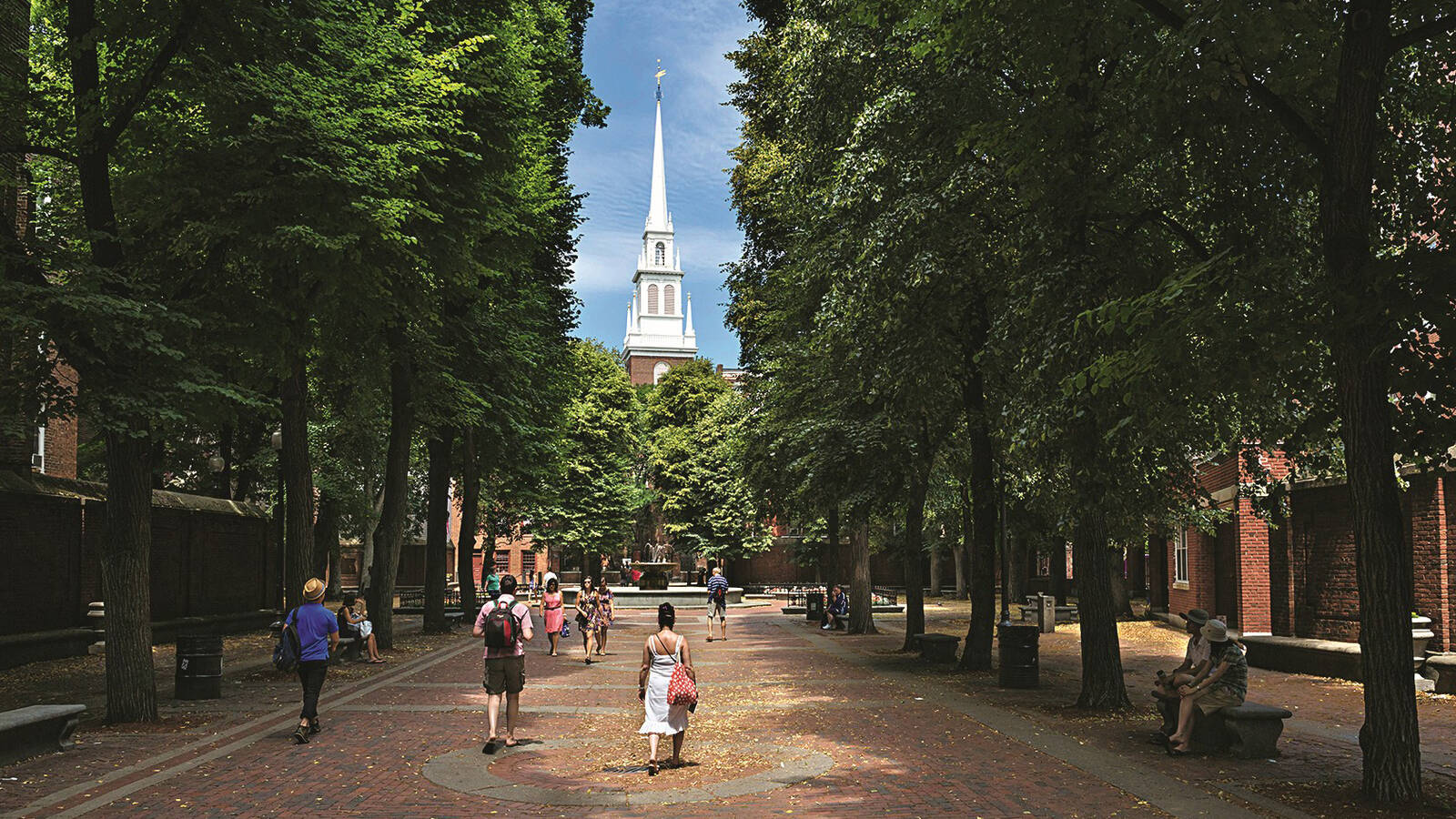
During her time in Boston, Jones particularly enjoyed spending time in the North End, a well-preserved neighborhood that is home to some of the park’s associated sites, including the Paul Revere House and Old North Church — and standout Italian restaurants where visitors can feast on pizza and cannoli. “It’s this site of amazing history that also continues to be a living neighborhood,” she said.
Some of the historic buildings and modern-day hangouts are one and the same. One of Jones’ favorite nighttime activities was trivia night with a group of colleagues at Warren Tavern, a haunt once patronized by the likes of Paul Revere and George Washington that sits a couple of blocks from Bunker Hill Monument. Visitors interested in joining in the fun should know they might face stiff competition. “Rangers are the best people to go to pub trivia with,” she said. “They have a lot of obscure knowledge.”
George Rogers Clark National Historical Park
Indiana
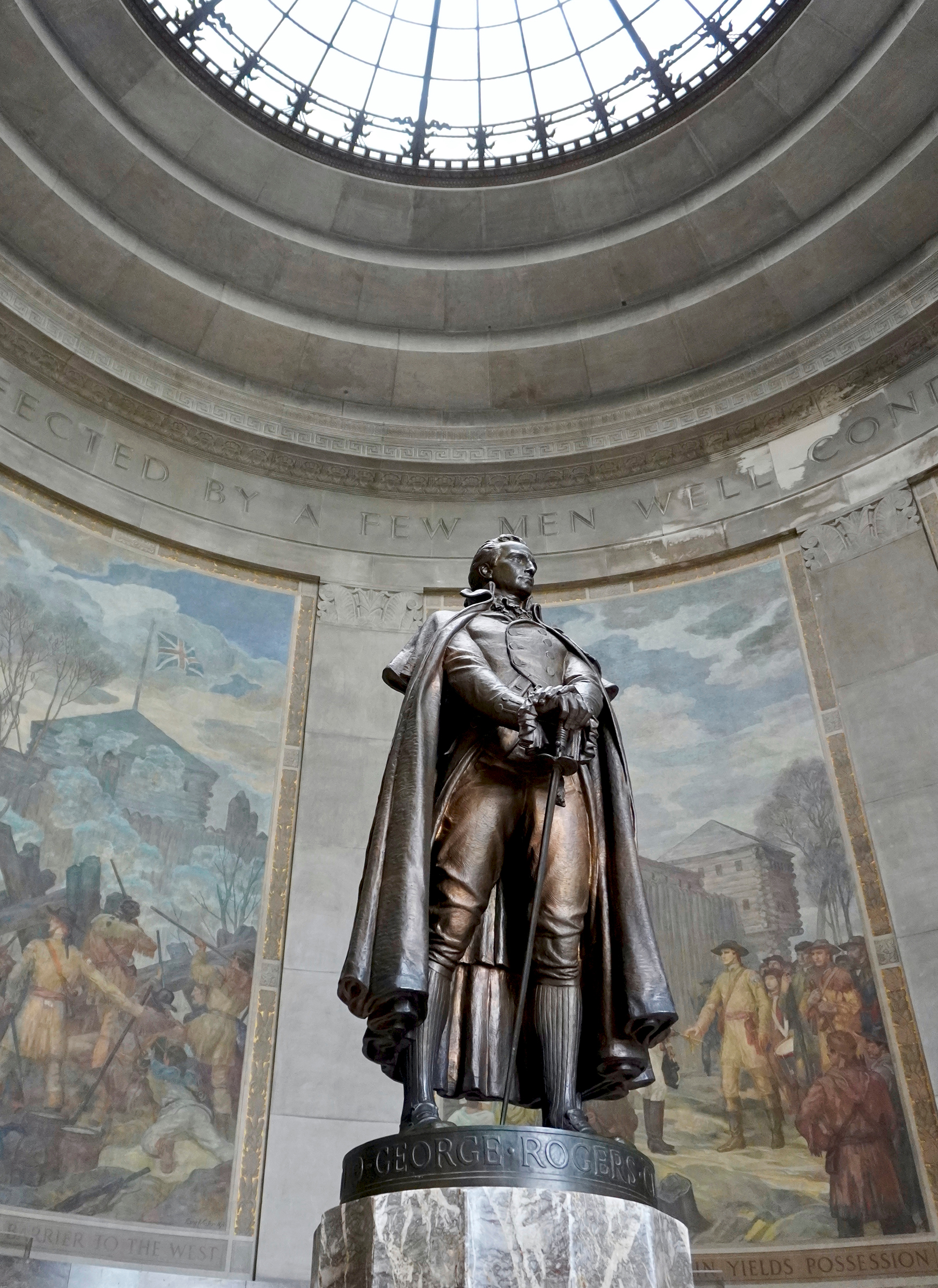
The George Rogers Clark Memorial sits near the Wabash River along the Indiana-Illinois border.
©EWY MEDIA/SHUTTERSTOCKSeveral Revolutionary War battles were consequential, but only one led to the young United States nearly doubling the size of its territory.
The British didn’t expect the Continental Army to attack Fort Sackville, in the southwestern part of today’s Indiana, in the dead of winter, but that’s exactly what George Rogers Clark did. Clark’s troops, which included Americans and Frenchmen, outnumbered British soldiers, and he made his forces appear even larger by unfurling an inordinate number of flags. After Clark had five Native American warriors allied with the British brutally executed, the officer in charge of the fort surrendered on Feb. 25, 1779. As a consequence of Clark’s victory, Britain ceded lands to the United States that included today’s Illinois, Indiana, Michigan, Ohio, Wisconsin and part of Minnesota.
“I like this park because it moves the Revolutionary War story beyond the 13 Colonies and ties it into the next stage of American history — westward expansion,” said Tim Koenning, NPCA’s Midwest program manager, who went out of his way to check out the George Rogers Clark Memorial, a columned rotunda housing Clark’s statue and the park’s main attraction.
As fate would have it, in 1804, William Clark, one half of the Lewis and Clark Expedition, would begin his famous journey in Illinois — land secured a couple of decades earlier by his brother George. In other words, George Rogers Clark’s victory “made that expedition possible,” Koenning said.
Overmountain Victory National Historic Trail
North Carolina, South Carolina, Tennessee and Virginia
During the spring and summer of 1780, royal forces were rolling from one win to the next in South Carolina, and victory in the war seemed within grasp.
A Revolutionary Itinerary
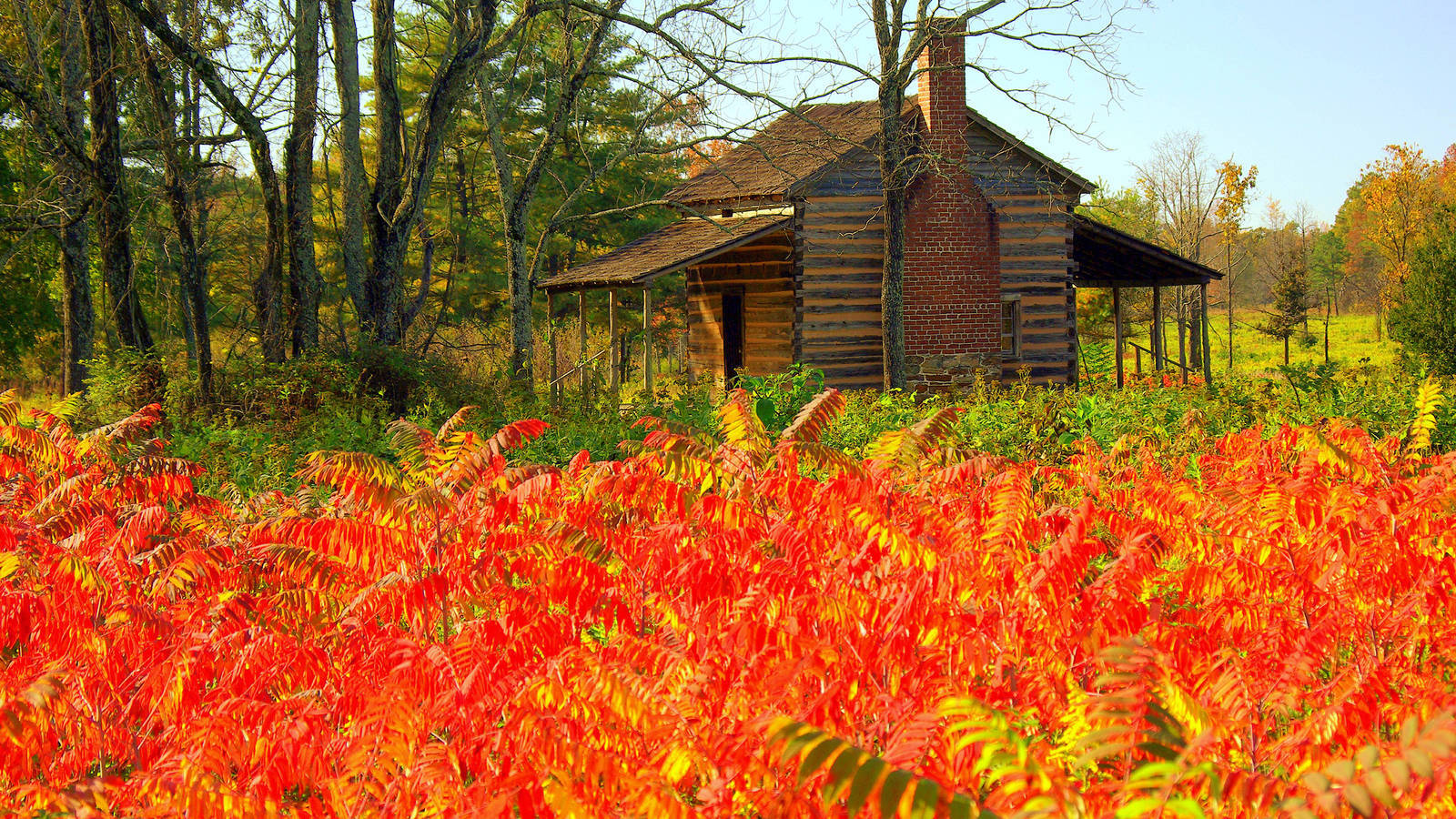
Here are some additional national park sites that preserve stories and places associated with the American Revolution and the founding of the country.
See more ›“The British had a lot of momentum, they had taken Charleston,” said Jeff Hunter, NPCA’s Southern Appalachian director. “Things were not looking good for the patriots.”
But in late September, patriot militias departed from various points in the region and headed toward Kings Mountain near the North Carolina-South Carolina border, where British Maj. Patrick Ferguson had assembled troops of locals loyal to the British Crown. On Oct. 7, 1780, the patriots overwhelmed their adversaries and killed Ferguson. “They were able to decisively beat the British at Kings Mountain, which turned the tide in the war,” Hunter said.
Along some 330 miles of roads and 80 miles of trails, the Overmountain Victory National Historic Trail follows the approximate path of the victorious militias all the way to Kings Mountain National Military Park. It intersects with the Blue Ridge Parkway near the Orchard at Altapass, where visitors can sample apple pie and get history lessons from one of the former owners. It also crosses what Hunter described as one of the most beautiful sections of the Appalachian National Scenic Trail. Hunter, who thru-hiked the AT in 2000, spent the night near the intersection of the two trails in “one of the coolest shelters” on the AT.
“It’s gone now because it became unstable, but it was an old barn, and back then I slept in the loft,” Hunter said of the Overmountain shelter. “It was very, very memorable.”
San Antonio Missions National Historical Park
Texas
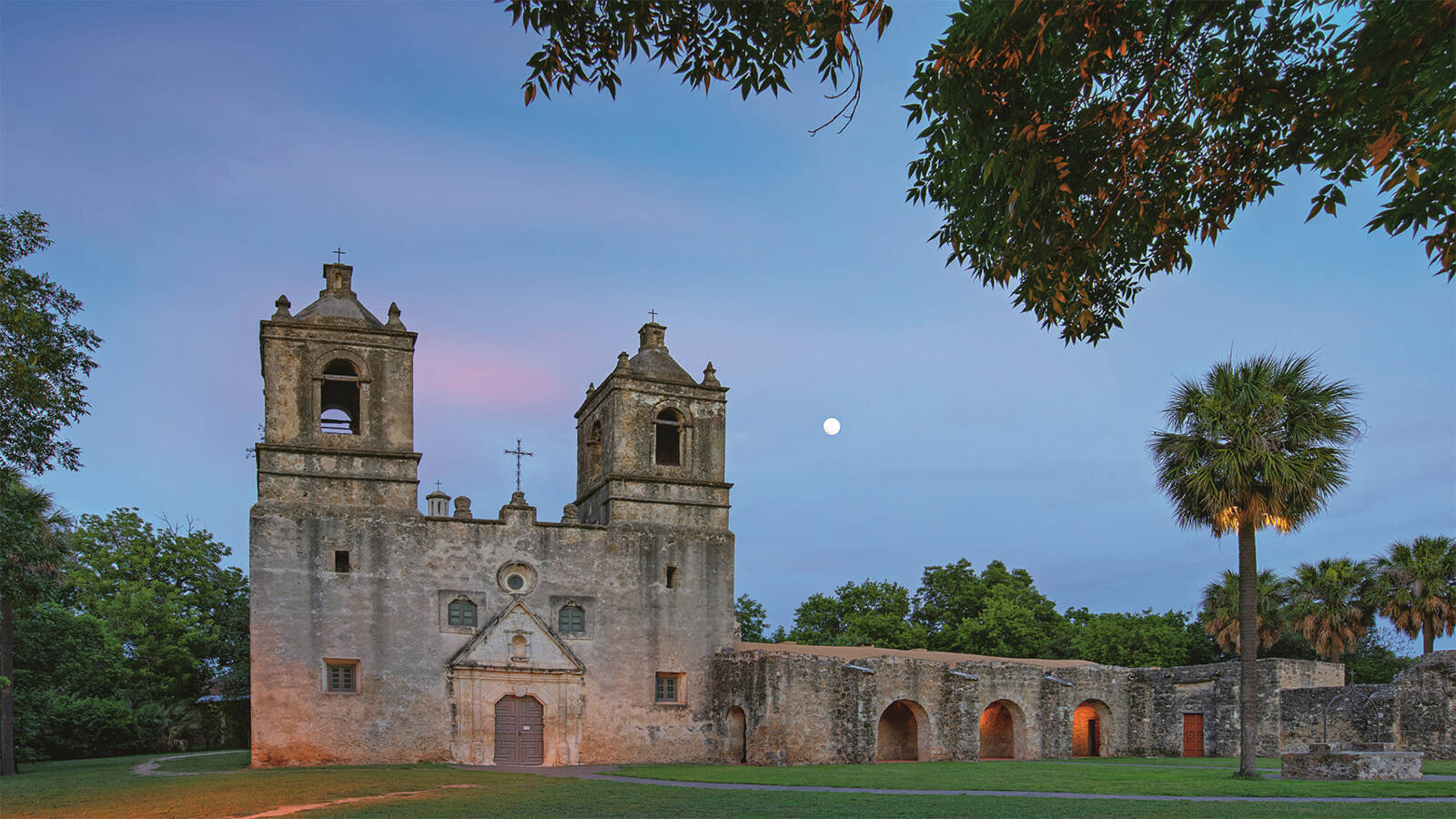
What would the United States look like without California, Texas and much of the American Southwest? Fortunately, we don’t have to contemplate that alternate reality thanks to the establishment of a few Spanish churches decades before 1776, said Cristóbal López, a historian who is also NPCA’s Texas program manager.

A Mission to Grow
Reviving ancient farming practices — and feeding the hungry — at San Antonio Missions.
See more ›It’s a little tortuous to follow, but here it is: In the early 1700s, Spain, in a last-ditch effort to maintain a stronghold in Texas, built several missions in a territory that would become the property of Mexico a century later. It was at Mission Concepción that Texas rebels and Mexican soldiers faced off in what may have been the first major battle of the Texas Revolution. Texas won the conflict and eventually became the 28th U.S. state. That move incensed Mexico and contributed to the start of the Mexican-American War, which the United States won in 1848. As a result, the U.S. not only solidified its claim to Texas, but it also acquired California, Nevada, New Mexico, Utah, most of Arizona and Colorado, and parts of Kansas, Oklahoma and Wyoming. “It’s kind of just a big chain reaction,” López said.
Today, San Antonio Missions National Historical Park (which includes Mission Concepción and three other missions) along with the Alamo, the famous mission that is the property of the state of Texas, are also protected as a World Heritage Site, but Texans did not always have the same level of reverence for the missions. López, who interned twice at the park a few years ago, said he and his colleagues would often show Mission San José visitors the marks possibly left by the Texian army’s musket balls and cannon shells during the Texas Revolution. “They would shoot the mission,” he said. “They would use it as target practice.”
Little Rock Central High School National Historic Site
Arkansas
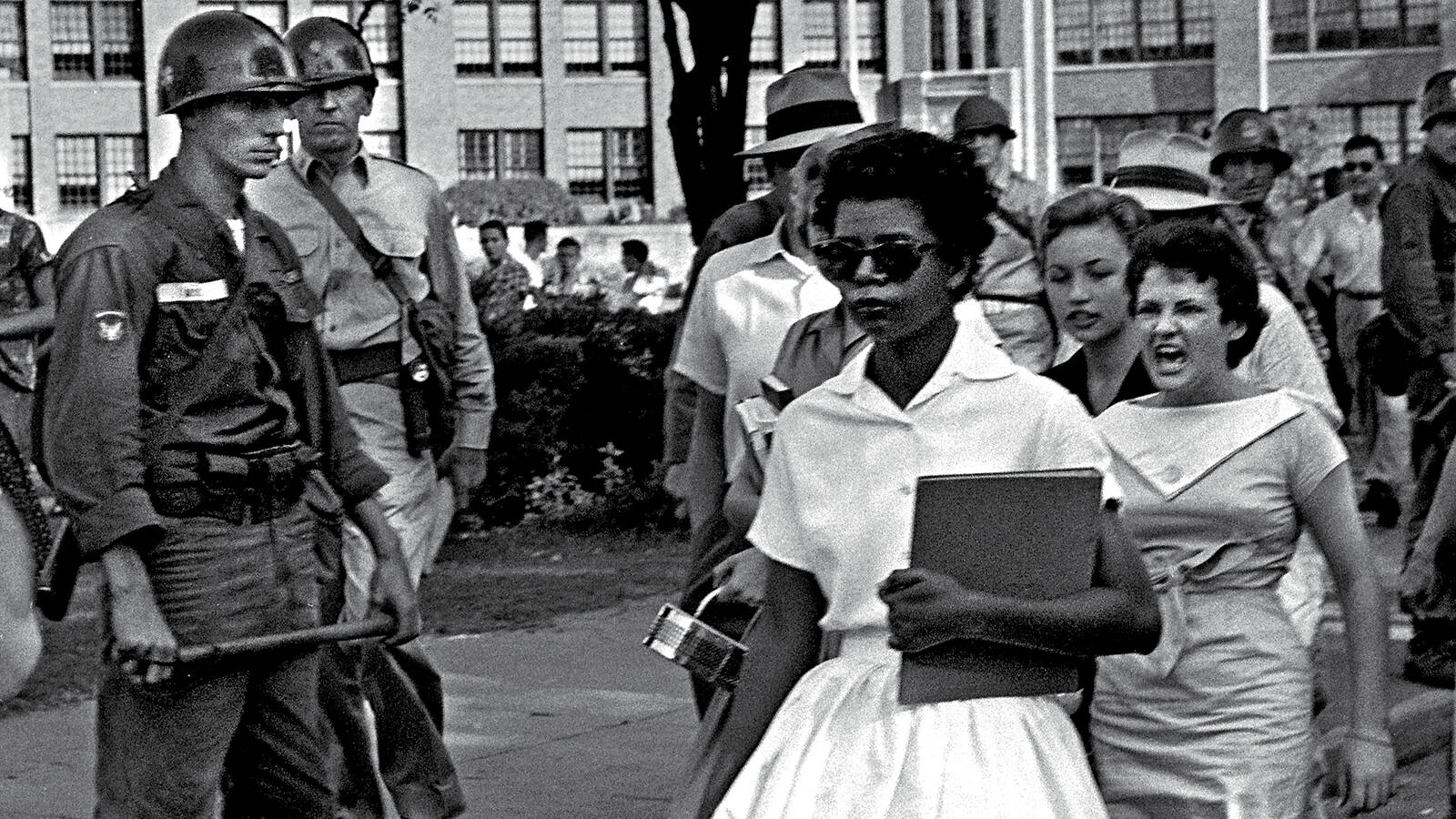
Though the events at this historic site occurred nearly two centuries after the Revolution, NPCA’s Chad Lord sees a direct connection between what happened in 1776 and 1957. That was the year when Black students braved hostile crowds to exercise their right to attend what had been an all-white high school in Little Rock.
Learn About Black History in 11 Unexpected Places
These fascinating sites share important and often overlooked stories about people who shaped U.S. history and culture.
See more ›“The Declaration has an ideal that we’ve never been able to achieve fully,” said Lord, who visited the park on a road trip a couple of years ago. “And that site in Little Rock, Arkansas, demonstrates an ongoing desire to meet that vision” — that all people are created equal.
Following the Brown v. Board of Education 1954 Supreme Court decision, which ruled that racial segregation in public schools was unconstitutional, the school board in Little Rock agreed to make a plan for integrating local schools starting in September 1957. On Sept. 4, a small group of Black students tried to enter Central High School, but they were barred from doing so by the state’s National Guard. Media coverage reverberated across the nation, and President Dwight D. Eisenhower intervened, eventually wresting control of the National Guard from the Arkansas governor and deploying federal troops to protect the students later known as the Little Rock Nine. They attended their first full day of classes on Sept. 25.
Central High remains an active high school with around 2,500 students, and the inside of the building is currently off-limits. Visitors can stroll the grounds of the school, which the American Institute of Architects named the most beautiful high school in the country when it was completed in 1927. They can also check out the nearby historic gas station that served as a makeshift office for national and international reporters covering the 1957 events that energized efforts to integrate schools across the South. “This Arkansas site definitely contributes to our revolutionary story,” Lord said.
About the authors
-
 Katherine DeGroff Associate and Online Editor
Katherine is the associate editor of National Parks magazine. Before joining NPCA, Katherine monitored easements at land trusts in Virginia and New Mexico, encouraged bear-aware behavior at Grand Teton National Park, and served as a naturalist for a small environmental education organization in the heart of the Colorado Rockies.
-
 Nicolas Brulliard Senior Editor
Nicolas is a journalist and former geologist who joined NPCA in November 2015. He serves as senior editor of National Parks magazine.
-
Blog Post
Postcards from Roadless Areas
What do designated roadless areas look like and what do they mean to national parks? NPCA colleagues share their experiences from walks through three roadless woods.
-
Blog Post
8 Park Sites That Tell the Gullah Geechee Story
Among the Sea Islands of the Southeast, aspects of African culture live on through food, spiritual traditions, the arts, community — and even a language spoken nowhere else in the…
-
Blog Post
Fat Bears at a Crossroads
As Fat Bear Week 2026 begins, a proposed mining project in Alaska threatens the future of brown bears.