A Smarter Path Forward: Safeguarding National Parks Amid Explosive AI and Data Center Growth
NPCA Data Centers Report (13.9 MB)The rapid expansion of artificial intelligence is driving massive data center development across Virginia and the broader Mid-Atlantic region, demanding extraordinary amounts of land, water, and energy. The physical reality of this digital revolution is landing squarely on the doorsteps of our most treasured landscapes: the region’s national parks. Without new policies and frameworks for responsible growth, development pressures in Maryland, Virginia, and West Virginia increasingly threaten the region’s national parks.


Mid-Atlantic National Parks are at Risk
Data center-related development is directly impacting national parks and protected landscapes across the region. Concerns include:
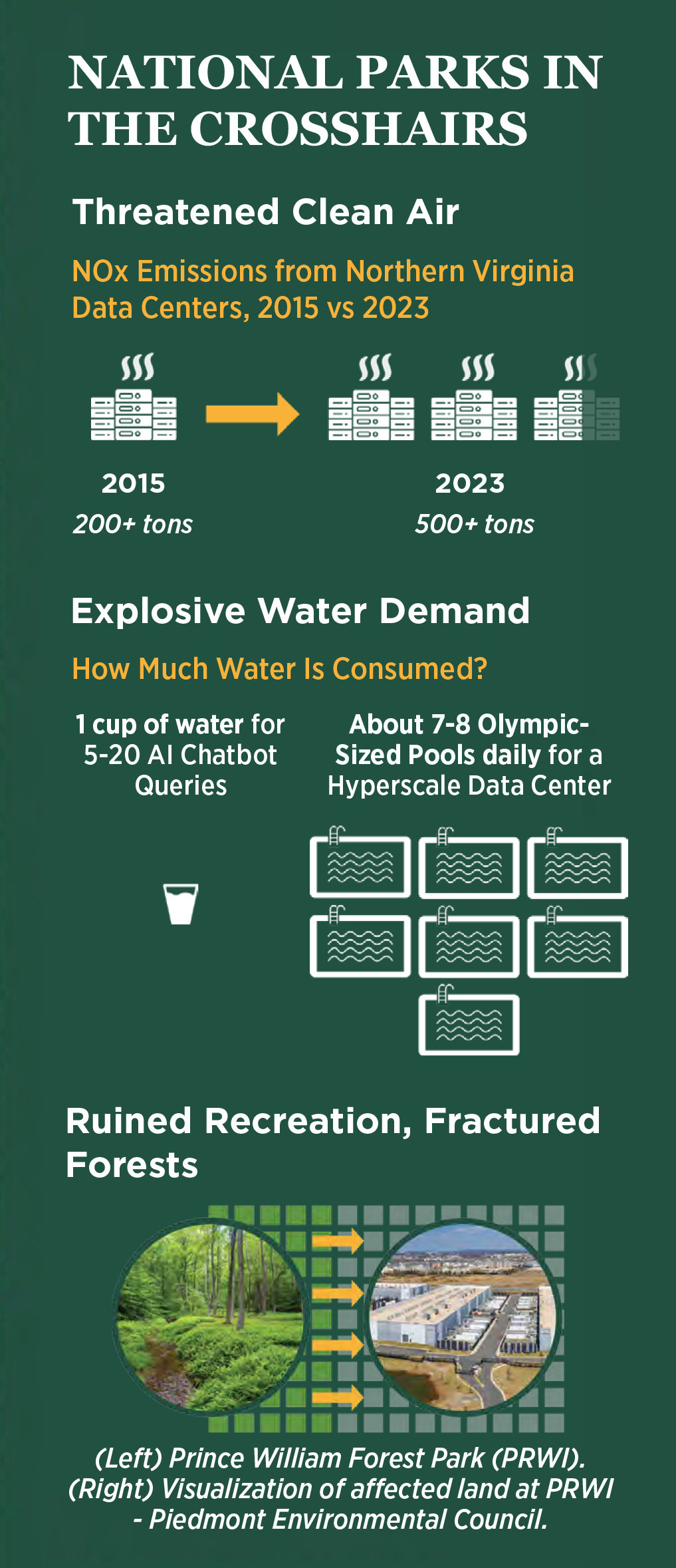
Degraded air quality from diesel backup generators, which at some facilities number in the hundreds, and contributes to regional haze that obscures vistas at Shenandoah and other parks.
Explosive water demand as a single hyperscale data center consumes approximately 7–8 olympic-sized pools of water daily; over the next two to three decades, estimated water withdrawals from the Potomac River in Virginia could reach 200 million gallons per day.
Transmission lines crossing the Appalachian Trail, Harpers Ferry National Historical Park, and the C&O Canal National Historical Park to transfer or support power needs from distant generation facilities.
Ruined recreation and fragmented forests if current trends continue, up to 100,000 acres of open green space could be converted and lost to industrial data center facilities, fragmenting wildlife corridors, impacting bobcats, Wood Thrushes, and Scarlet Tanagers that require large, contiguous forest interiors far from industrial clearings to survive.

Our Most Vulnerable Parks
Manassas National Battlefield Park
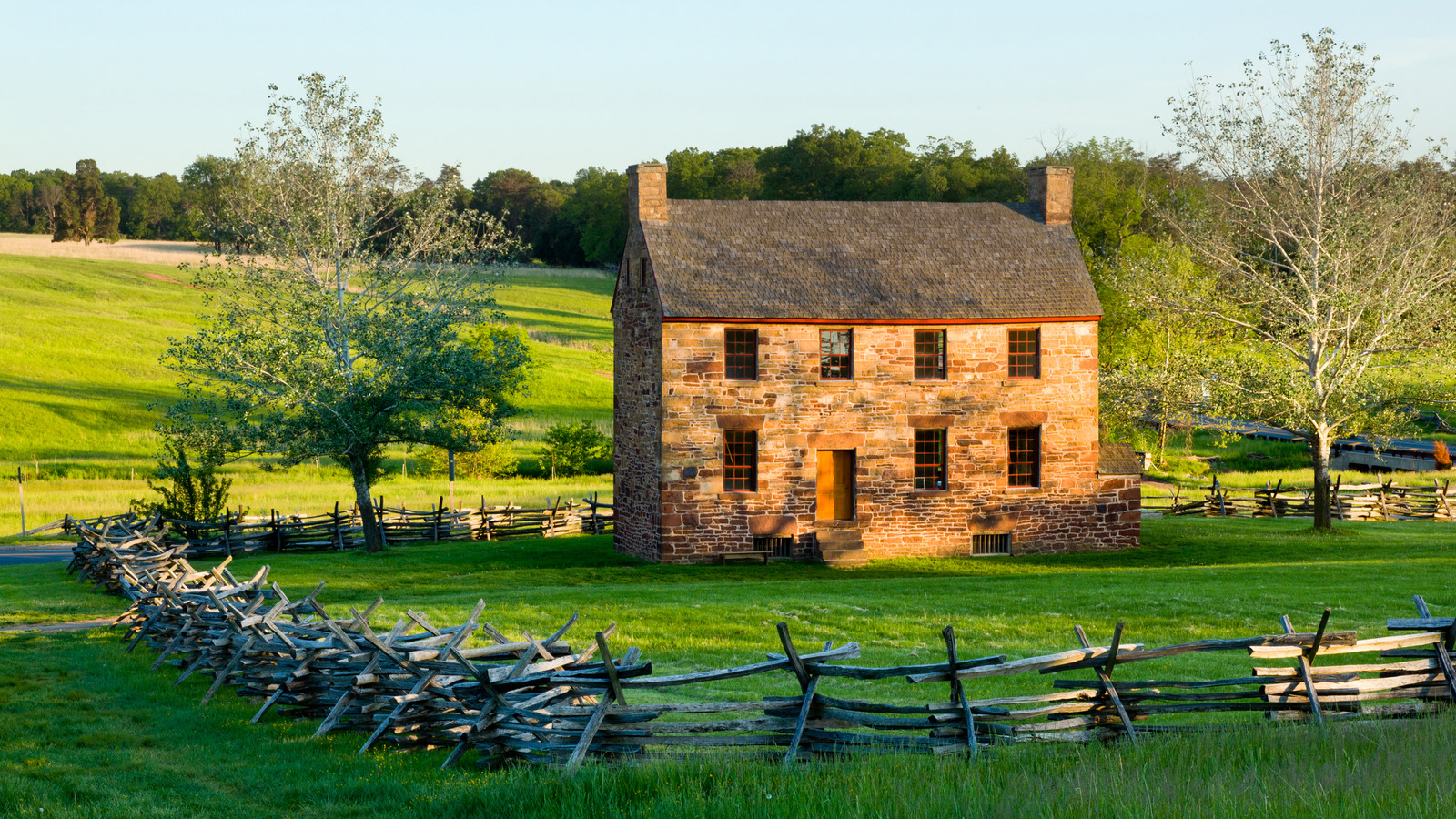
The old stone house in the center of the Manassas Civil War battlefield site near Bull Run.
© Steveheap | Dreamstime.comEstablished in 1940, Manassas National Battlefield Park preserves the site of two pivotal Civil War battles. More than 500,000 visitors each year use the park’s 40 miles of trails across approximately 5,000 acres. Adjacent to the park is the proposed Prince William Digital Gateway, a large data center complex that has expanded from approximately 800 acres to more than 2,100 acres, including roughly 10 acres located within the congressionally authorized boundary of Manassas National Battlefield Park.
Editor’s Note: On March 31, the Court of Appeals of Virginia halted development of the Prince William Digital Gateway, a victory that NPCA applauds.
Prince William Forest Park

South branch of Quantico Creek in Prince William Forest Park
Shutterstock/Malachi JacobsPrince William Forest Park, located approximately 30 miles from Washington, D.C., is the largest protected green space in Northern Virginia and the greater Washington metropolitan area. A proposed “Potomac Technology Park” would convert approximately 52 acres within the congressionally authorized boundary of the park into roughly one million square feet of data center development. The affected area includes sensitive environmental resources, wetlands, and steep slopes vulnerable to erosion.
Wilderness Battlefield

Wilderness Battlefield, Fredericksburg & Spotsylvania National Military Park, VA
iStockphotoThe 2,600-acre park preserves one of the bloodiest battles in American history, with trails that allow visitors to experience the landscape much as it appeared in the nineteenth century. Over 480,000 people visit the park each year to learn about this critical moment in the nation’s history. Proposed data center development near the battlefield risks undermining this sense of place. Large industrial facilities and associated infrastructure could degrade air and water quality and disrupt the historic landscape that defines the visitor experience.
Shenandoah National Park, Appalachian Trail, Harpers Ferry National Historical Park, Chesapeake and Ohio Canal National Historical Park

Sunrise at the Hazel Mountain Overlook at Shenandoah National Park.
National Park Service photo.Two proposed high-voltage transmission lines, the PATH/Valley Link (765-kV, 276 miles through West Virginia) and MARL (500-kV ,150+ miles through Virginia, Maryland and West Virginia), would cross Harpers Ferry National Historical Park, the Appalachian National Scenic Trail, and the C&O Canal National Historical Park multiple times, with towers up to 200 feet tall cutting through some of the region’s most scenic corridors.
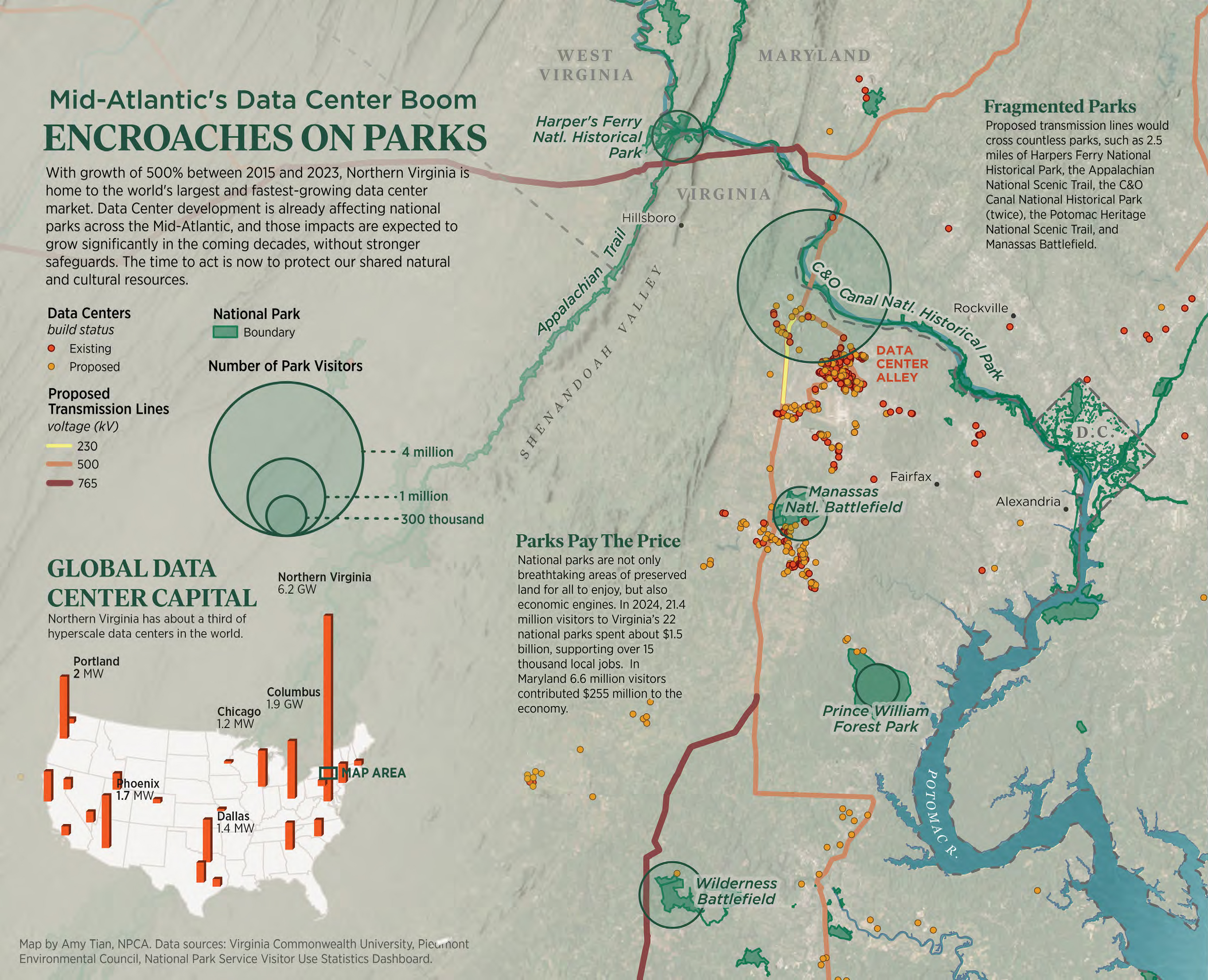 Click to enlarge map
Policy Recommendations for Protecting Parks
Data centers are a modern reality, but rapid expansion must not come at the expense of our beloved national parks. NPCA offers the following recommendations to help decision-makers at all levels ensure that data center development does not undermine national parks:
Federal
Require federal consideration of data center impacts to national parks and protected places;
Oppose federal preemption of state, local, and Tribal environmental reviews; and
Direct federal agencies to coordinate with the National Park Service on regional impact evaluations.
State
Require state-led cumulative impact analyses of infrastructure, power plants, and transmission systems driven by data center growth;
Institute state review and permitting for large data center projects before construction begins;
Limit tax credits to responsible projects that meet environmental and park-protection standards;
Ban confidentiality agreements that restrict public oversight of energy use, water consumption, and emissions; and
Require large developers to bear the full cost of grid upgrades rather than shifting costs to ratepayers.
Local
Reform zoning to require meaningful setbacks (at least one-half mile) from national parks, historic battlefields, and sensitive landscapes; and
End the use of confidentiality agreements that conceal water and energy use from communities.
Industry
Voluntarily commit to siting facilities away from national park boundaries;
Invest in conservation and water protection projects near affected parks and communities; and
Participate in transparent sustainability auditing and public reporting.
The Time to Act is Now
Data center development is already affecting national parks across the Mid-Atlantic and those impacts are expected to grow significantly in the coming decades without stronger safeguards. As investment in digital infrastructure accelerates, policymakers face a clear choice: lead by adopting these commonsense solutions that protect America’s national parks and surrounding communities.
For Media Inquiries
-
Blog Post
Fat Bears at a Crossroads
As Fat Bear Week 2026 begins, a proposed mining project in Alaska threatens the future of brown bears.
-
Press Release
Proposed Arctic Mine, Ambler Road Threatens America’s Largest Park Landscape
“All Americans should be outraged that our taxpayer dollars are being wasted to fund international companies that seek to destroy our country’s largest park landscape" -- NPCA Alaska Campaign Director…
-
Press Release
Atrocious Reported Changes to the ESA Could Threaten Extinction to Park Wildlife, Wild Nature
"This memo appears to suggest that it’s no longer the purpose of the ESA to ensure animals such as grizzly bears, North Atlantic right whales, or Florida panthers are protected"…