Dolores Huerta’s leadership empowered the farmworker movement and environmental advocacy. Those who believe in environmental justice mourn her passing.
Few individuals have dedicated their lives to the pursuit of justice with the determination, courage and vision of Dolores Huerta, who died Oct. 28 at age 96. From transforming the labor movement and advancing the rights of farmworkers to championing environmental protection and social equity, Huerta’s remarkable legacy reflects a lifelong commitment to empowering people and building a more just and sustainable world.
César E. Chávez National Monument in California tells part of her story as a leader in the farmworker movement. But there is more to this remarkable leader who spent her life fighting for dignity for farm workers — which included the right to a fair wage, safe working conditions and access to clean water. That fight extended to the California Desert, where she stood firmly alongside Tribes, local communities and NPCA against the decades-long effort by Cadiz Inc. to drain desert springs for private profit.
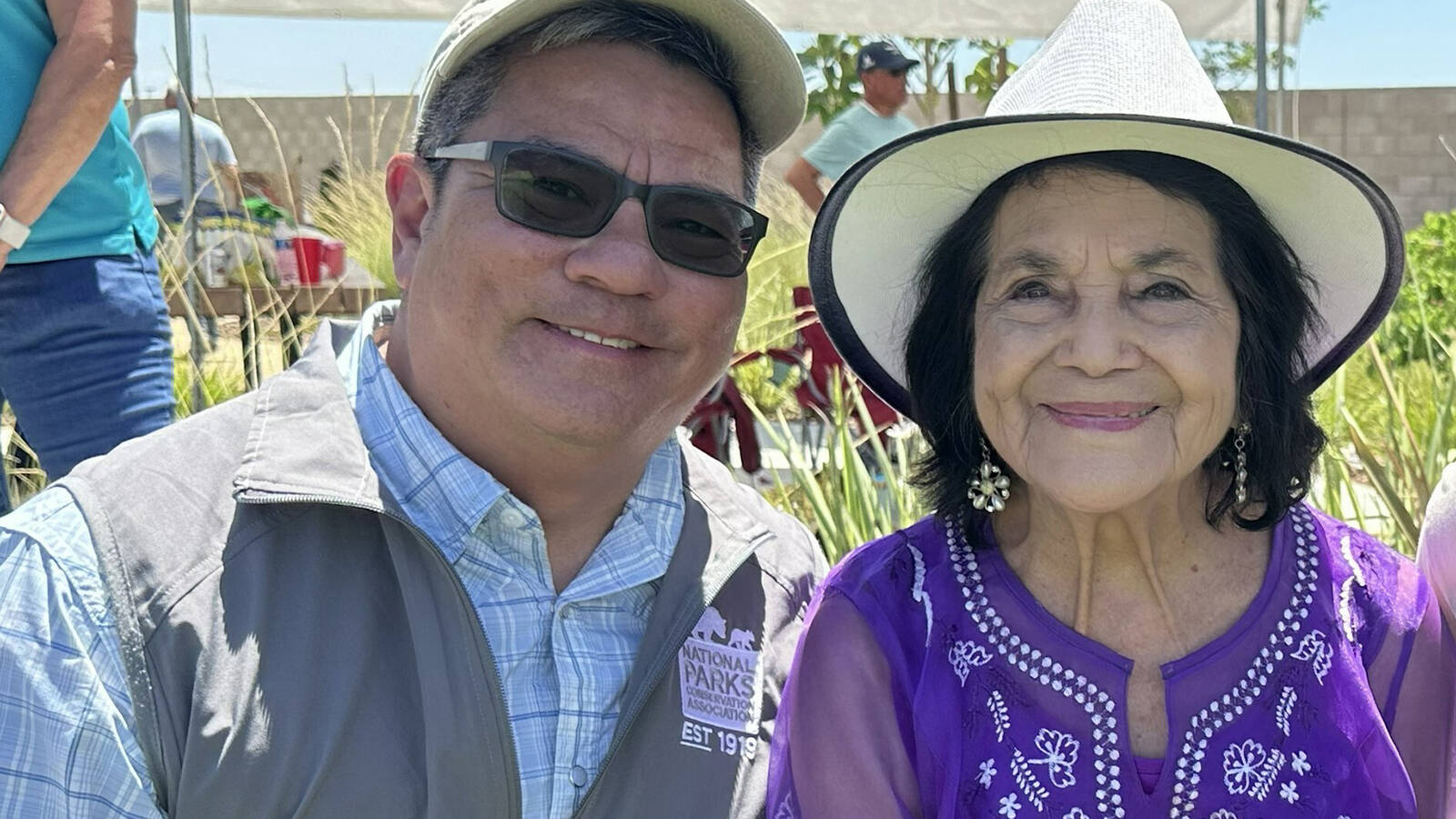
The loss of Dolores Huerta is felt deeply by those of us who believe in environmental justice for workers and the lands they call home. In my role as NPCA’s Southern California Director, she always served as an inspiration and guiding light, and working with her was one of the greatest privileges of my life.
A Teacher Turned Activist
Born in New Mexico and raised in Stockton, California, Huerta began her career as an elementary school teacher. Witnessing firsthand the poverty and difficult conditions endured by farmworkers and their families, she later joined the Community Service Organization (CSO), helping establish its Stockton chapter and organizing Latino communities to fight for civil rights and economic opportunity.
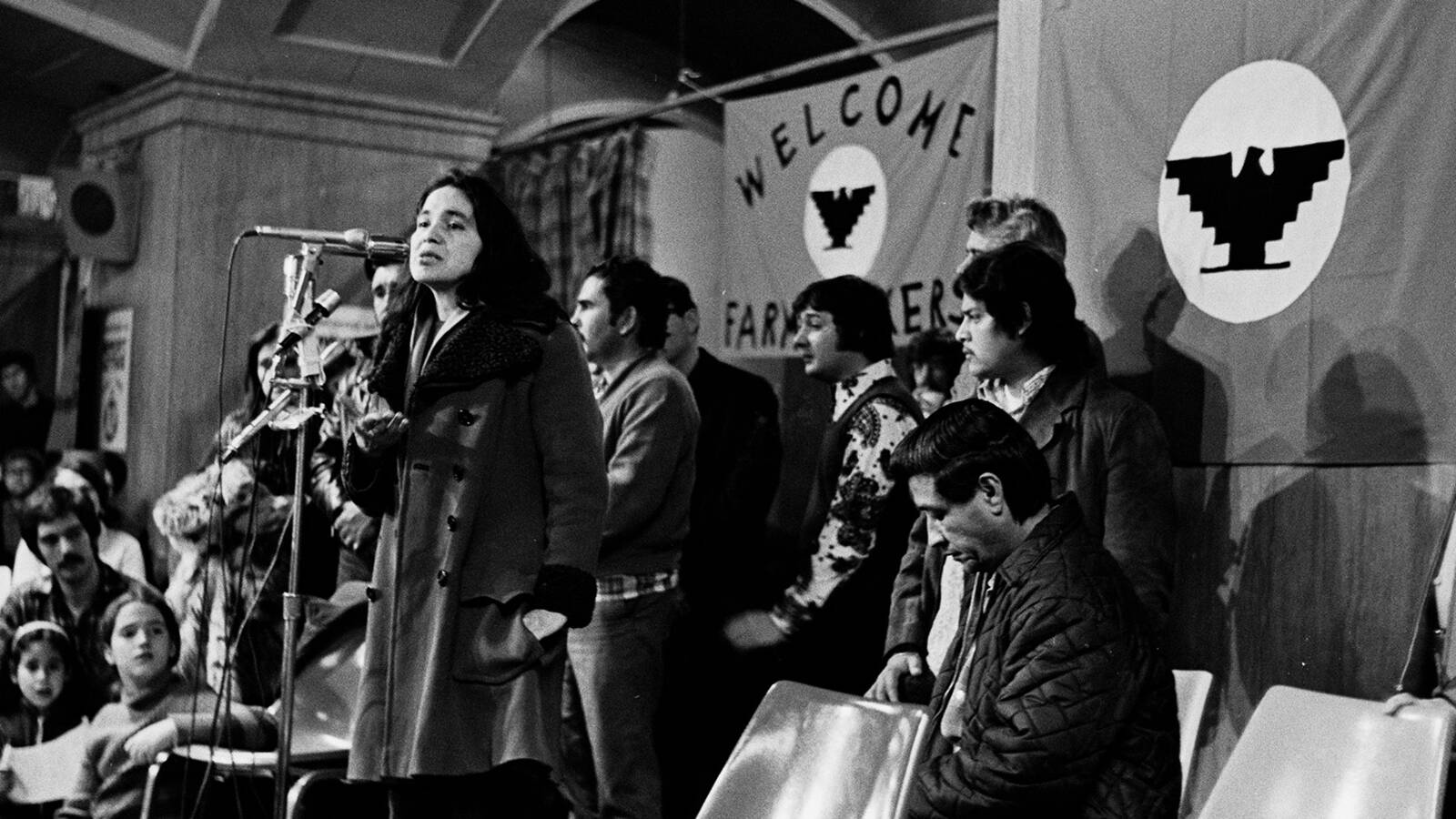
In 1960, alongside César Chávez, Huerta co-founded the National Farm Workers Association, the predecessor to the United Farm Workers (UFW). As a gifted organizer, negotiator and strategist, she became one of the most influential leaders of the farmworker movement. Her leadership helped secure historic victories for agricultural workers, from California’s Central Valley to New York.

Remembering the Manongs and Story of the Filipino Farm Worker Movement
In the 1920s and 30s, Filipino immigrants arrived in the United States seeking fortune but facing discrimination as they worked in the vast agricultural fields of the West. These “manongs”…
See more ›In the spring of 1972, the UFW took the fight to Arizona, where restrictive legislation threatened farmworkers’ ability to organize. As Huerta mobilized workers and supporters against the legislation and the powerful agricultural interests behind it, she responded to doubts about whether the movement could replicate its California victories with some simple but enduring words: “¡Sí, se puede!” — “Yes, we can!” The phrase became a rallying cry for farmworker and Chicano movements and, decades later, was embraced by Barack Obama’s 2008 presidential campaign. Its enduring message of hope, determination and collective action has reached generations far beyond the fields where it first took hold.
After stepping down from her leadership role with the UFW in 1999, Huerta continued her work through the Dolores Huerta Foundation, developing new generations of community organizers and advocates. Her commitment to justice, however, was never limited to workers’ rights. She increasingly brought her organizing experience and leadership to the fight for environmental protection, recognizing that the health of working families and the health of the natural world are inseparable.
Her environmental advocacy grew in part from the struggle to protect farmworkers from dangerous pesticide exposure. Agricultural workers were among the first to challenge the widespread use of toxic chemicals, including DDT, whose devastating effects extended beyond human health to wildlife and entire ecosystems. Huerta understood that environmental harms often fall most heavily on those with the fewest resources and the least political power. She consequently expanded her advocacy to encompass environmental justice, public transportation, parks, clean energy, sustainable development and infrastructure that serves the needs of underserved communities.
Her environmental advocacy grew in part from the struggle to protect farmworkers from dangerous pesticide exposure.
Among her many conservation efforts, Huerta became a prominent opponent of Cadiz Inc.’s proposal to extract and market groundwater from a sensitive aquifer near Mojave Trails National Monument in California’s desert. The controversial project continues to raise alarm about unsustainable groundwater pumping, damage to fragile desert ecosystems, threats to nearby Mojave National Preserve and Joshua Tree National Park, and the potential loss of natural springs sacred to Indigenous communities for thousands of years.
Standing alongside NPCA, the Chemehuevi and Fort Mojave Indian Tribes, and numerous other conservation, environmental justice and preservation organizations, Huerta helped bring national attention to the environmental and cultural stakes of the proposal. In a 2024 letter to the California State Lands Commission, she wrote of her opposition to the project, emphasizing the importance of protecting scarce desert water resources and prioritizing both disadvantaged communities and the environment. Her position reflected a principle that has guided her activism throughout her life: access to clean water, a healthy environment and the resources necessary for human dignity should never be sacrificed for the benefit of a powerful few.
‘Bigger and Far More Important Than Any One Individual’
When revelations of sexual abuses committed by César Chávez came to light in March, Huerta expressed grief and solidarity with the victims of Chávez’s abuses. She also spoke courageously about her own painful instances of abuse at the hands of Chávez, called for survivors to be heard and for such crimes to be confronted and not hidden or erased.
As some people pushed to remove Chávez’s name from the monument or strip the monument entirely from the National Park System, Huerta joined NPCA and over 60 advocacy groups, including Latinos in Heritage Conservation, the Hispanic Access Foundation, GreenLatinos, Asian and Pacific Islanders in Historic Preservation, the Little Manila Foundation and the UFW, in advocating to keep the monument. She said the revelations should not mean erasing the contributions of farmworkers, organizers, women and community supporters who built the movement — nor should honoring those contributions require defending Chávez or overlooking the people who were harmed.
She also rebuffed suggestion that streets, schools, monuments and other institutions named for Chávez should be renamed in her honor. “The farmworker movement has always been bigger and far more important than any one individual,” she said in a statement.
Dolores Huerta’s story is ultimately one of extraordinary perseverance and an unwavering belief in the power of ordinary people to create extraordinary change. From the fields of California to the halls of government, from the fight for farmworkers’ dignity to the protection of sacred desert landscapes, she has consistently stood with communities whose voices too often go unheard.
¡Sí, se puede! is more than a slogan. The words embody the spirit of Dolores Huerta’s life and work: a reminder that meaningful change is possible when people stand together, raise their voices and refuse to give up.
Stay On Top of News
Our email newsletter shares the latest on parks.
About the author
-
 Dennis Arguelles Southern California Director, Pacific
Dennis, Los Angeles Program Manager, works on park protection and expansion efforts as well as engaging diverse and underserved communities not traditionally connected to the national parks.