Summer 2026
The Park Keepers
A grassroots effort spearheaded by Minnesota librarians and historians is putting the preservation of U.S. history in the public’s hands.
Joey Jones loves national parks. Since 2014, when the Minneapolis hairstylist started adventuring in earnest, he and his husband have toured more than 35, from Gateway Arch to Everglades. They’re the kind of visitors who pause to take pictures of park signs while hiking a trail or bagging a peak. They don’t often read the information in the moment, Jones said, but when they’re winding down later that day, they might pull out their phones and scroll through the images to learn about the natural and cultural history of the public lands they just toured. He wasn’t aware of another purpose for these photos until last summer when, in the midst of a haircut, a friend told him about a crowdsourcing effort to document national park signs.
The project was news to Jones — as was the impetus for it. A few months prior, President Donald Trump had issued an executive order titled “Restoring Truth and Sanity to American History.” Shortly thereafter, the secretary of the interior issued a secretarial order of the same name. The orders ushered in a massive review of all park materials to ferret out any that “inappropriately disparage” Americans or that “fail to emphasize the beauty, grandeur and abundance of landscapes and other natural features.”
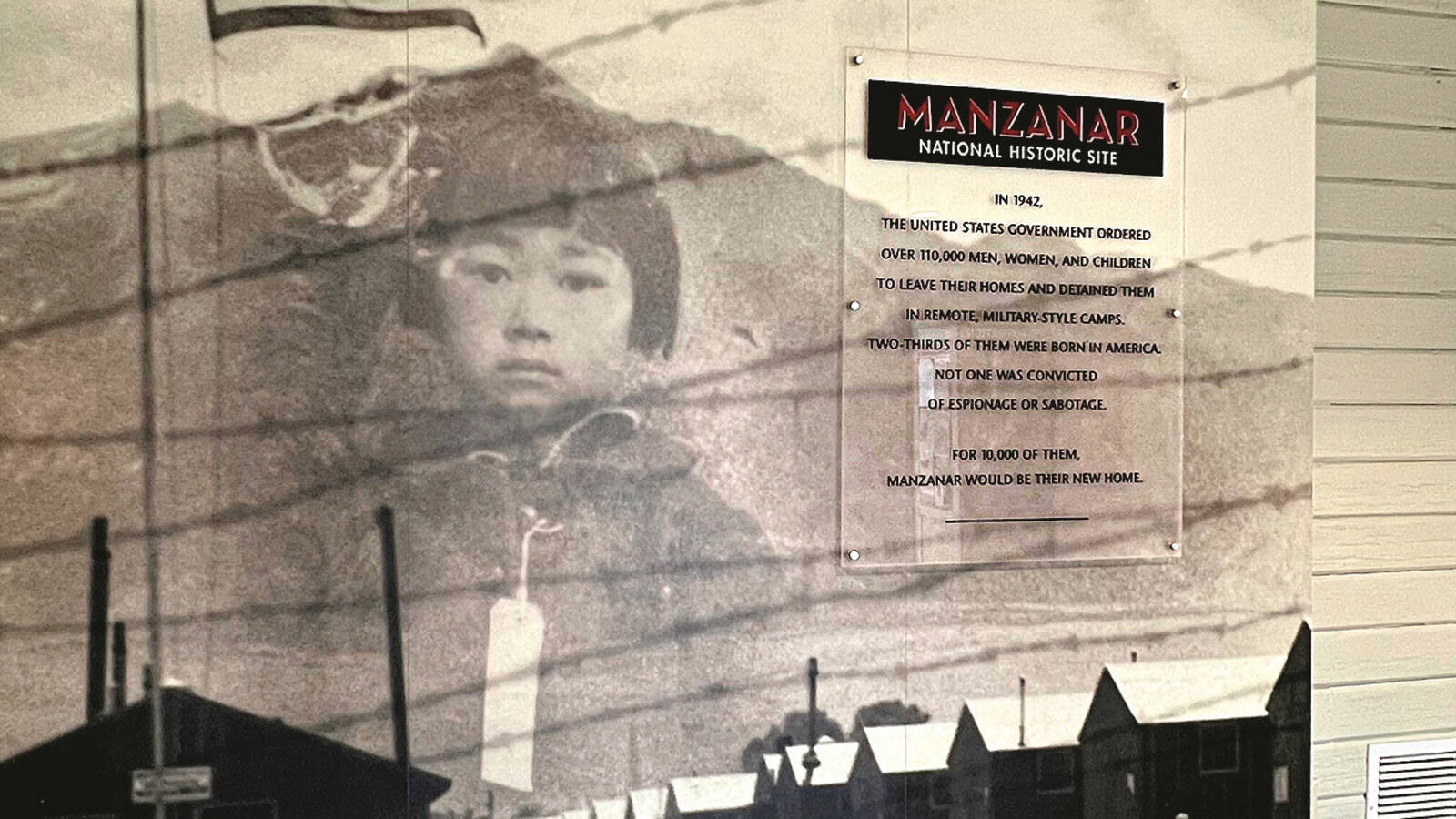
Fearing this move was a presage of impending censorship, a cohort of Minnesota librarians and public historians teamed up to create Save Our Signs, a website that launched on July 3. They extended an open invitation to park visitors to submit snapshots of waysides, exhibits and panels from Park Service lands, with the goal of assembling as complete an archive of signs as possible. As SOS gained momentum, the founders’ concern proved warranted: By fall, news outlets were reporting the removal of signs at multiple parks. (At least 58 signs about Native American history, climate change, plastic pollution, Japanese American incarceration during World War II, slavery and more had disappeared across the country as of press time, though a judge’s order prompted the return of some in Philadelphia.)
“I just thought that the national parks were there, and they were going to be safe, and they were always going to be safe,” Jones said. “It’s wild to me that we live in a time where people are trying to erase information.” Inspired to act, he went home and scoured the images stored on his computer. He compared what he had collected to gaps in the budding SOS archive and began uploading. All told, he estimates he submitted pictures from 15 or 20 park sites.
Kirsten Delegard, the friend who informed Jones about SOS, is a co-founder of the initiative and the director of the University of Minnesota’s Mapping Prejudice project. She views the administration’s censorship of Park Service materials as a reaction to the agency’s earlier efforts to expand the breadth and depth of its storytelling. “It’s an attempt to turn back the clock on all of this very careful community work to really have deep conversations about what stories are our parks telling,” she said. Delegard, who likes to joke that she raised her two kids in a tent in the parks, also believes the recent targeting of the Park Service underscores the value of the agency. “Probably more people learn about history in the national parks than they do in any classroom, in any school across the country, at any level,” Delegard said. “If you want to control the way people understand the birth and development of this country, focus on the national parks.”

To Tell The Truth
National Parks have a duty to share the full, messy, complicated story of the founding of the country. As the nation turns 250, NPCA’s resident historian warns against whitewashing history.
See more ›The Park Service hasn’t been the only agency to bear the brunt of a revisionist agenda. Jenny McBurney, the government publications librarian at the University of Minnesota-Twin Cities, had been tracking undocumented changes to federal websites for a few months when she started pulling colleagues together to form SOS. “Data was being edited, oftentimes without mentioning that in the change logs,” she said. “That’s a big no-no in terms of data management.” As she and others grappled with the problem, they realized the degree to which parks serve as information hubs because “they’re kind of everywhere.”
This is taxpayer-funded material, said Molly Blake, social sciences librarian at the University of Minnesota. “This really belongs to everybody.” The SOS co-founder hopes the project inspires lesson plans, prompts conversations and — ultimately — leads to the restoration of removed resources. “We’re not asking you to pass judgment on the signs,” she said. “You might read a sign and think, ‘Actually, this should be added to it.’ That’s great. We want you to engage with it.”
If you want to control the way people understand the birth and development of this country, focus on the national parks.
So far, park visitors have documented nearly 15,000 signs at hundreds of parks across 50 states, four territories and the District of Columbia. Park advocates have submitted close to 200 pictures for Women’s Rights National Historical Park, over 320 for San Antonio Missions National Historical Park and more than 440 for Independence National Historical Park, for instance. Each image has been reviewed by a cadre of SOS volunteers to prevent irrelevant material from slipping into the archive. (They rejected a cute bison photo as “out of scope,” McBurney recalled, and jettison any pics of park visitors.)
With a click or a swipe, SOS website visitors can read about subalpine meadow restoration at Mount Rainier National Park, Indigenous history at Effigy Mounds National Monument, the “rigid military caste system” at Fort Scott National Historic Site and much more. Users can filter by park and zoom around a map to locate data gaps. The site also tracks the status of removed signs.
DIGITAL DOWNLOAD
While the nature of the anonymous submission portal makes tabulating the number of SOS contributors difficult, the sheer size of the archive signals that the effort has touched a nerve. “What makes you want to know something more than someone telling you you can’t?” asked Anne Mitchell Whisnant, a public historian and the director of Duke University’s Graduate Liberal Studies.
The co-author of several national park publications, including a 2011 report on the state of history in the Park Service titled “Imperiled Promise,” Whisnant spoke with me about a recent trip to Hopewell Culture National Historical Park in Ohio. She observed a couple asking a Park Service representative in the visitor center whether any written material had been removed or whether the staff had been pressured not to tell certain stories. “I bet that conversation is happening in visitor centers all over the country,” Whisnant said.
She’s taken about 100 photos for the archive already and hopes to document signage from the Blue Ridge Parkway in the coming months. “I always take images of park signs when I go. Like, who cares about the view?” she said. “So, this is kind of my jam.”
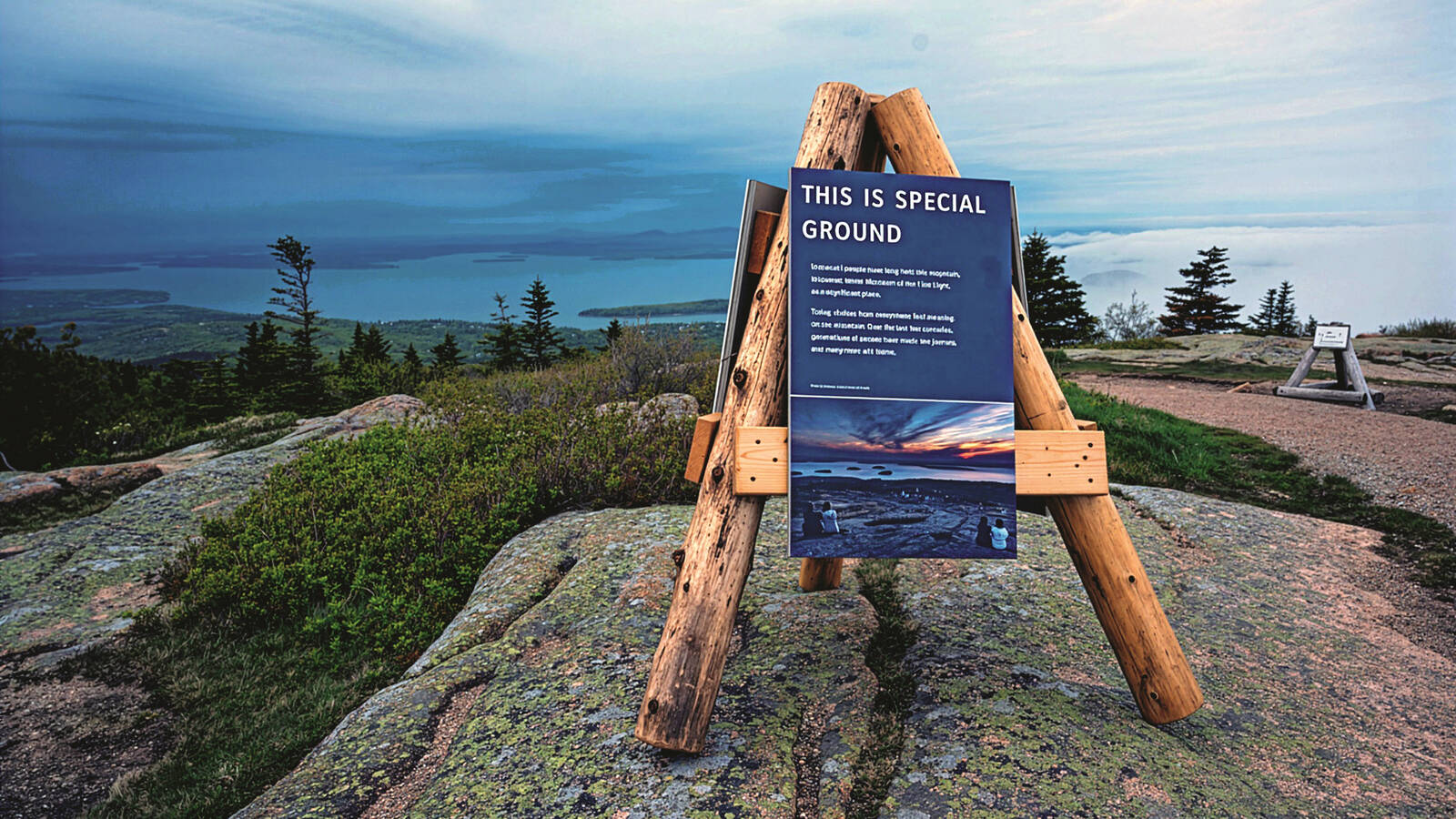
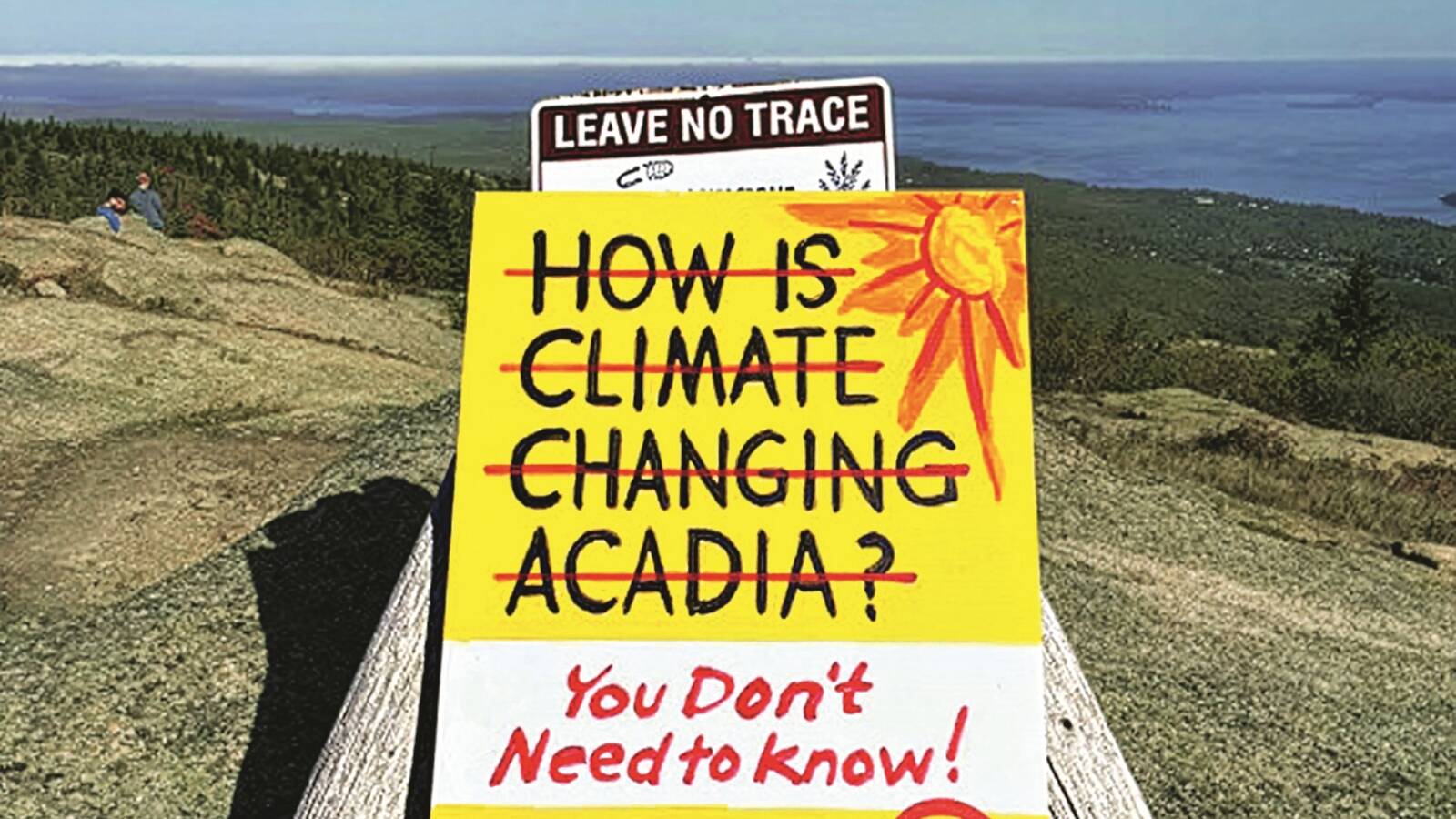
Whisnant draws inspiration from the coast-to-coast resistance the recent erasures have spurred. Artists in Maine painted vibrant signs to highlight missing climate and Indigenous information at Acadia National Park. An eastern Sierra-based group posted a Facebook reel that followed one of its staff members as he toured Manzanar National Historic Site in January. Though he didn’t find any omitted or modified materials, he urged the public “to keep a watchful eye.” And in Philadelphia, the city took the administration to court when Park Service staff were forced to remove dozens of signs about the lives of enslaved people at the President’s House, part of Independence National Historical Park. (NPCA and a coalition of others, represented by Democracy Forward, filed a separate lawsuit to halt the erasure of science and history across the park system.) A federal judge demanded the restoration of the panels, but as park staff were complying with that order, the administration appealed the decision, and the exhibit remains in limbo. With a few signs rehung and many others still glaringly absent, community members have stepped in to fill the void.

National Parks
You can read this and other stories about history, nature, culture, art, conservation, travel, science and more in National Parks magazine. Your tax-deductible membership donation of $25 or more entitles…
See more ›On a sunny day this March, I gawked at the glue-marred gaps as visitors milled around. One person carried a binder full of printouts of the removed signs and happily answered questions or read off excerpts from the missing text. Just two days later, several blanks on the exhibit walls had been papered over with the prompt “add your voice” scrawled in the corner. A multitude had complied. “Presidents enslaved people,” read one note. “Democracy needs your courage,” read another.
“What power do we have in this moment?” Whisnant asked. Taking photos for SOS or scribbling your perspective at the President’s House “is public history at its best,” she said. “We are all the keepers of our national parks.”
To learn more or submit images of your own, visit saveoursigns.org.
About the author
-
 Katherine DeGroff Associate and Online Editor
Katherine is the associate editor of National Parks magazine. Before joining NPCA, Katherine monitored easements at land trusts in Virginia and New Mexico, encouraged bear-aware behavior at Grand Teton National Park, and served as a naturalist for a small environmental education organization in the heart of the Colorado Rockies.
-
Press Release
Atrocious Reported Changes to the ESA Could Threaten Extinction to Park Wildlife, Wild Nature
"This memo appears to suggest that it’s no longer the purpose of the ESA to ensure animals such as grizzly bears, North Atlantic right whales, or Florida panthers are protected"…
-
Press Release
First Mining Claims Filed in Lands Cut from Bears Ears National Monument
"National park units and their surrounding landscapes are no place for energy development, but outdated laws elevate mining above all other uses on these lands. We will continue to fight…
-
Press Release
Groups File Injunction to Stop Development at West Potomac Park
“West Potomac Park is treasured green space and we will not stand for the unlawful destruction of public lands that belong to all of us."