Winter 2026
Wild River, Ghost Lake
Drought is a crisis for the West. But it has also resurrected a long-lost desert river.
I was sitting in the bow of a rubber raft, halfway through Gypsum Canyon Rapid on the Colorado River, when I spotted a blue heron wing across the water, right to left. It was the fifth heron of the day, and my fifth day on the river. My eyes charted the bird’s path until a cresting wave slapped the boat, and I remembered to hunker down and hang on. Cheers rose from the other rafts as we finished the run.
“Thanks for showing me the line,” my guide, Sienna Chilcutt, shouted to the trip leader, Nick Smith, and I realized it was her first time rowing Gypsum Canyon Rapid, the last rough water we’d run in Cataract Canyon, a river-carved gorge in this heat-seared desert of southern Utah. That’s because the rapid was submerged beneath a reservoir, Lake Powell, for decades, and only recently reappeared.
Earlier that morning, we had crossed from Canyonlands National Park into Glen Canyon National Recreation Area, two national park sites with opposing goals. Canyonlands protects a wild river, Glen Canyon a flatwater reservoir. On maps, the border is a straight line, but the real boundary between river and reservoir constantly shifts. That’s what I came to see.
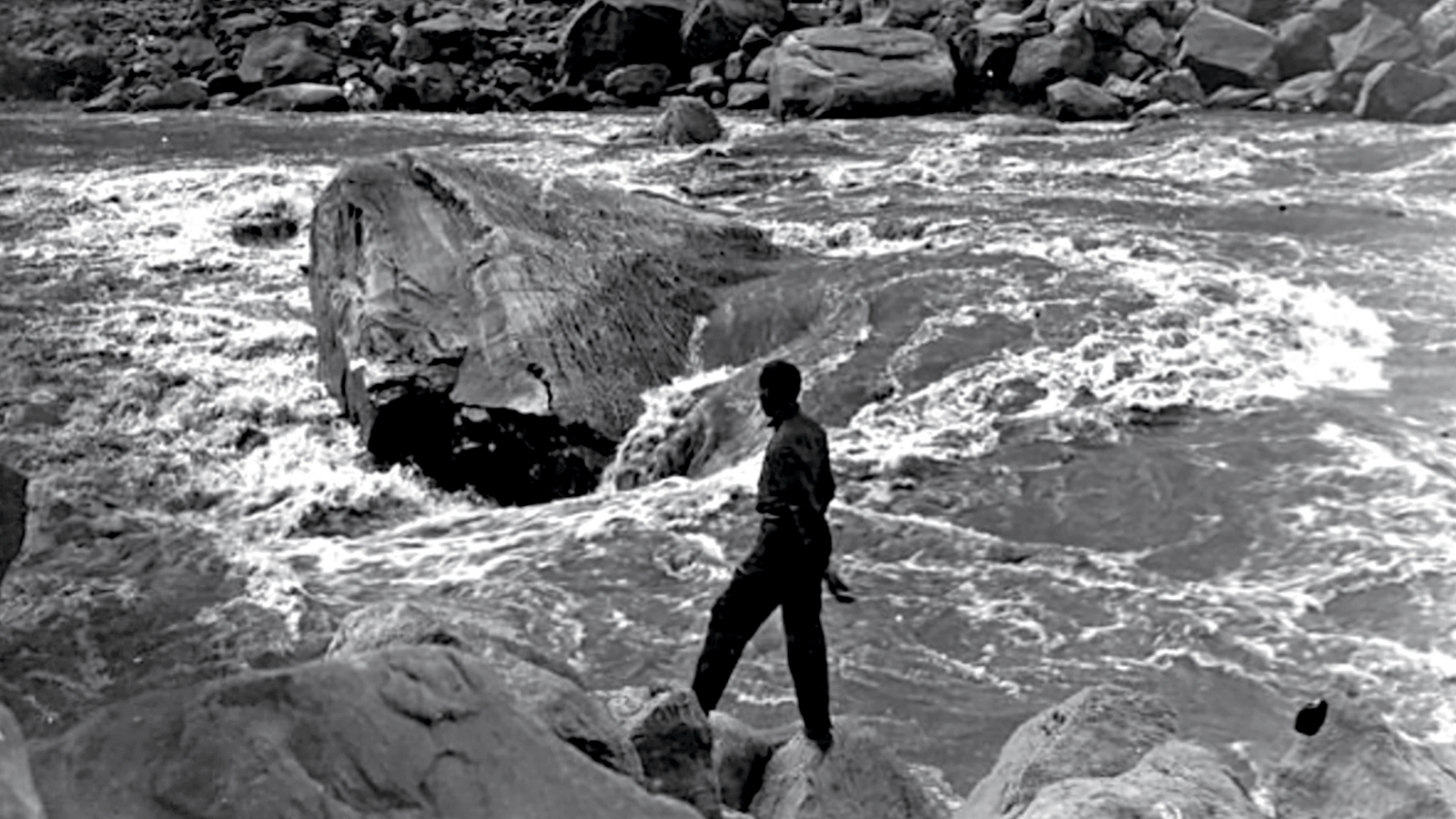
John Wesley Powell called a stretch of the Colorado River “Cataract Canyon” because of its ferocious rapids, including Little Niagara (pictured in 1911).
NORTHERN ARIZONA UNIVERSITY. CLINE LIBRARYThis area is the ancestral land of the Navajo, Hopi, Zuni, Ute, Southern Paiute and Pueblo peoples, who each have their own name for the river. John Wesley Powell called this rocky stretch of the Colorado River “Cataract Canyon” because of its ferocious rapids — averaging more than one per mile over the course of 40-some miles. The upper canyon is still full of cataracts. But the rapids on the lower end vanished after Glen Canyon Dam near the Arizona-Utah border closed its gates in 1963 and the reservoir behind it began to fill, smothering the rapids as it rose. Lake Powell topped out in the 1980s. It’s been shrinking since then, drunk down by cities and farms and siphoned away by decades of drought and rising temperatures.
I’d never rafted this stretch of river before, but its water is in my bones and blood. I grew up drinking the Colorado, piped to me through a plumbing system that included the dam that drowned Cataract. That September of 2024, I didn’t know if I’d find wreckage or treasure, a landscape changed beyond recognition or reborn.
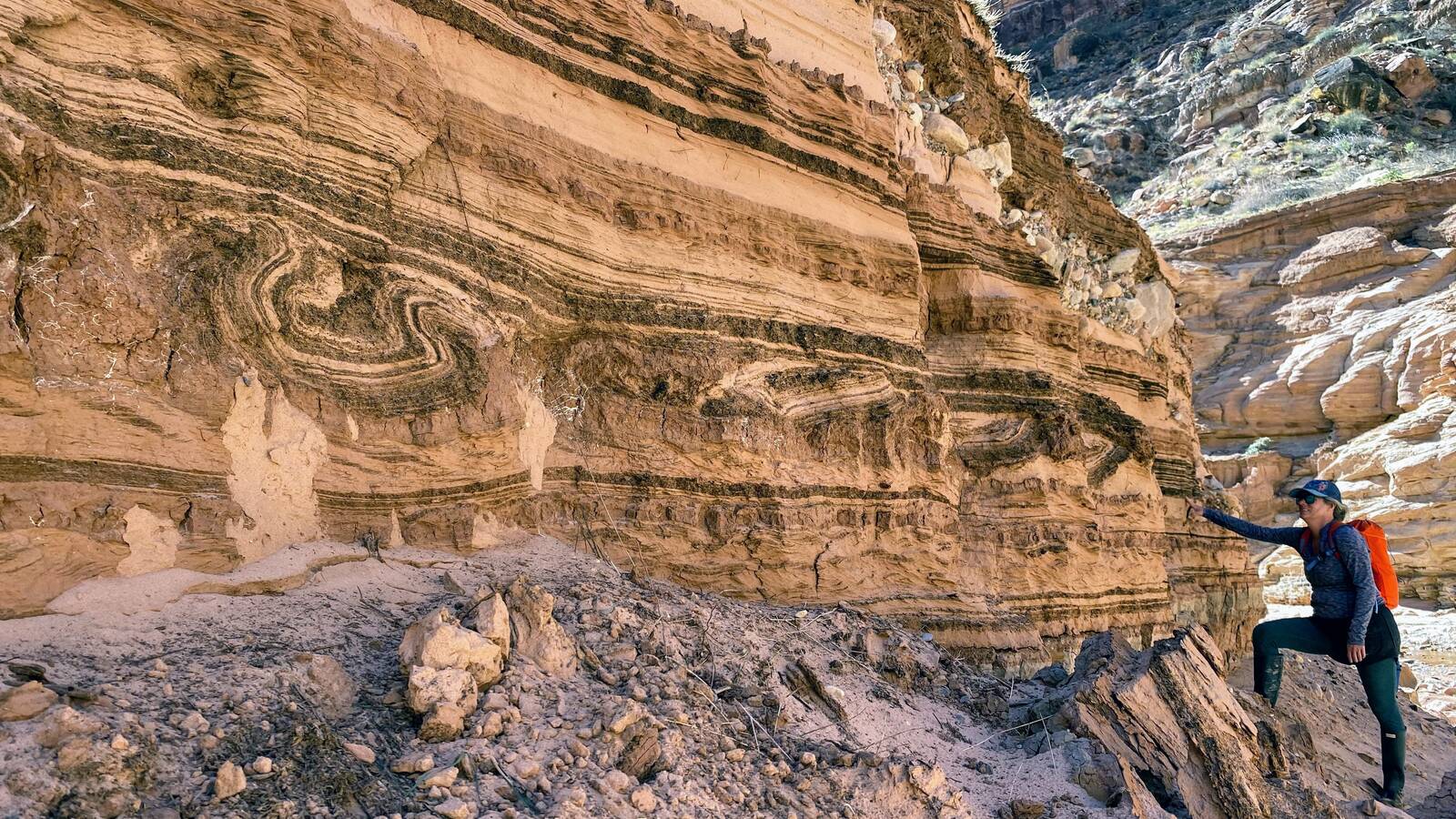
So far, what I’d found was mud. Wherever the river runs up against the reservoir, it drops its load of silt, like a tired traveler leaving suitcases at the door. Now, the boats floated among enormous islands of mud with sheer, fissured slopes. They rose above us like brown icebergs — the remaining bits of the old lakebed, carved into pieces as the newly awakened river cut its way through. Once, the tops of those “mudbergs” were the bottom of the reservoir. If our boats could stay in place but teleport a few decades back in time, we’d be underwater. I was boating down a real river, but also a ghost lake.
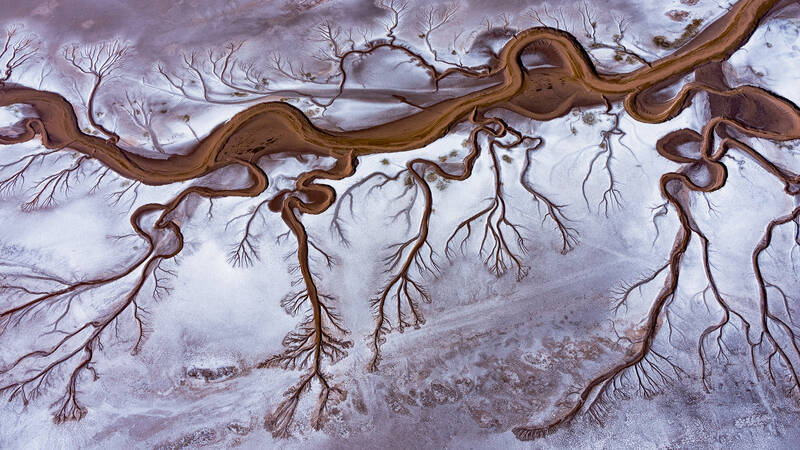
The Beauty of Loss
Pete McBride spent 20 years photographing the Colorado River. His new book showcases the depths of its crisis — and reasons for hope.
See more ›“It’s like being in a submarine,” Chilcutt suggested, “except in air.”
Later that day or perhaps the next morning, we would cross the invisible boundary where the river’s current disappeared, swallowed by the diminished reservoir. The only hint would be the extra effort our guides put into rowing. One of them, Abbey Woodruff, told me it’s a point of pride to row all the way to the takeout point, nearly 30 miles downriver from Gypsum Canyon Rapid. Other expeditions skip over this tedious stretch by bringing a motorboat; we waved one such group by.
I felt grateful for the slower way. It gave me time to see this in-between place, a murky borderland cradled in beige-and-pink cliffs that looked like they were carved out of rock candy and chewed on. Plants took up residence on the new land provided by old lake sediment, including non-native species: tamarisk trees and Russian thistle. They would lose their precarious footing if the mud calved away, or if the reservoir rose. We passed a cluster of Canada geese huddled on a sandbar like schoolkids in overlarge coats — taking a rest, perhaps, on their migration route south for the winter — and I glimpsed what Cataract used to be.
About seven years ago, Meg Flynn, a Moab librarian, her husband, Mike DeHoff, a river runner, and others started the Returning Rapids Project to document the revitalization of Cataract Canyon: rapids, sandbars, willows, cottonwoods, beavers and otters. “The landscape has the ability to take care of itself,” Flynn told me. “Sometimes better if we just get out of the way.” It’s a gift of the National Park System that ecosystems have space and time to recover from catastrophe.
But if catastrophe describes what the reservoir did to the river, it also describes the forces killing Lake Powell: decades of overuse, laws out of step with science and climate change-fueled aridification in a place that was already dry. I hardly know whether to celebrate or mourn.
To be human and to be awake in the world is to hold contradictions in one’s mind.
Earlier that week, before heading downriver, I had stopped in Moab to chat with Flynn, and she handed me a historical photograph of Inscription Rock, where explorers of yore painted or carved their names on a cliff wall. The reservoir drowned the spot, and we wondered if it had reappeared. I was eager to search. On the sixth and final day of the trip, as the boats approached the former site of Dark Canyon Rapid — once one of the river’s most feared, now smooth as glass — I pulled out the photograph and copies of old expedition journals, hoping to find a clue.

Climate Change Forces Difficult Decisions Along the Colorado River
Without enough water to go around, federal agencies and advocates weigh competing needs of people and threatened fish.
See more ›My six-person boat filled with excited shouts, mostly mine. “Look at that pointy rock!” “What about up there?” “No, it’s got to be farther down.” Then a musical sound distracted us from the quest. A frothy white spring gushed from beneath one of the mudbergs. The two geologists in the boat speculated it was bank flow: water pressed into the surrounding rock by the massive weight of the reservoir, now returning to the river after decades entombed.
“What makes the water so white?” I wondered aloud. One of them replied it was probably full of aluminum.
At that moment, I glanced at the journal pages in my hands, and a chill raised the hairs on my neck. “… [F]ound a beautiful spring, enclosed by ferns … very metallic tasting,” Norman Nevills, one of the Colorado’s first commercial river guides, wrote on this spot in 1938. “Probably aluminum in it.”
Past and present collided. The cliffs swung into position as if enacting a slow ballet. I felt sure their outline matched the photo Flynn gave me, but either Inscription Rock had been sponged clean by its time underwater, or else it was still buried beneath towers of mud. The researchers with Returning Rapids say some of that mud will continue to slough off downriver, but some of it is there to stay — a new sediment layer appearing before our eyes. The Dominy formation, they call it, a tongue-in-cheek reference to the U.S. Bureau of Reclamation commissioner who built Glen Canyon Dam.
What lies hidden, just beyond reach? What might emerge, given time?
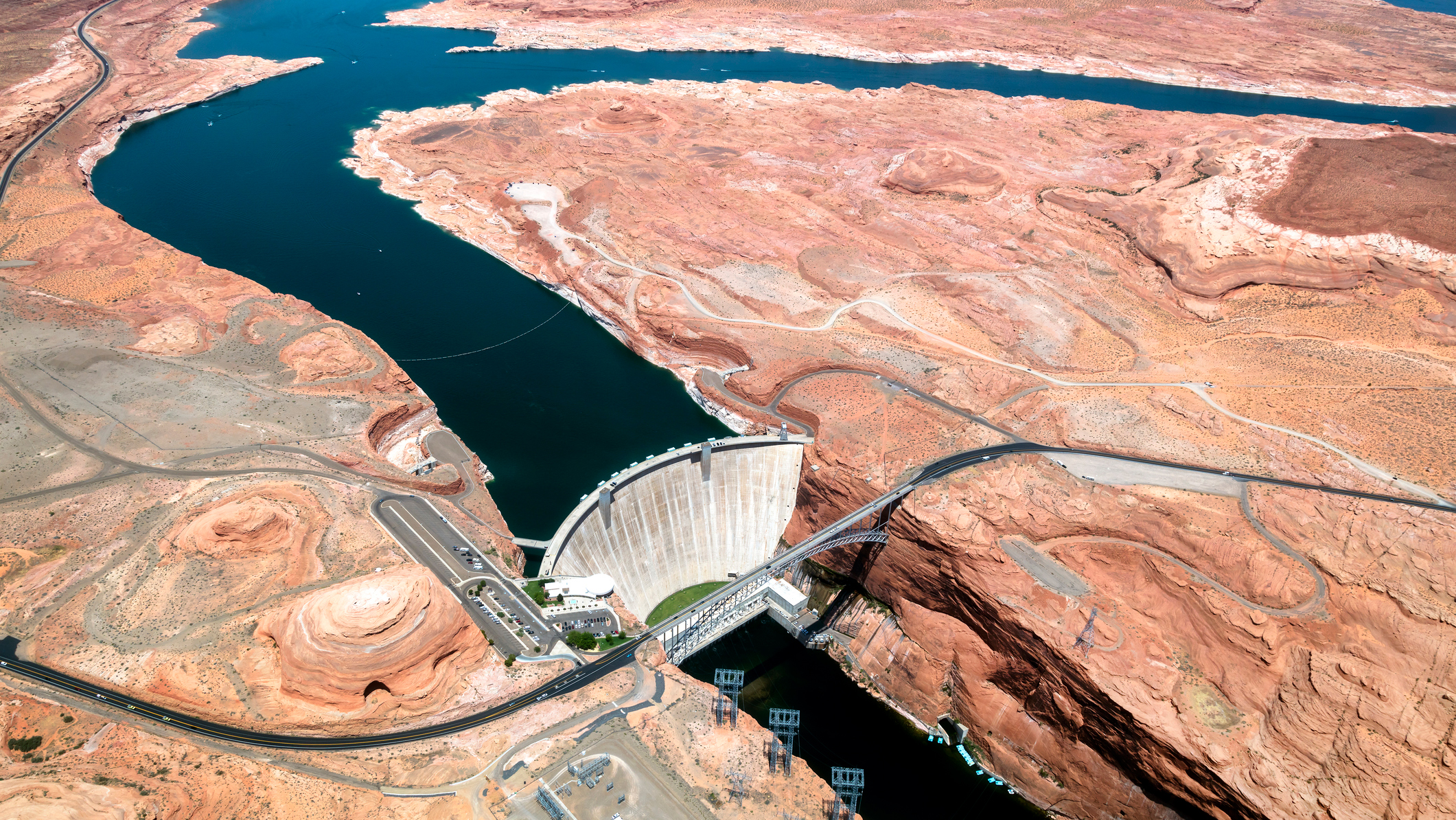
Glen Canyon Dam was completed in 1963. As the reservoir filled, it smothered rapids miles upriver, including in Cataract Canyon.
©BIM/ISTOCKPHOTO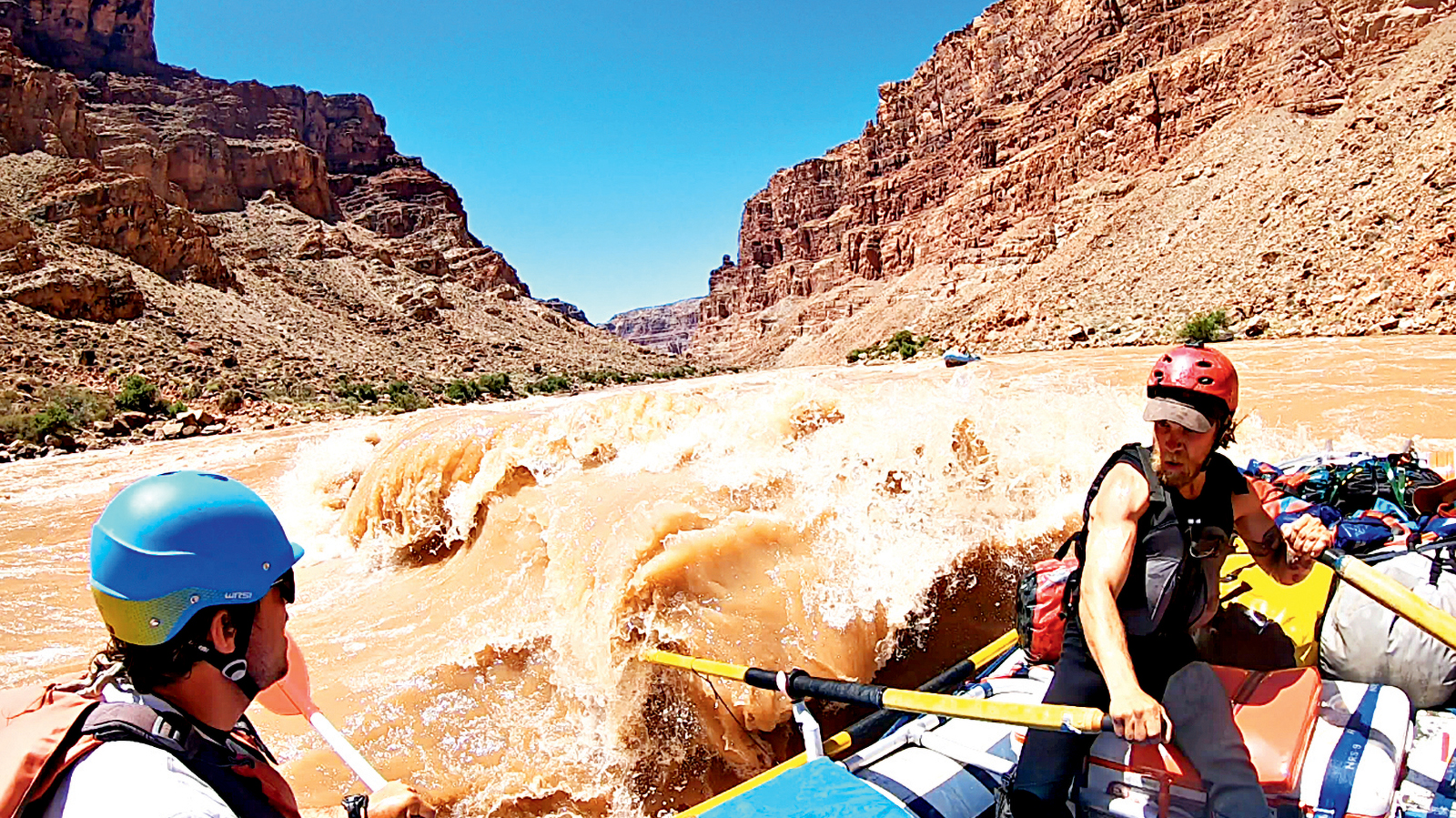
Rafting the Colorado River.
COURTESY OF MILD TO WILD RAFTINGGlen Canyon Dam was completed in 1963. As the reservoir filled, it smothered rapids miles upriver, including in Cataract Canyon.
©BIM/ISTOCKPHOTORafting the Colorado River.
COURTESY OF MILD TO WILD RAFTINGTo be human and to be awake in the world is to hold contradictions in one’s mind. This was the place for paradox: half river, half lake. Half hope, half heartbreak. I wanted the drought to end, but also the river to thrive. I wanted the safety of abundance, but also the splendor of the desert. If Cataract Canyon was the hero of the story, it was on its way back from the underworld, irrevocably changed by its time below. It wasn’t Lazarus that came to mind, but Persephone, climbing back into spring but doomed to return periodically to the depths. As long as Glen Canyon Dam remains, lower Cataract will be a liminal space. Its fate rests not just on weather and climate, but the politics of water. Which is to say, people have some choice in the matter.
DeHoff offered his own metaphor: “For me,” he said, “the Colorado River as it flows through Gypsum Canyon Rapid is like an old friend that’s come home after being in the hospital for a long, long time.” He took a deep breath. “They’re not the whole way healed. They’re not the same. But they’re back home.”

National Parks
You can read this and other stories about history, nature, culture, art, conservation, travel, science and more in National Parks magazine. Your tax-deductible membership donation of $25 or more entitles…
See more ›I have to believe in a future where humans and rivers thrive. Flynn put it this way: Cataract Canyon “has value unto itself, separate from us and what it does for us. But taking care of our spaces also ultimately takes care of us, too.”
The river’s current slowed, mirroring my reluctance to reach the journey’s end. I soaked up every glimmer of revival. A cluster of willows. A sprawl of sacred datura, their white flowers blooming in the shade like tiny moons. They would close at the first real touch of sun. Then, I saw them: two bighorn sheep perched up high on top of the mud, the exact color of the rock behind them and so narrow they looked like they might vanish if they turned to face us head-on.
We all looked up, and they looked down.
“Cataract isn’t dead,” Chilcutt said quietly, as if to herself. Up ahead in the sky, a ghostly gibbous moon floated between the cliffs, half here, half vanished in the day.
About the author
-
 Melissa L. Sevigny Contributor
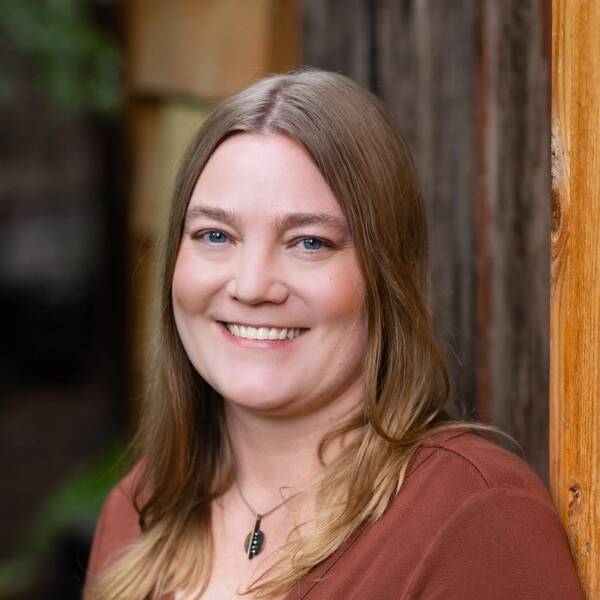
Melissa L. Sevigny is an award-winning science writer and author of three nonfiction books, most recently “Brave the Wild River: The Untold Story of Two Women Who Mapped the Botany of the Grand Canyon.” She lives in Flagstaff, Arizona.
-
Blog Post
8 Park Sites That Tell the Gullah Geechee Story
Among the Sea Islands of the Southeast, aspects of African culture live on through food, spiritual traditions, the arts, community — and even a language spoken nowhere else in the…
-
Blog Post
Fat Bears at a Crossroads
As Fat Bear Week 2026 begins, a proposed mining project in Alaska threatens the future of brown bears.
-
Press Release
Proposed Arctic Mine, Ambler Road Threatens America’s Largest Park Landscape
“All Americans should be outraged that our taxpayer dollars are being wasted to fund international companies that seek to destroy our country’s largest park landscape" -- NPCA Alaska Campaign Director…