Winter 2026
Battling Data
Advocates slow the advancement of two massive data center projects bordering national park sites.
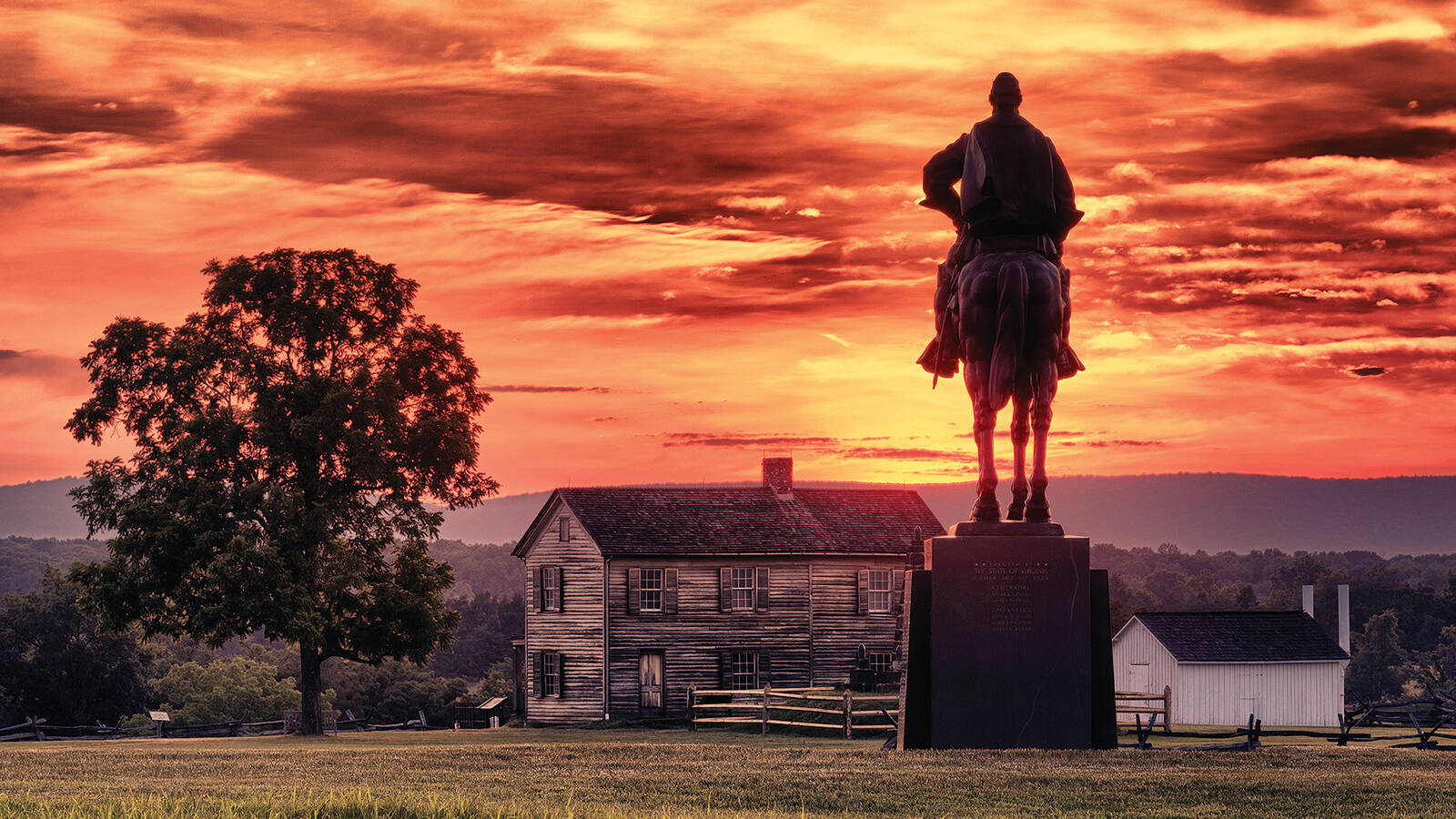
Virginia is for lovers — and, increasingly, for data centers. For a variety of reasons — tax breaks, an outsize customer base, a fiber optic network superhighway — the state has more active and planned data centers than anywhere else in the world. By a lot.
“It’s like a snowball,” said Kyle Hart, NPCA’s Mid-Atlantic program manager and a critic of the unchecked growth. “Once it got going, it was kind of this thing that was almost impossible to stop.”
But residents, environmentalists and preservation groups are saying “enough” — and it turns out that it is possible to halt, or at least pause, the snowball. Two massive data center projects adjacent to national park sites have faced setbacks in court recently — outcomes hailed by NPCA and its allies, who have been fighting these projects for years. They say that if allowed to proceed, the developments could increase noise and traffic, degrade drinking water and viewsheds, block access to recreation, create an unsustainable need for energy, and impinge on treasured Civil War battlefields.
Battle Lines
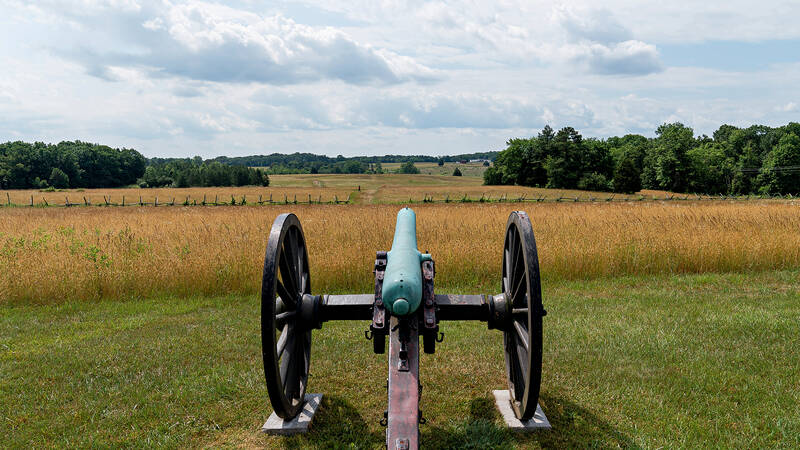
For decades, advocates have defended Manassas National Battlefield Park from one threat after another. Now with the specter of a massive data center project looming, they may be facing their…
See more ›“We know people need places to live and work and shop and recreate, and now, of course, to have access to their data,” said David Duncan, the president of the American Battlefield Trust. “But we can do those things and still protect the irreplaceable historic resources.”
The first case concerns the Prince William Digital Gateway, a proposed data center behemoth next to Manassas National Battlefield Park, which commemorates two significant Civil War battles. The project consists of up to 37 buildings, some rising as high as 100 feet, with footprints the size of football fields. “It’s not just the biggest in the Commonwealth of Virginia,” Duncan said. “It’s intended to be the largest data center campus of its type on planet Earth.”
In August, a circuit court judge sided with a homeowners association, ruling that previously approved rezoning that would pave the way for the project was null and void because the county failed to give sufficient public notice prior to the Prince William Board of County Supervisors’ vote. A spokesperson for the board declined to comment on ongoing litigation but confirmed that the county appealed the decision. (In late October, a state appeals court judge ruled to allow project construction to continue while the case advances. Separately, the American Battlefield Trust and the Coalition to Protect Prince William County are involved in a lawsuit that makes similar arguments to the homeowners’.)
The other case revolves around Wilderness Crossing, a development slated for 2,600 acres near the historic Wilderness Battlefield, a remarkably intact part of Fredericksburg and Spotsylvania National Military Park that memorializes a harrowing 1864 battle. The project includes residential, commercial and industrial development and allows for both data centers and warehouse distribution centers. In September, a judge ruled that the case brought by the American Battlefield Trust (one of two active legal challenges) had enough merit to proceed.
“We’re very, very hopeful that we’re going to prevail on this,” said Duncan, whose organization argued that Orange County leaders had made procedural errors that violated the law when they approved the project. “The goal would be, ultimately, hopefully, the developers would reconsider the size and scope and location of their project. But at the very least, let’s have a fair, open, honest and transparent process so people in those areas know exactly what they’re signing on for.”
Glenda Bradley Paul, the county administrator, said in a written statement that the county is reviewing the decision with legal counsel. A trial date has not yet been set.

National Parks
You can read this and other stories about history, nature, culture, art, conservation, travel, science and more in National Parks magazine. Your tax-deductible membership donation of $25 or more entitles…
See more ›One of the most vexing parts of the state’s data center push, Hart said, is the lack of foresight about energy production. According to a 2024 state government report, to meet the data center energy demands on the table, Virginia would have to build a new natural gas plant every 18 months for the next 15 years, increase nuclear power generation, double the rate of solar deployment, drastically increase the state’s wind energy generation, and double the amount of energy being imported from other states. “It’s absolutely insane,” Hart said.
He contends that the rate of data center growth has outpaced the demand. Rightsizing would naturally occur, he said, if developers did the “right thing,” such as employing efficient water-use practices and generating their own clean energy.
“This bubble is being propped up on the backs of everyday Virginians with their electricity bills, with the lost tax revenue, with poorly sited plans and projects,” he said. “As soon as state and local leaders start holding the industry accountable, the industry will have to start answering those tough questions, like, does this actually make sense economically?”
About the author
-
 Rona Marech Editor-in-Chief
Rona Marech is the editor-in-chief of National Parks, NPCA’s award-winning magazine. Formerly a staff writer at the Baltimore Sun and the San Francisco Chronicle, Rona joined NPCA in 2013.
-
Blog Post
Fossils: Yesterday, Today and Tomorrow
Celebrating ancient trackways, and all fossils, for National Fossil Day, Oct. 14.
-
Press Release
Federal Court Blocks Border Barrier Construction at Big Bend National Park
Congress designated Big Bend National Park to protect our country’s natural wonders, and people come from all over the world to experience its star-filled skies and striking mountain ranges. Big…
-
Press Release
Swing and a Miss: Grand Teton Safe at Home After MLB Withdraws Proposal
"The bases were loaded with opposition, and this news is a grand slam for Teton county communities and the enduring legacy of Grand Teton National Park" -- NPCA Grand Teton…