Winter 2026
Justice Served
A new designation for Santa Monica Mountains National Recreation Area celebrates two remarkable women and the landmark suit that emancipated them.
On Jan. 19, 1856, Bridget “Biddy” Mason and Hannah Embers waited anxiously as Los Angeles District Court Judge Benjamin Hayes determined their fate. The women had been living in San Bernardino for about five years at that point. They were mothers, ranch hands, and sought-after nurses and midwives. They were also the property of Robert Smith, the largest slaveholder in the “free” state of California.
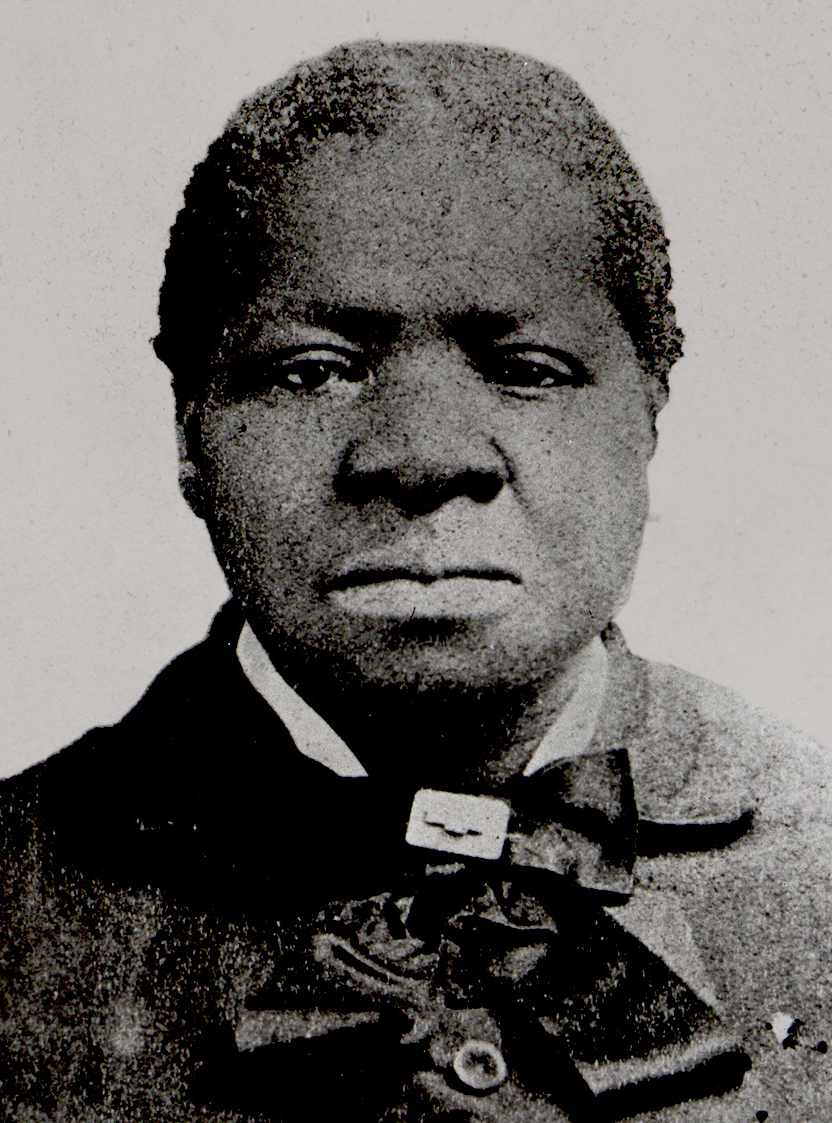
Biddy Mason helped secure her freedom, and that of 13 others, by testifying in a Los Angeles judge’s private chambers.
UCLA LIBRARYSome weeks prior, Mason and Embers had learned of Smith’s intention to uproot his household and farming operation and move to Texas. The women were no strangers to difficult and perilous journeys. They had, in fact, already traveled some 2,500 miles — mostly on foot — from Mississippi to Utah to California on the orders of Smith, who was himself following the westward migration of the Mormon church. But they were done. Working clandestinely, they’d alerted abolitionist allies and friends in the free Black community to their plight. One or more of those confidants had then petitioned Judge Hayes on their behalf.
While the original request for legal intervention was never recorded, or was subsequently misplaced or destroyed, the crux of the complaint appears to have hinged on an accusation of kidnapping — that is, Smith was holding Embers, Mason and their families against their wills and planned to transport them across state lines. In early January, Hayes deployed a party of men, including the sheriffs of Los Angeles and San Bernardino, to track down Smith, who’d moved his workforce into a remote canyon in the Santa Monica Mountains in preparation for departure. The officers took Mason and Embers and their kin into protective custody and demanded Smith appear in court to defend himself. Because Black people could not testify against white people, the judge — who came from a slaveholding family himself — “sort of fudged the law,” said Kevin Waite, a history professor at the University of Texas at Dallas. Hayes brought Mason into his private chambers to hear her testimony before coming to his decision. Whatever she said must have been convincing, as the judge emancipated all 14 of Smith’s enslaved workers, including Mason and her three children and Embers and her eight children and one grandchild.

The Women Behind the Brotherhood
The little-known story of the wives and maids who helped propel the Brotherhood of Sleeping Car Porters to a groundbreaking agreement with the Pullman Company.
See more ›The state constitution outlawed slavery, but Hayes’ decision was unexpected nonetheless. “If you were an African American in California and you wanted to adjudicate your freedom in a court of law, chances are you were not going to win that suit,” Waite said. Indeed, in dozens of similar cases, the opposite outcome had prevailed, with freedom-seekers being returned to their owners. In his book “West of Slavery: The Southern Dream of a Transcontinental Empire,” Waite describes the multi-pronged efforts of slaveholders and their sympathizers to extend the influence of this “peculiar institution” throughout the West, effectively creating what he calls the “Continental South” with California as its “linchpin.” This 1856 ruling, he told me, “marked one of the first real blows against slavery in the Far West.” Not only did it break up Smith’s operation, but it also likely set in motion the self-emancipation of San Bernardino’s remaining enslaved population.
This pivotal moment in California history has languished in relative obscurity for nearly 170 years, but that’s begun to change. This February, the National Underground Railroad Network to Freedom program, a Park Service initiative, designated two new sites to help commemorate this freedom-seeking saga. The first, at Santa Monica Mountains National Recreation Area, memorializes the approximate location in the eponymous coastal range where the women and their families were rescued prior to the court hearing, and the second marks the location in San Bernardino (now Colton) where the women lived and worked in the years leading up to their emancipation. These designations are particularly noteworthy given the relative paucity of Network to Freedom sites in the region: Of the more than 800 locations listed, only about 15 lie west of El Paso.

An American Hero Turns 200
2022 marks 200 years since Harriet Tubman’s birth, and we’re still learning new information about her life and family, and still marveling at how a woman with all the odds…
See more ›The path to designation started in 2022, when the Park Service organized a panel of experts to explore the history of freedom-seeking in the West. The relationships established at that event eventually inspired a collaboration between Waite, Network to Freedom staff, Santa Monica Mountains leadership and two park interns. (The Park Service declined an interview with National Parks.)
The story preserved by these two sites is one of resilience and resourcefulness on the part of Mason and Embers. It is also one of community — of unnamed individuals banding together to thwart Smith’s plans. “The fact that we don’t know who precisely was involved in this freedom suit, or bringing it about, is actually a testament to the ingenuity and the skill of Biddy and Hannah and whoever they were working with to bring about their emancipation,” Waite said. “I mean, they covered their tracks really, really well.” More broadly, these sites shine a light on the largely unacknowledged reality of slavery in the West.
When Christella Maldonado, one of the interns assisting Waite with the Network to Freedom nominations, described the focus of her summer job to friends and acquaintances, she was frequently met with incredulity. “They’re like, ‘Slavery in California, really?’” Maldonado recalled. A doctoral student in public history at the University of California, Riverside, she had been “shocked” to learn that there was a population of enslaved people so close to where she grew up. And yet, she wasn’t surprised that her education had skipped those tales. “The ways in which we’re taught history in high school, or even in some college classes,” Maldonado said, “are not fully going to highlight a story about a Black woman who won her freedom.”
She was still a Black woman in a deeply racist and inhospitable landscape.
Given how infrequently women of color appeared in 19th-century records, cobbling together a picture of the lives of the two leading ladies at the heart of this landmark case was an exercise in persistence and conjecture. Using Waite’s research as a launchpad, Maldonado and fellow park intern Isaiah L. Martin scoured microfilm in the basements of county buildings; pored over library directories, university archives and newspaper clippings; puzzled through tax, property, baptismal and church records; and reviewed the accounts of neighbors, descendants and more. Despite their collective efforts, information gaps abound.
Mason doesn’t appear in any record by name until she’s “well into adulthood,” according to Waite. We know she moved to Los Angeles after her emancipation and achieved renown as a midwife, real estate mogul and philanthropist. We know she had a will — a rarity for any female at the time — and was one of the wealthiest Black women west of the Mississippi River upon her death in 1891. Yet, “she was still a Black woman in a deeply racist and inhospitable landscape,” Waite said, “and so she did not make as many appearances as somebody of that stature would today.” His forthcoming biography on Mason has been assembled over the course of a decade with what he calls “a degree of informed speculation.” He hopes the book’s upcoming publication “sparks a conversation and reevaluation,” he said.
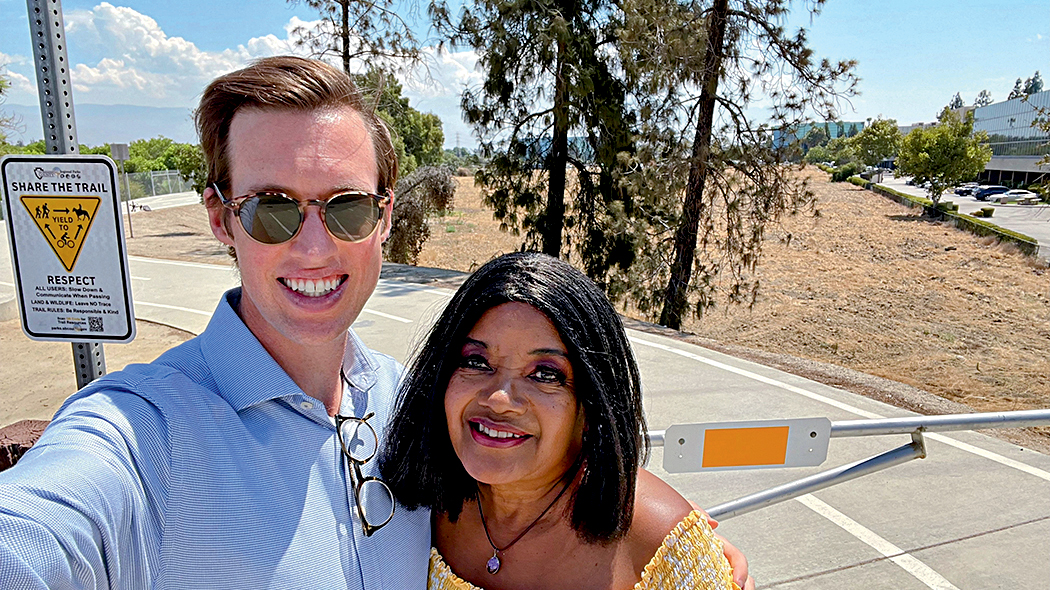
Kevin Waite and Angela Wilkinson at what was once Jumuba Ranch, the California property where Mason and Hannah Embers were enslaved. “I think sometimes California gives itself a free pass when it comes to some of these darker chapters in American history, and it shouldn’t,” Waite said.
COURTESY OF ANGELA WILKINSONThese days, Mason lingers in L.A.’s collective memory as an entrepreneurial benefactor — one can tour her memorial park south of downtown, visit the church she founded or donate to the foundation established in her honor. Embers, on the other hand, has largely vanished, a victim of her time and — Maldonado argues — her class. Basic details, such as the dates of her birth and death, remain frustratingly murky. She lived 40-odd years, married and owned property, but appears conclusively in few of the traditional records. “We don’t even have a photo of her,” said Angela Rona Ingham Wilkinson, Embers’ third-great-granddaughter. “I’m not sure if there ever was one.”
Maldonado repeatedly hit dead ends in her research but said that Embers’ own tenacity in the face of a lifetime of adversity inspired her to persevere. “I so wanted to just kind of do her justice,” she said. Her biggest regret is that she couldn’t locate Embers’ gravesite. Martin and Wilkinson joined her one morning for what she called a “little scavenger hunt” in the most promising location — a cemetery in San Bernardino for the area’s earliest pioneers. They left no closer to the truth, having discovered only badly eroded headstones and telltale signs of neglect. One thing that’s helped Maldonado make peace with the ambiguity has been meeting the woman’s descendants. “In a way,” she said, “I guess she’s kind of still living through them.”
Editor’s Notes:
Wilkinson, 66, became active in the research into Embers’ life when she inherited her father’s genealogical and family papers after he died in 2017. She’d been made aware of her lineage decades earlier when, as a teen, she visited the San Bernardino County Museum with her grandmother and paused at a display illustrating the arrival of pioneers via wagon train in the wake of California’s Gold Rush. Wilkinson’s grandmother had pointed to the mannequins representing the entourage’s enslaved attendants and explained that they were her ancestors. In the years since her father’s death, Wilkinson has gleaned that Embers was an expert horsewoman and was likely the one to instruct Mason in nursing. “I’m finding out more and more information on this amazing woman,” she said.
Though she wishes her father were alive to witness the recent revival of interest, she is happy that Black history, especially Black women’s history, is being recognized with these new Network to Freedom sites. “When I talk about this, it just sends chills through me,” Wilkinson said. “Our history is ugly. You know, slavery is ugly, but we must learn from our past.”
About the author
-
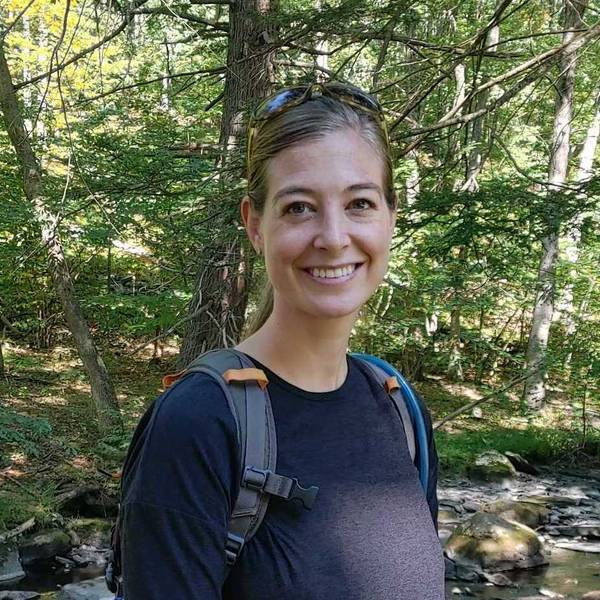 Katherine DeGroff Associate and Online Editor
Katherine is the associate editor of National Parks magazine. Before joining NPCA, Katherine monitored easements at land trusts in Virginia and New Mexico, encouraged bear-aware behavior at Grand Teton National Park, and served as a naturalist for a small environmental education organization in the heart of the Colorado Rockies.
-
Blog Post
8 Park Sites That Tell the Gullah Geechee Story
Among the Sea Islands of the Southeast, aspects of African culture live on through food, spiritual traditions, the arts, community — and even a language spoken nowhere else in the…
-
Blog Post
Fat Bears at a Crossroads
As Fat Bear Week 2026 begins, a proposed mining project in Alaska threatens the future of brown bears.
-
Press Release
Proposed Arctic Mine, Ambler Road Threatens America’s Largest Park Landscape
“All Americans should be outraged that our taxpayer dollars are being wasted to fund international companies that seek to destroy our country’s largest park landscape" -- NPCA Alaska Campaign Director…


