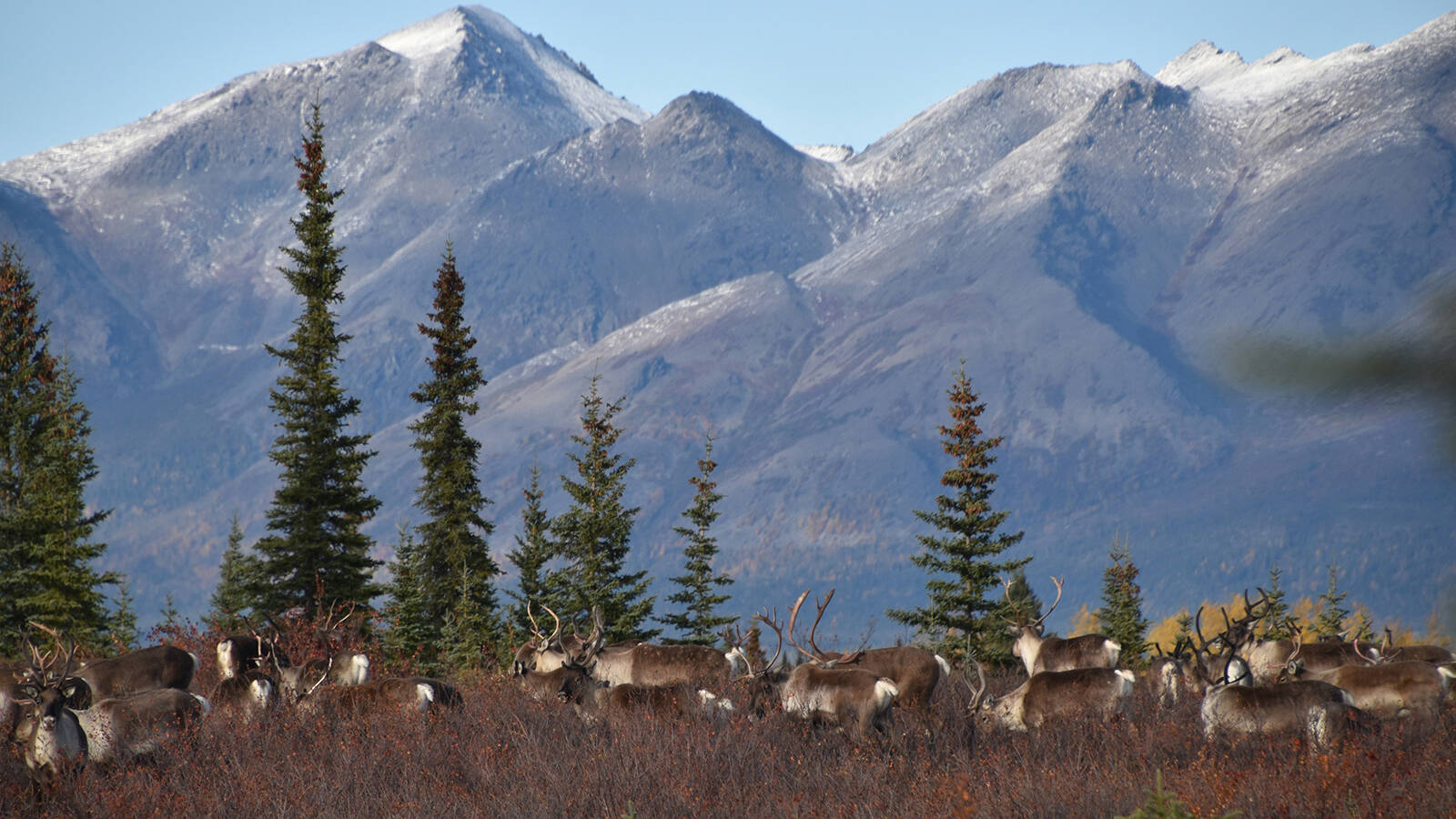
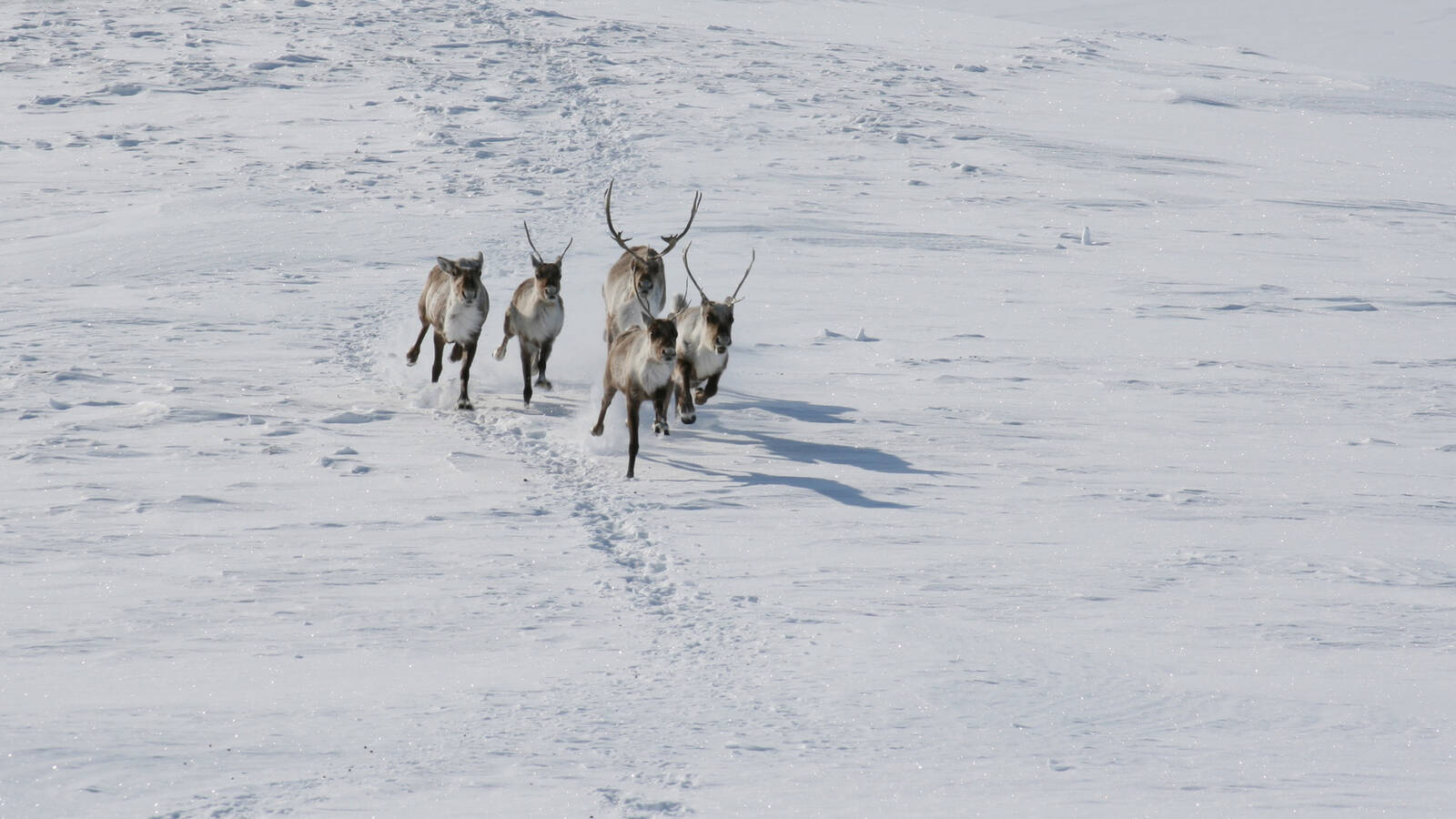
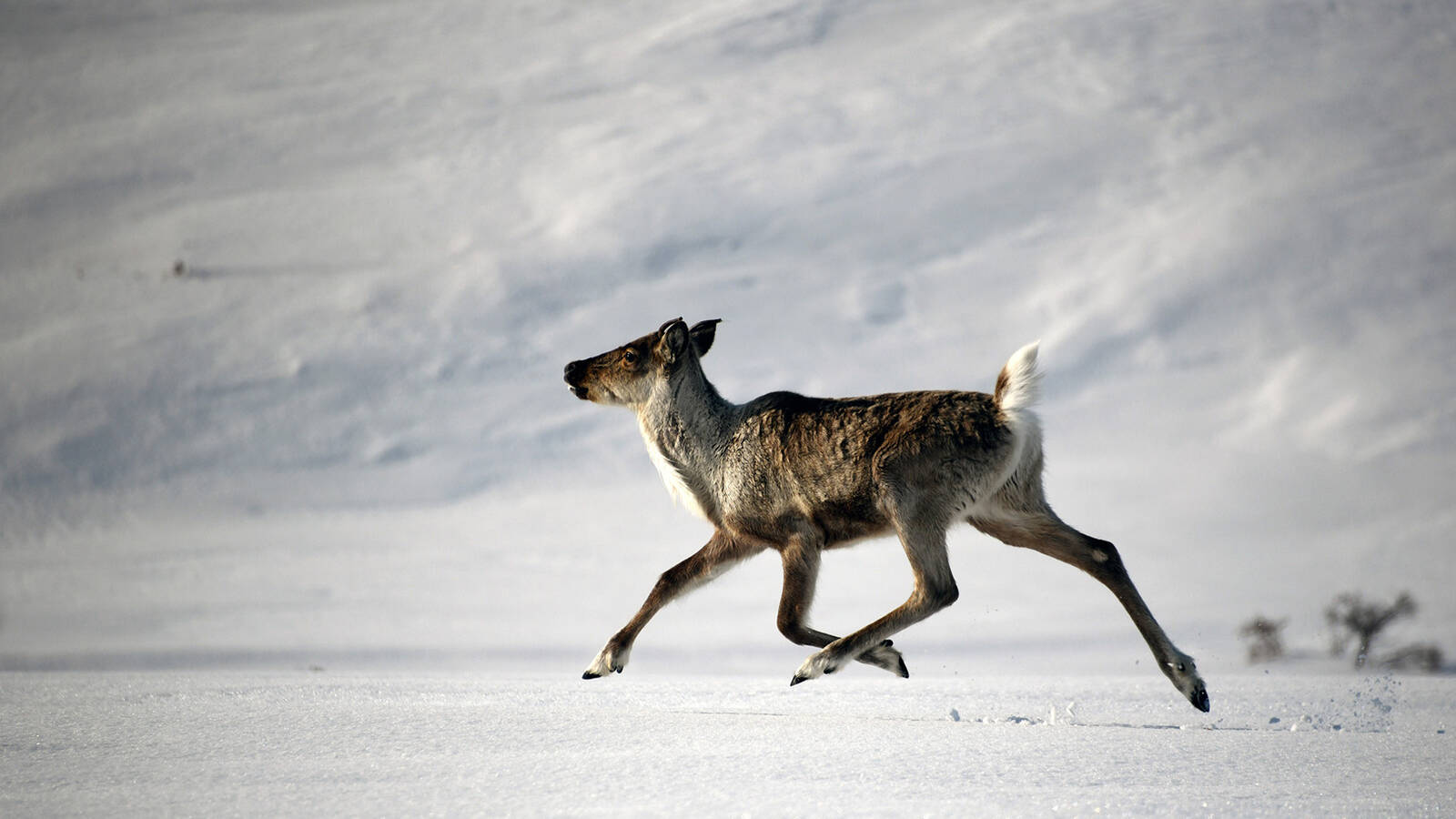
This majestic herd in Alaska travels a distance equivalent to New York City to Seattle each year. But can it continue in the face of human-caused threats?
If you think reindeer and caribou look alike, you are correct. They are actually the same species, Rangifer tarandus, but they differ in some ways. As the National Park Service points out, “caribou” is the name used in North America, while “reindeer” is the word used in Europe and Asia. All caribou are wild animals, whereas reindeer might be wild, domesticated or semi-domesticated.
Each year, the Western Arctic Caribou Herd migrates across a large portion of Alaska, including through several of the state’s national parks. Here are 10 facts you may not know about this drove and the threats it faces.
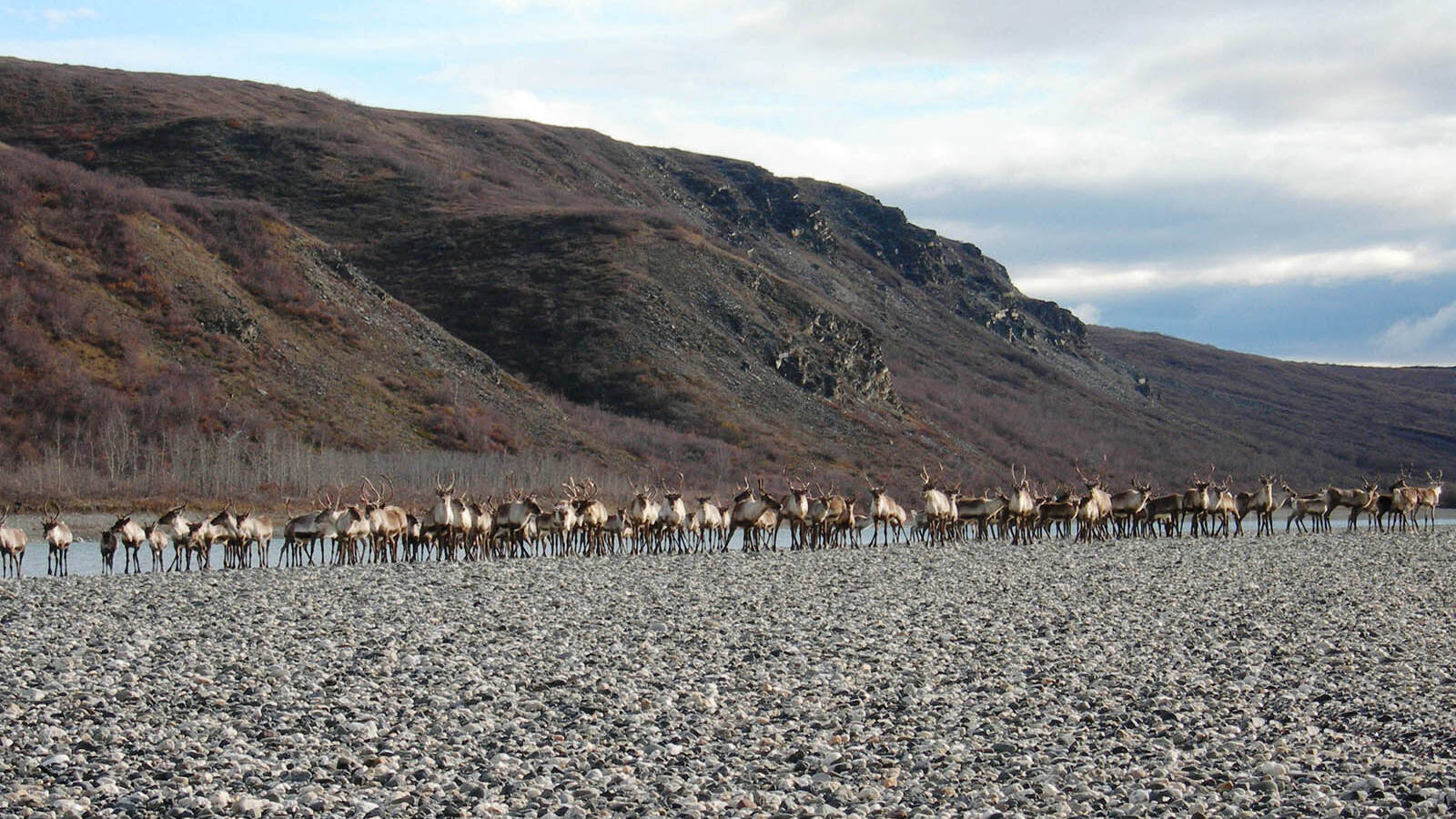
1. The herd has one of the longest wildlife land migrations on Earth, at 2,700 miles each year across northwest Alaska — longer than the distance between New York City and Seattle. The herd wanders from their calving grounds in the Utukok Uplands to their wintering grounds on the Bering Land Bridge and back again.
2. Over 20 million acres of the Western Arctic Caribou Herd range are managed by the National Park Service — including Gates of the Arctic National Park and Preserve, Kobuk Valley National Park, Noatak National Preserve, Bering Land Bridge National Preserve, and Cape Krusenstern National Monument.
3. Over thousands of years, the hooves of the Western Arctic Caribou Herd have pounded zigzag ruts across mountains and through the Alaskan tundra as they migrate each year to graze on lichen, moss, grass and other low-growing plants.
4. Their numbers are declining. According to the U.S. Fish and Wildlife Service, the herd numbered 152,000 in July 2023, down from 188,000 in 2021 and 500,000 in 2003. This may be due to transformations in the region’s precipitation and vegetation as a result of climate change. The caribou will need a vast, intact range to adapt as the earth’s climate continues to shift.
5. An essential factor in the herd’s resilience over thousands of years is its ability to move with the flow of the land and its changing conditions. They need lots of space to roam — about 100 million acres, which is about the size of California or Montana.
6. In Northwest Alaska, the Western Arctic Caribou Herd shares homelands with many Indigenous Tribes. The Gwich’iin word for caribou is Vadzaih; the Inupiaq word is Tuttu; the Koyukon call caribou Bedzeyh; the Alutiiq people call them Tuntuq; and Linqít people call them Watsíx. People who speak in Unangam Tunuu use the word Itx̂ayax̂, while the Tanacross language calls them Wudzih. While names and regions greatly differ, these caribou are a shared cultural symbol and also an important food source.
7. Scientific studies indicate that roads directly impact caribou migration behavior, and there is serious concern that the proposed 211-mile Ambler industrial mining road could shift the Western Arctic Caribou Herd away from Alaska Native villages that depend on the herd to feed their households. The Ambler Road project would include a mining corridor with large trucks plowing across lands and waters otherwise only traveled by caribou, Alaska Native Tribes and the occasional adventurer. These trucks would transport hazardous materials many times a day along the route, which crosses nearly 3,000 rivers and streams including the Kobuk River.
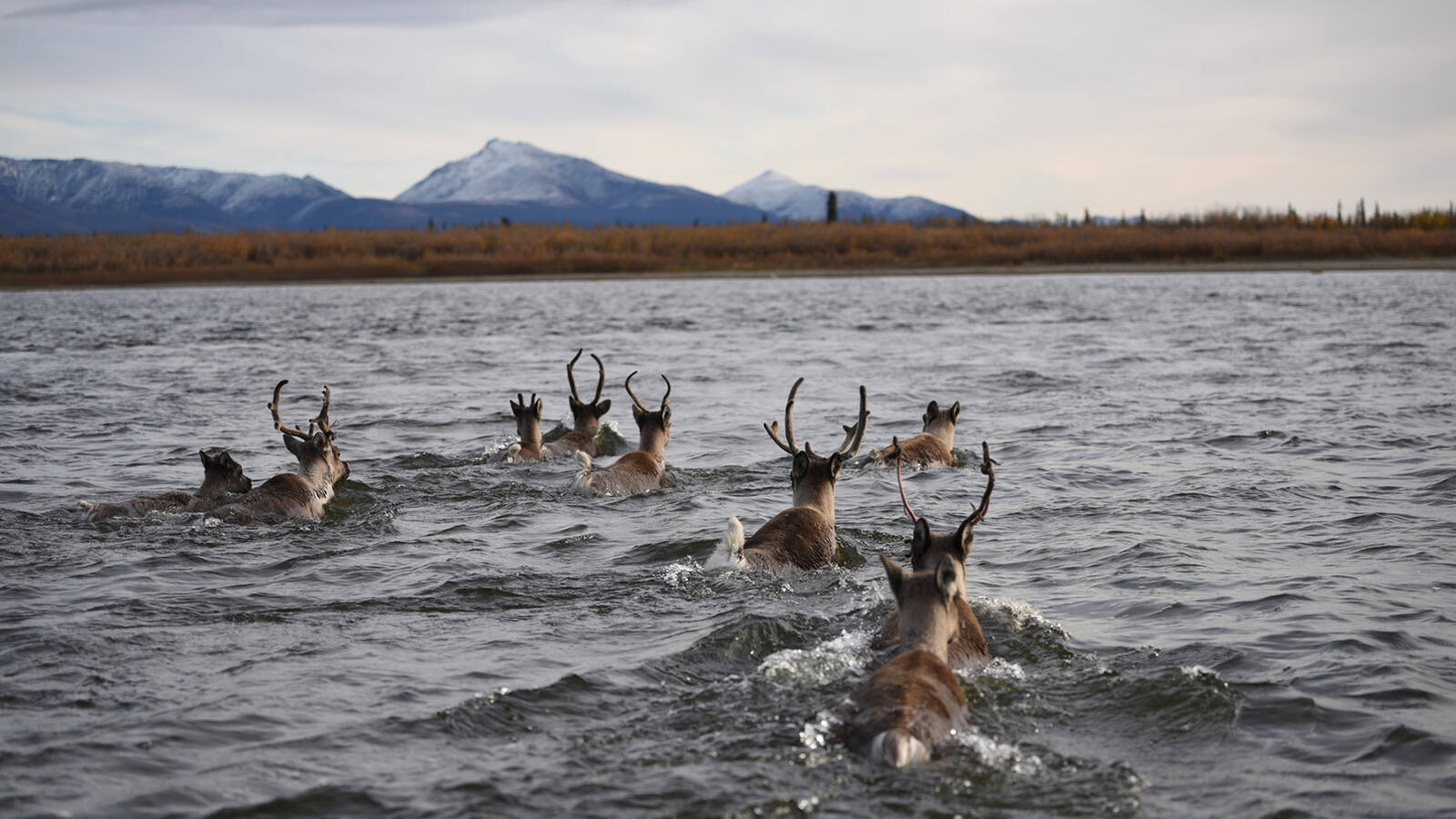
8. While these reindeer may not fly, the Western Arctic caribou’s paddle-like hooves help them swim across waterways, such as the Kobuk River. The caribou herd fords this river twice a year along its journey. Because of this threat of road construction, the Kobuk landed on the 2024 list of most endangered rivers from the conservation group American Rivers.
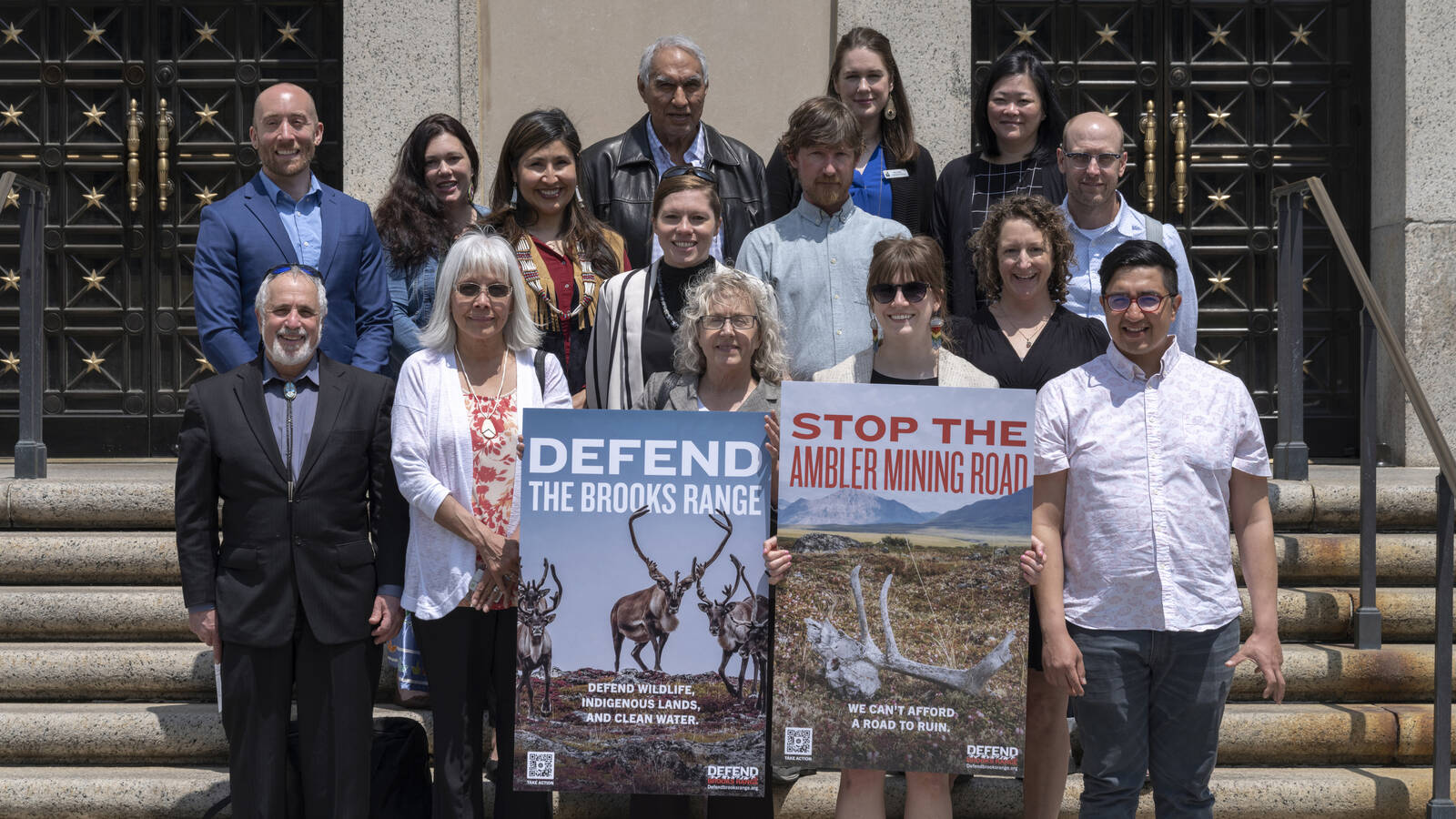
9. Alaskans and national park advocates from across the country successfully blocked the proposed Ambler mining road — twice in 2024, only to have the current administration attempt to reverse those victories in 2025. If built, the road would threaten the vast national park landscapes of Northwest Alaska.
10. More than 87% of people in the U.S. support protecting wildlife such as this caribou herd from mining development in Alaska’s park lands. If built, the Ambler road would not benefit park visitors or local communities — its sole purpose would be to support the mining industry.
NPCA’s fight to protect the Western Arctic Caribou Herd continues. The organization’s goal is to maintain the connectivity of one of the world’s last great ecosystems, a wild tract of land unbroken by roads or industry. By blocking the Ambler Road a third time, we have the opportunity to keep intact one of Earth’s few remaining massive tracts of roadless land.
From staff reports by Alex Johnson, Kati Schmidt and Linda Coutant
Stay On Top of News
Our email newsletter shares the latest on parks.


-
Press Release
In Less Than a Month, Mining Claims Filed in Bears Ears Already Triple the Total Number Filed During Previous Trump Reduction
“With 72 mining claims staked on lands withdrawn from Bears Ears over the last three weeks alone, the threat of a modern-day mineral rush has arrived at one of our…
-
Blog Post
Postcards from Roadless Areas
What do designated roadless areas look like and what do they mean to national parks? NPCA colleagues share their experiences from walks through three roadless woods.
-
Blog Post
Fat Bears at a Crossroads
As Fat Bear Week 2026 begins, a proposed mining project in Alaska threatens the future of brown bears.