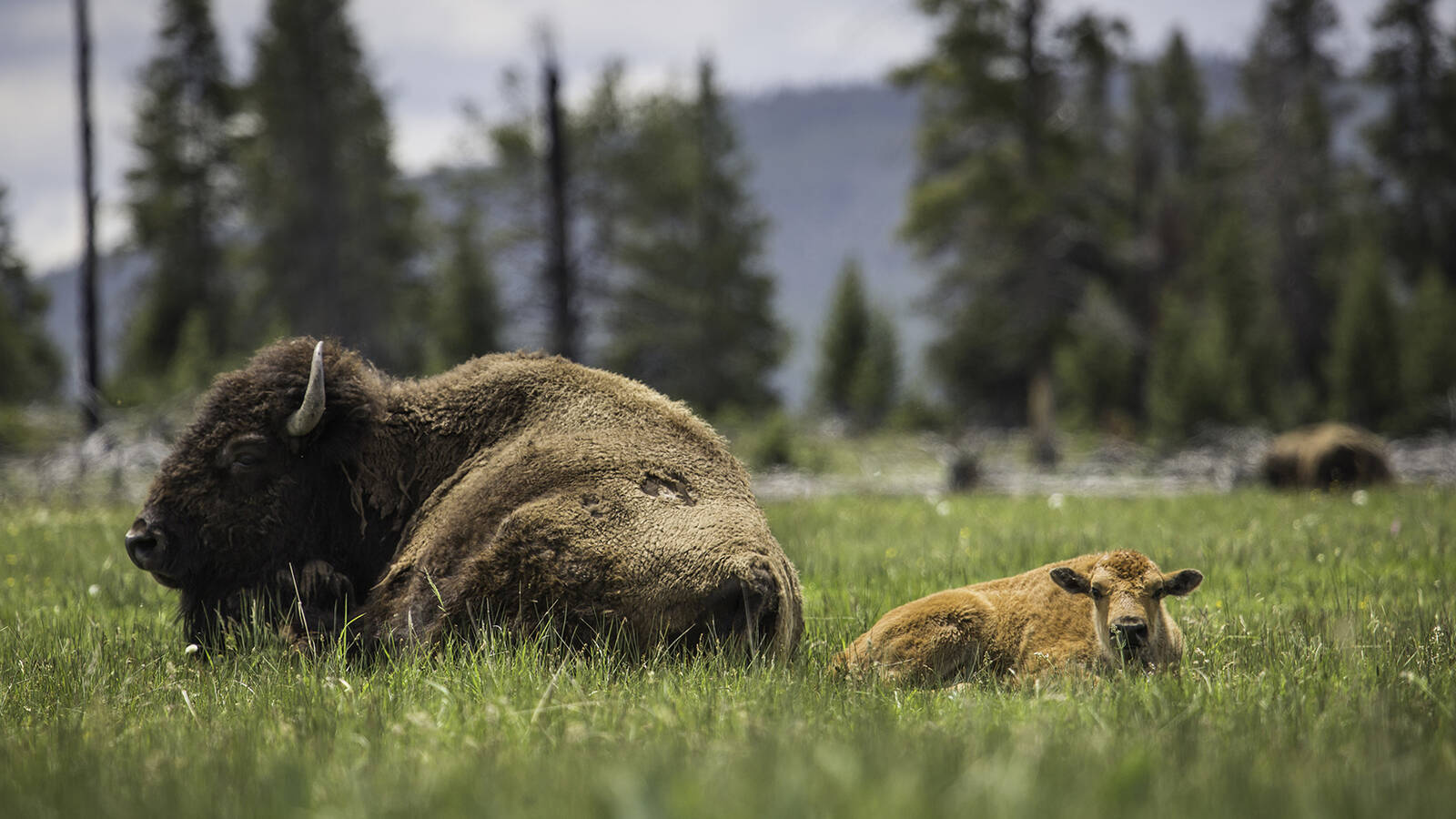
“Those of us who live in Montana understand that bison belong on the land. Bison are woven into America’s conservation legacy and Montana’s history and cultures” - NPCA Greater Yellowstone Senior Program Manager Michelle Uberuaga
Billings, MT — The state of Montana today moved to dismiss its lawsuit over Yellowstone National Park’s science-based bison management plan. The Fort Peck Assiniboine and Sioux Tribes and conservation groups, who intervened in defense of Yellowstone’s plan last year, urged the National Park Service to stand by its bison conservation progress against Montana’s attacks. The plan, which was adopted in 2024, allows for roughly 5,000 bison in the park and creates more opportunities for Native Nations to restore brucellosis-free bison to Tribal lands.
“The Fort Peck Tribes are encouraged to see the State of Montana dismiss its lawsuit so that the parties can move past litigation and focus on the real work ahead on the Bison Management Plan,” said Floyd G. Azure, Chairman, Assiniboine and Sioux Tribes of the Fort Peck Reservation. “We look forward to continuing to work with the National Park Service on the plan, particularly to maximize the use of the Fort Peck Tribes’ successful bison quarantine program as we continue to restore wild bison to Indian Country and fulfill Treaty and trust obligations.”
In the months ahead, NPS will release a draft supplemental environmental impact statement that could shift or maintain the direction of Yellowstone’s bison management plan. The public will have the opportunity to comment on the draft SEIS to urge the park to maintain a science-based approach to bison conservation and management.
“Those of us who live in Montana understand that bison belong on the land. Bison are woven into America’s conservation legacy and Montana’s history and cultures,” said Michelle Uberuaga, Greater Yellowstone senior program manager for National Parks Conservation Association. “People visit Montana and Yellowstone to witness the magic of this place, including bison. National Parks Conservation Association remains committed to working with the park to support bison restoration on the landscape, implementation of the Yellowstone bison management plan, and the bison conservation transfer program.”
The intervenors note that the plan adopted by the park was a moderate, science-based alternative that recognized the significant role of bison in maintaining healthy ecosystems. The plan also provided for increased Tribal hunting opportunities outside of the park to honor treaty rights, enhanced tools to provide meat and hides to Tribes, and enhancements to the Bison Conservation Transfer Program.
“Montana was right to move to dismiss this lawsuit. It was a frivolous challenge to a widely supported, science-based plan that builds on more than 20 years of successful Yellowstone bison management,” said Scott Christensen, executive director of the Greater Yellowstone Coalition. “We should be working together to build on that progress, not fighting it in court. That means treating bison as valued wildlife, expanding tribal buffalo restoration opportunities, reducing conflict, and protecting Montana’s livestock industry. As the National Park Service revisits the plan, we’ll keep standing up for solutions that move Yellowstone bison conservation forward.”
The state of Montana filed suit in December 2024 seeking to reinstate outdated policies that do not reflect the best available science, more than two decades of progress in Yellowstone bison conservation, broad Tribal support for restoration, or the values of the vast majority of Montanans and Americans. The state sought to decrease the park’s bison population by nearly half despite the plan setting a population range well within the 10-year average that has allowed Yellowstone managers to maintain separation between bison and cattle. To date, there have been zero documented cases of the transmission of brucellosis from bison to cattle.
“The state took the appropriate action and walked away from a lawsuit that aimed to disrupt the collaborative work that the National Park Service has had with our local community and the state,” said Karrie Kahle, conservation director with Park County Environmental Council. “We need to keep working together to support healthy bison populations on the landscape, a healthy ecosystem and the continued success of the bison transfer program.”
“Now that the state of Montana has moved to dismiss its baseless lawsuit, we urge Yellowstone to stand by its progress on bison conservation,” said Jenny Harbine, managing attorney for Earthjustice’s Northern Rockies Office. “When the Park Service releases its draft SEIS in the coming months, the public will have yet another opportunity to demand continued protections for our national mammal. We hope that the millions who visit Yellowstone for a chance to see its iconic bison herd speak up on their behalf.”
“Dismissing Montana’s misguided lawsuit would be a win for Yellowstone’s bison, but the fight is far from over. The Yellowstone bison management plan is accomplishing what it set out to do: allowing park visitors to experience our national mammal roaming across vast landscapes, while advancing a successful transfer program to return buffalo to tribal lands and Indigenous communities,” said Chamois Andersen, senior field representative at Defenders of Wildlife. “This plan is grounded in science and guided by the deep cultural significance of buffalo to Native Nations. As we await the updated plan, we will be ready to defend a science-based approach that protects Yellowstone’s bison and advances their long-term recovery.”
Yellowstone bison are a link to the millions of Plains bison that once supported the cultural, spiritual, and nutritional practices of countless Indigenous communities for millennia. The Tribes’ access to Yellowstone bison is not only paramount for cultural reasons, but a protected treaty right that the state’s lawsuit risked impeding. The Fort Peck Tribes, which operate the only approved assurance testing facility capable of receiving bison cleared from quarantine in Yellowstone, have been integral partners with the National Park Service working to restore bison through the Bison Conservation Transfer Program, which has transferred more than 400 brucellosis-free bison to 26 Tribes.
Earthjustice represents the Fort Peck Assiniboine and Sioux Tribes, National Parks Conservation Association, Defenders of Wildlife, the Greater Yellowstone Coalition, and Park County Environmental Council in the intervention.
For Media Inquiries
-
General
-
- NPCA Region:
- Northern Rockies
-
Issues


-
Blog Post
FAQ: Border Destruction at Big Bend
The Trump administration destroyed parts of Big Bend National Park in August. We share updates, answer frequently asked questions and share how you can help.
-
Press Release
NPCA, Conservation Groups Challenge Trump’s Decimation of Two National Monuments in Utah
"Support for these monuments has never wavered and neither will our fight to protect them" -- NPCA Southwest Campaign Director Erika Pollard
-
Press Release
45 Million Acres of Public Lands, Parks Threatened by Proposed End of Roadless Rule Protections
"When combined with the recent administrative actions including advancing mining and oil and gas development on public lands and removing habitat protections from threatened and endangered species, ending the roadless…