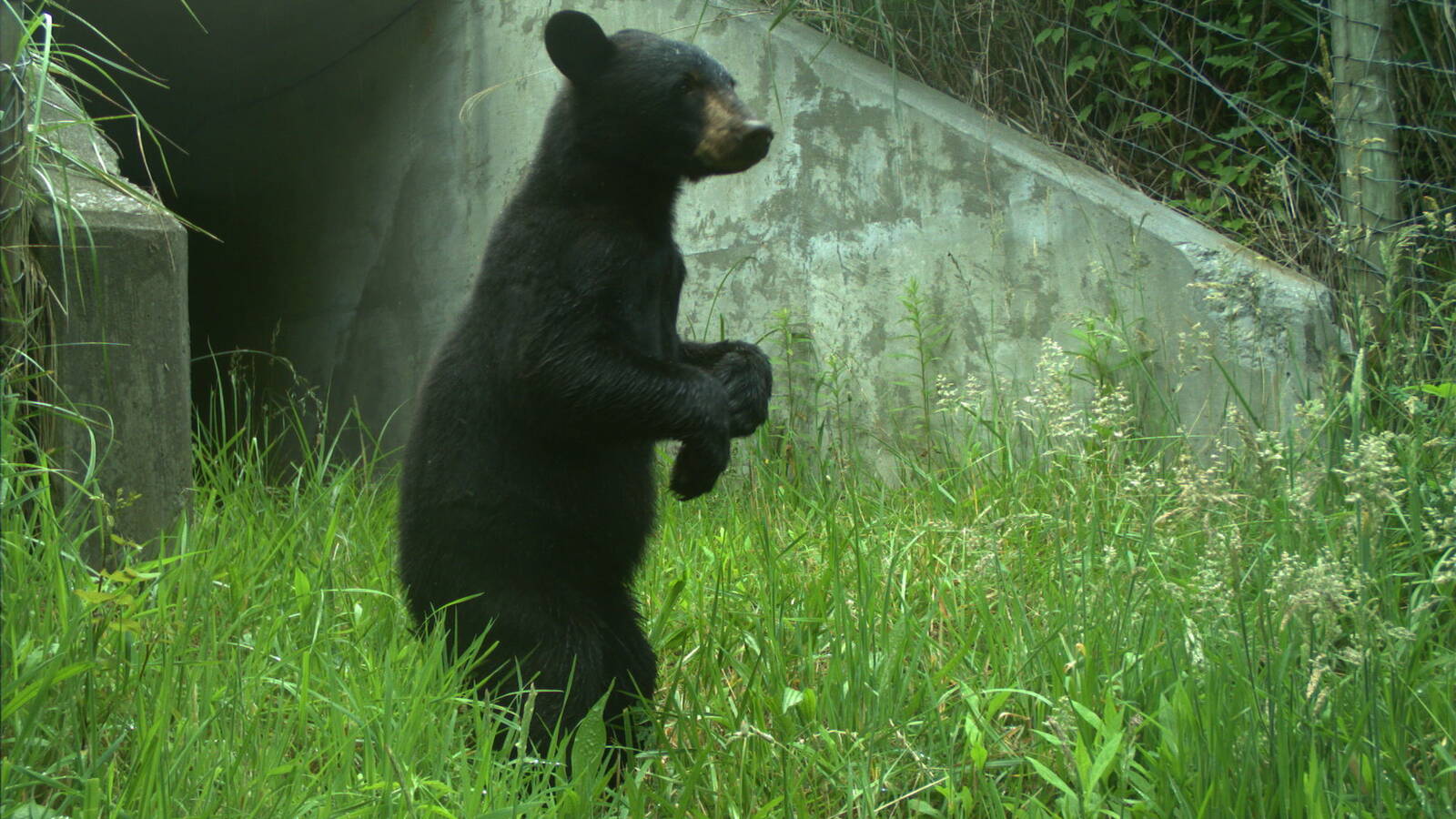
NPCA joins fellow members of the Safe Passage coalition in applauding millions of dollars in new recurring funding for wildlife crossings that will help keep people and park wildlife safe.
Raleigh, N.C. – The Safe Passage coalition applauds the North Carolina General Assembly’s appropriation of funds for wildlife crossings and mitigation strategies in the state’s budget, marking a historic commitment to improving safety for both people and wildlife across North Carolina. The total appropriation comes to $10.2 million recurring every two years.
“Safe Passage thanks members of the General Assembly and all partners who supported this historic investment in conservation for future generations,” said Jill Gottesman with The Wilderness Society. “We look forward to helping implement projects that make North Carolina’s transportation system safer and more connected for both people and wildlife.”
The recurring investment builds on the General Assembly’s landmark $2 million appropriation in 2023, which represented North Carolina’s first dedicated state funding for wildlife crossings. After two years without an enacted state budget, lawmakers have now established a permanent funding source that will allow the state to plan and implement wildlife crossing projects for years to come.
“The Great Smoky Mountains National Park and connected landscapes are havens for iconic wildlife like black bears and elk. But animals need room to roam, and when they roam onto roadways, the results can be catastrophic,” said Jeff Hunter, National Parks Conservation Association Southern Appalachian Director. “We are incredibly grateful to North Carolina lawmakers for securing permanent funding for wildlife crossings.”
North Carolina is one of the most biologically diverse states in the nation, home to plant and animal species found nowhere else in the world. As roads and development continue to fragment habitat, strategically placed wildlife crossings help animals move safely under or over highways, reduce costly collisions with motorists and improve the resilience of wildlife populations.
Nationally, an estimated one million large animal collisions with vehicles occur each year, causing $8 billion in associated costs for damages and hundreds of human fatalities. Wildlife crossings — including underpasses, overpasses and associated fencing — have been proven to dramatically reduce collisions while maintaining critical habitat connectivity.
“Wildlife crossings save lives by reducing dangerous wildlife–vehicle collisions while reconnecting habitats that are essential to the long-term survival of many of our state’s native species. We are grateful to the General Assembly for recognizing that these projects are smart investments in both public safety and conservation,” said Tim Gestwicki with North Carolina Wildlife Federation.
The North Carolina Department of Transportation and the North Carolina Wildlife Resources Commission see wildlife vehicle collisions and habitat fragmentation as critical issues to address and have invested and implemented wildlife crossings projects across the state. This dedicated funding mechanism will allow them to spearhead new projects and pay for the cost of maintaining the wildlife-friendly infrastructure.
Safe Passage originally formed to advance wildlife connectivity in the Pigeon River Gorge of Western North Carolina and East Tennessee, where Interstate 40 bisects one of the state’s most important wildlife corridors. The Gorge provides critical habitat for black bears, elk, bobcats, white-tailed deer and countless other species moving between the Great Smoky Mountains National Park, Pisgah and Cherokee National Forests and along the Southern Appalachian Mountains.
“What began as a vision to reconnect one of North Carolina’s most important wildlife corridors has resulted in a historic, statewide effort to make roads safer for people while conserving the wildlife and natural heritage that define North Carolina,” said Nikki Robinson with Wildlands Network.
The coalition is made up of nearly 20 federal, state, tribal, and non-governmental organizations that have been making North Carolina and Tennessee mountain highways a safer place for wildlife and humans since 2017. They are supported by a steering committee comprised of Defenders of Wildlife, National Parks Conservation Association, North Carolina Wildlife Federation, Smokies Life, Southern Appalachian Highlands Conservancy, Wildlands Network and The Wilderness Society. More information on the coalition can be found at SmokiesSafePassage.org.
###
For Media Inquiries
-
General
-
- NPCA Region:
- Southeast
-
Issues


-
Blog Post
Postcards from Roadless Areas
What do designated roadless areas look like and what do they mean to national parks? NPCA colleagues share their experiences from walks through three roadless woods.
-
Blog Post
Fat Bears at a Crossroads
As Fat Bear Week 2026 begins, a proposed mining project in Alaska threatens the future of brown bears.
-
Press Release
Proposed Arctic Mine, Ambler Road Threatens America’s Largest Park Landscape
“All Americans should be outraged that our taxpayer dollars are being wasted to fund international companies that seek to destroy our country’s largest park landscape" -- NPCA Alaska Campaign Director…