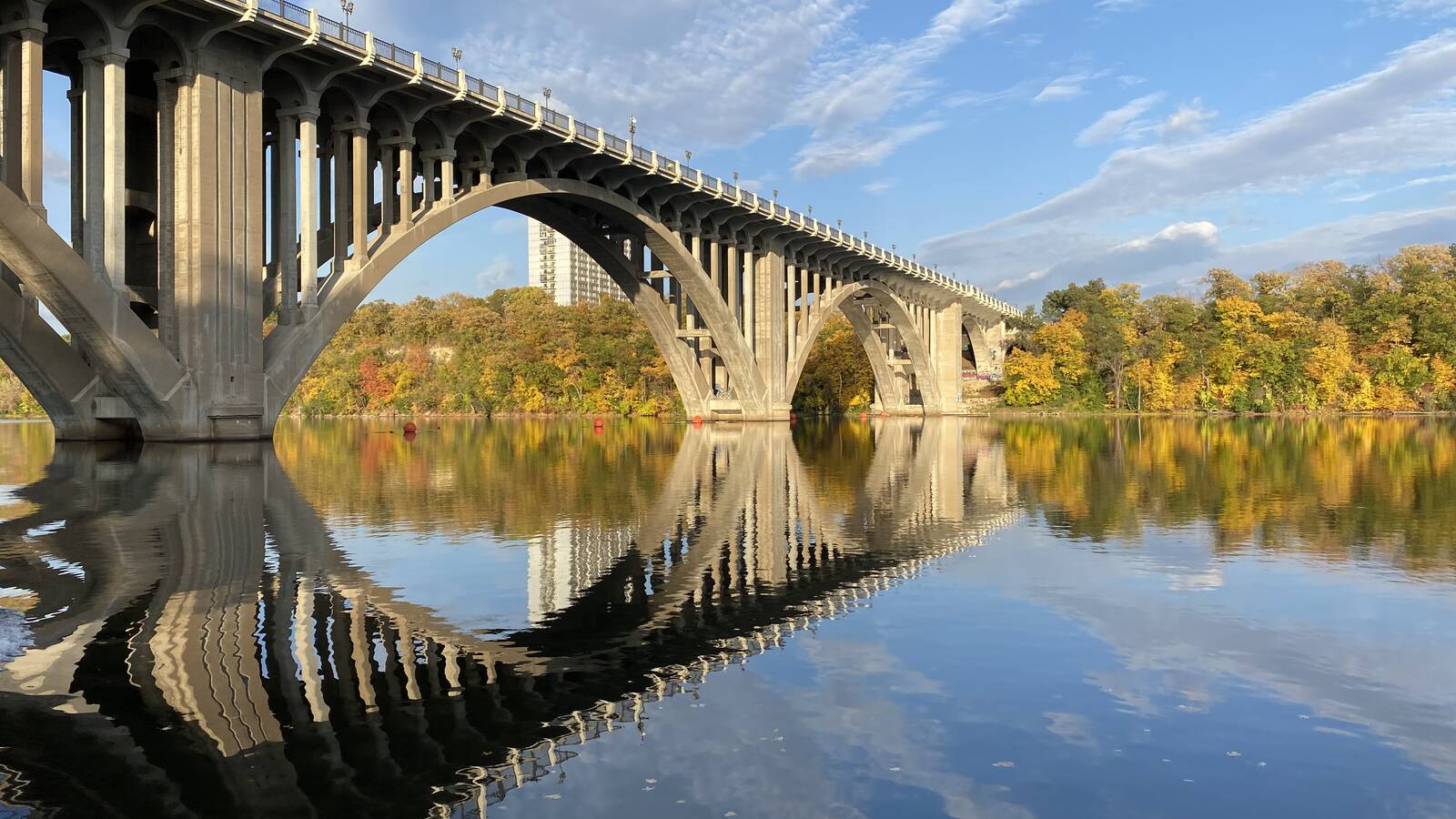
Our "Reimagining the River," report reveals opportunities to expand recreation, strengthen community connections, and generate economic benefits for the Twin Cities region.
MINNEAPOLIS – Today, the National Parks Conservation Association (NPCA) released an economic report examining how restoring portions of the Mississippi River in the Twin Cities by removing two locks and dams within Mississippi National River and Recreation Area, could expand recreation, strengthen community connections, and generate economic benefits for the region.

Reimagining the River
A first look at potential recreation & economic opportunities along a restored Mississippi River in the Twin Cities.
See more ›NPCA commissioned the report, Reimagining the River, as a part of a broader suite of studies underway by federal and state agencies, nonprofit organizations, academic partners and Tribal communities, to inform the future of the Mississippi River and the surrounding communities’ connections to it.
Reimagining the River is focused on the eight-mile stretch of river from St. Anthony Falls to the upper confluence of the Mississippi and Minnesota rivers, and lies within the Mississippi National River and Recreation Area, the only national park unit dedicated to this mighty river. This stretch—known as the Gorge—is one of the most distinctive and culturally significant urban river reaches anywhere in the country.
“For the first time in over a century, our communities have an opportunity to redefine our relationship with the Mississippi River,” said Christine Goepfert, Midwest Policy Director for the National Parks Conservation Association. “River restoration through lock and dam removal could expand river access, strengthen community connections, and generate economic opportunities for this region at the heart of this national park.”
Following the end of commercial barge traffic in 2015, NPCA’s Reimagining the River explores the possibility of lock and dam removal, which is currently under evaluation by the U.S. Army Corps of Engineers, along with other options. While NPCA does not have a formal position supporting or opposing dam removal, the report highlights the economic opportunities removal could provide as discussions continue about the river’s future.
NPCA worked with the Harbinger Consultancy to develop a preliminary analysis of how a restored Mississippi River might impact outdoor recreation, improve community access and provide expanded economic benefits in the region. “While we cannot say for sure what will happen in the Twin Cities, peer community experience indicates that investment in river restoration and recreation can pay measurable economic dividends,” said Michele Archie, Harbinger Principal.
The report features case studies of comparable communities that have invested in river recreation, share similar urban characteristics with the Twin Cities, and evaluated the economic return of these investments. Communities include Richmond (VA), Golden (CO), Pittsburgh (PA), and San Antonio (TX). Lessons from these cities show that thoughtful design, programming and inclusive partnerships and cultural connections could put the Twin Cities on par with the nation’s best. Each of these case studies included recreational opportunities like paddling, tubing, whitewater, and land use trails expanding the range of use and access for visitors and locals alike.
Data from these cities show that strategic investment in river restoration yields substantial local returns, generating as much as $34 million annually in visitor spending. These investments could boost local tax revenues, support small businesses, increase tourism and outdoor recreation economies and offer opportunities for riverfront revitalization.
“What’s clear from our research is that with more river access comes more economic opportunity for the urban communities in the region,” added Goepfert.
Currently, water-based recreation represents only a small fraction of the millions of annual visits to the Mississippi River. Restoring a free-flowing river here would replace the current flatwater system with a dynamic, shallow environment featuring pools, rapids, and more than a dozen emerging mid-channel islands. This would shift and expand potential river use in the Twin Cities.
None of the peer communities involved dam removal, so to understand the potential of river restoration, NPCA’s report also analyzed three additional urban river communities, including Columbus (GA), Milwaukee (WI), and Cuyahoga Valley (OH). After dam removal, those communities attracted new riverfront investments, experienced increases in visitation at new river-related parks and saw increases in native fish.
According to data from the Minnesota Department of Natural Resources, past dam removals in the state saw an average of 66% of absent fish species return upstream. Studies suggest that reconnecting river habitat could substantially increase the number of native fish species present within the corridor.
The future of the Mississippi River will be shaped by science, community voices, Tribal perspectives, economic analysis, and public engagement. NPCA remains committed to working with local communities to understand what is possible while ensuring that future decisions reflect the river’s ecological, cultural, recreational and economic importance.
Read the full report here.
###
About the National Parks Conservation Association: Since 1919, the nonpartisan National Parks Conservation Association (NPCA) has been the leading voice in safeguarding our national parks. NPCA and its more than 1.9 million members and supporters work together to protect and preserve our nation’s most iconic and inspirational places for future generations. For more information, visit www.npca.org.