Reimagining the River
A first look at potential recreation & economic opportunities along a restored Mississippi River in the Twin Cities.
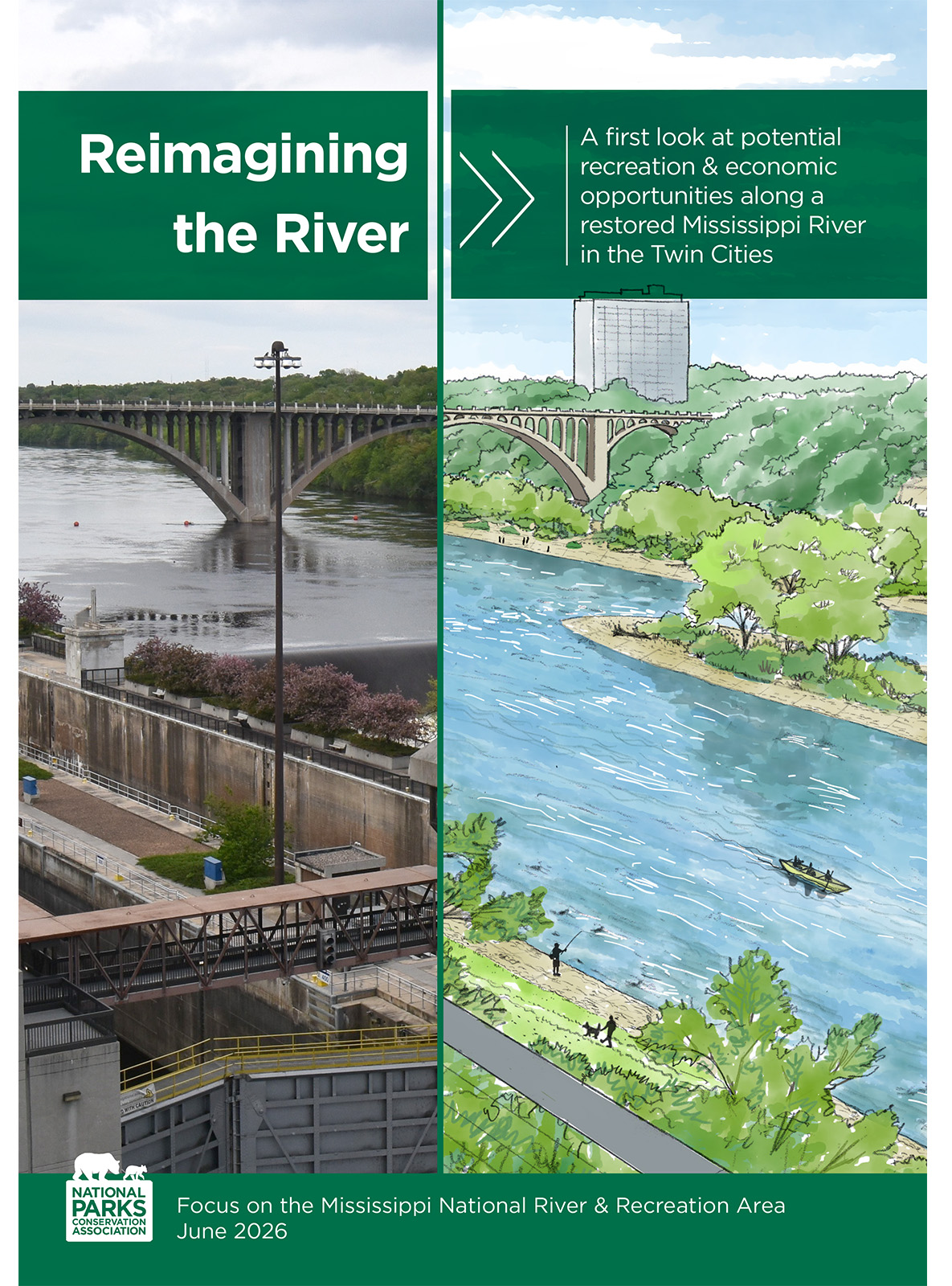
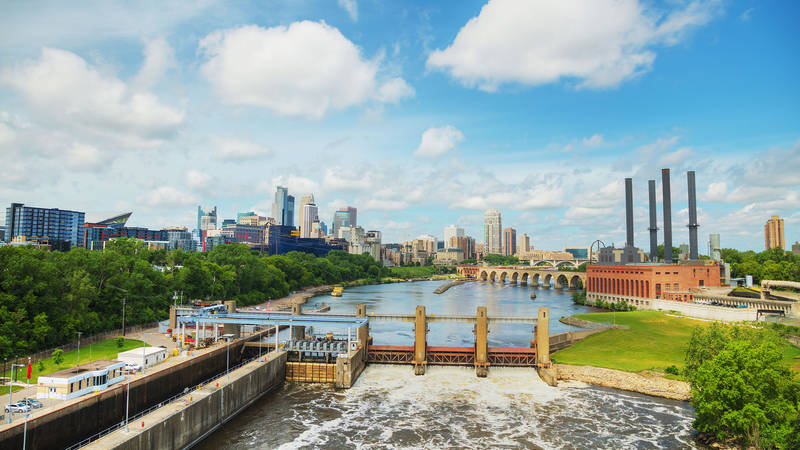
For the first time in over a century, we have the opportunity to establish a new relationship with the Mississippi River in the Twin Cities. Commercial barge traffic ended at the Lower St. Anthony Falls Lock and Dam and Lock and Dam No. 1 in 2015. Now the Army Corps of Engineers, which operates the structures, is studying options for both sites. The choice now is whether these locks and dams remain with some new use or are removed.*
Removing the structures is a real possibility. Doing so would restore a free-flowing river through the heart of the Twin Cities and reshape the river’s ecology and how people interact with it recreationally, culturally and economically.
The eight-mile stretch of river from St. Anthony Falls to the upper confluence of the Mississippi and Minnesota rivers lies within the Mississippi National River and Recreation Area, the only national park unit dedicated to this mighty river. This stretch—known as the Gorge—is one of the most distinctive and culturally significant urban river reaches anywhere in the country. That’s why the National Parks Conservation Association (NPCA) commissioned this preliminary study to explore how a restored river might change outdoor recreation and influence community and economic benefits.
Restoring an eight-mile stretch of the Mississippi River could open a slate of new opportunities for outdoor recreation, cultural preservation, habitat restoration and fish and wildlife diversity in the heart of the Twin Cities.
Reimagining the Mississippi River
Help support a healthy, accessible Mississippi National River and Recreation Area.
See more ›This report is part of a broader suite of studies led by agencies, nonprofits and academic partners that aim to inform decision-making about the river’s future. NPCA’s contribution focuses on recreation and economic opportunity, complementing engineering, sediment, feasibility, safety and cultural studies being led by others.
NPCA does not have a formal position supporting or opposing dam removal. Much remains to be examined, including the safety and feasibility of removal. NPCA supports rigorous analysis, stakeholder engagement and community-centered processes to evaluate restoration opportunities within the river corridor.
*The Army Corps of Engineers is conducting a separate study for the Upper St. Anthony Falls Lock.
-
General
-
- NPCA Region:
- Midwest
-
Issues
-
Press Release
Atrocious Reported Changes to the ESA Could Threaten Extinction to Park Wildlife, Wild Nature
"This memo appears to suggest that it’s no longer the purpose of the ESA to ensure animals such as grizzly bears, North Atlantic right whales, or Florida panthers are protected"…
-
Press Release
First Mining Claims Filed in Lands Cut from Bears Ears National Monument
"National park units and their surrounding landscapes are no place for energy development, but outdated laws elevate mining above all other uses on these lands. We will continue to fight…
-
Press Release
Groups File Injunction to Stop Development at West Potomac Park
“West Potomac Park is treasured green space and we will not stand for the unlawful destruction of public lands that belong to all of us."