"Americans overwhelmingly agree that our national parks are worth investing in so they can be protected and enjoyed for generations to come. This bill is a start but misses the mark." - Emily Douce, NPCA's Acting VP of Government Affairs
WAHSINGTON, DC – Today, the United States House of Representatives Transportation and Infrastructure Committee introduced the bipartisan BUILD America 250 Act, which includes $1.8 billion for critical road, bridge, and transportation system repairs and improvements at national parks across the country. The legislation marks a slight increase of $149 million over 5 years from the previous reauthorization in 2021. The National Parks Conservation Association (NPCA) appreciates the modest increase but warns additional park infrastructure investments are needed. Inflation continues to drive up road infrastructure costs as national parks across the country face soaring visitation. Today, national parks need over $23 billion in repairs, half of which are transportation projects.
If enacted, the bill would authorize $376 million in average annual funding to the Park Service through the Federal Lands Transportation Program, which funds existing infrastructure maintenance and critical new projects. The bill would also expand investment in the Federal Highway Administration’s very popular Wildlife Crossings Pilot Program (WCPP) to $80 million annually ($400 million in total). This critical program that protects motorists traveling to parks and provides safe passage for wildlife was established as a pilot in 2021 and awarded $350 million for 35 projects across 30 states. However, demand has far outpaced available funding, with $500 million in requests received from more than 60 states, tribes and other agencies in the first five-year period.
Millions of visitors flock to national parks annually — 323 million in 2025 alone — generating tens of billions of dollars for gateway communities and the US economy. But decades of surging visitation and a massive deferred maintenance backlog have taken their toll. Visitors often face degraded infrastructure like roads riddled with potholes, failed bridges, neglected pathways and insufficient parking — diminishing the visitor experience and jeopardizing the long-term vitality of park resources.
The National Park Service owns and maintains 5,600 miles of paved roads, 7,500 miles of unpaved roads, 6,100 paved parking areas, 1,338 bridges, 62 tunnels, over 800 miles of trails, and 100 transit and ferry systems. Across all parks, more than 46% of paved roads and 68% of bridges are in fair or poor condition.
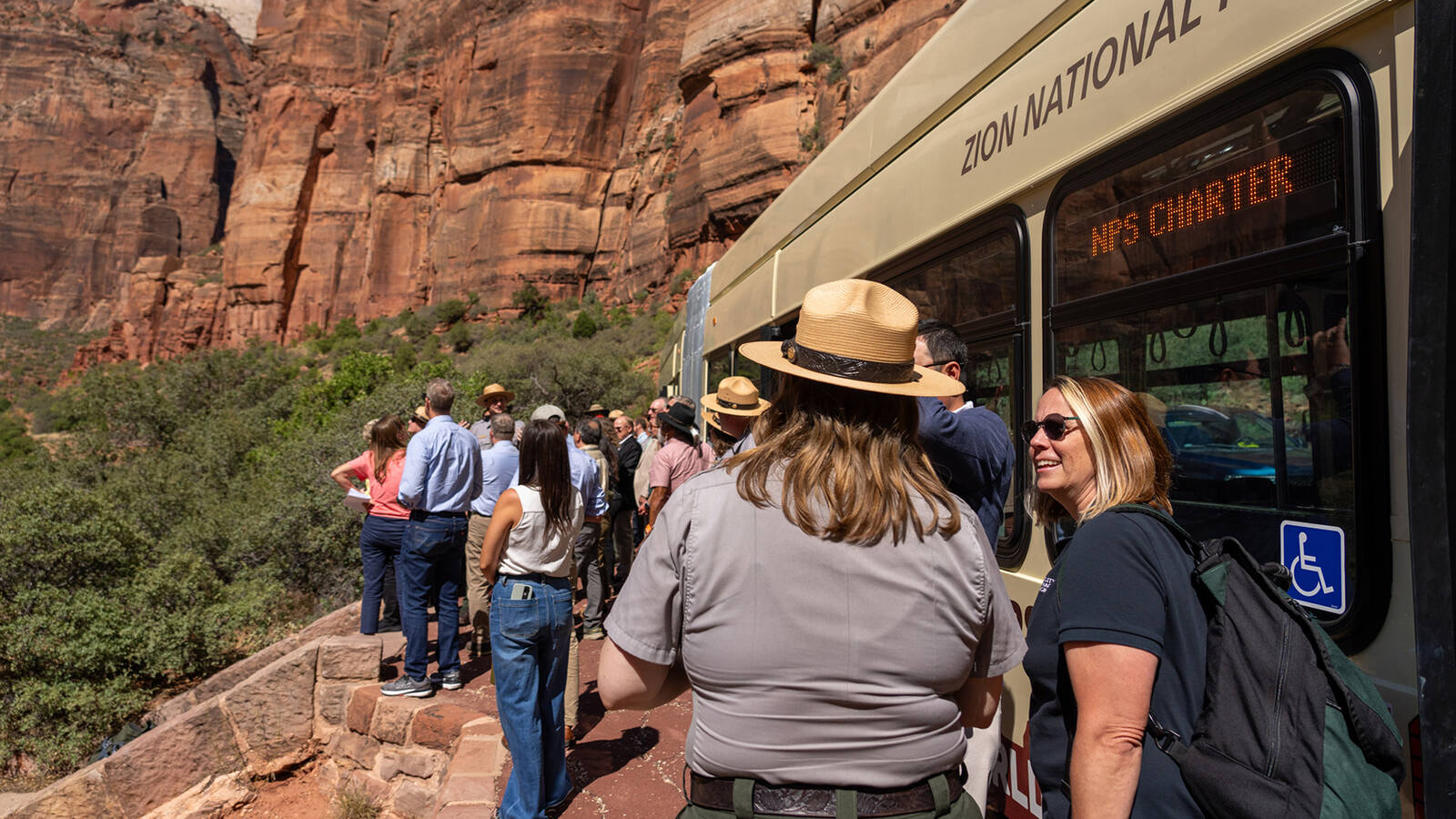
NPCA has also long championed increased transportation infrastructure funding for parks through the transportation funding bill, which helped secure $27.5 million for the Grand Canyon National Park Shuttle Bus Fleet Replacement, $33.4 million for shuttle bus replacement at Zion National Park and $60 million to support bridging and elevating the Tamiami Trail to restore historic freshwater flow to Everglades National Park and Florida Bay.
Estimates show more than 90% of national park visitors arrive by car, and virtually 100% of visitors utilize some form of transportation infrastructure during their visit. But proposed federal budget cuts coupled with only slight increases in transportation funding risks further degrading the infrastructure visitors depend on to safely access and navigate park sites large and small. Lawmakers must increase this critical funding that protects wildlife populations and provides a safer visitation experience.
Additional key provisions affecting national parks include:
- Dedicates $55 million a year for the Nationally Significant Federal Lands and Tribal Projects Program designed to address large repair projects in our parks. The bill removes the authority for Congress to provide additional funding through annual funding bills.
- Provides $1.63 billion for the Federal Lands Access Program that provides funding to state and local entities to increase transportation and transit access to our federal lands, including national parks.
- Continues providing $200 million annually in grant funding for fish passage under roads with a focus on salmon and other migratory/ sea-run fish species.
- Lifts burdensome matching requirements for Native American Tribes that previously prevented applications for competitive grant programs, such as the Wildlife Crossings Pilot Program.
Statement by Emily Douce, Acting Vice President of Government Affairs for the National Parks Conservation Association (NPCA):
“We applaud this bipartisan legislation that provides modest funding increases for our national parks and the surrounding communities. However, it falls far short of what our national parks urgently need. Visitation continues to soar, yet millions of visitors are met with crumbling roads, failing bridges and aging and necessary transit systems. If not addressed, park roads, bridges and other transportation assets will lead to congestion, closures and safety risks. The impacts go well beyond a diminished visitor experience, further straining park staff, weakening local economies and jeopardizing the long-term health of these places.
"Our parks and communities are under real pressure. And Americans overwhelmingly agree that our national parks are worth investing in so they can be protected and enjoyed for generations to come. This bill is a start but misses the mark. We hope Congress will act with bold, sustained investment that meets the scale of the need as the bill moves through the House.”
Statement by Bart Melton, Senior Director of Wildlife Conservation Programs for the National Parks Conservation Association (NPCA):
“Every year, thousands of preventable wildlife-vehicle collisions occur, including many in and near our national parks. Continuing our nation’s investment in the Wildlife Crossings Pilot Program, which has significant bipartisan support, means safer roads for motorists and safer habitats for America’s wildlife. Expanding these protections requires innovative solutions and significant investment.
“While we are thankful that the draft bill maintains the bipartisan pilot grant program and moderately increases funding, we are a long way from meeting project demand. As negotiations continue, NPCA encourages Congress to significantly expand investment in the Wildlife Crossings Pilot Program to account for on-the-ground demand and inflation.”
###
About The National Parks Conservation Association: Since 1919, the nonpartisan National Parks Conservation Association has been the leading voice in safeguarding our national parks. NPCA and its nearly 1.9 million members and supporters work together to protect and preserve our nation’s most iconic and inspirational places for future generations. For more information, visit www.npca.org.
For Media Inquiries
-
Issues


-
Press Release
National Park Advocates Unite on August 25 to Show Support for Park Staff and Urge Washington to Defend America’s Legacy
To honor the 110th birthday of the National Park Service and commemorate America’s 250th, National Parks Conservation Association sends a message to Congress and the Administration
-
Blog Post
Behind the Facade, Yosemite is in Chaos
We outline three major issues at Yosemite caused by mismanagement and what NPCA is doing about them.
-
Press Release
Senate Committee Advances Critical Bill to Fix National Parks
"As America approaches its 250th anniversary, there’s no better way to honor this milestone than by investing in the places that protect and tell our shared history." - Emily Douce,…