Spring 2026
In the Sacred Grove
The Newe people’s ancient connection to Bahsahwahbee is marked by ceremony, sustenance, tragedy and endurance. Will local Tribes succeed in their effort to preserve their hallowed lands?
I sit in the midmorning sunshine on the tailgate of my old pickup, sipping lukewarm coffee and waiting for the arrival of Ely Shoshone elders Delaine Spilsbury and her son, Rick Spilsbury. Having barreled across 320 miles of remote high desert since dawn on this trip from my home outside Reno, I’m now at a small gas station on the south edge of the mining town of Ely, Nevada. With a population of roughly 4,000, Ely is by far the largest community in this part of the Great Basin Desert — a 200,000-square-mile expanse so named by 19th-century military officer and explorer John C. Frémont because no drop of water in this vast desert reaches the sea. Here in White Pine County, the population density is around one person per square mile — a number so low that this area easily meets the standard used by the U.S. Census Bureau during the 19th century to identify “unsettled” frontier territory.
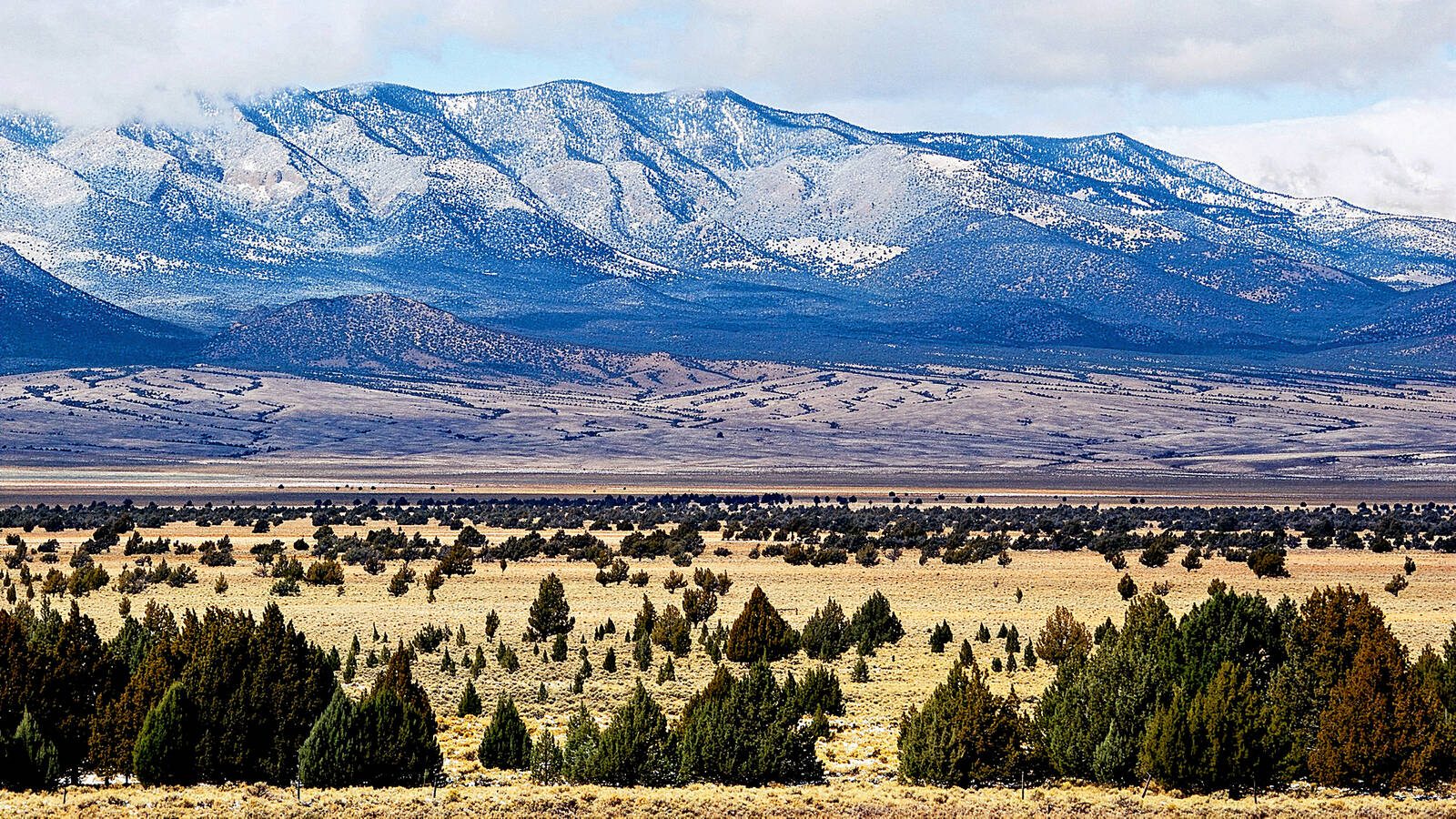
Delaine has asked to meet here because this gas station — which adjoins the Tsaa Nesunkwa Dispensary — is run by the Ely Shoshone Tribe, and so the sale of gas, weed and sundries supports the local Indigenous community. In front of me rises the Egan Range, carpeted with pinyon pine and Utah juniper trees. Behind me, open desert rolls out to the towering Schell Creek Range. As I gaze up at the high peaks, a gleaming, midnight blue Cadillac EV rolls up. In the driver’s seat, a small woman sits so low as to barely be visible over the steering wheel. She parks the car cautiously and climbs slowly out, waving to me.
“I just can’t get used to a car that doesn’t have a key,” Delaine says, laughing. Her waist-length, slate-gray hair is gathered into several sections with ties. She wears jeans, a T-shirt and a Patagonia ball cap with sunglasses perched on the bill. Her jewelry is gorgeous: wide silver and turquoise bands on both wrists; a large oval of silver-rimmed turquoise on her pointer finger; long, colorful beaded earrings; and a beaded medallion necklace ornamented with three dangling pendants. Her face is deeply weathered, her eyes absolutely mischievous.
“I gotta go get some health food,” she tells me, laughing again. Delaine is 87 years old, and Rick, who follows behind her, is 60ish, tall and broad shouldered, with a ponytail of straight black hair splitting his shoulder blades. Rick shakes my hand in greeting, saying loudly enough so his mother can hear that she’s doing a great job learning to drive her new car. He lays his broad-brimmed hat and a water bottle on the back seat of my truck, explaining that he’ll let his mom ride shotgun so she’s better able to hear the conversation. Rick asks if I need anything and then follows his mother into the store. When he and Delaine emerge, she’s smiling broadly and holding up a large bag of potato chips in each hand. “See?” she says. “Traditional Indian food. Very healthy!” I am quickly learning that Delaine, who has an infallible instinct for when to turn a conversation toward levity, also has a delightful habit of laughing at her own humor.

Open Roads & Endless Skies
At Great Basin National Park, a father and son gaze at stars, touch ancient trees, and reflect on space, time and the universe.
See more ›We climb into my truck and head southeast on Highway 50, aptly named the “loneliest road in America.” After driving through the elk range of Steptoe Valley, we climb from the sage and rabbitbrush scrublands into the pinyon-juniper woodlands. The winding road finally crests the Schell Creek Range at Connors Pass. From this 7,722-foot saddle, we gain a sweeping view eastward across Spring Valley to Great Basin National Park’s Wheeler Peak and the dramatic western escarpment of the Snake Range. Then we begin our descent, switchbacking slowly down into the valley. We roll past a sprawling cattle operation and, soon after, pass by the tall, white turbines of a wind farm, the juxtaposition a potent reminder of how past and future land-use practices in the Great Basin overlap in real time.
After a few more miles, Rick indicates where I should pull off onto a dirt apron, and from there we follow a sandy, meandering two-track to an old ranch gate constructed from hand-hewn juniper poles wrapped with barbed wire. Rick hops out, drags the gate open and waves me through. He directs me to park near a timeworn, handmade stock corral. Delaine sits silently next to me in the truck, looking wistful. Rick leans forward from the back seat and says, simply, “This is the place.”
We have come to visit one of the most important sites in the Great Basin Desert. We have reached Bahsahwahbee.
Nevada is the driest state in the U.S. It encompasses more than 300 distinct mountain ranges, which are often snowy but separated by vast, arid valleys. Many of those basins are flat, white, bright, baked, cracked saline and alkali playas where even the hardiest desert plants are unable to survive.
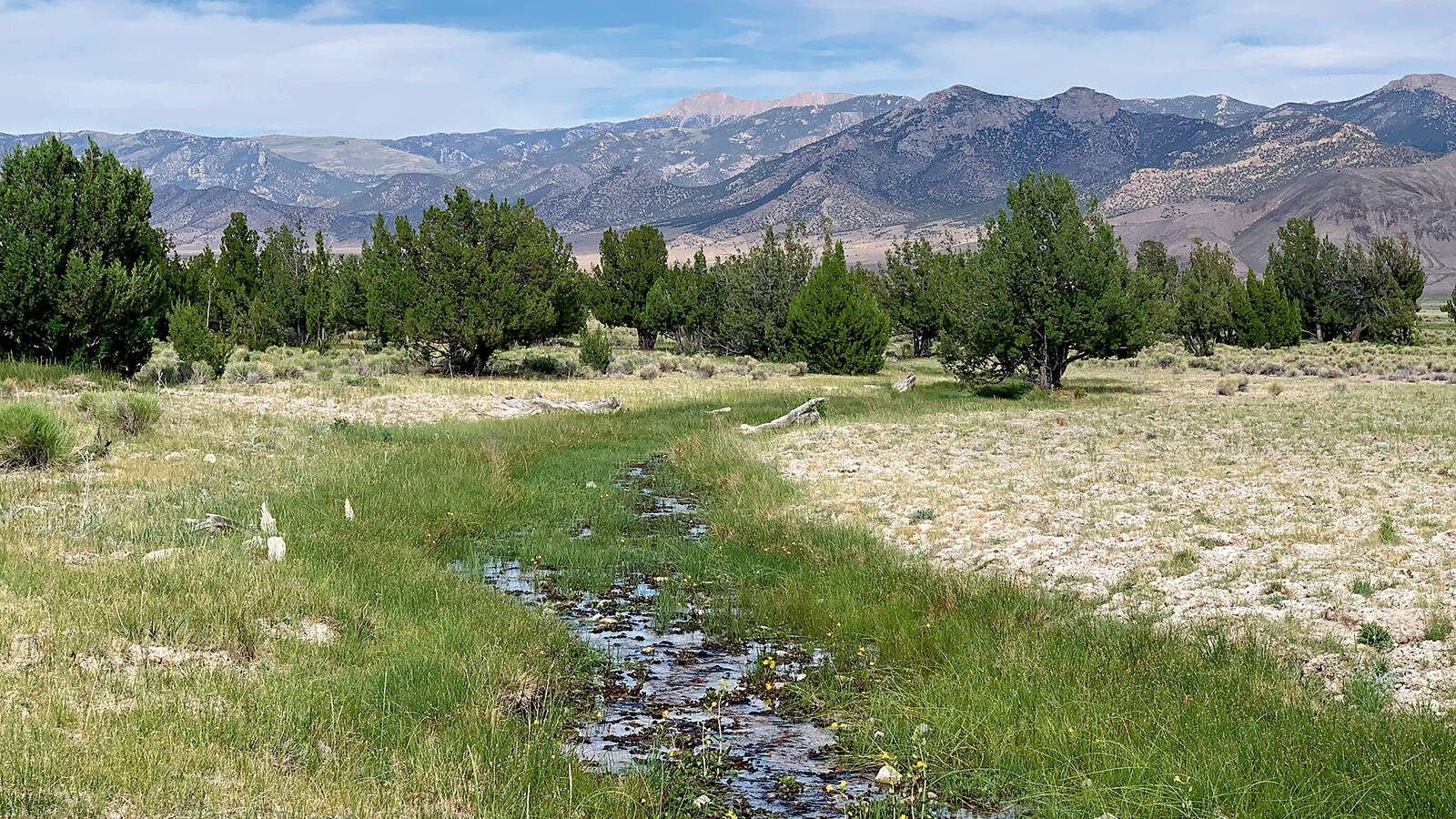
Yet Spring Valley, as the English name for Bahsahwahbee suggests, is distinguished by the unusual presence of over 100 natural springs. A more precise translation of Bahsahwahbee from Shoshoni (the name of the language is spelled differently from that of the Tribes) is “Sacred Water Valley.” While no river runs through it, this valley is dotted with wet meadows and springs that have long made the area an oasis for both people and wildlife. The treasure also lies beneath our feet. While the water table in the Great Basin typically ranges from 50 to 500 feet below ground, in Spring Valley, the water hovers just below the surface. In the springtime, parts of the valley can flood, swollen with snowmelt from the massive peaks that cradle it.
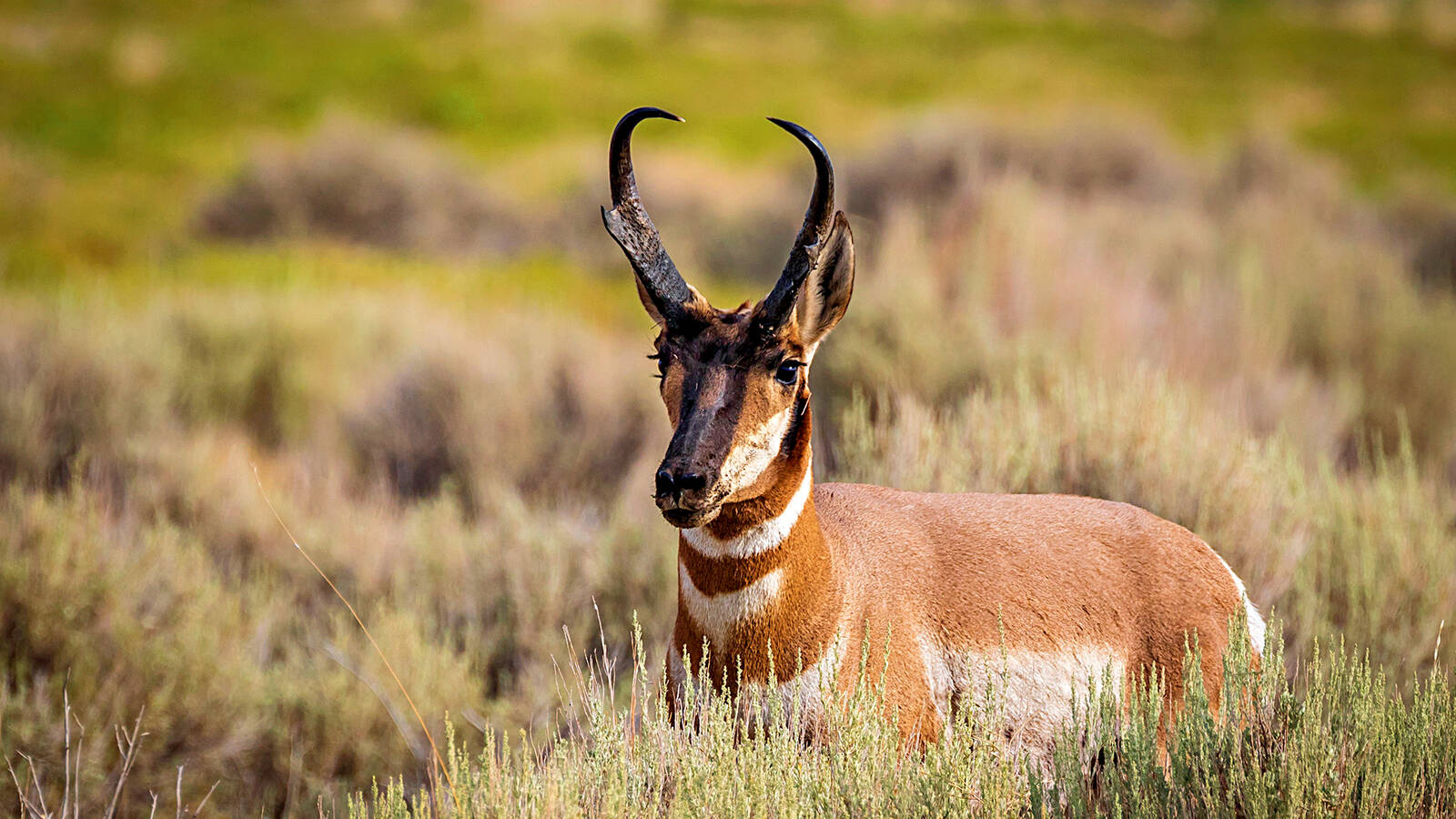
The Newe, an Indigenous people including the Duckwater Shoshone Tribe, the Ely Shoshone Tribe and the Confederated Tribes of the Goshute, are the original human inhabitants of vast expanses of the Great Basin. Archaeological evidence shows an Indigenous presence in this area dating back at least 10,000 years to a time when wildlife would have included camels, giant short-faced bears, large-headed llamas, cheetahs and jaguars, and Aiolornis incredibilis, a vulture-like creature with a wingspan of up to 18 feet. In recent centuries, Newe people have come to Bahsahwahbee to hunt elk, mule deer, pronghorn, rabbit, grouse and waterfowl. Fifteen species of raptors, 56 species of songbirds, and 21 species of waterfowl and shorebirds have been documented in Bahsahwahbee, which is part of the Pacific Flyway. In addition, there are 24 state or federally protected species at or near this site. The unusual presence of so much water in the valley also makes this an exceptional spot for gathering traditional food and medicinal plants, including Indian ricegrass, basin wild rye, sagebrush, saltbush, Mormon tea, pickleweed, saltweed, willow, watercress, sedges, bulrush and cattail.
Beyond all this, what makes Bahsahwahbee special are its trees. Valleys in the Great Basin are so arid that you can traverse basin after basin for hundreds of miles without seeing wild trees on any valley floor. But Bahsahwahbee is graced with a unique occurrence of Rocky Mountain juniper, a species usually restricted to high, cold mountains. In Nevada, it grows at elevations of up to 9,000 feet. What, then, are these trees doing down here in this exposed valley thousands of feet below their normal range?
There is no other region on Earth where a juniper species thrives under these conditions: at the wrong elevation, in the wrong soil type, in the wrong habitat. Even more inexplicably, these trees flourish in an area that historically has seen seasonal floods — a singular situation that has led Bahsahwahbee’s celebrated trees to be known locally as “swamp cedars.” The trees occupy this unlikely spot because their range shifted during the Pleistocene glaciation. When the glaciers receded, the trees were left stranded on the valley floor. Under usual circumstances, that is where they would have perished, just as they disappeared from other Great Basin valleys. But at Bahsahwahbee, the high water table and springs have allowed the trees to survive.
For decades, local Tribes have sought to protect the resources of this sacred site. In recent years, they have campaigned with allies to designate Bahwahwahbee as a national monument of around 25,000 acres within the larger Spring Valley. Their aim is to preserve this place’s outsize historical significance — including chapters of grave injustice and survival — by making it part of the National Park System.
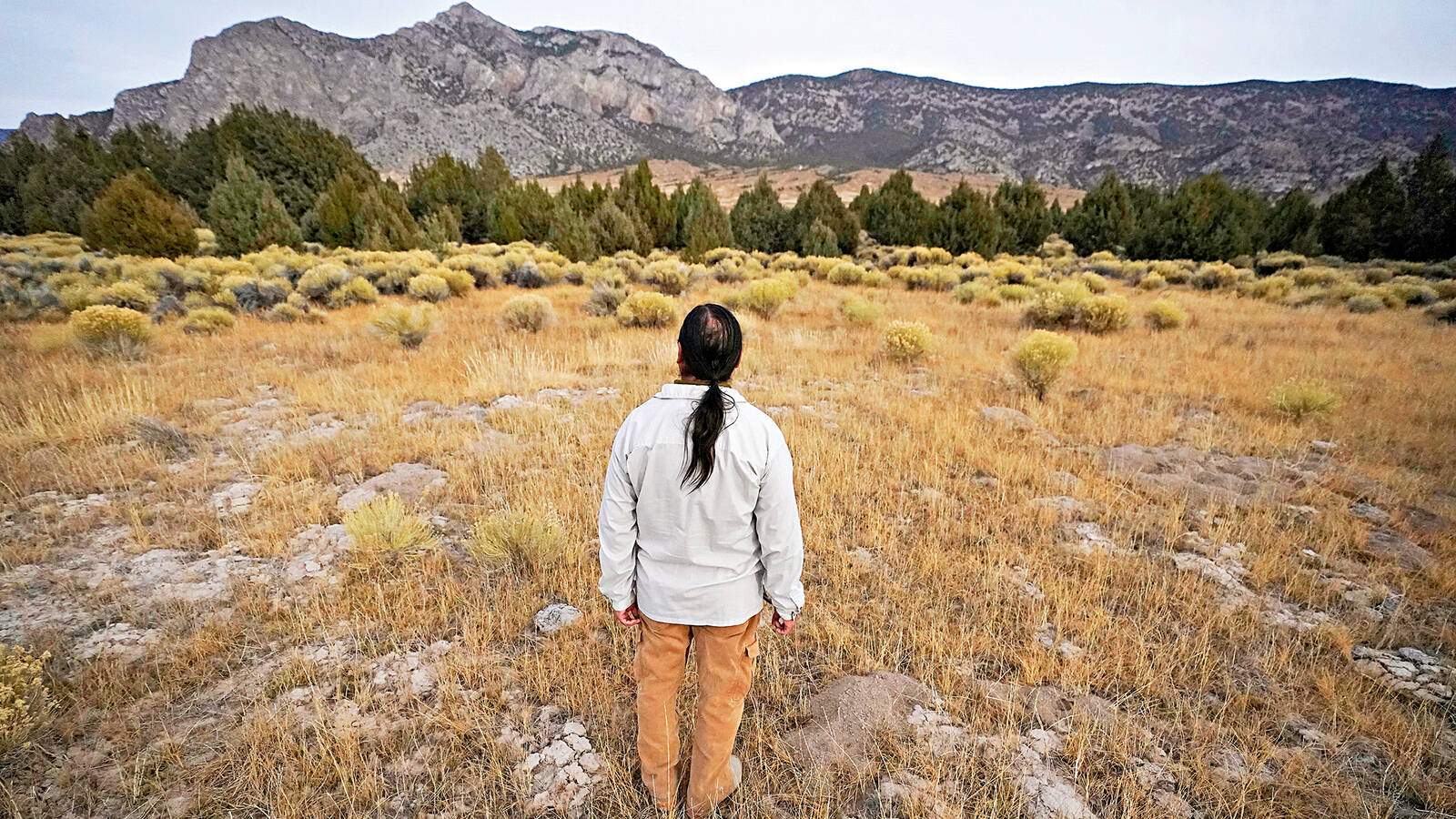
Delaine ambles toward the fringe of trees below us with her walking stick in hand, and Rick follows, carrying a folded three-legged stool. I trail them both as we silently wend our way downslope.
As we enter the forest, I’m struck by the size of the trees. When spotted on its native ground up in the mountains, this species tends to be modest — 10 to 20 feet tall — and in exposed situations, it often appears more like a battered shrub than a proper tree. But in Bahsahwahbee, the larger junipers grow at least 40 feet tall and are full and conical. Some of the trunks are nearly 3 feet in diameter — remarkable girth for a slow-growing desert tree — an indication that many of the trees are at least 300 years old.
We reach a clearing within a ring of especially large trees, and Rick sets up the stool for Delaine, who eases herself onto it. She digs a bag of potato chips out of her pack, and Rick opens it for her as she begins to reminisce.
“When I was little, I used to come out here pretty often. The valley was so wet that the water was a lot of times right there at the surface. There were fish in big ponds. Lots of antelope. And we ate a lot of watercress here. You know, that stuff tastes pretty good,” she says, chuckling. Delaine explains that when she was growing up, Native people lived scattered in the canyons outside Ely, which long before contact with settlers, had been the largest Native village in the valley. “Most of our houses were kind of like caves,” she says. “We were in abject poverty. No running water. We hunted and fished and gathered pine nuts and mined turquoise for subsistence. I actually worked in those mines with a real shovel! We still lived in the old ways with our families as we had when we were hunting and gathering.”
I ask what role Bahsahwahbee had played in the life of the Native community when she was a kid.

‘How We Heal’
The Blackfeet Nation’s effort to restore bison reached a milestone this summer with the release of a free-roaming herd onto sacred lands adjacent to Glacier National Park.
See more ›“Every once in a while, we would all get together, just like in the old days. And the primary place we came to was here at the cedars,” she says. “That’s why Bahsahwahbee was sacred to the Shoshone people, because it was so full of game and fish and food. It was the only place around where there was really good shade and grass, and the people that wandered around these valleys all ended up here for their ceremonies a number of times each year.”
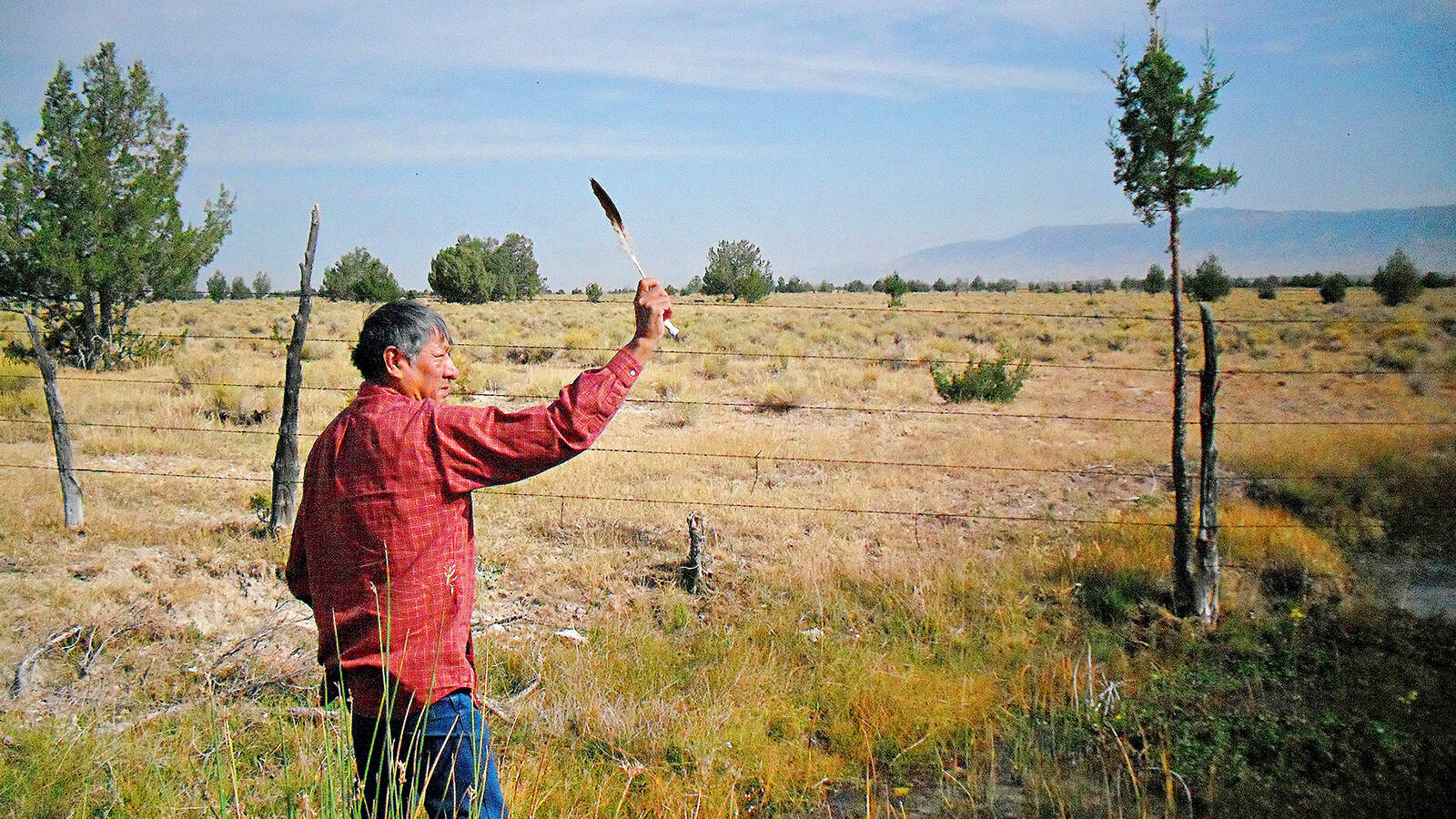
“This has always been the place where Newe people held rain dances, round dances, vision quests, harvest rituals,” Rick says. “The springs that bubble up have always been sites of special healing ceremonies. Before colonization, Indigenous people from all over traveled to gather here at Bahsahwahbee. This place brings people together.”
“My mother was from Snake Valley, and my dad was from White River, so they may even have met here,” Delaine says. “This has always been a site for religious ceremonies, like Rick said, but also a place to renew old friendships, and for young people to find mates. And for everyone to replenish food and medicinal stores before snowfall. It must have been great back then. Without money and cars, it must have been like going camping all summer long.”
“How long do you think your people have been gathering at Bahsahwahbee?” I ask. “10,000 years? 12,000?”
“Maybe as long as 20,000 years,” Rick replies.
Delaine shakes her head emphatically from side to side. “Since time immemorial,” she says.
Bahsahwahbee has a very dark past. Newe people had used the area as a sacred site of ceremony and sustenance for millennia, but everything changed with the arrival of white settlers in the Great Basin during the 19th century. Newe territory was within the Permanent Indian Frontier that the U.S. had established in 1830, but repeated incursions by white trappers, hunters and others effectively erased the established boundary. In 1859, U.S. Army Capt. James H. Simpson led an expedition to find a more direct route from Camp Floyd (south of Salt Lake City) to Genoa (at the eastern foot of the Sierra Nevada); the route he opened vastly increased the movement of white settlers through the heart of Newe territory, including Steptoe, Spring, Snake and Antelope valleys. The California Trail and the Overland Stage route also passed through Newe lands in Nevada, as did the Pony Express, which began mail service in 1860 and had stations throughout Shoshone and Goshute territory.
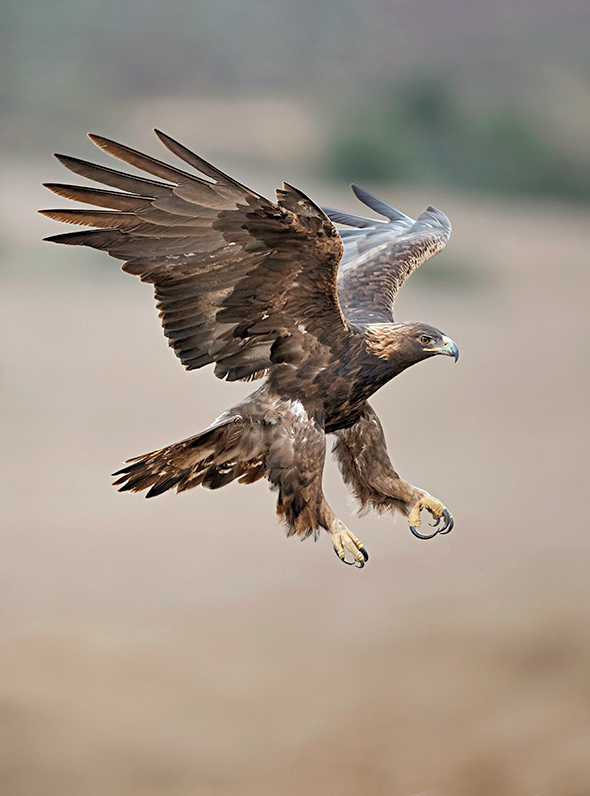
A golden eagle, one of 15 raptor species that have been documented in Bahsahwahbee, which is part of the Pacific Flyway.
©ALAN MURPHY/BIA/MINDEN PICTURESThis increased presence of newcomers created immense pressure on the high desert’s natural resources. For the Newe, as a hunter-gatherer people, the disappearance of game that resulted from increased trapping and hunting proved devastating, as did the tendency of white people to monopolize the few available water sources and overgraze the land to the detriment of wild food sources. Introduced diseases including smallpox had reached Indian Country even earlier, taking an enormous toll. By the start of the Civil War, the Newe population was a fraction of what it had been before the 1700s. The isolation of surviving Native people from their traditional food sources resulted in wretched poverty.
By 1859, reports of sporadic Native American raids on emigrant caravans had reached U.S. Gen. Albert Sidney Johnston at Camp Floyd. Although Johnston was well aware that white traders were, as he put it, “instigators, if not participants, in the robberies perpetrated,” he nevertheless felt compelled to act. Johnston mustered four companies of cavalry and hired Elijah Nicholas Wilson to serve as guide and interpreter. Wilson, a young white Mormon pioneer who had lived much of his life among the Shoshone and was known to them as Yagaiki, was fluent in the regional Native culture and language. Having determined through Wilson’s interrogation of a couple of local Native people that there was to be a large rendezvous in Bahsahwahbee, Johnston directed Wilson to lead the troops westward by night to avoid discovery. Arriving in darkness, the general ordered his men to surround the encampment.
At daybreak, the soldiers descended on the unsuspecting Newe. Wilson remained stationed on a nearby hill, from which he witnessed the ensuing massacre. He described what he saw in his 1910 autobiography, “Among the Shoshones” (republished as “The White Indian Boy”) — an account corroborated by Tribal oral histories. Wilson reported that women as well as men fought back fiercely, and that even children wielded sticks in a futile attempt to defend themselves against the onslaught. “This was the worst battle and the last one that I ever saw,” Wilson recalled. “It lasted about two hours, and during that short period of time, every Indian, squaw, and papoose, and every dog was killed.”
Wilson reported that at least 350 warriors were killed, which suggests that, including women and children, between 525 and 700 Newe were murdered. Likely one of the largest slaughters of Native people ever perpetrated by the U.S. government, the massacre remains relatively unknown because Johnston never reported it to the War Department.
Increasing tensions between Native people and settlers led to a series of skirmishes that would come to be known as the Goshute War. During the conflict, a band of Goshutes attacked the Overland station north of Spring Valley, killing the operator. In response, volunteer cavalry were dispatched from Fort Ruby under the command of Capt. S. P. Smith to seek retribution. Smith and his men went first to Duck Creek in the foothills of the Schell Creek Range, where they ambushed an encampment of Newe and killed 24; when five others arrived at camp the following day, they too were murdered. Following this massacre, the company marched over the Schell Creek Range into Spring Valley under cover of darkness. They surrounded another group of Newe camped in the swamp cedars, where they’d gathered for religious ceremonies. At dawn on May 6, 1863, the soldiers launched their surprise attack, and although many of the cavalry’s horses were mired in the swampy ground, at least 23 Newe were massacred.
Bahsahwahbee is where we pay our respects to our ancestors and mourn what happened to our people.
Even late into the 19th century, when the murder of Native Americans by the U.S. military had become infrequent, self-appointed groups of white vigilantes sometimes picked up where the U.S. Cavalry left off in their mission to force Indigenous people off ancestral lands through intimidation and violence. In 1897, long after the Treaty of Ruby Valley, signed in 1863, had purportedly brought peace to Native-white relations in Newe territory, such a vigilante attack occurred at Bahsahwahbee.
PRESERVING NATIVE HISTORY
According to Tribal oral histories, including many conducted with the grandchildren and great-grandchildren of victims of the massacre, the Newe had congregated at Bahsahwahbee for seasonal celebrations. “The camp was not a war camp because the arrows were not tipped with rattle snake venom,” one elder testified in an oral history collected by an anthropologist in 2010. “It was a gathering camp, not a war party.”
Nonetheless, a violent gang descended on the Newe. They raped the women before murdering men and women, children and elders and desecrating the bodies. According to oral history accounts, “They found everyone dead at the camp site and witnessed terrible and horrifying scenes.” Another interviewee said, “They killed everybody, pregnant women, cut them open, burned the babies and chopped them up.”
The only survivors of the 1897 massacre at Bahsahwahbee were two little girls who would have been about 10 years old at the time. The girls were outside the camp when the onslaught began, and seeing the melee, had ducked into a ditch, where they remained hidden. Once the vigilantes cleared out, the girls fled south, traveling 20 miles until they eventually reached the ranch of Mormon pioneers George and Anna Swallow. When the children arrived, disheveled and exhausted, they were asked how they had managed to get there by themselves. One girl answered only “ne mimia,” Shoshoni for “I walk.”
After their escape, one of the girls, Annie Jack, eventually made her way to the Goshute Reservation near Ibapah, Utah. The Swallows took the other little girl in, named her Laurene Mamie Swallow, and raised her as their own. Mamie lived and worked at the Swallow Ranch until she was about 16, when she married Joe Joseph, a Paiute ranch hand. The Josephs settled in the tiny Nevada-Utah border town of Baker, where Mamie had 11 children, the last of whom was born only a few months before her death in 1925. Laurene Mamie Swallow Joseph’s headstone still stands in the old Indian Cemetery in Baker. An orphan, a witness and a survivor, she was also Delaine Spilsbury’s grandmother.
I finally broach this most difficult topic and ask Delaine and Rick about the tragic history of this beautiful place.
“Were you told the story of what happened here at Bahsahwahbee?” I ask, reflexively avoiding the word “massacre.”
“The story of this place wasn’t shared that much because the elders were ashamed,” Delaine says. “They just tried to live in another world. Psychologically it’s been a secretive thing.”
“And there weren’t many witnesses left alive to tell the stories,” Rick says.
“White people wouldn’t have believed us anyhow,” Delaine adds.
Rick nods.
“It was too hurtful to talk about, and Bahsahwahbee wasn’t threatened. We had no desire to tell the story,” Delaine explains.
“Now we do,” Rick adds. “But if this place weren’t endangered, we wouldn’t have shared the story.”
“It was so vicious,” Delaine says. “They wanted to scare the hell out of the few Indians who were left.”
Rick nods again. “This place is important to the American people, whether they know it or not,” he says.
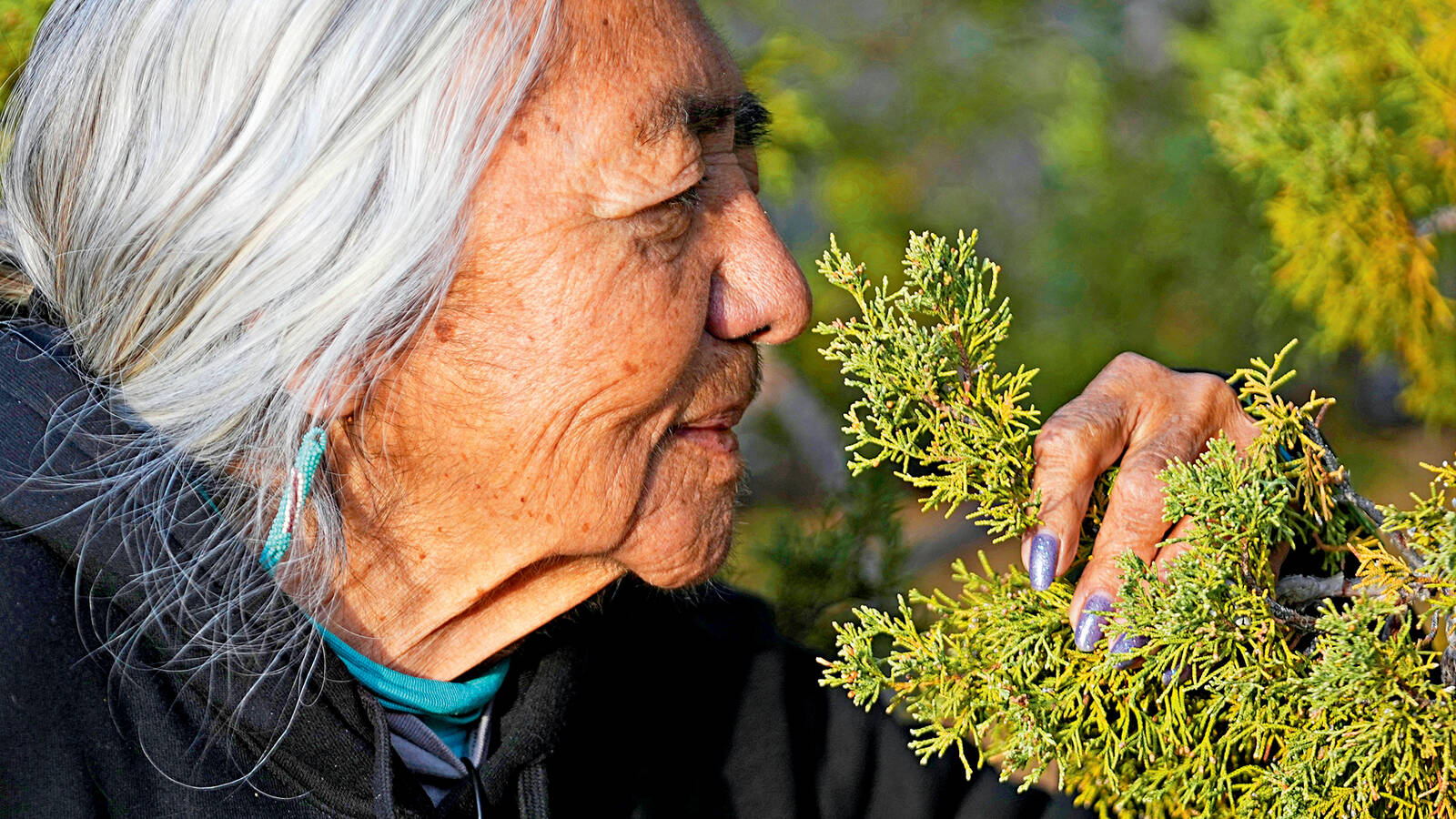
Minutes pass in silent reflection. I breathe in the distinctive aromatics of sage and juniper, squint slightly at the indescribable clarity of the high desert light.
Rick finally speaks. “It’s such a beautiful day today. Strange to think that our people were slaughtered here.”
“Not once but three times,” Delaine adds.
She now has a faraway look in her eyes. “It’s awful what they did to their bodies. Maybe they were trying to keep them out of heaven. Does heaven have a dress code? I don’t know.” She pauses. “And Grandmother. She was just a little girl.”
Delaine plants the tip of her walking stick in the ground and, with a little support from Rick, rises from the stool.
“Come on,” she says to me. “You need to take a picture of me next to a big tree. I’m kinda short, so it’ll make it look even bigger.” She smiles warmly. Delaine leads the way toward a copse of junipers, and then poses in front of an especially tall and graceful one.
“For the Newe people who are left, we believe that the swamp cedars embody the spirits of the lives lost during the massacres,” Delaine says. “Their bodies are in these trees. This is where we come to visit our relatives.”
I’m struck by the realization that Delaine is not speaking metaphorically. She does not mean that the swamp cedars represent or symbolize her slain ancestors, but instead something more radical. To the Shoshone, these trees are their lost people — the physical and spiritual embodiment of them — and Bahsahwahbee is their sacred burial ground.
“Bahsahwahbee is where we pay our respects to our ancestors and mourn what happened to our people,” Rick says. “If we were to ever lose this grove of trees, it would be my own personal extinction event. The death of all life related to the people who lived here. It would be an existential crisis.”
Between 1950 and 1985, the population of Las Vegas (including the surrounding county) grew from around 47,000 to over 560,000, a 12-fold increase in the number of residents who needed enormous amounts of water to live in one of the driest cities in America. Realizing that their meager share of the drought-stricken and dwindling Colorado River was unlikely to keep pace with skyrocketing demand, the city’s water utility secretly began working to identify sources of unappropriated groundwater in the mid-1980s. Then, in a surprise move in the fall of 1989, the Las Vegas Valley Water District (now part of the Southern Nevada Water Authority) simultaneously filed 146 applications for rights to all the unclaimed groundwater in Nevada. Under its multibillion-dollar plan, the city would construct a vast constellation of wells to pump up to 800,000 acre feet — or more than 260 billion gallons per year — of groundwater from dozens of rural desert basins, including Spring Valley, and send it more than 300 miles through a proposed pipeline to the city’s sprawling subdivisions, fountain-fronted casinos and thirsty golf courses. The elaborate plan would have resulted in the most massive transbasin exportation of groundwater in history.

Sacred Water
How an unlikely alliance of conservationists, ranchers, business owners, and American Indians is fighting to save the Great Basin.
See more ›The potential effects of the proposed water grab on Bahsahwahbee were painfully clear. In his assessment of possible impacts, biologist David Charlet projected a drop of 10 feet in the water table at Bahsahwahbee in the first 20 years of pumping alone. “I would expect trees to die within no more than two years following the pumping of water from their root zone,” wrote the late forester Ronald Lanner. “Within a short time this unique juniper ecotype, and the ecosystem based on it, will be gone.”
The Southern Nevada Water Authority would later buy up ranches in Spring Valley — not for their land, but for their water rights. SNWA spent around $75 million to acquire roughly 23,000 acres of private property, a million acres of grazing allotments and, most important to the city, 50,000 annual acre feet of water rights.
But in 2020, after years of dissent by conservationists, ranchers, local governments and Tribes, SNWA reversed course. Following federal and state court rulings invalidating the water transfer, SNWA commissioners voted unanimously to abandon the effort. “Over the course of the past 30 years it’s clear that the project does not make sense environmentally or economically,” Commissioner Justin Jones said at the time.
Delaine, Rick and I head back to the truck. We’re silent for a good while on the drive back, but eventually Delaine asks me to pull over so she can check on the pinyon nut crop up in the Schell Creeks. While stopped, we share a snack, and Delaine, after examining the cone-laden native pines, delights in how bountiful the pinyon harvest will be this year. Meanwhile, Rick discovers an enormous, fully toothed elk jawbone, which he points out to me but doesn’t disturb.

National Parks
You can read this and other stories about history, nature, culture, art, conservation, travel, science and more in National Parks magazine. Your tax-deductible membership donation of $25 or more entitles…
See more ›As we roll up in front of the gas station back in Ely, Rick reaches for my field journal, in which I’ve been taking voluminous notes all day. I hand it to him, and he sketches a makeshift map that will guide me to their home for dinner later. In this sparsely populated landscape, cell reception is unreliable, and homes don’t all have addresses.
“Bring some veggies,” Rick calls over his shoulder, as he and Delaine make their way to their car. Delaine smiles and waves to me as she drives slowly away, past the entrance to the Ely Shoshone Reservation, then north up Steptoe Valley. After the Caddy disappears, I sit quietly on my tailgate. Gazing across the sweeping basin to the backlit, serrated crest of the Egan Range, I sip water that now tastes more delicious than it ever has before.
This piece is excerpted from the author’s book “Water Warriors,” to be published by Counterpoint Press in 2027.
About the author
-
 Michael P. Branch Contributor
Michael P. Branch is an award-winning humorist and writer of place-based creative nonfiction from the American West. His books include “Raising Wild,” “Rants from the Hill," “How to Cuss in Western," and "On the Trail of the Jackalope," and his essays have appeared in venues such as CNN, the San Francisco Chronicle, Slate, Outside, Orion and High Country News. Branch is University Foundation Professor, Emeritus, at the University of Nevada, Reno, and he was inducted into the Nevada Writers Hall of Fame in 2024.
-
Press Release
Proposed Arctic Mine, Ambler Road Threatens America’s Largest Park Landscape
“All Americans should be outraged that our taxpayer dollars are being wasted to fund international companies that seek to destroy our country’s largest park landscape" -- NPCA Alaska Campaign Director…
-
Press Release
NPCA, Conservation Groups Challenge Trump’s Decimation of Two National Monuments in Utah
"Support for these monuments has never wavered and neither will our fight to protect them" -- NPCA Southwest Campaign Director Erika Pollard
-
Press Release
Construction for Second Border Wall Tears Through Organ Pipe Cactus National Monument
Federal contractors are clearing protected Sonoran Desert habitat in a national park after the administration waived laws designed to protect natural resources and cultural sites, sidestepping extensive review typically required…