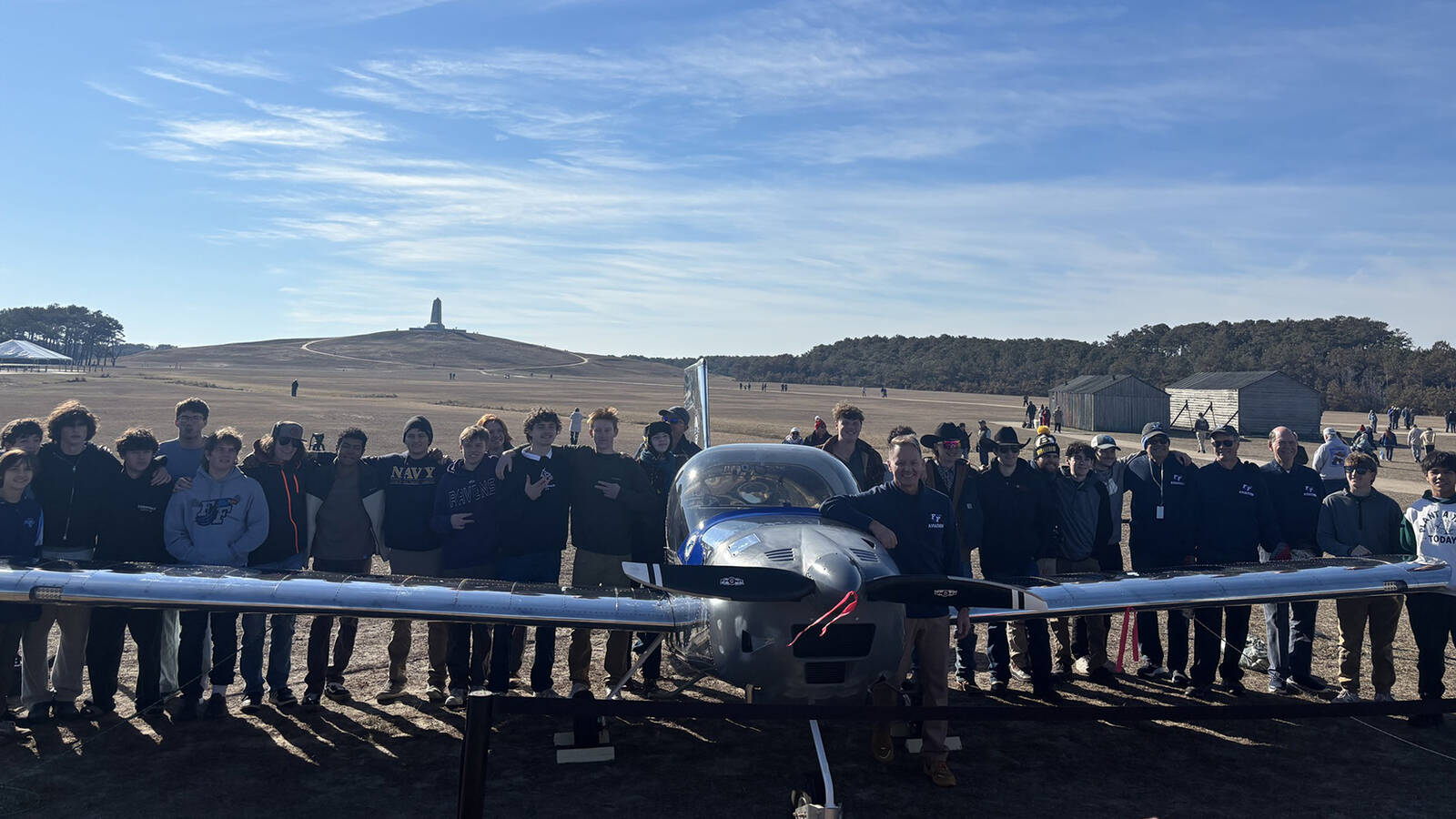
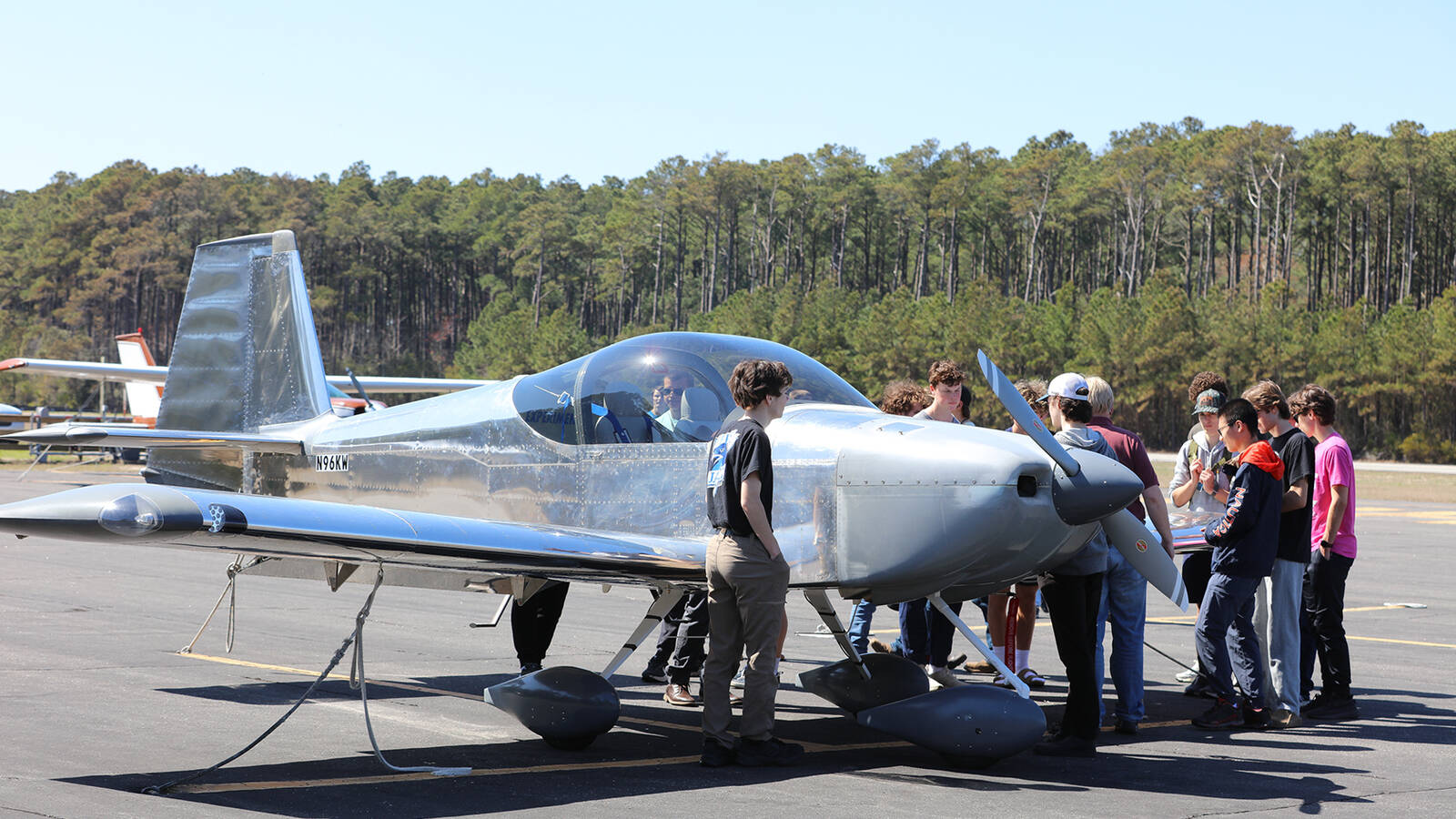
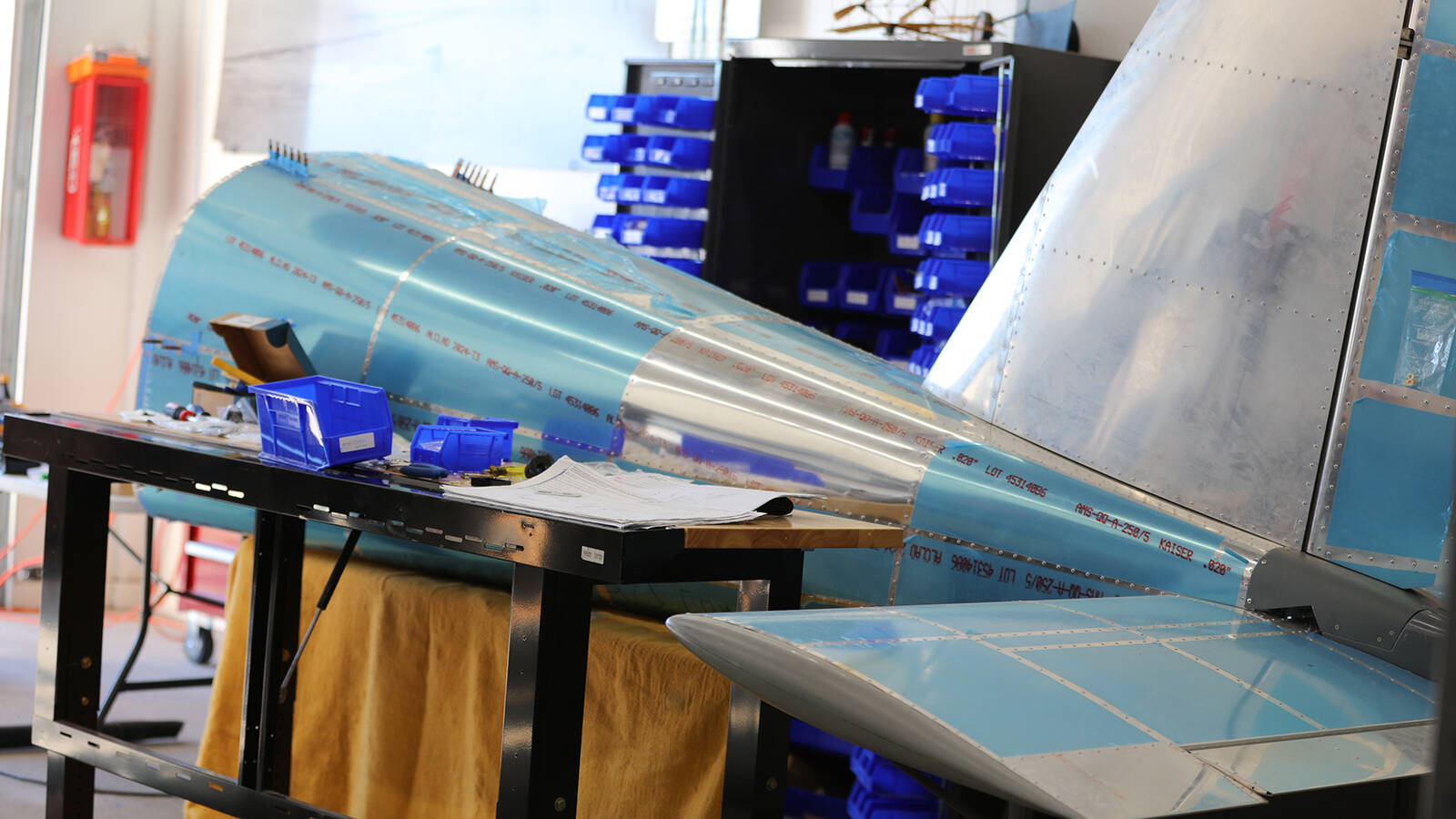
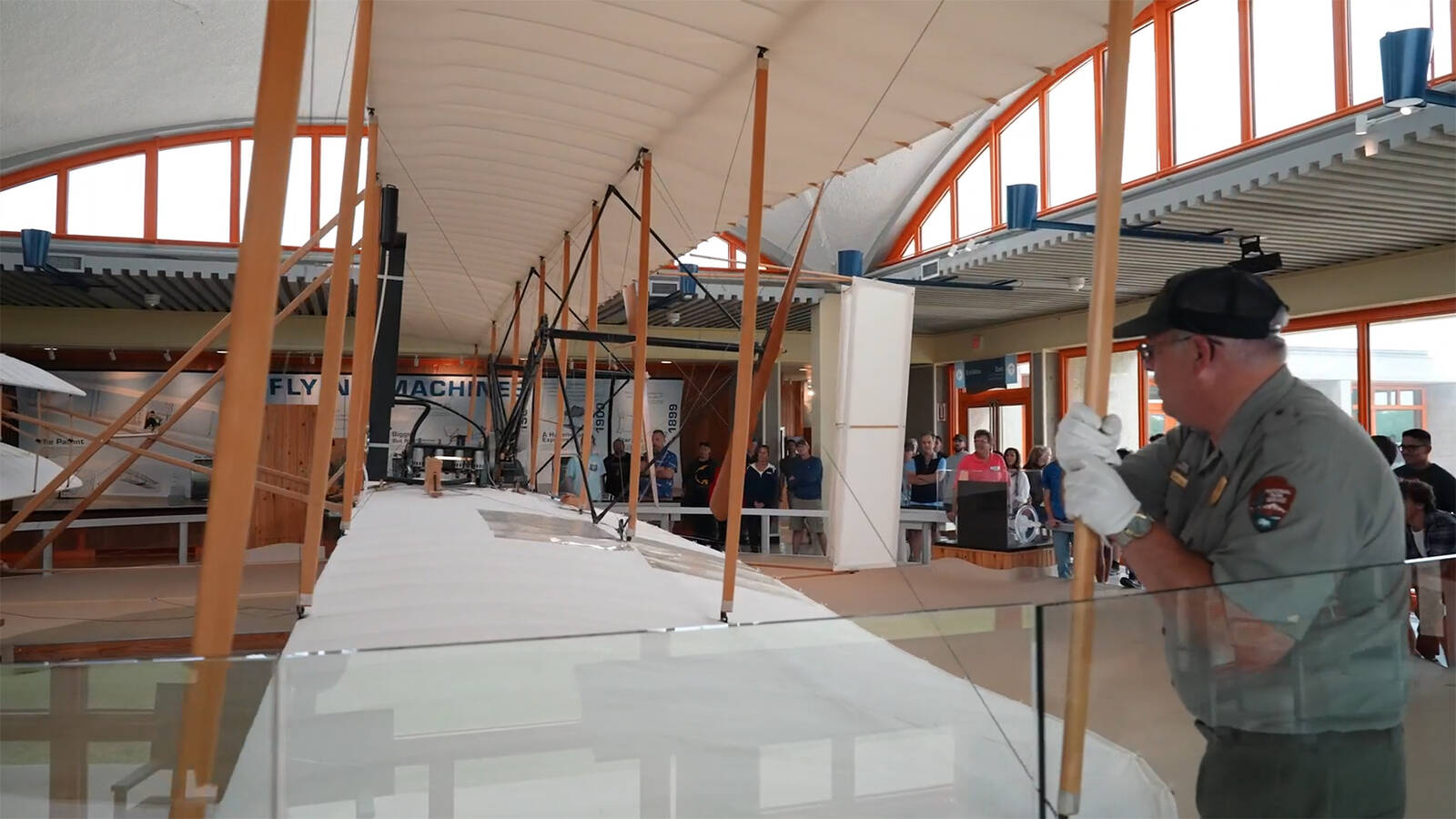
In the shadow of the Wright brothers’ achievements, a group of high school students finished building a plane of their own — only the second ever constructed at the birthplace of aviation.
Two years ago, NPCA’s blog introduced readers to Wright Flight Academy, in which high schoolers were starting to build a plane on the same coastal landscape where aviation was born.
The students completed that project in late 2025, unveiling their two-seater plane at the Wright Brothers National Memorial on Dec. 17 — the 122nd anniversary of brothers Orville and Wilbur Wright’s first successful flight of a heavier-than-air, controlled, powered aircraft at Kitty Hawk, North Carolina.
An eight-episode video series chronicling the project shared perspectives of the students, their teachers and park site staff, quoted here.
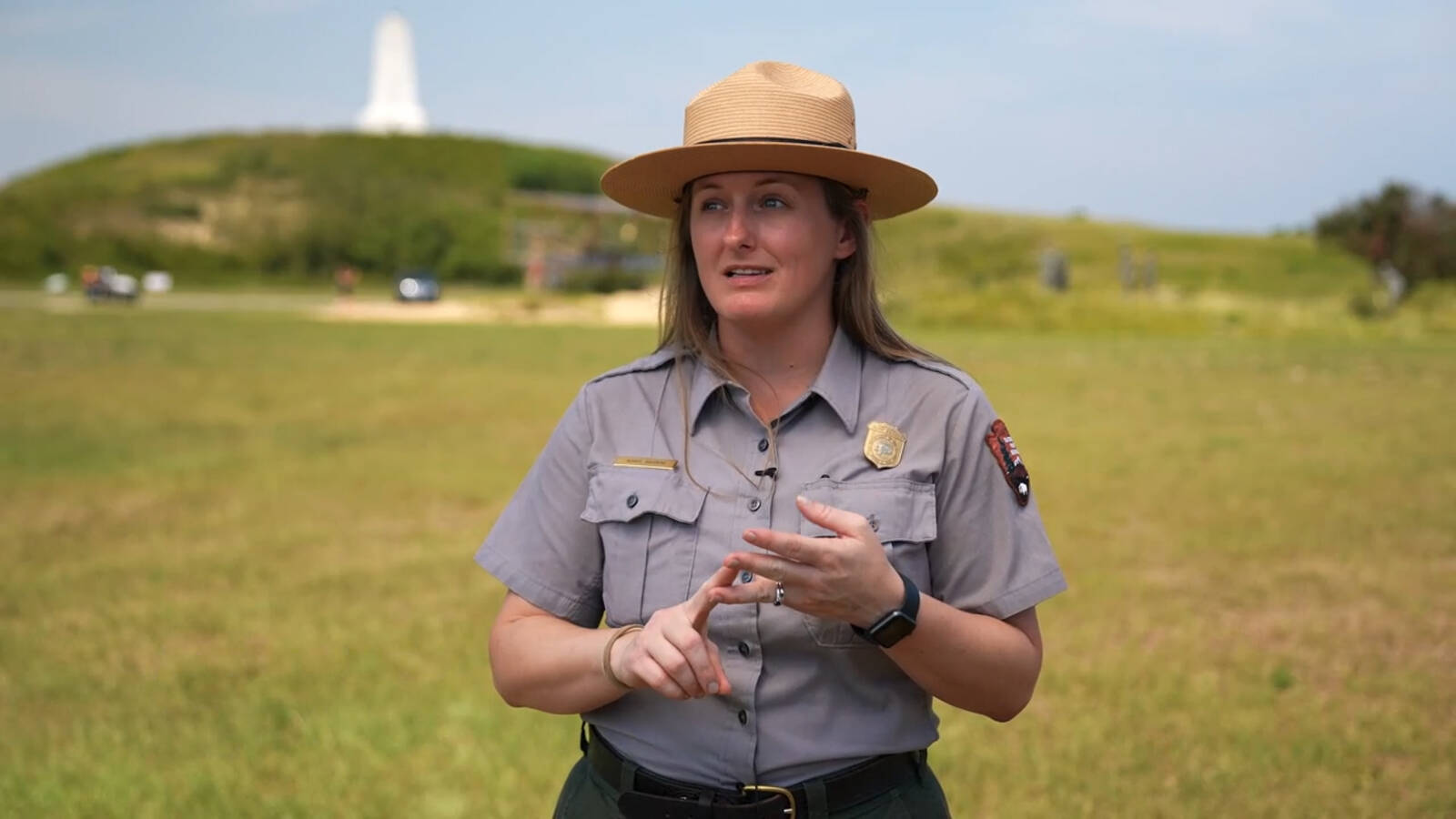
“There’s very much the power of the place playing a role here,” said Interpretive Park Ranger Adair Raybon. “This is only the second plane to be built here. Going from the very first airplane and very first powered flight, and now over 100 years later the high school students are getting a chance to be part of that story while on site — it’s exciting.”
Students at nearby First Flight High School began working on the plane in fall 2023. The elective aviation courses they enrolled in were made possible through a collaboration between the National Park Service and Dare County Schools with support from local aviation mentors.
Once the aircraft is inspected and certified in the coming weeks, students will have the opportunity to fly in it alongside a representative from Tango Flight Inc., the nonprofit organization that provides both the curriculum and the kit for building the aircraft. A new build kit is currently enroute from Tango Flight for students to begin working on a second aircraft.
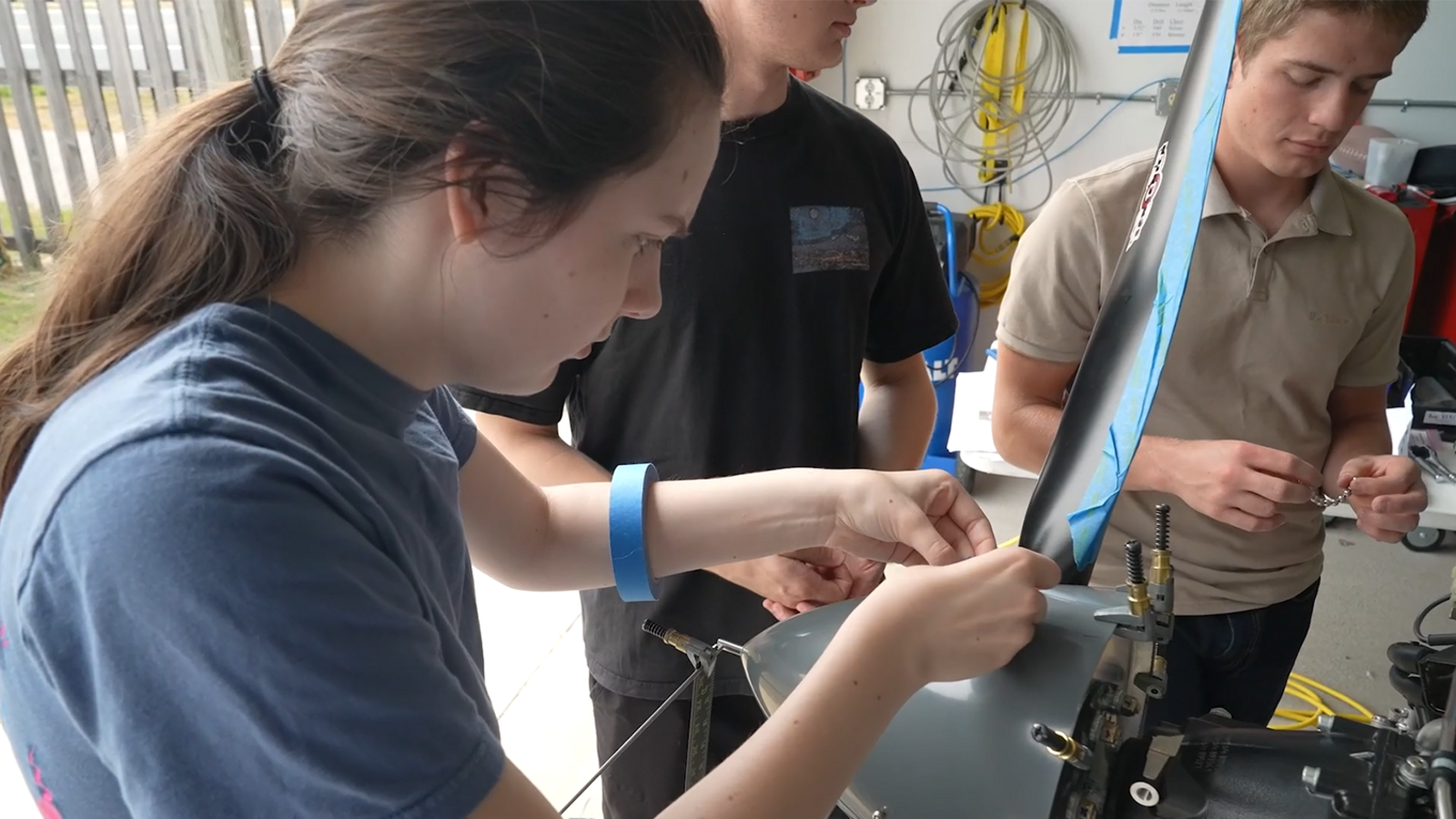
While students built most of the plane in a modern lab provided by the Park Service, they finished some of the construction in the park site’s replicas of the Wright brothers’ work sheds as park site visitors looked on.
“That’s the coolest part, we’re building it where the Wright Brothers built it. We’re building it where (aviation) was invented,” student Simon Burkhimer said.
Students learned the mechanical side of aviation as well as skills that help make young people employable: how to communicate, work as a team and solve problems.
The students started by inventorying parts, then building the tail, rudder and stabilizer and working their way forward. By spring 2024, the main body began taking shape. Teams rotated time in the lab and in the library studying aviation.
A large copy of the famous photo capturing the Wright brothers’ first flight hung on the wall of their shop. “The opportunity to be a part of history, to build an aircraft in the shadow of what the Wright brothers did — we never lost sight of that during this process,” their instructor, U.S. Navy Admiral J.T. Tynch, said.
“You have to learn about the history and also the mechanics, how things work, because it’s all part of the experience,” student Jorge Flores said.
Valentine Siegel, one of two young women who joined the course in its second year, wants to become a mechanic and said the class was “really hands on, a lot of focusing. To be able to read instructions, work cooperatively with other people — it’s very important to listen and pay attention and make sure everything you do is correct. If you have a doubt, you have to back that up by checking the plans.”
Just like the Wright brothers, the students learned by making a few blunders. Among their lessons: “Do it right the first time, because if you have to fix your mistake it takes a lot longer than if you just took your time and did it right,” student Mathew George said.
In describing the Wright brothers’ process, Ranger Raybon said the men “truly needed that year of messing up in 1901 … There were a lot of tough landings, crashes and bruises. Each of those accumulate into this really big learning of knowledge.
“The Wright brothers loved to work. They were hard working, and that stick-to-it-ness and perseverance was instrumental to their success. And, it was that ability to not let anything drag them down, to keep pushing them through even the hardest of times that ensured that they were successful,” Ranger Raybon said.
After that disastrous year, though, it was the Wrights’ younger sister Katharine whose cheering on kept them from quitting, the ranger explained. “She was the one that kept them on the path, she encouraged them and built up their confidence and really just ensured that they kept chasing their dream,” she said. Once they succeeded, Katharine became “their social manager,” assisting with building up her brothers with contacts throughout their career.
Expanding Career Opportunities
Likewise, Burkhimer said their instructor Tynch taught him and his classmates throughout the project “to have a good attitude and positive, uplifting mental state.”
Within just a few months of the project, Tynch said he was observing a lot of growth in the students. “We’re working on developing their leadership skills, their teamwork skills, their focus and discipline and we’re doing it in a way that hopefully benefit them for the rest of their lives, as well as how it plays out in building this aircraft,” Tynch said.
After the first year, the rising seniors stepped up to be leaders and become mentors to the newer students who joined the class.
“They have a lot of knowledge from the previous year and coming back this year, they’re telling us what they know,” newcomer Carley Bonamico said.
Student Gavin Sibler said the aviation course was one of the best experiences he’s had in school. His peer Dennis Flores said the class will enhance the career he plans with the Marines after high school.

Next in Flight?
The Wright Brothers were first in flight. Now, in the new Wright Flight Academy, high schoolers are building a plane on the same coastal landscape where aviation was born.
See more ›Lessons learned? Stay focused, stay motivated, be professional, don’t be afraid to get your hands dirty, and don’t rush — be slow and precise.
“I feel really honored that I’ve gotten to put in effort toward it,” Siegel said. “The plane took shape right before my eyes. It went from pieces that did not at all look like a plane, then it really started to take on the shape it has now.”
In the final video, Seth Yaeckel said the class taught him, among other things, that not having prior knowledge about something that interests you shouldn’t hold you back from trying. “When I came into this class I didn’t know anything, but I had a desire to learn. And, it took me a long way.”
Stay On Top of News
Our email newsletter shares the latest on parks.
About the author
-
 Linda Coutant Online Editor
As a member of the Communications team, Linda Coutant manages the Park Advocate blog and other web content, and also coordinates the monthly Park Notes e-newsletter for NPCA members and supporters. She lives in Western North Carolina.