Image credit: ©KEITH HENRY BROWN

Winter 2026

New Orleans Pilgrimage

By Keith Henry Brown
Winter 2026: New Orleans Pilgrimage

An artist travels south to experience jazz in a city where it’s a historical tradition and living art.
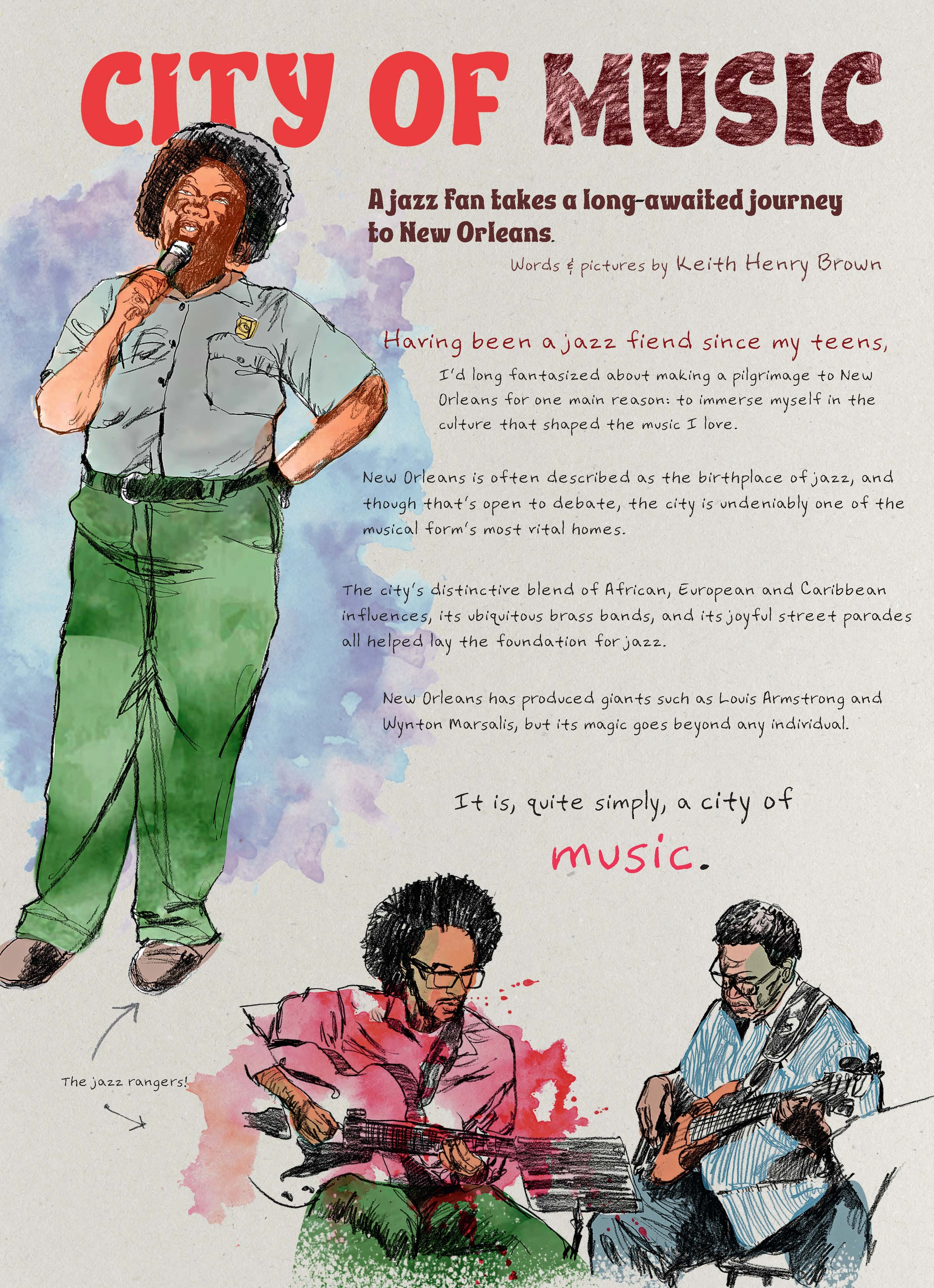
Comic book image with the following text: Having been a jazz fiend since my teens, I’d long fantasized about making a pilgrimage to New Orleans for one main reason: to immerse myself in the culture that shaped the music I love. New Orleans is often described as the birthplace of jazz, and though that’s open to debate, the city is undeniably one of the musical form’s most vital homes. The city’s distinctive blend of African, European and Caribbean influences, its ubiquitous brass bands, and its joyful street parades all helped lay the foundation for jazz. New Orleans has produced giants such as Louis Armstrong and Wynton Marsalis, but its magic goes beyond any individual. It is, quite simply, a city of music.
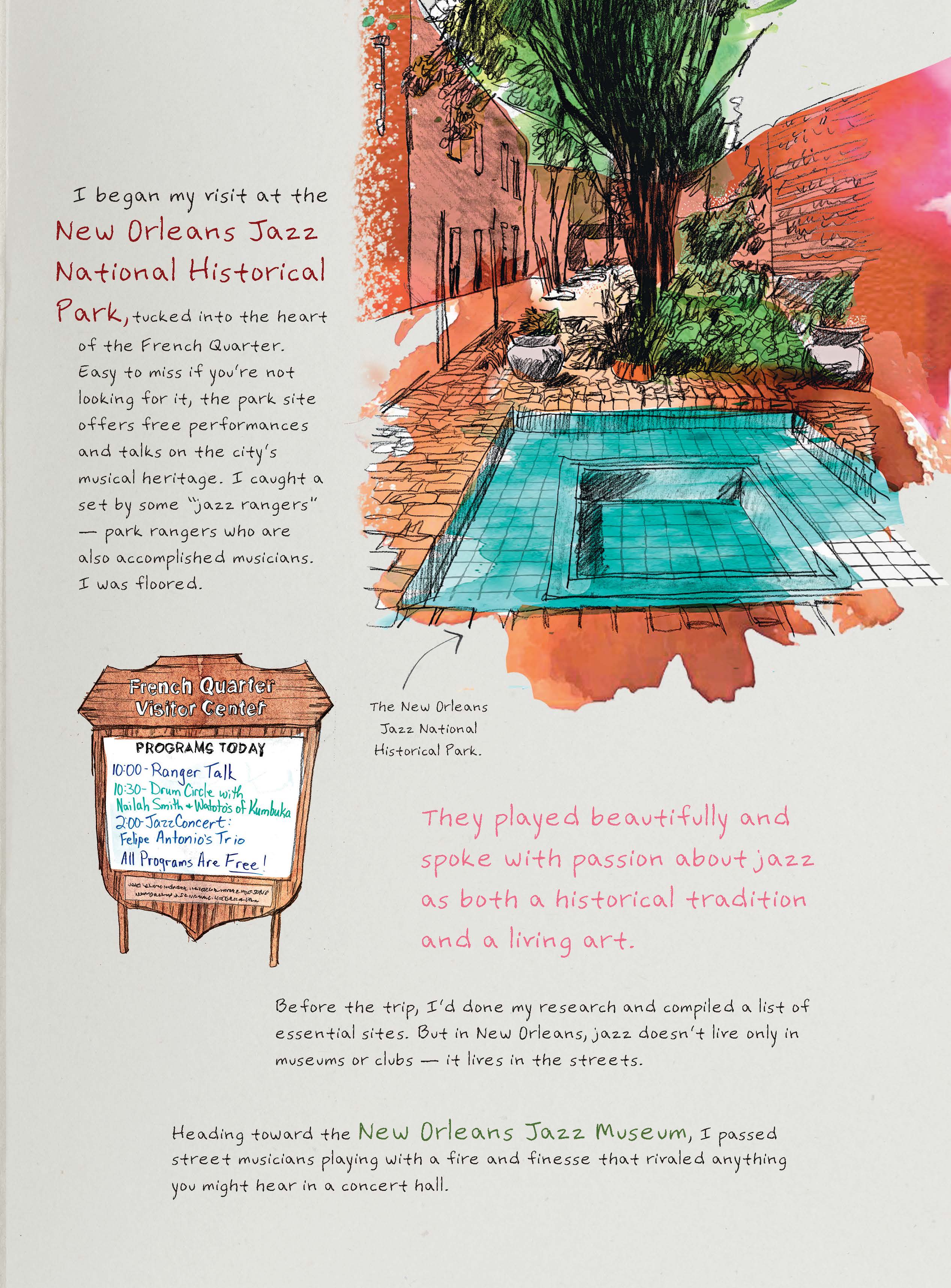
Comic book image with the following text: I began my visit at the New Orleans Jazz National Historical Park, tucked into the heart  of the French Quarter. Easy to miss if you’re not looking for it, the park site offers free performances and talks on the city’s  musical heritage. I caught a set by some “jazz rangers” — park rangers who are also accomplished musicians. I was floored. They played beautifully and spoke with passion about jazz as both a historical tradition and a living art. Before the trip, I’d done my research and compiled a list of essential sites. But in New Orleans, jazz doesn’t live only in museums or clubs — it lives in the streets. Heading toward the New Orleans Jazz Museum, I passed street musicians playing with a fire and finesse that rivaled anything you might hear in a concert hall.
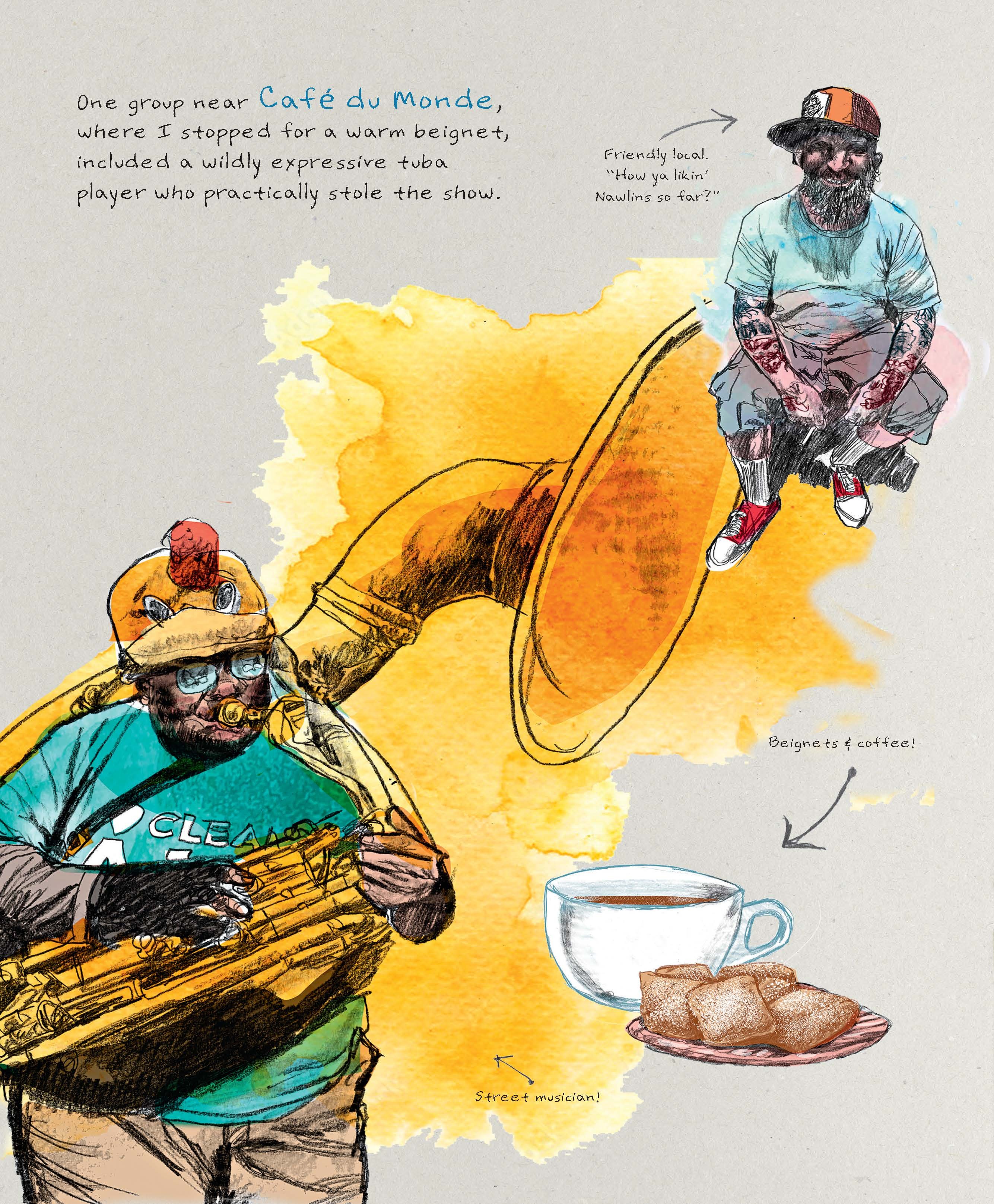
Comic book image with the following text: One group near Café du Monde, where I stopped for a warm beignet, included a wildly expressive tuba player who practically stole the show.
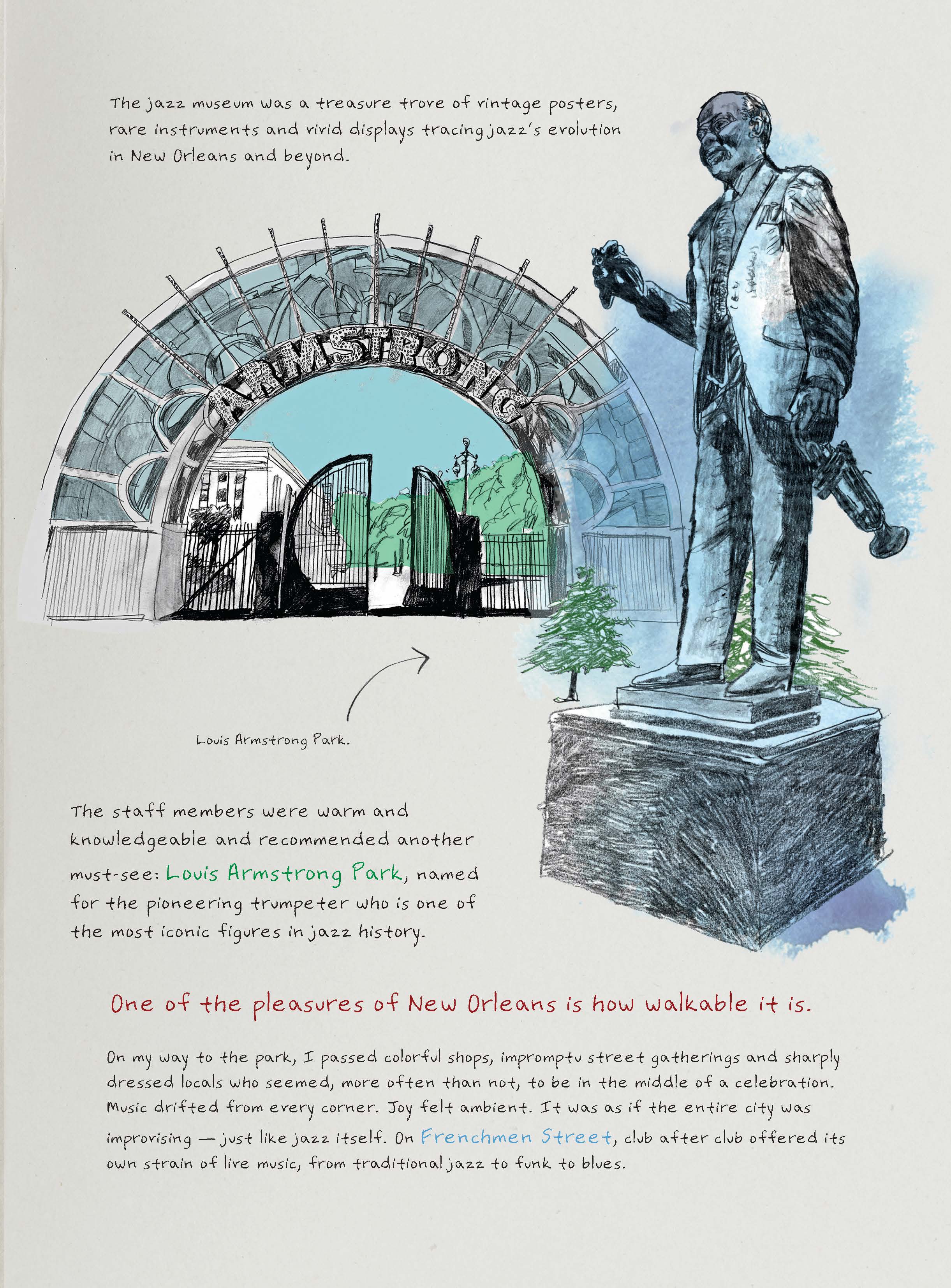
Comic book image with the following text: The jazz museum was a treasure trove of vintage posters, rare instruments and vivid displays tracing jazz’s evolution in New Orleans and beyond. The staff members were warm and knowledgeable and recommended another must-see: Louis Armstrong Park, named for the pioneering trumpeter who is one of the most iconic figures in jazz history. One of the pleasures of New Orleans is how walkable it is. On my way to the park, I passed colorful shops, impromptu street gatherings and sharply dressed locals who seemed, more often than not, to be in the middle of a celebration. Music drifted from every corner. Joy felt ambient. It was as if the entire city was improvising — just like jazz itself. On Frenchmen Street, club after club offered its own strain of live music, from traditional jazz to funk to blues.
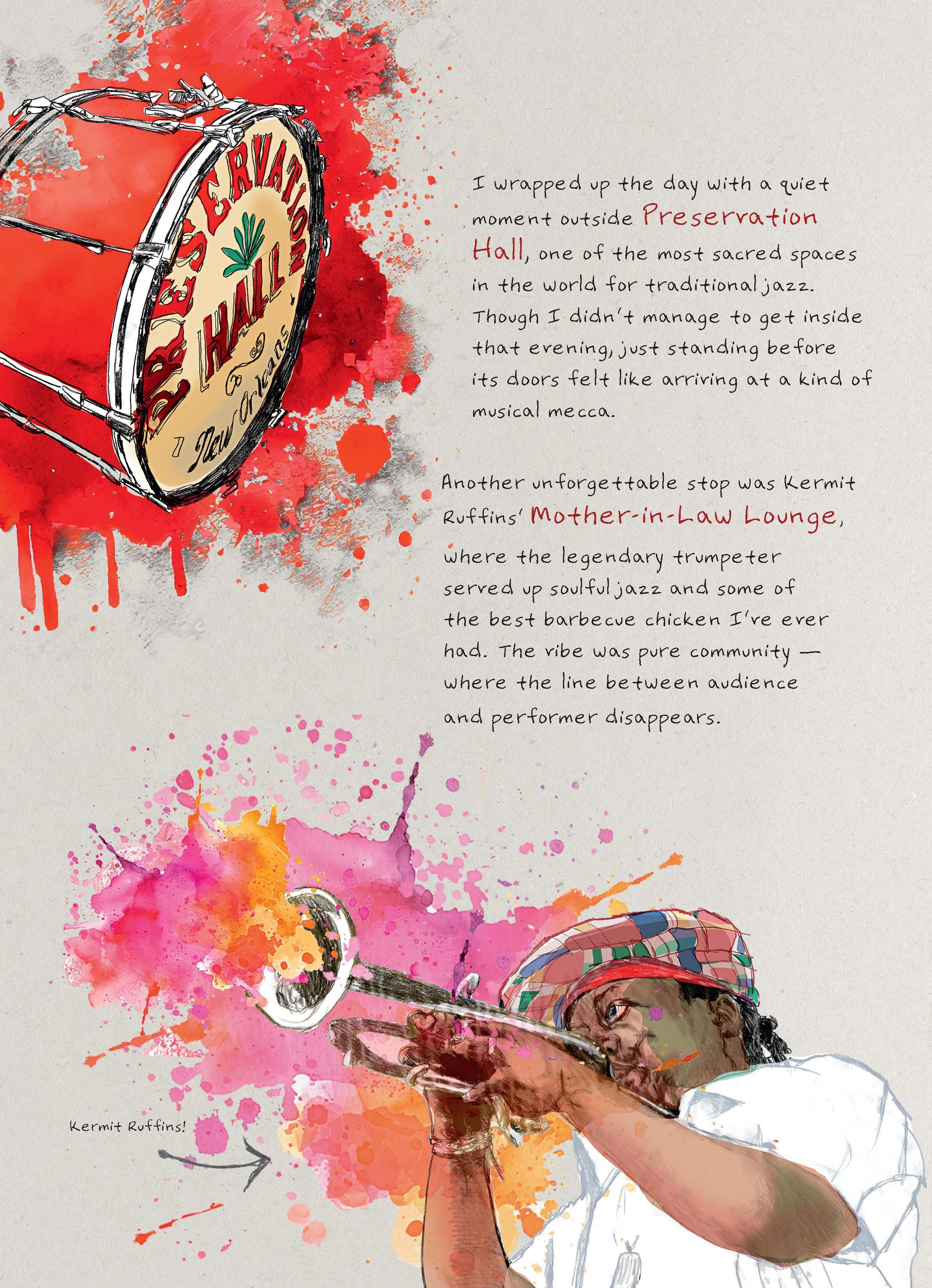
Comic book image with the following text: I wrapped up the day with a quiet moment outside Preservation Hall, one of the most sacred spaces in the world for traditional jazz. Though I didn’t manage to get inside that evening, just standing before its doors felt like arriving at a kind of musical mecca. Another unforgettable stop was Kermit Ruffins’ Mother-in-Law Lounge, where the legendary trumpeter served up soulful jazz and some of the best barbecue chicken I’ve ever had. The vibe was pure community — where the line between audience and performer disappears.
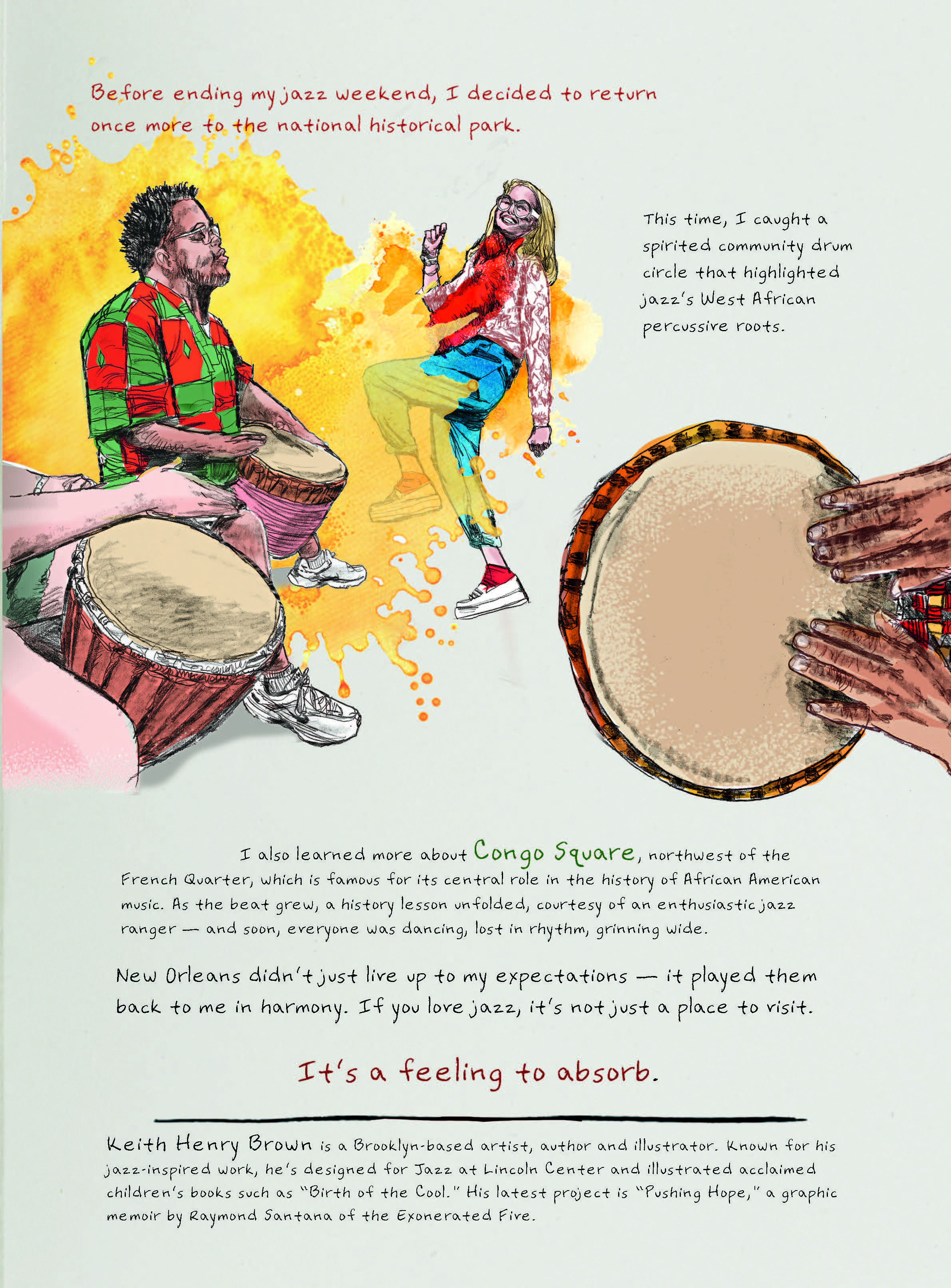
Comic book image with the following text: Before ending my jazz weekend, I decided to return once more to the national historical park.  This time, I caught a spirited community drum circle that highlighted jazz’s West African percussive roots. I also learned more about Congo Square, northwest of the French Quarter, which is famous for its central role in the history of African American music. As the beat grew, a history lesson unfolded, courtesy of an enthusiastic jazz ranger — and soon, everyone was dancing, lost in rhythm, grinning wide. New Orleans didn’t just live up to my expectations — it played them back to me in harmony. If you love jazz, it’s not just a place to visit. It’s a feeling to absorb.

About the author

  • Keith Henry Brown Contributor

    Keith Henry Brown is a Brooklyn-based artist, author and illustrator. Known for his jazz-inspired work, he’s designed for Jazz at Lincoln Center and illustrated acclaimed children’s books such as “Birth of the Cool.” His latest project is “Pushing Hope,” a graphic memoir by Raymond Santana of the Exonerated Five.

This article appeared in the Winter 2026 issue

National Parks, our award-winning quarterly magazine, is an exclusive benefit of membership in the National Parks Conservation Association.

More from this issue

The First American Revolution?

Read more from NPCA