Winter 2026
The Long Road to Recovery
Appalachian communities along the Blue Ridge Parkway are struggling to bounce back as big sections of the park remain closed to visitors because of hurricane damage.
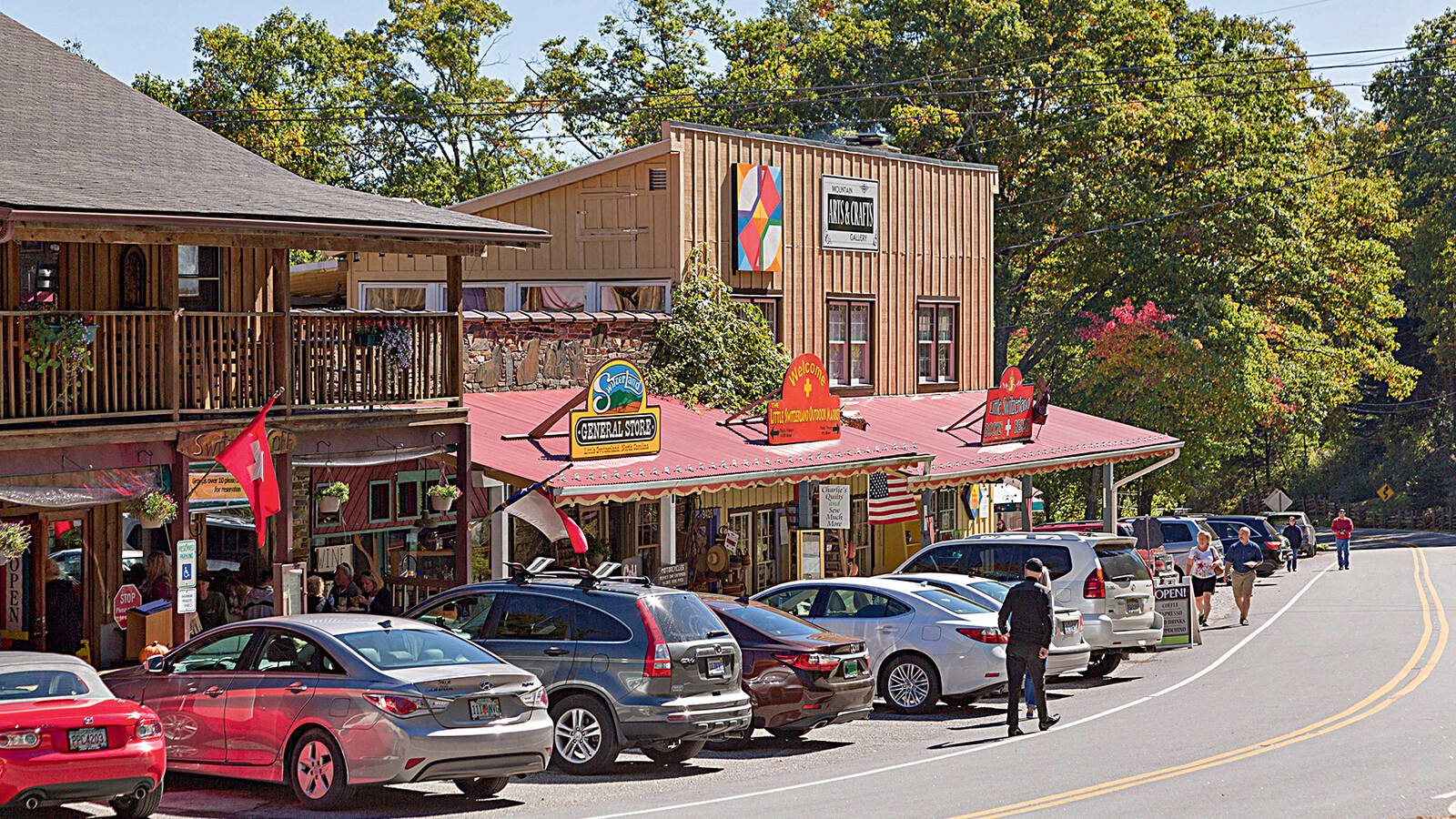
In September 2024, as Hurricane Helene lashed western North Carolina with torrential rains and powerful winds, Carter Francois noticed that the front door of his Alpine Inn was not latching. It didn’t take him long to realize that something was very wrong with the mountainside lodge’s foundation. “I heard some cracking,” he said, “so I went outside, and the deck that was in front of the lobby just kind of exploded and went down the hill between the building and the road right in front of me.”
Francois, the inn’s co-owner and a few guests escaped the perilous situation by trekking about a mile through knee-deep mud to the town of Little Switzerland where they found shelter at a posh hotel. With all roads to Little Switzerland blocked by landslides and treefall, the National Guard was called in to airlift stranded people off the mountain. By the time Francois returned to his inn several days later, he found one of the buildings missing: It had tumbled down the mountainside.
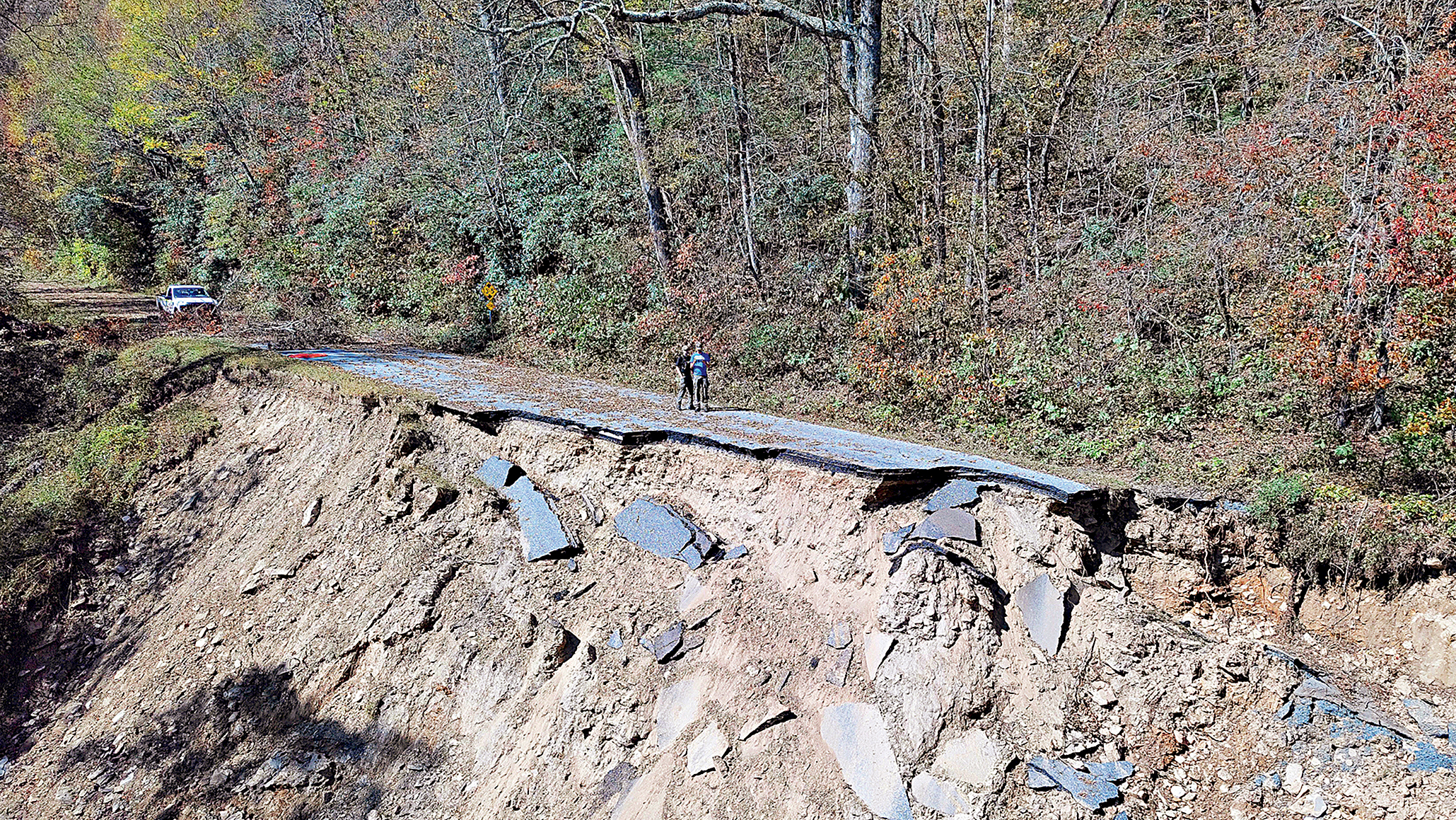
In September 2024, torrential rains from Hurricane Helene caused at least 57 landslides along the parkway.
NPS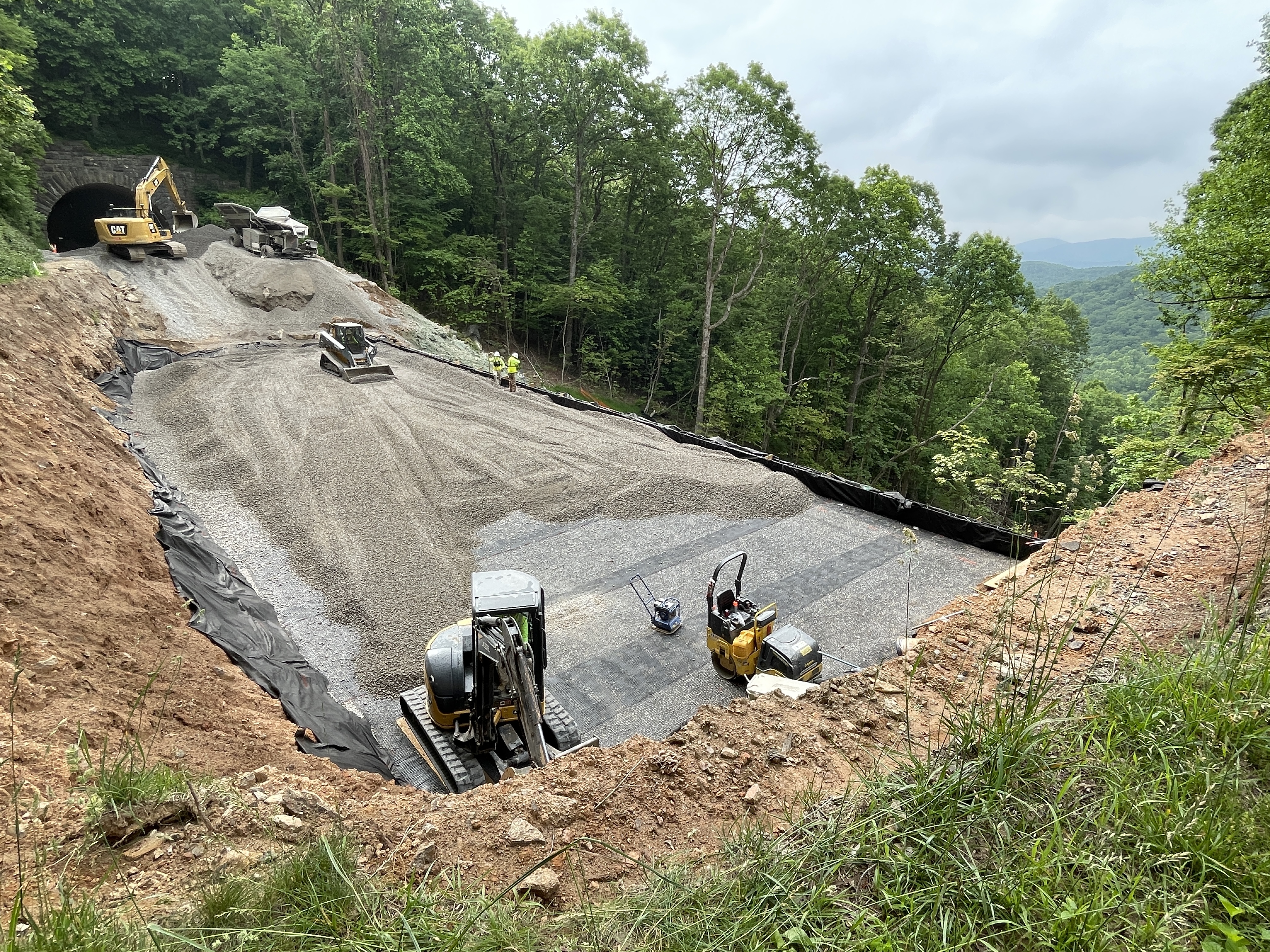
Efforts to rebuild the parkway are ongoing.
NPSIn September 2024, torrential rains from Hurricane Helene caused at least 57 landslides along the parkway.
NPSEfforts to rebuild the parkway are ongoing.
NPSA year later, Francois and his business partner have partially reopened the inn, but there aren’t enough tourists to fill even half of the remaining rooms. The inn is just 1 mile from the Blue Ridge Parkway, but with the storm-damaged roadway near Little Switzerland still closed in one direction, many visitors are choosing to spend their money elsewhere. “Tourism out here right now is almost nonexistent,” Francois said.
With some 16 million visitors in a normal year, the Blue Ridge Parkway is one of the nation’s most-visited national park sites and central Appalachia’s economic powerhouse, generating an estimated $1.4 billion in annual spending and supporting over 19,000 jobs. So the closure of large swaths of the 469-mile roadway has had a big impact on the local economy.
Tourism out here right now is almost nonexistent.
One of the areas most affected was McDowell County, where the Alpine Inn is located. Local boosters have worked for decades to rebrand this former manufacturing area into a hub for outdoor recreation, but the tourism sector has been suffering from the hurricane fallout. Kim Effler, president and CEO of the McDowell Chamber of Commerce, said traffic at the chamber’s visitor center in Marion, the county seat, decreased by 50% in June and July, compared with the previous year. Many visitors who do come seek information on accessing the parkway, but Effler must tell them that big sections of it remain inaccessible. Still, she directs tourists to visit the area’s hardest-hit towns, telling them, “Your visit to us is part of our economic recovery.”

Shindigs, Jamborees, & Jubilees
Traveling along the Blue Ridge Parkway for some fast dancing, sweet music, and old-fashioned fun.
See more ›Twelve miles west in Old Fort, Jeremy Poore co-owns a business that transports mountain bikers up 3,800 feet to a point on the parkway where they can let gravity carry them back down on scenic trails. Because of the parkway closures, shuttle revenue is down 98%, Poore said. He’s still paying for insurance, web hosting and permits, and he said he hopes to keep his business afloat until the local section of the parkway reopens. “Our goal is to be able to survive financially until that time,” he said.
The drop in mountain biking clientele hurts other businesses, too. “The average person who comes to ride the shuttle might spend $30 on our shuttle, and they’ll spend another $30 to $50 in town,” Poore said. “That’s having a coffee and a pastry or having beer and lunch.”
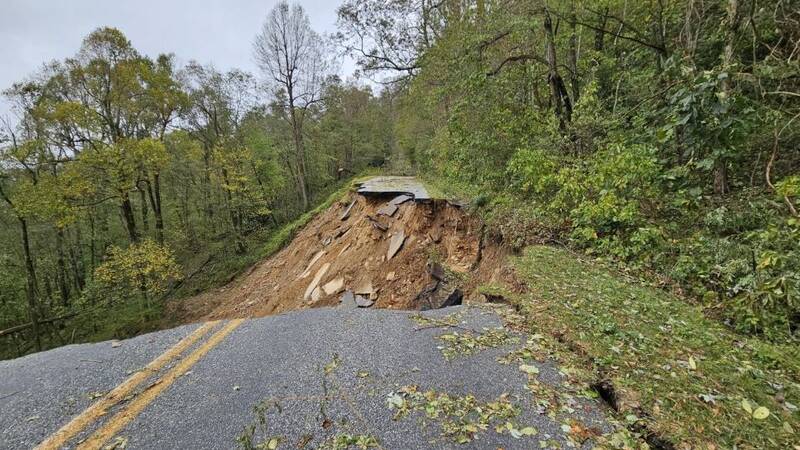
The National Park Service closed the entire length of the parkway in the immediate aftermath of Helene. The agency began reopening sections of the parkway in Virginia a couple of weeks later, but it took months to assess the full extent of the damage, especially in North Carolina. In the spring, the Park Service said that at least 57 landslides had wiped out entire sections of the roadway. Restrooms and visitor centers were severely damaged by the storm, with the Linville Falls Visitor Center completely destroyed by 12-foot-high rushing floodwaters. It was clear that reopening the entire parkway was going to be a herculean task. In addition, park employees, many of whom suffered directly from the storm, would face uncertainties of their own as the Trump administration targeted the Park Service with massive staff reductions and budget cuts. “There’s a devastation that comes with that, too,” said Eboni Preston Goddard, NPCA’s Southeast regional director.
At the start of the summer tourist season, elected officials, business leaders and Park Service officials in North Carolina gathered in an emotionally charged meeting. Business leaders wanted to know when sections of the parkway would reopen, but park staff were only offering imprecise estimates. “That ‘we’re not really sure’ answer didn’t sit well with a community that was gearing up for the summer and needed those answers,” said David Jackson, president and CEO of the Boone Area Chamber of Commerce, in the northwestern part of the state.
Helene: Facing Loss and the Blue Ridge Parkway’s ‘Most Tremendous Challenge’
As damage assessments continue, an NPCA staffer who lived through Tropical Storm Helene in North Carolina reflects on the impact to residents and the Southeastern parks they love, including the…
See more ›The Park Service is using a reinforced soil slope procedure that involves constructing a tiered embankment of gravel underneath the roadway to improve its long-term resiliency, Leesa Brandon, the park’s spokesperson, told me. While only 50 miles of roadway remain closed to the public, the area between Linville Falls and Mount Mitchell, where Little Switzerland is located, will not likely reopen until the fall of 2026, but “we’ve got good momentum going,” she said.
Meanwhile, the parkway may not fully bounce back, even after repairs are completed. In July, the president signed a law that strips $267 million from the Park Service’s budget, while an NPCA analysis noted a 25% reduction in permanent staffing and a nearly 50% reduction in seasonal hiring. Brandon and the agency’s communications office did not comment on the impact of staffing cuts on the parkway’s operations, but those could affect whether campgrounds, picnic areas, visitor centers and restrooms will be staffed and open to the public in the years ahead.

National Parks
You can read this and other stories about history, nature, culture, art, conservation, travel, science and more in National Parks magazine. Your tax-deductible membership donation of $25 or more entitles…
See more ›Over the past year, Carter Francois said, he made countless calls to his insurance company and the Federal Emergency Management Agency, but he and the inn’s co-owner were denied coverage by their insurance carrier and only received a “chunk of change” from FEMA. It may cost as much as $3 million to fully rebuild the 1929 inn, a gigantic sum for a business that saw revenue fall 73% so far this year.
To make ends meet, Francois made the difficult decision to partially close the lodge for the leaf-peeping season and go sell tacos out of a food truck to workers at an IV bag manufacturing plant at the base of the mountain. He said he thinks the parkway near his lodge may not open until the spring of 2027 — some 2 ½ years after the passage of the hurricane. But he has a request for returning tourists once the parkway does eventually reopen: “When you come here,” he said, “have empathy.”
About the author
-
 G. Samantha Rosenthal Contributor
G. Samantha Rosenthal is an independent journalist, historian and award-winning author. Her most recent book is “Living Queer History: Remembrance and Belonging in a Southern City.”

-
Press Release
NPCA Celebrates Staff Expert's New Book on Blackwell School National Historic Site
A groundbreaking new book co-authored by NPCA's Cristobal Lopez tells the history of Blackwell School National Historic Site, highlighting the experiences of the Mexican American students who attended the segregated…
-
Press Release
Trump Administration Continues to Unlawfully Bulldoze National Mall Parks
“This egregious destruction continues to show how the Trump administration operates as if laws don’t apply. They continue to move forward, disregarding the will of the American people for which…
-
Blog Post
Fossils: Yesterday, Today and Tomorrow
Celebrating ancient trackways, and all fossils, for National Fossil Day, Oct. 14.