Imagine America Without...
Our Iconic Landscapes


Secretary Burgum must protect our monuments.
We are on the verge of what could be the largest rollback of protections for national parks and monuments in U.S. history.
Send MessageMajestic mountains. Rolling rivers. Elusive wildlife. Breathtaking views. Generation after generation, visitors come to national parks for all of this and more, to be inspired by one of America’s great, lasting legacies.
But the parks don’t exist in a vacuum. The lands surrounding national parks — national forests, wilderness areas, national monuments and more — safeguard the water, wildlife and clean air that visitors treasure. Those thriving, living landscapes are what draw millions to national parks every year.
The true value of a place isn’t measured in dollars or acres, but in the lives it has touched. National parks account for only 3% of protected lands, but their value to all of us is immense — as anchors for ecosystems and as national treasures to be passed down for future generations to enjoy.
Imagine America Without… America’s Largest Intact Park Landscape
The unspoiled, roadless landscape of Gates of the Arctic National Park and Preserve is so remote that few will ever see it with their own eyes. But you don’t have to travel to the wilds of Alaska to know why this is such a special place.
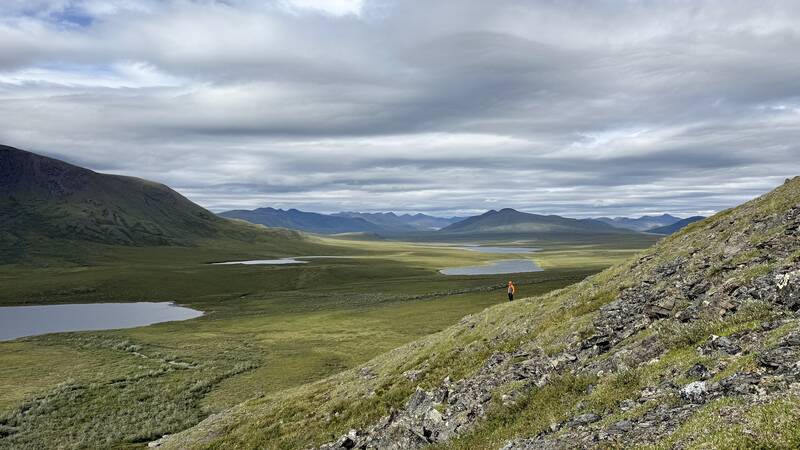
Gates of the Arctic: Scenes from a Park at a Crossroads
By bush plane, canoe and dog sled, a traveler experiences the priceless landscape threatened by the proposed Ambler mining road.
See more ›This landscape is home to one of North America’s largest caribou herds. The Western Arctic Caribou herd undertakes one of the longest land migrations on Earth each year through Alaska’s roadless and intact lands and waterways.
The Western Arctic Caribou Herd is the epitome of this kind of boundless migration. Each year, 250,000 caribou migrate across a 100-million-acre landscape – the size of the state of Montana.
As they wander from their calving grounds in the Utukok Uplands to their wintering grounds on the Bering Land Bridge and back again, western Arctic caribou can cover 2,700 miles a year, equivalent to the distance between New York and Seattle — one of the longest land migrations on Earth.
NPCA, alongside Alaska Native Tribes, local communities and millions of Americans have long opposed the industrial Ambler mining road proposal, which would slice through Gates of Arctic National Park and Preserve and sever the migration route for the Western Arctic Caribou Herd.
More than 20 million acres of national parklands — nearly a quarter of the acres in the entire National Park System — would be harmed by this private mining road. The Ambler Road would destroy and pollute Arctic lands and waters, and harm the health of wildlife and people across a broad region in the southern Brooks Range. It’s hard to imagine a worse place to develop a road to destructive, industrial mining operations.
Imagine America Without… Mojave National Preserve
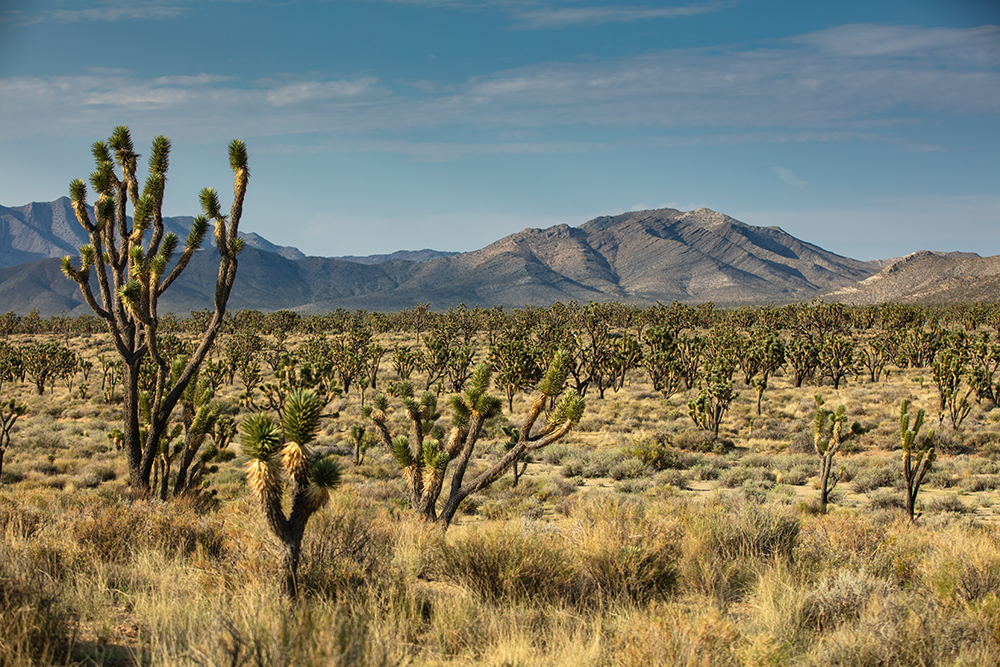
Mojave National Preserve in California has come under threat from increased energy extraction.
iStock/halbergmanHome to sweeping dunes, ancient volcanic formations, broad mesas, and one of the largest Joshua tree forests on Earth, Mojave is one of the largest and most diverse desert preserves in the world. Spanning 1.6 million acres, it is the third-largest park unit in the contiguous United States and one of the planet’s most ecologically diverse environments. Representing three of North America’s four major deserts — the Mojave, Great Basin, and Sonoran — the preserve draws visitors seeking solitude, biodiversity, star-filled skies, and a sense of wonder that is hard to find anywhere else.
While beloved by many, this landscape is under urgent threat. A foreign-owned mining company is bulldozing protected land inside Mojave, relying on an expired 1985 permit from the Bureau of Land Management, despite objections from the National Park Service who has had authority over the preserve since 1994. Destructive activity is already underway at the Colosseum Mine in the Clark Mountain region, an area that holds the second-highest concentration of rare plants in California and critical habitat for desert bighorn sheep. The Trump administration is encouraging the company to move forward, disregarding the authority of the National Park Service and undermining long-standing protections. This sets a dangerous precedent that national park safeguards can simply be ignored.
There is so much at stake. Mojave is a lifeline for species like tortoises, bobcats, coyotes, badgers, and more than 60 others. The preserve anchors the Moab to Mojave Conservation Corridor, the largest connected protected landscape in the lower 48 states. This corridor supports wildlife migration, protects clean water, and provides climate resilience across ecosystems that stretch from Utah to California. If Mojave falls to industrial development, it weakens an entire regional conservation effort and threatens the future of our most iconic public lands.
Mojave is a vibrant place filled with life. It is alive with red cactus blooms, wind-carved peaks, and the slow, quiet movement of desert tortoises. Visitors describe the preserve’s night skies as portals to the universe and its silence as healing. Mojave invites reflection, exploration, and a sense of connection to the land that is rare and deeply needed. It is an irreplaceable American treasure. We must act now to prevent further and irreversible damage.
Imagine America without… Devils Tower
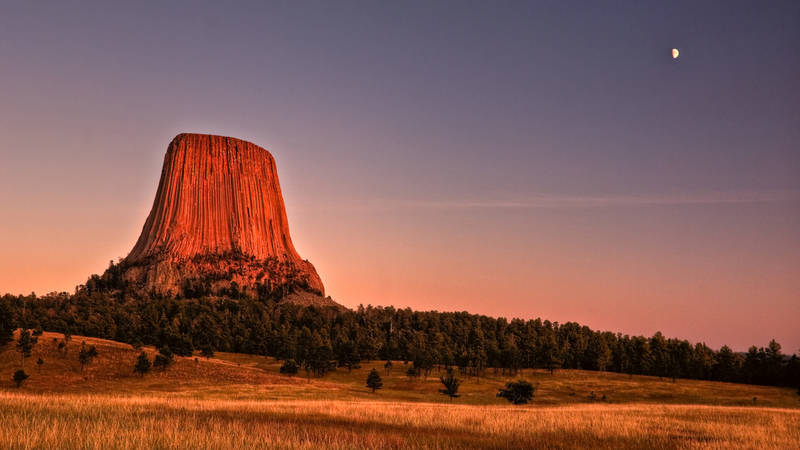
Devils Tower in Wyoming was the first national monument created through the 1906 Antiquities Act.
Matt Pcion/DreamstimeDevils Tower National Monument, established in 1906 by President Theodore Roosevelt, is a landmark in the truest sense of the word. It’s an astounding geologic feature — visible from some 50 miles away — that protrudes out of the prairie surrounding the Black Hills. It is considered sacred by many Indigenous people, and the Arapahoe, Cheyenne, Crow, Kiowa, and Lakota tribes each have sacred narratives in their oral histories about the Tower. Hundreds of parallel cracks make it one of the finest crack climbing areas in North America.
It is also in the crosshairs of oil and gas developers, who hope for the opportunity to drill in this landscape.
Breaking up the Devils Tower landscape would leave this one-of-a-kind view surrounded by oil wells, industrial roads, hazy skies and gas flares. President Roosevelt protected this landscape precisely to save it from this kind of development, but the Department of the Interior has begun actively studying whether those protections can be revoked.
Visitors come from across the nation — and around the world — to experience the natural wonder of a breathtaking landscape. Like so many people who experience the sights of Devils Tower, President Roosevelt recognized the importance of preserving America’s natural heritage for future generations. Devils Tower entices us to explore, find our own place in the world, and protect these inspiring and irreplaceable landscapes.
Get Involved
Stay On Top of News
Our email newsletter shares the latest on parks.
Learn More
-
Press Release
Parks Group Responds to New Order Threatening National Monuments
"Time and again, millions of people have spoken out in defense of America’s national monuments. Americans do not…

Make a tax-deductible gift today to provide a brighter future for our national parks and the millions of Americans who enjoy them.
Donate Now