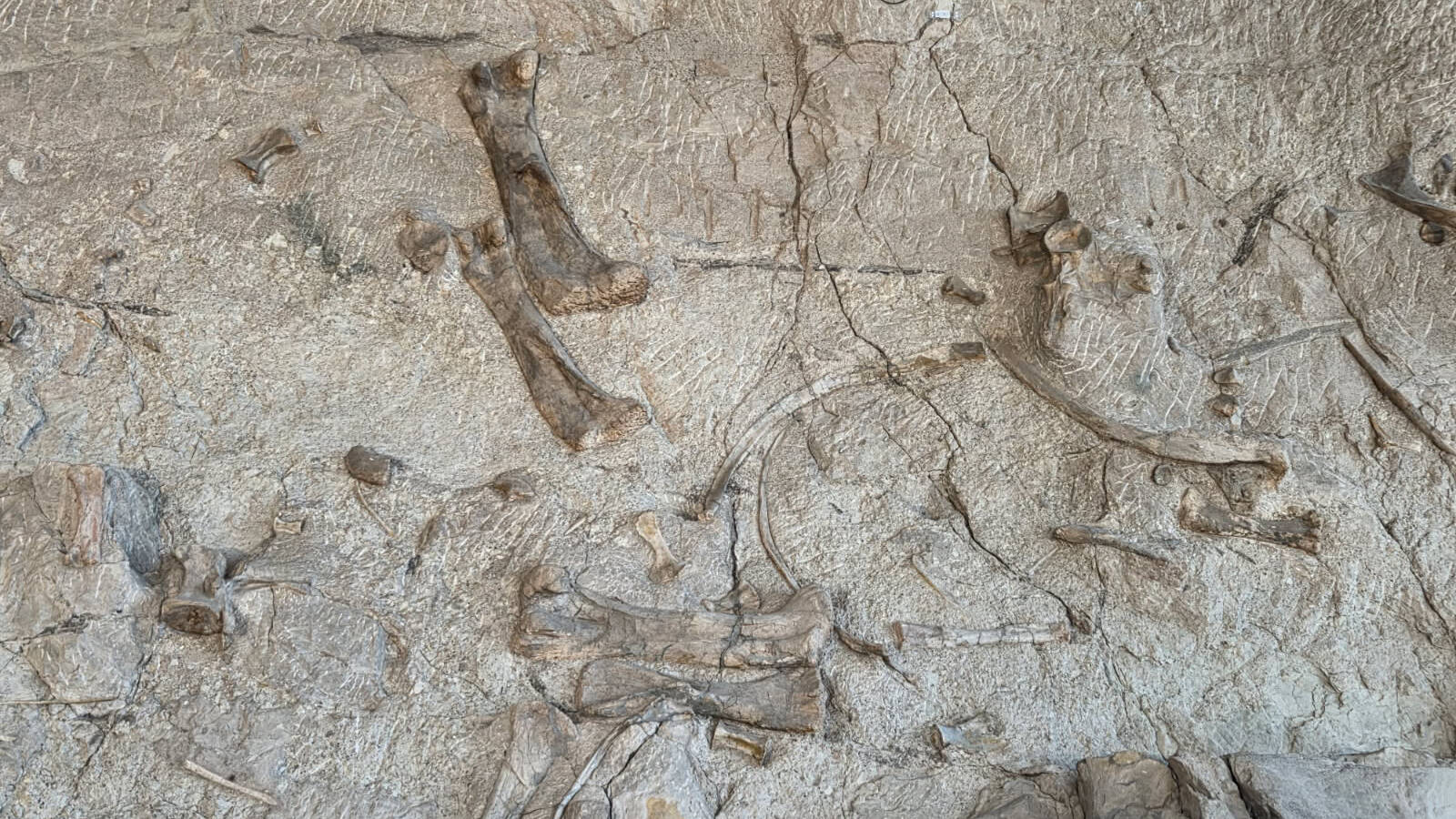
Celebrating ancient trackways, and all fossils, for National Fossil Day, Oct. 14.
Fossils — the ancient remnants and traces of animals, plants and even footprints from a previous geologic age that have been preserved — speak to the genesis and grandeur of this planet. The National Park Service’s annual National Fossil Day serves as a feel-good nod to this evidence of earth’s memory. The day of observance always falls in the middle of the internationally recognized Earth Science Week initiated by the American Geosciences Institute, and this year will be celebrated Wednesday, Oct. 14. Advocacy by the institute and Park Service paleontologists led to former President Obama declaring an official National Fossil Day starting in 2010. The mission is straightforward:
“National Fossil Day is a celebration organized by the National Park Service to promote public awareness and stewardship of fossils, as well as to foster a greater appreciation of their scientific and educational values.”
National Fossil Day encourages us to remember the vast paleontological resources in the park system, as we also acknowledge the feelings of awe, wonder and intrigue that are inseparable from fossils.
To demonstrate the sheer diversity of these resources, the Park Service designs a different National Fossil Day poster each year. This year’s official poster features White Sands National Park in New Mexico, which preserves one of the world’s largest concentrations of Cenozoic fossil footprints. And there are scientific updates to share!
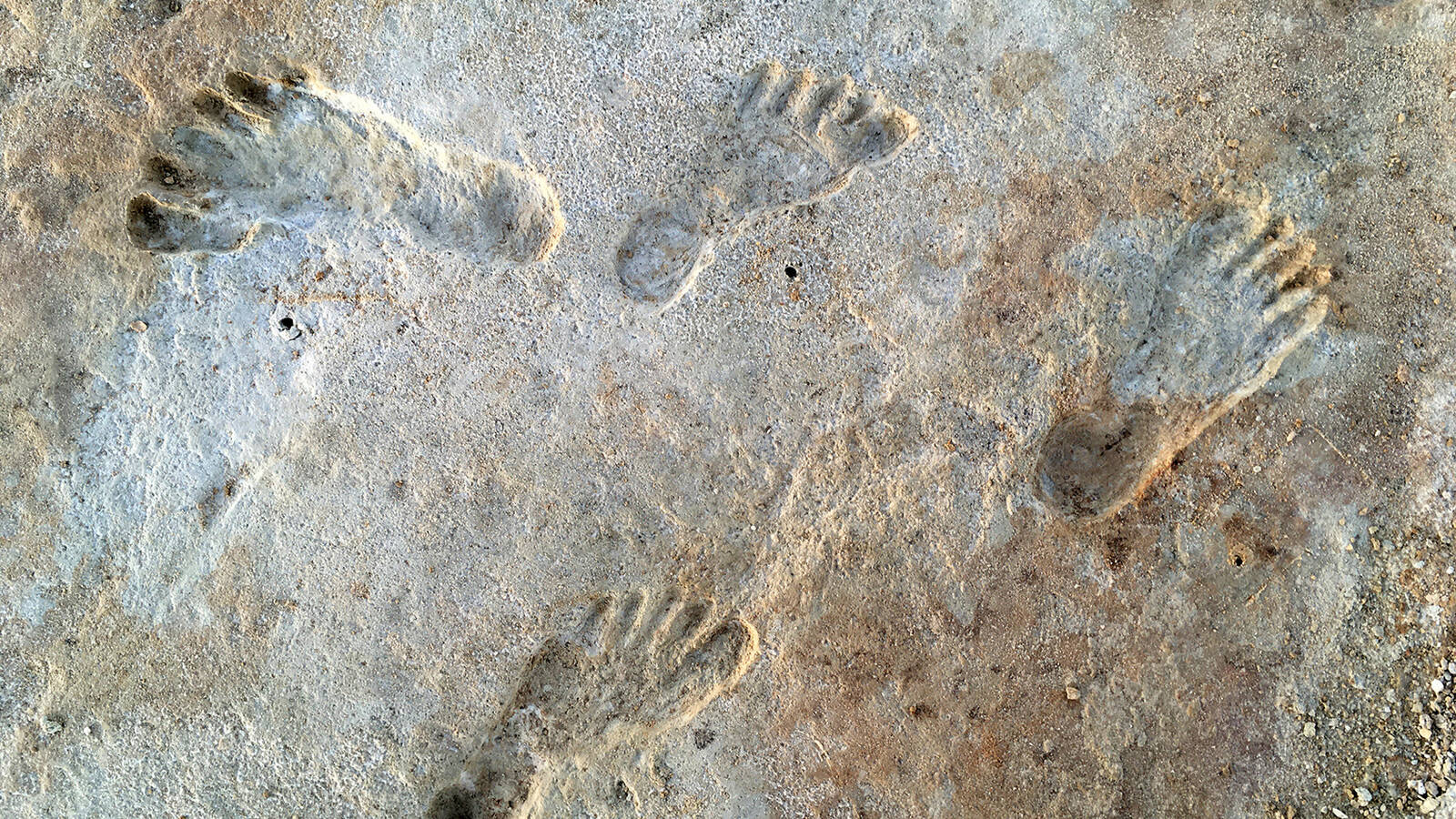
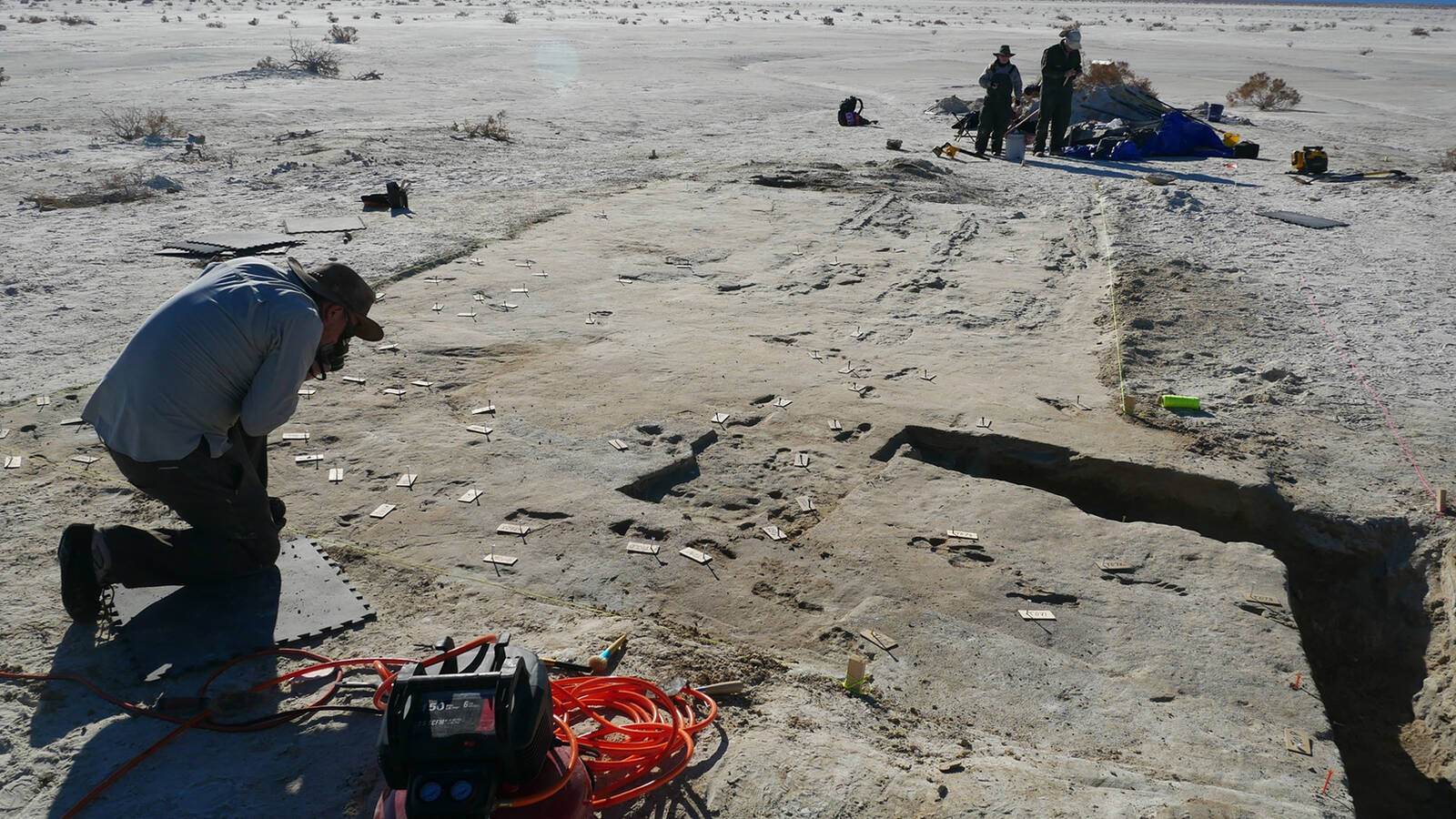
The biggest new developments at White Sands National Park center on the famous Ice Age human footprints. Over the past few years and using various scientific dating methods on both ancient pollen and the lakebed mud, studies have strengthened the claim that humans were here approximately 20,700 to 23,000 years ago. This puts humans on this continent during the Last Glacial Maximum, a time when the icesheets reached their greatest global extent. This is about 10,000 years older than previously thought.
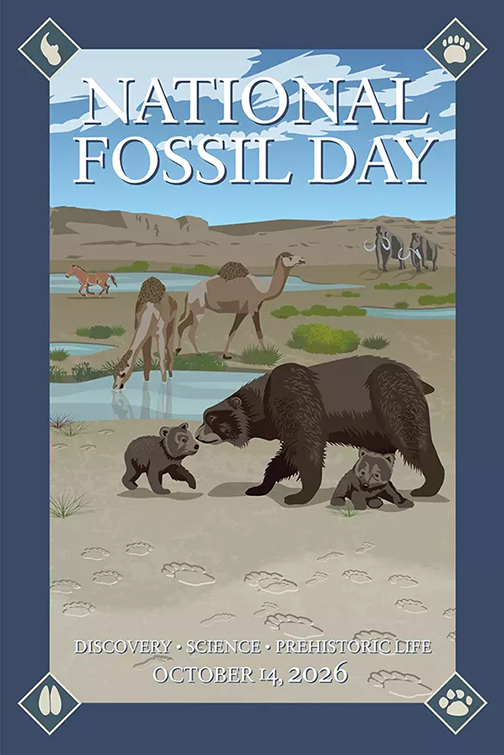
The 2026 National Fossil Day poster, featuring White Sands National Park.
NPSThis information has forced researchers to rethink when and how the first people reached the Americas. It is also speculated that the fossilized set of parallel lines near the footprints were most likely made from a dragging device, such as a travois, to aid in transporting heavy loads. The studies provide multiple independent confirmations of the prints’ extraordinary age, along with new reconstructions of the Ice Age landscape, animal communities and human behavior. This work is a great example of scientists merging two similar yet different disciplines — archaeology and paleontology — to help us learn about our past.
Both disciplines dig and research the past, but archaeology is limited to the study of human history. Paleontology, by contrast, isn’t just about looking backwards — it helps with future projections because it provides a long-term record of how life and environments responded to changes in the past. Scientists use this information to identify patterns that can inform predictions about the future. With reexaminations, technological advancements and new discoveries, all those findings afford greater insights, showing us that the story of our planet continues to evolve.
Ironically, both the fossilization process and the chance of finding fossils are all about time and timing, and in geologic terms, there is plenty — so much so, it’s almost intimidating. The process takes one perfect moment to start and requires what seems like infinity compared to a human lifespan to complete the precise cycle. After fossils are found, some of them may reside in collections for several decades before they can tell us much. Meanwhile, new fossil deposits are revealed during weathering events and as land shifts and erodes, and it can take just one scientist looking at a fossil differently to reveal a new part of a story.
Events at White Sands
Fossils are important to our nation’s geoheritage — in fact, they are the only resources in the National Park System that have their own designated day of celebration! Having fewer than a dozen full-time Park Service paleontologists to oversee them, fossils can be found in 2/3 of our more than 430 park units. They are found in situ, in collections, on display and in existing infrastructure and personal items that allow them to be classified as natural, historic and cultural resources. We take National Fossil Day to reflect on their distinct character and the invaluable information they provide. Personally, I view them as proof that we can’t assume a geologic story has ended — fossils can reveal a beginning for new understanding! It is with this outlook that many of us see fossils as more than individual objects; they are nature in one of its oldest and truest forms.
The National Park Service, along with several hundred partners — including academic, professional and non-government organizations, use National Fossil Day to share their own contributions to scientific understanding. Because White Sands National Park is the Park Service’s featured unit this year, the park will commemorate National Fossil Day with a series of special programs — including guided hikes along the new Ice Age Trail, ranger talks and a full moon event — focused on the Ice Age fossil record. Visitors also can check out the recently installed exhibit at the visitor center with more information and casts of human footprints.
What NPCA is Doing
NPCA supports the highest protection standards for fossils and works with National Park Service paleontologists to promote public awareness of and engagement with these resources. We also track all applicable legislation and bills that are introduced that would directly or indirectly have an impact on paleo resources in priority landscapes and work to protect park sites from external development threats.
On National Fossil Day, we encourage park lovers to celebrate the preserved ancient life in our national parks — over a billion years’ worth, represented throughout the geologic record! We are so grateful for the rangers and scientists who work to interpret and protect them, and the policies written to guarantee them for tomorrow.
Stay On Top of News
Our email newsletter shares the latest on parks.
About the author
-
 Christa Cherava Senior Manager of Conservation Programs
Christa joined the National Parks Conservation Association (NPCA) as an intern in the Government Affairs Department, seeking hands-on experience in natural resource policy. Today, she works in the Conservation Programs Department, where she focuses on water resources, sustainability, and geoscience initiatives.
-
General
-
- NPCA Region:
- Southwest
-
Issues


-
Press Release
Federal Court Blocks Border Barrier Construction at Big Bend National Park
Congress designated Big Bend National Park to protect our country’s natural wonders, and people come from all over the world to experience its star-filled skies and striking mountain ranges. Big…
-
Press Release
NPCA and Partners Appeal State of Alaska’s Decision to Grant an Easement for the Ambler Mining Road
“...the proposed 211-mile Ambler Road would be a disaster for Gates of the Arctic National Preserve and the Western Arctic Caribou herd that crosses it" - Naawéiyaa Tagaban, NPCA Alaska…
-
Blog Post
We Toured Grand Staircase-Escalante After the Boundary Was Shrunk. Here’s What We Experienced
With few signs and no detailed map to guide us, we drove down the geologic Grand Staircase — which is no longer fully protected, putting treasured natural and cultural resources…