For over a century, the National Park Service has helped us learn and reflect on the history of our nation. The terrorist attacks on the U.S. are among those stories.
On Sept. 11, 2001, al Qaeda terrorists hijacked four civilian airplanes to crash into symbols of U.S. commerce, military and government — killing nearly 3,000 people and reminding Americans that the United States was not isolated from the broader threat of international terrorism.
United Flight 93 was the only one of those hijacked planes that failed to reach its intended target, thanks to the courage of its 33 passengers and seven crew members who agreed among themselves to fight back. The National Park Service tells their story at Flight 93 National Memorial, the only national park site solely dedicated to the Sept. 11 terrorist attacks.
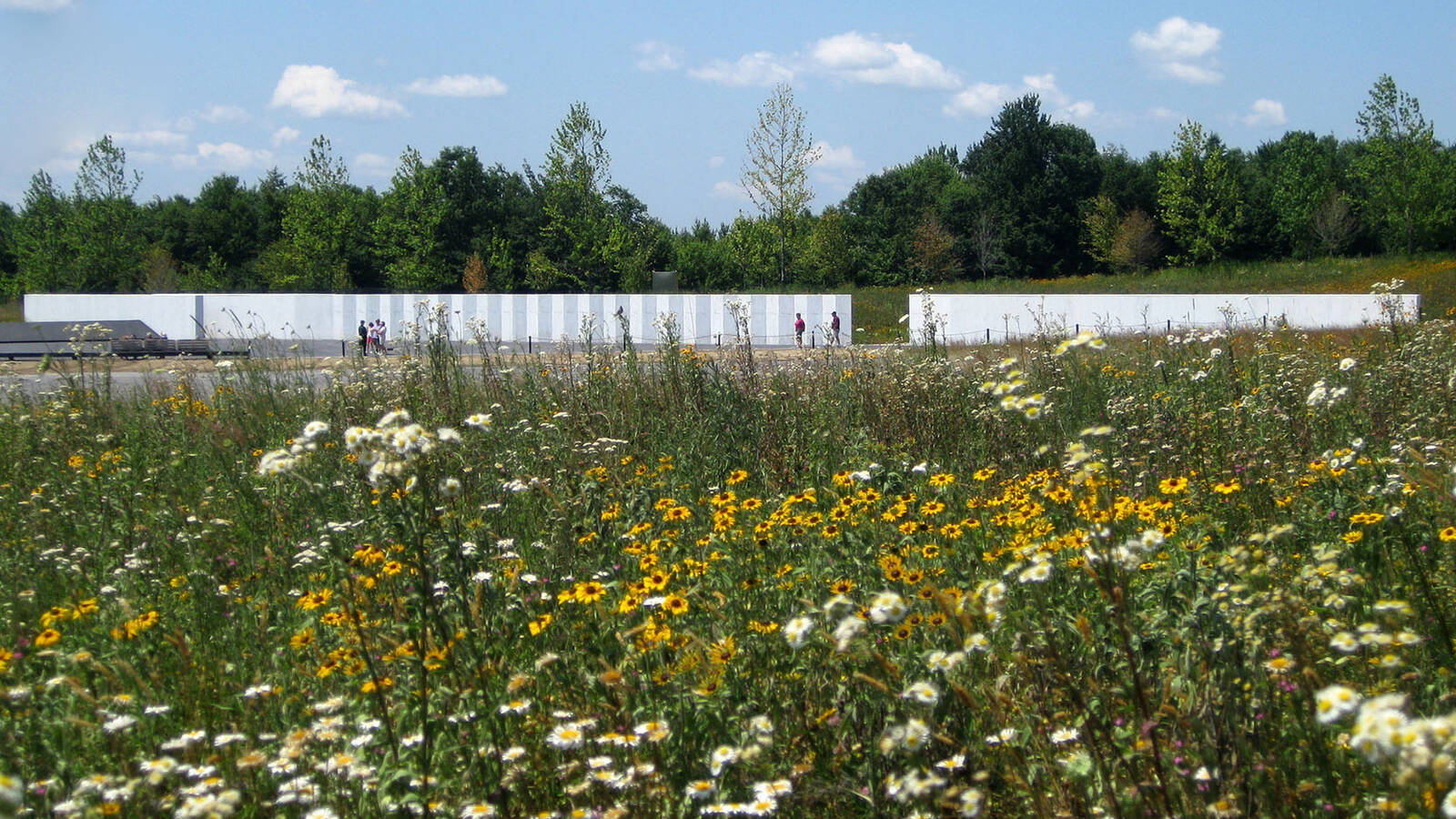
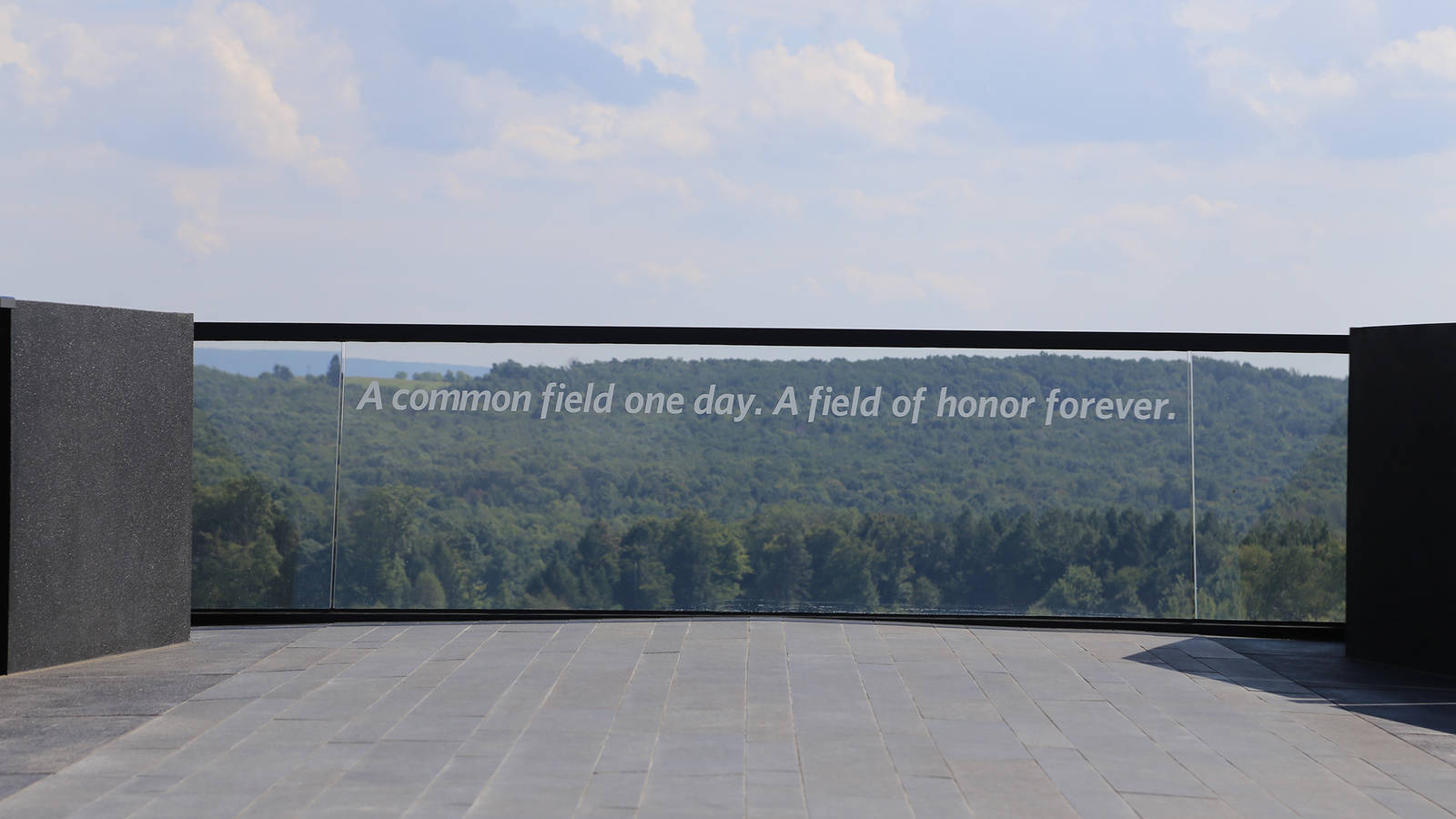
Located in a rural Pennsylvania field where the plane crashed, Flight 93 National Memorial features a Visitor Center Complex and Wall of Names along the flight path and a Memorial Plaza at the edge of the crash site. The Wall of Names appears solid from a distance, representing the unified action of the flight’s 40 passengers and crew members, yet is constructed of separate marble panels inscribed with the names of each passenger and crew. The park site’s Tower of Voices (credit: NPS), a 93-foot musical instrument of 40 wind chimes, also represents each of the passengers and crew. The Park Service recommends allowing two to three hours for a visit.
UNITED BY PARKS
Like many people, we each remember exactly where we were when news broke that a plane had struck the first World Trade Center tower — and then watched the television in anguish as the morning’s additional events unfolded.
The Flight 93 Story
According to the timeline of events, United Flight 93 took off from Newark International Airport in New Jersey at 8:42 a.m. Sept. 11, headed for San Francisco International Airport in California. Forty-six minutes into the flight, as the plane reached Ohio, four terrorists broke into the cockpit and overtook the flight crew. They then turned the plane around, heading toward Washington, D.C.
Cleveland Air Traffic Controllers heard a mayday transmission from the cockpit, and a flight attendant telephoned United Airlines at 9:35 a.m. to report the hijacking. According to the 9/11 Commission Report, the hijackers were aiming the plane for either the White House or the U.S. Capitol Building.
Passengers thwarted their intentions, however, by storming the cockpit and wrestling for control of the plane. Initially forced to the back of the plane and told to sit down and be quiet, the passengers and crew members used Airfones in seat backs to report the hijacking and also call families and friends. Thirteen people placed 37 calls, during which they learned hijacked planes had already crashed into the World Trade Center’s twin towers and the Pentagon. The group agreed to fight back and not allow their plane to become part of this larger attack on the United States.
Timeline of 9/11 Hijacking Events
Passengers and crew began their revolt inside the cockpit at 9:57 a.m., as the plane was east of Pittsburgh. People in other planes and on the ground witnessed erratic flying as the plane rolled to the right and left, presumably as the terrorists attempted to knock the passengers off balance. The cockpit voice recorder retrieved from the crash site captured the sounds of the assault, which continued until the plane crashed at 10:03 a.m. in the field near Shanksville, Pennsylvania.
Commemorative Events for 2026
Around the country, Sept. 11 is marked each year by honoring the lives lost during the terrorist attacks, including first responders, service members and every American whose life was forever changed that day.
At Flight 93 National Memorial, the 25th anniversary schedule of public events includes:
- An outdoor live chalk portrait event Sept. 9-10 honoring the 40 passengers and crew members, and a display of finished work beginning Sept. 11.
- A Morning Observance on Sept. 11 at 8:30 a.m. with a wreath laying near the visitor center, including the reading of names of the Flight 93 passengers and crew, and a ringing of the Bells of Remembrance. The observance will be broadcast live on the memorial’s YouTube page.
- An Afternoon Ceremony on Sept. 11 at 1 p.m. featuring remarks, keynote speakers, music and wreath laying at the Wall of Names. This ceremony will be broadcast live on the memorial’s YouTube page.
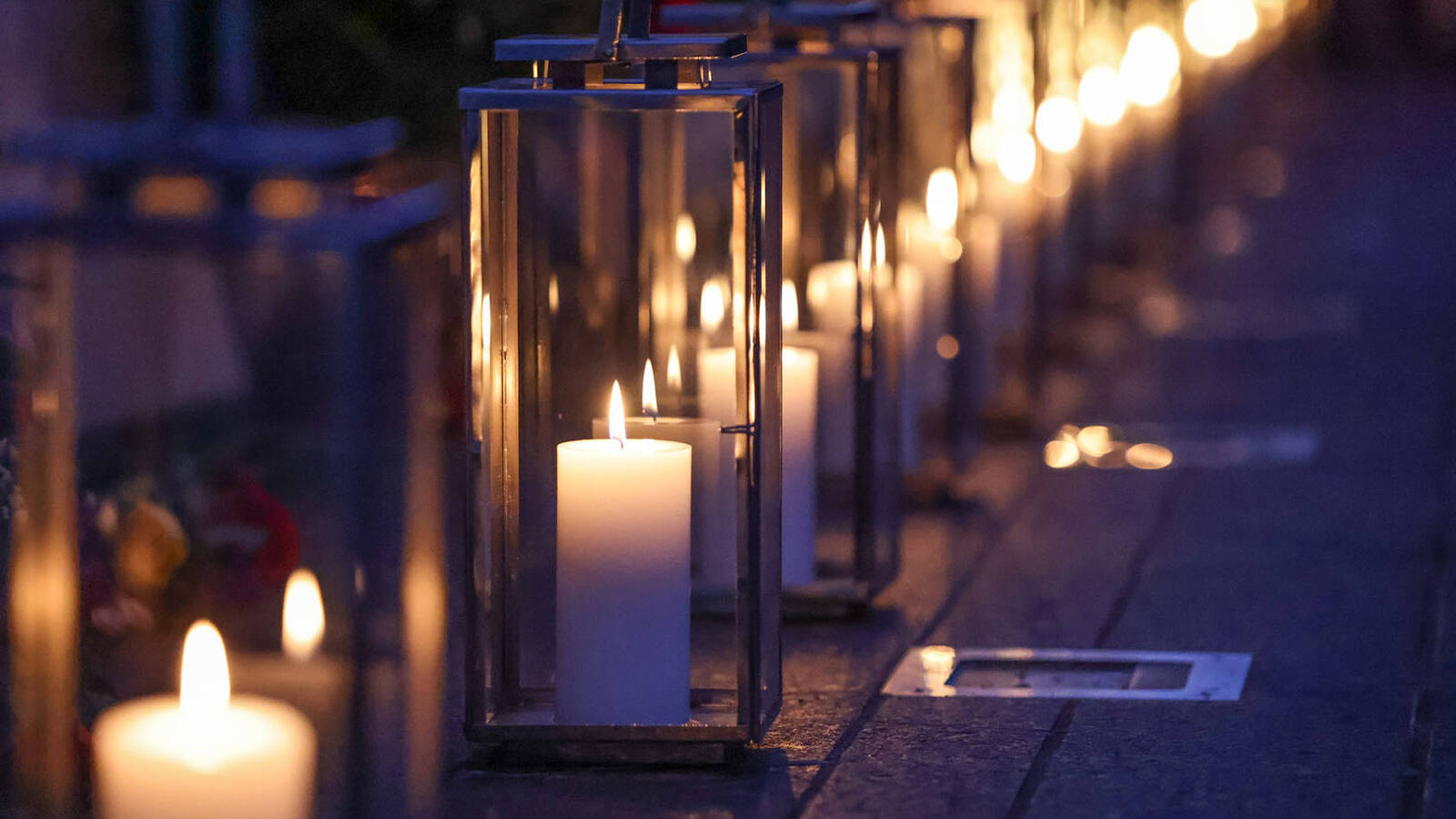
- A Luminaria Ceremony on Sept. 12 at 7:30 p.m. with a procession of lanterns to the Wall of Names, hosted in partnership with the Friends of Flight 93 National Memorial.
“We gather together in a spirit of remembrance and reflection to honor the heroes of Flight 93, recall the moments that changed our nation, and renew our commitment to carry their legacy forward with courage and compassion,” Superintendent Stephen M. Clark stated in a news release.
Protecting the Next 250 Years
This year’s quarter-century milestone coincides with the 250th anniversary of our nation’s founding. The day can remind us that the freedoms and ideals that are core to our nation’s founding can never be taken for granted. We can recall the sadness over loss of life and the gratitude for those who risked their own lives to help others. Through the National Park Service, we have the opportunity to learn more about these courageous individuals, their lives and their sacrifices.
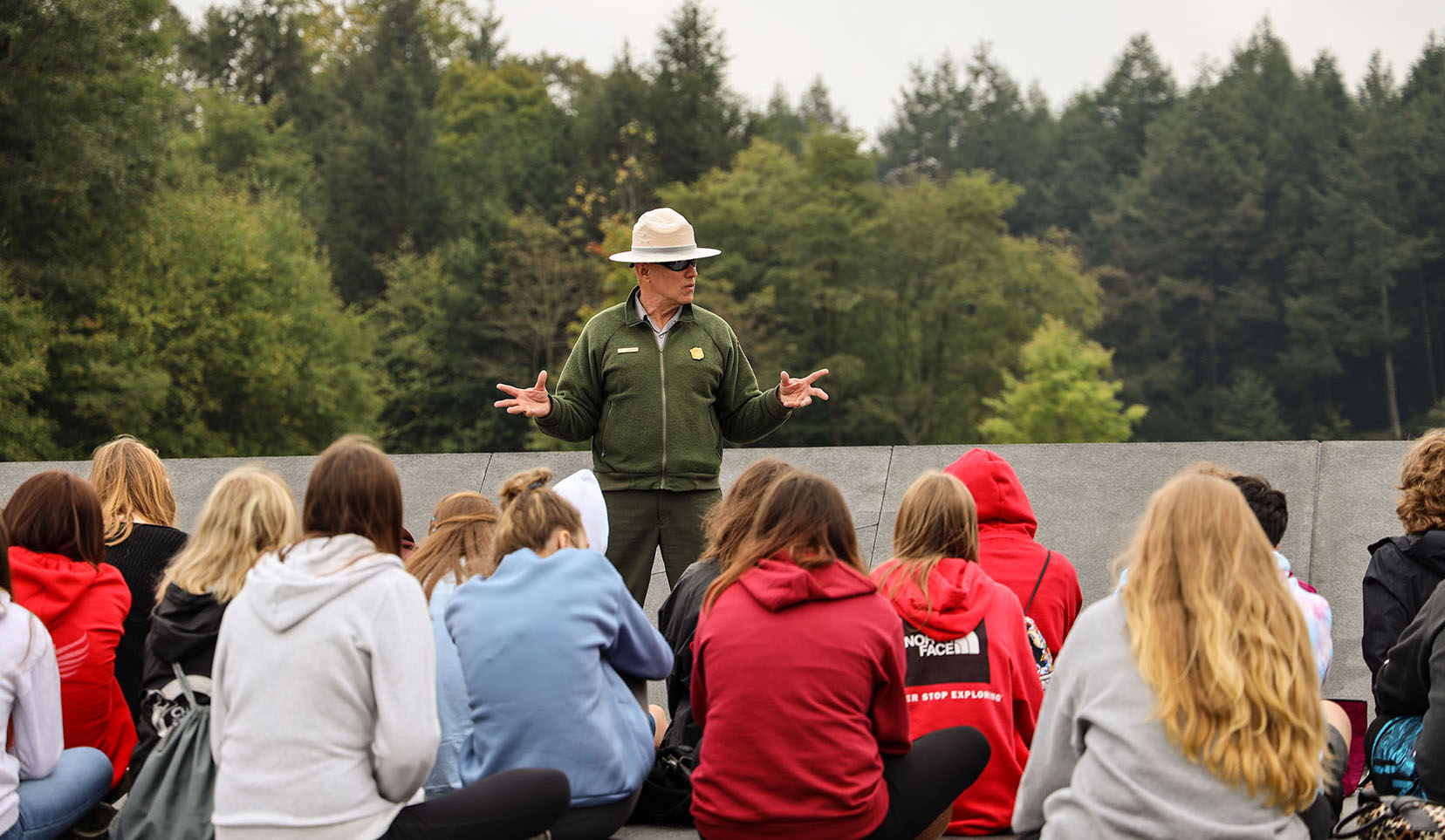
Park Ranger Gregory shares the Flight 93 story with students on a field trip at Flight 93 National Memorial.
NPS Photo/C.ClaycombCongress designated the Flight 93 crash site as a national memorial in 2002. An international design competition in 2005 led to the park site’s current features, which opened to the public in stages between 2011 and 2020.
Preserving U.S. history isn’t just about the long-ago past — it’s also about what unfolds today. For more than a century, the Park Service has helped us learn about our nation by preserving vital places and stories and giving us opportunities to reflect. It’s critical that its work continues, so future generations have the same opportunities to learn from our nation’s history and continue to write its ongoing story.
Stay On Top of News
Our email newsletter shares the latest on parks.
About the authors
-
 Linda Coutant Online Editor
As a member of the Communications team, Linda Coutant manages the Park Advocate blog and other web content, and also coordinates the monthly Park Notes e-newsletter for NPCA members and supporters. She lives in Western North Carolina.
-
 Angela Gonzales Director, Communications
Angela joined NPCA in October 2017 and is a Director of Communications. She currently manages outreach and communications for the Government Affairs team and Conservation Programs.
-
General
-
- NPCA Region:
- Mid-Atlantic