Fall 2026
Taking the Waters
A writer finds rejuvenation at Hot Springs National Park, where the primary resource just begs to be enjoyed.
Have you done this before?” asked the woman beside me, who looked as unsure as I felt. A no-nonsense attendant had just cocooned us in eggshell-colored, calf-length sheets and directed us to a couple of chairs, where we waited to be ushered into the tiled room beyond. When I assured my seatmate this was all new to me, she told me that she was from St. Louis and was here on a sort of post-retirement, routine-shaking trip.
We were ensconced in the women’s wing of the Buckstaff, a century-old bathhouse in Hot Springs National Park, and were moments away from understanding the meaning of a “traditional” bathing experience. One by one, the guests around me were called away. My new acquaintance disappeared first, followed by my friend Andrea. I was regretting my choice to forgo a swimsuit — my aversion to public nudity a holdover from middle school gym class when my peers and I perfected the art of changing without disrobing — when a bubbly woman with a mass of curly hair called my name, introduced herself as Brittany and led me into a long hall lined with bathing stalls.
Brittany had been a bathing attendant for a month and loved it. She was a people person, she explained while steering me into a curtained booth with a high-backed porcelain tub, and had already met women from all over the world. Relieved of my sheet, I clambered self-consciously into the waiting basin and sank into its delicious warmth. Brittany topped up the tub and flicked a switch on an ancient blue tank near my feet. A powerful jet chugged to life, enveloping me in pulses of water direct from the park’s thermal springs.
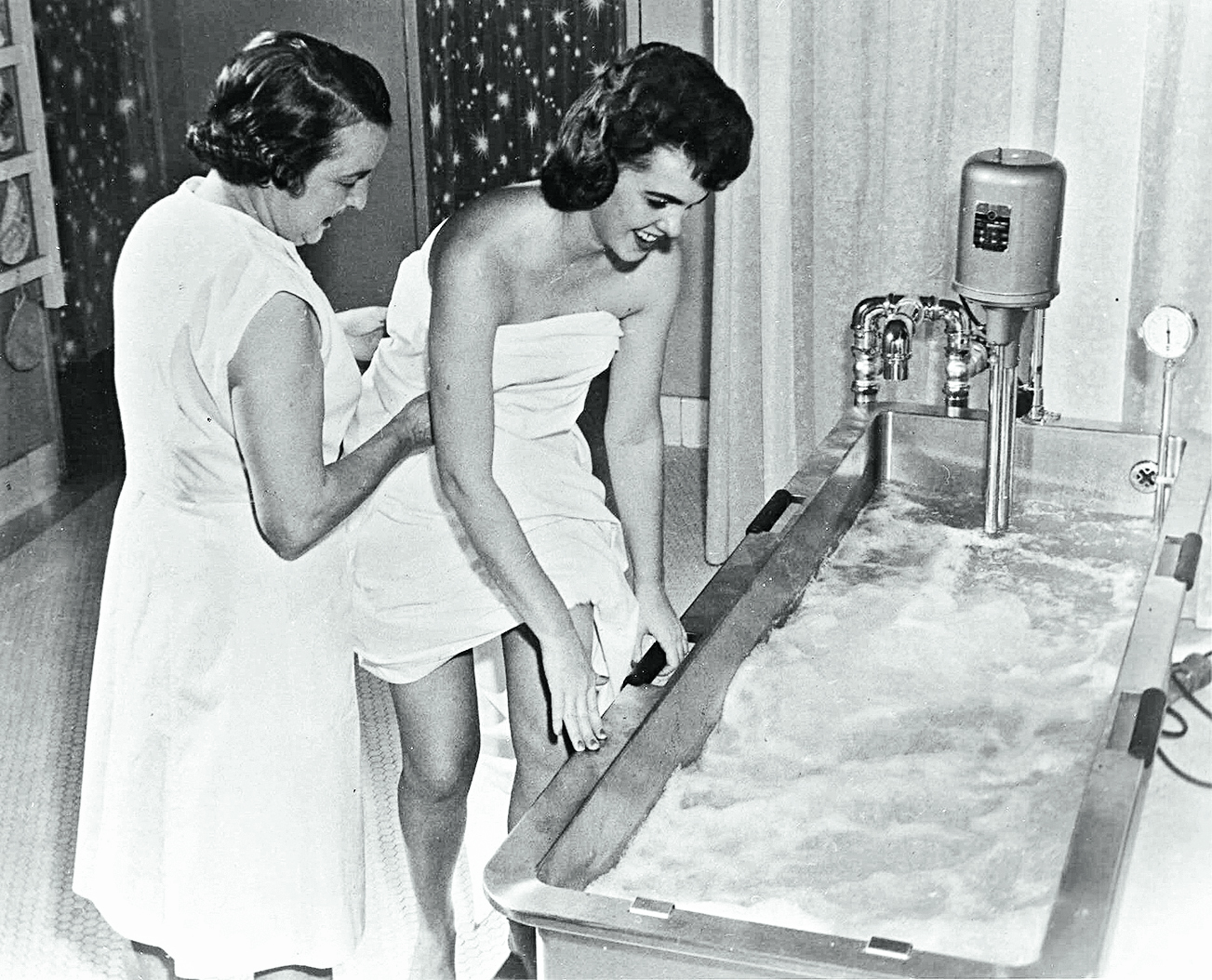
A woman is assisted into a bath at Ozark Bathhouse in 1960. NPS
The last time this water had touched the air was some 4,000 years prior, when it fell on the nearby mountains as rain, snow or ice. In the intervening millennia, it had percolated as much as 8,000 feet through layers of sedimentary rock, gaining heat with depth, until a fault line redirected the mineral-enriched water to the surface, where it exited at an average temperature of 143 degrees. This reputedly healing elixir then traveled through a system of pipes and temperature-moderating tanks before pouring out of the bathhouse’s taps.
Brittany deposited a cup of spring water into my hand for sipping, laid a loofah on the tub’s edge, and left me with the promise she’d return in 15 minutes to wash my back and feet. Having no desire for someone to scrub me like a potato, I promptly set to the task myself.
I’d come to Arkansas for a conference, but I’d extended my stay to explore a park I’d never visited, to adventure with a longtime friend, and to reset and recharge after a whirlwind of a spring. Luxuriating in a historic bathhouse on a Saturday morning in May was certainly helping on the reset front, even if the setting — and the methods — hewed a little closer to old-school sanatorium than modern wellness retreat.
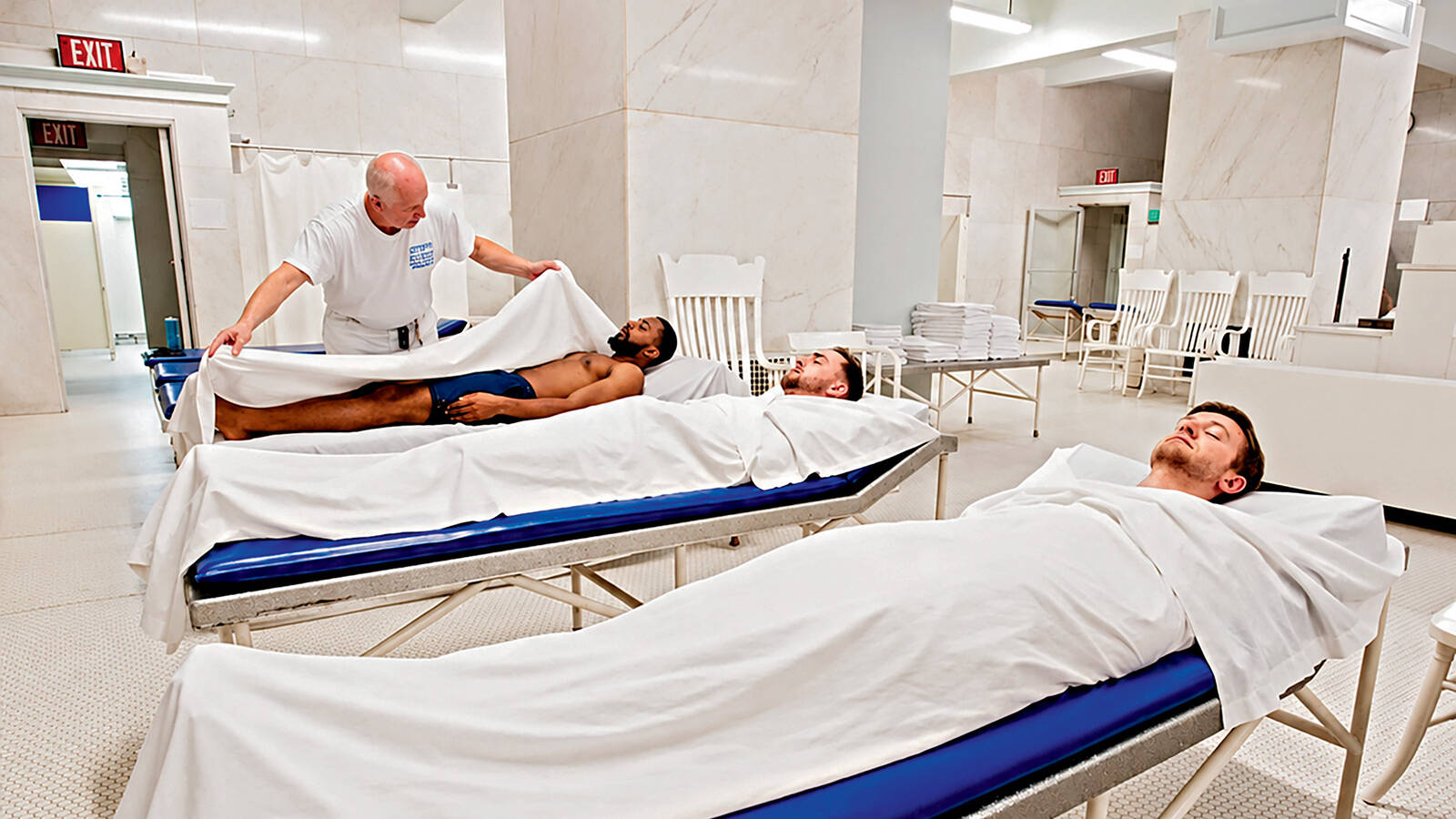
When Brittany returned, I abandoned the tub and, weak-kneed, wobbled to a row of padded massage tables. There, she wrapped my body in steaming towels and placed a bracingly cold one on my face. The sensation was so wildly refreshing that I was momentarily distracted from anxious thoughts about the upcoming “vapor cabinet,” which a local shop owner had warned me about.
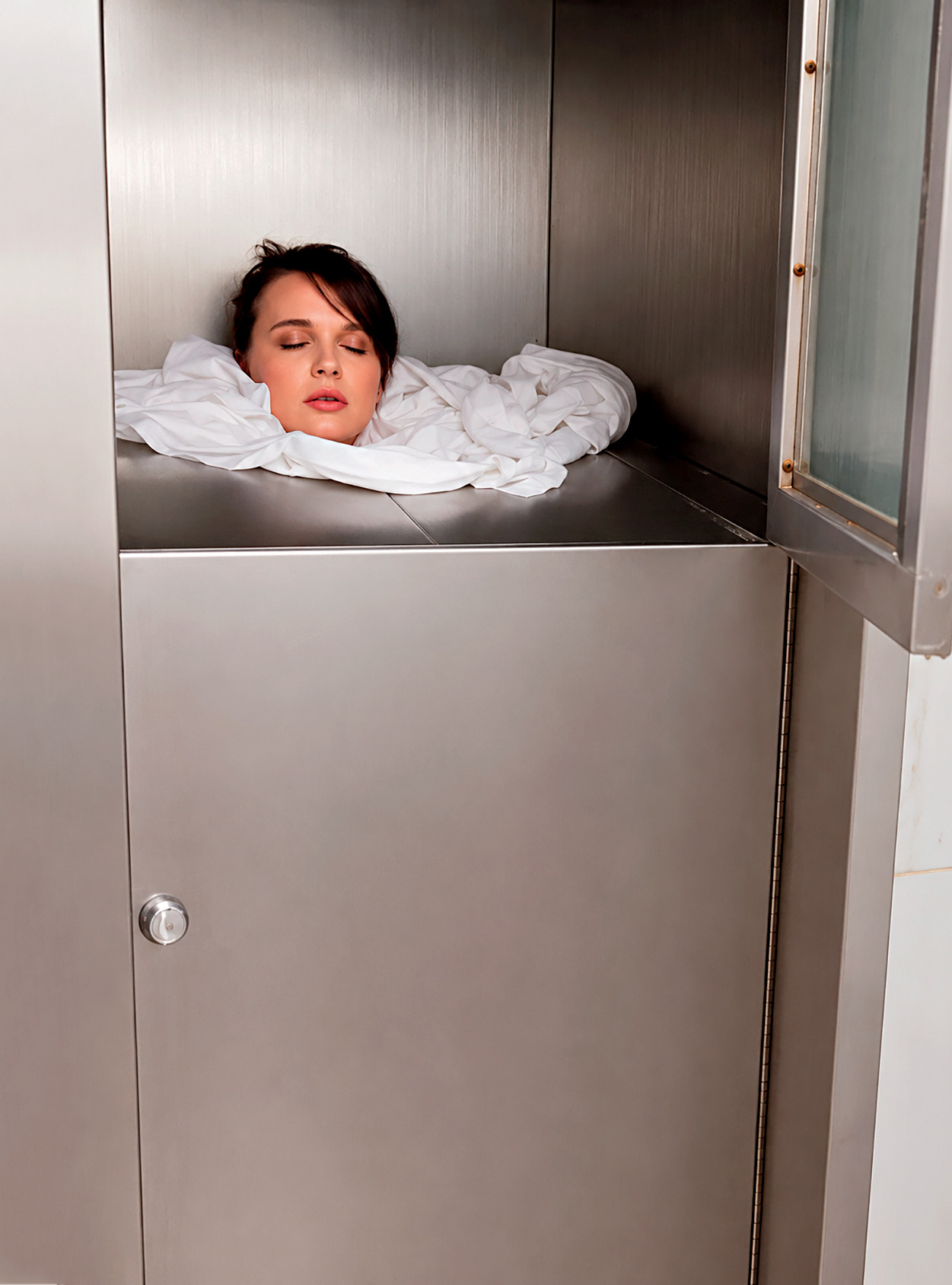
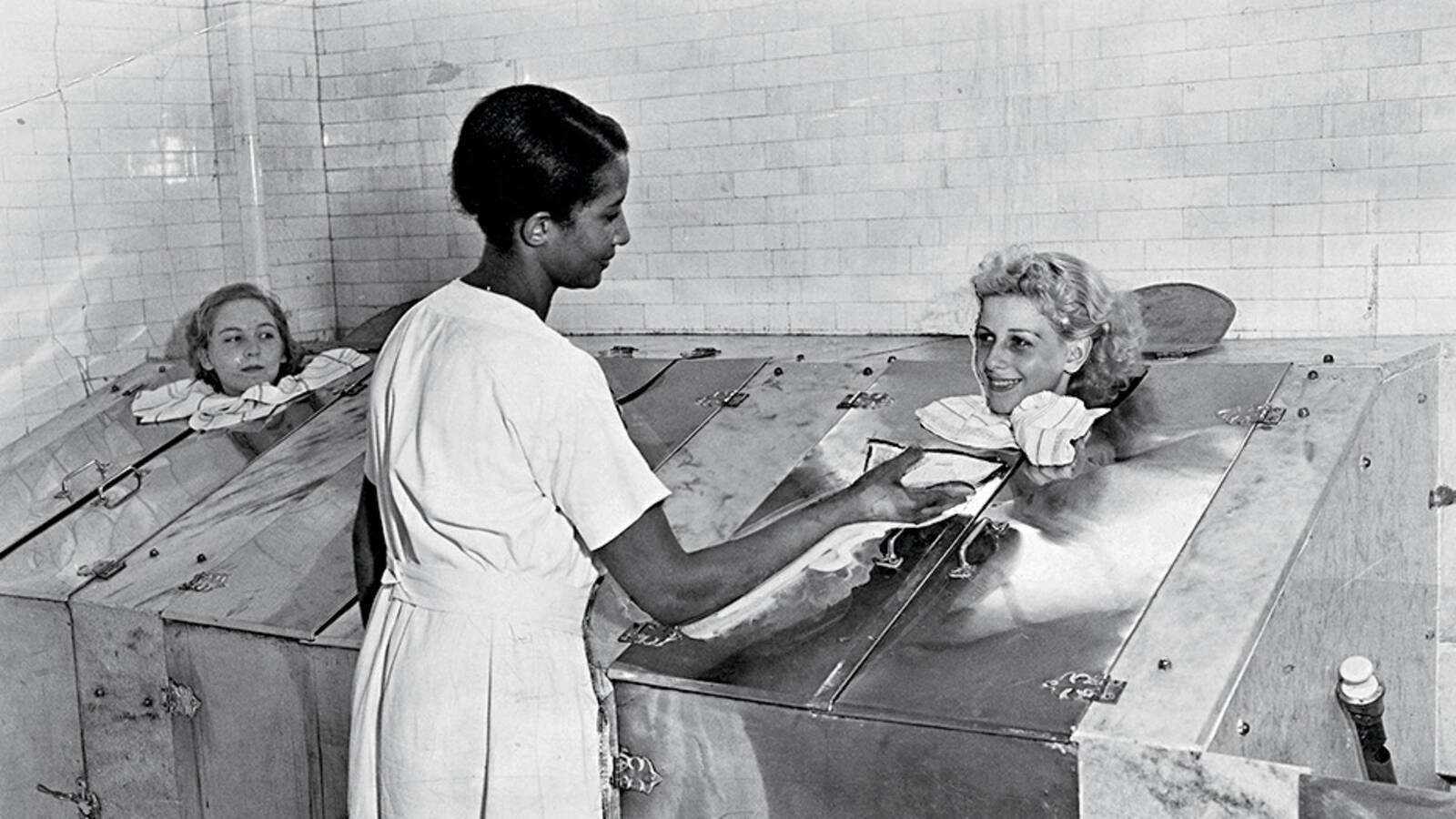
Present-day vapor cabinet.
COURTESY OF BUCKSTAFF BATHHOUSEThe medieval-looking contraption, once believed to cure everything from rheumatism to obesity, consists of a metal locker set into a cupboard. I passed one in use, but all I could see was a nimbus of hair and a pale face, eyes closed. The sight was unsettling, seemingly more marble sculpture than flesh and blood. I’m not particularly good with heat, so within seconds of taking my seat in the cabinet, I found myself contemplating how I might reach my sheet — now atop my personal sauna — and wave it in surrender. Instead, I tried leaning into the discomfort. I listened to the water trickling out of pipes beneath me, watched as it beaded and ran down the tiles beside me. I focused on my breathing and embraced the cleansing sweat. Just as I reached my breaking point, Brittany returned with a cheerful “Do you feel like a lobster yet?”
She freed me, shuffled me to a row of ground-level, baby-sized tubs and instructed me to sit in the warm water. A nearby sign informed me the sitz bath was used to relieve hemorrhoids, prostate issues and lower back pain. From this soggy but happy perch I watched the attendants move around in practiced choreography, shepherding guests from one station to the next. I glimpsed Andrea glide by looking relaxed and radiant.
Sometime later, feeling rather boneless after a full-body massage, I dressed and wandered to the bathhouse’s front desk. “What’s the needle bath?” I asked. I’d seen a note indicating that this part of the ritual was not currently permitted, per National Park Service guidance. Turns out, I’d missed out on a cold shower following the hot-towel wrap. The practice has been discontinued, the man at the desk informed me, for fear of Legionnaires’ disease, a severe form of pneumonia.
Over brunch at the hotel, Andrea and I debriefed. “Did you let your attendant loofah you?” I asked.
She nodded. “At that point,” she said, “in for a penny, in for a pound.”
SIDETRIP: Little Rock Central High School
Hot Springs was established as the country’s first so-called reservation in 1832 and became a national park in 1921, around the time Helen Keller and Babe Ruth could be found “taking” the waters. A turn-of-the-century brochure described the town as “one of the most beautiful spots belonging to Uncle Sam” and billed it as a land “where crutches are thrown away.” Doctors prescribed the thermal waters for gout, tuberculosis, alcoholism, paralysis, malaria, “hysteria,” digestive issues, skin diseases and more.
The bathhouse experience was considered advanced medicine, explained Park Service volunteer Greg Fisher on my first morning in town. I’d popped into Fordyce, the largest remaining bathhouse, because it houses the park visitor center and I was jonesing for a map. After a helpful geography lesson, Fisher informed me that the building had been restored so that approximately 90% of it appears as it did in its heyday. Two upper floors of elaborate woodwork, mosaic tile and stained-glass ceilings transport visitors to the extravagant bathhouses of yore.
Doctors took a holistic view of their patients, Andrea and I learned. Not only did they prescribe physical therapy, hydrotherapy, massage and weight training, but they also encouraged socializing and directed people to the fitness trails circling town. Some of the treatments sounded horribly archaic, from mercury rubs to treat sexually transmitted infections to “electrohydric” baths, in which electricity was passed through a patient immersed in a bathtub. I even saw a placard describing how foot cysts were treated, in part, with sideward knuckle punches. But many of the regimens aligned with commonsense advice that would hold up today: warm water, rubdowns, movement. Even the antiquated weight machines, with their velvet-lined seats and exposed gears, were recognizable precursors of modern equipment.
As we explored Fordyce’s parlors, healing rooms, gymnasium and dressing areas, it became clear that these facilities represented the height of innovation and luxury in the Edwardian era. I mentioned this to Andrea, who responded that, given the array of ailments visitors were seeking to cure, there was likely a measure of desperation involved as well. If everything else had failed you, the baths might have represented your last hope.
The evolution of Hot Springs into a wellness destination began centuries ago, when Native Americans made use of the abundant warm water percolating out of the mountainside. By the early 1800s, shortly after the Louisiana Purchase tacked this land onto the growing United States, settlers began setting up crude canvas huts above the myriad springs. Wooden bathhouses and troughs to channel the water replaced these slapdash constructions in the ensuing decades, but those burned or rotted so frequently that strict building standards were instituted to guide future bathhouse construction. By the end of the 19th century, there were about two dozen bathhouses of various quality, offering single baths, starting at 20 cents, or packages of 21 baths, starting at $3.
The eight bathhouses that line the park’s Bathhouse Row, including Fordyce and Buckstaff, were part of the last wave of construction. Erected between 1892 and 1923, these buildings of stone and brick, with their elaborate facades and design flourishes, ushered in the belle epoque of spa leisure. (While the waters were purportedly accessible to everyone, African Americans had to construct their own bathhouses until integration arrived in the 1960s.)
Widespread antibiotic use changed the world of medicine, leading fewer people to seek out the park’s healing waters. By 1985, every bathhouse but the Buckstaff had shuttered. Today, the park uses several of the architectural gems along Bathhouse Row and leases the others to a variety of operators, including a brewery and a children’s museum.
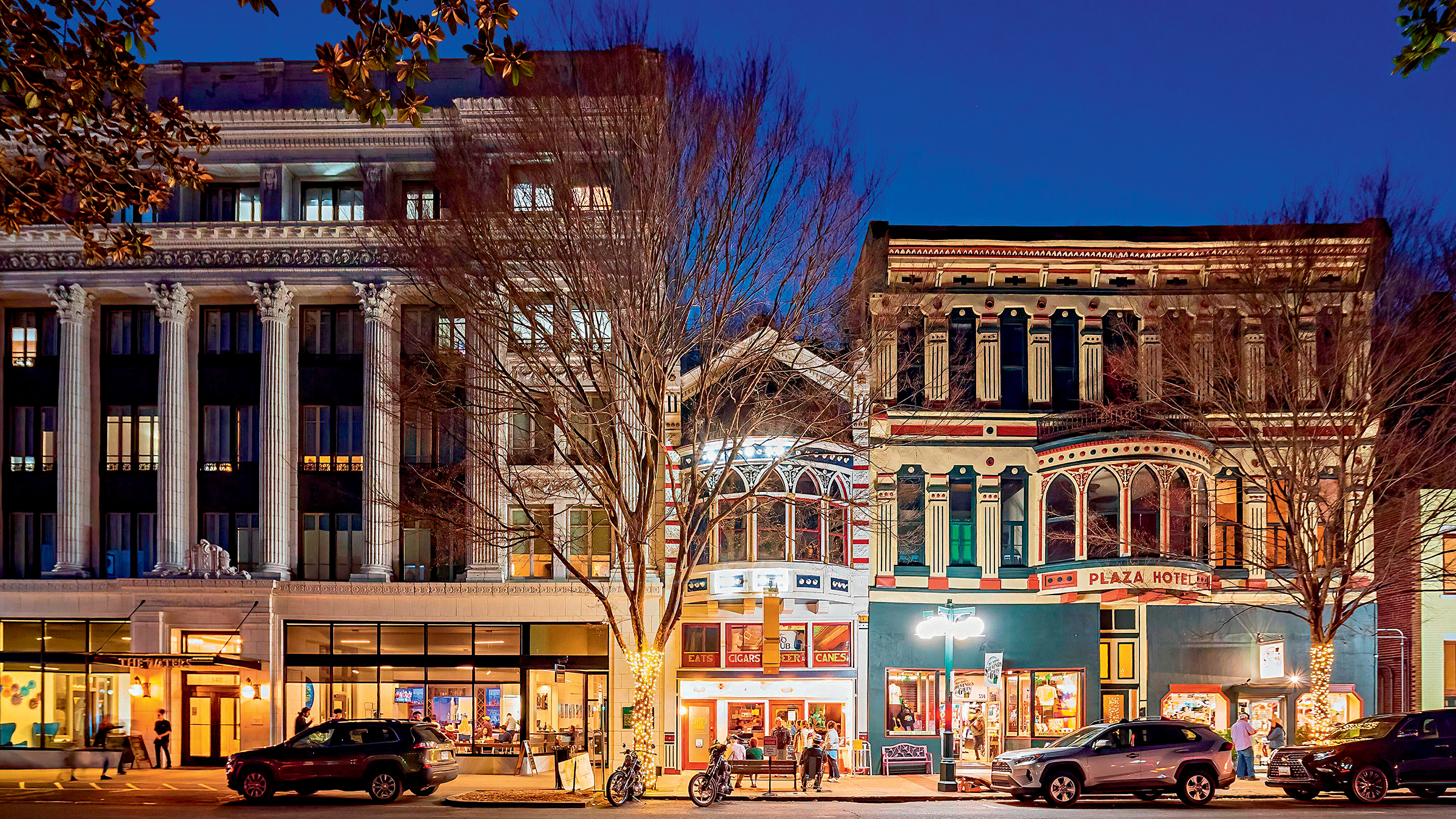
View of Central Avenue from Bathhouse Row.
©CHON KIT LEONG/ALAMY STOCK PHOTO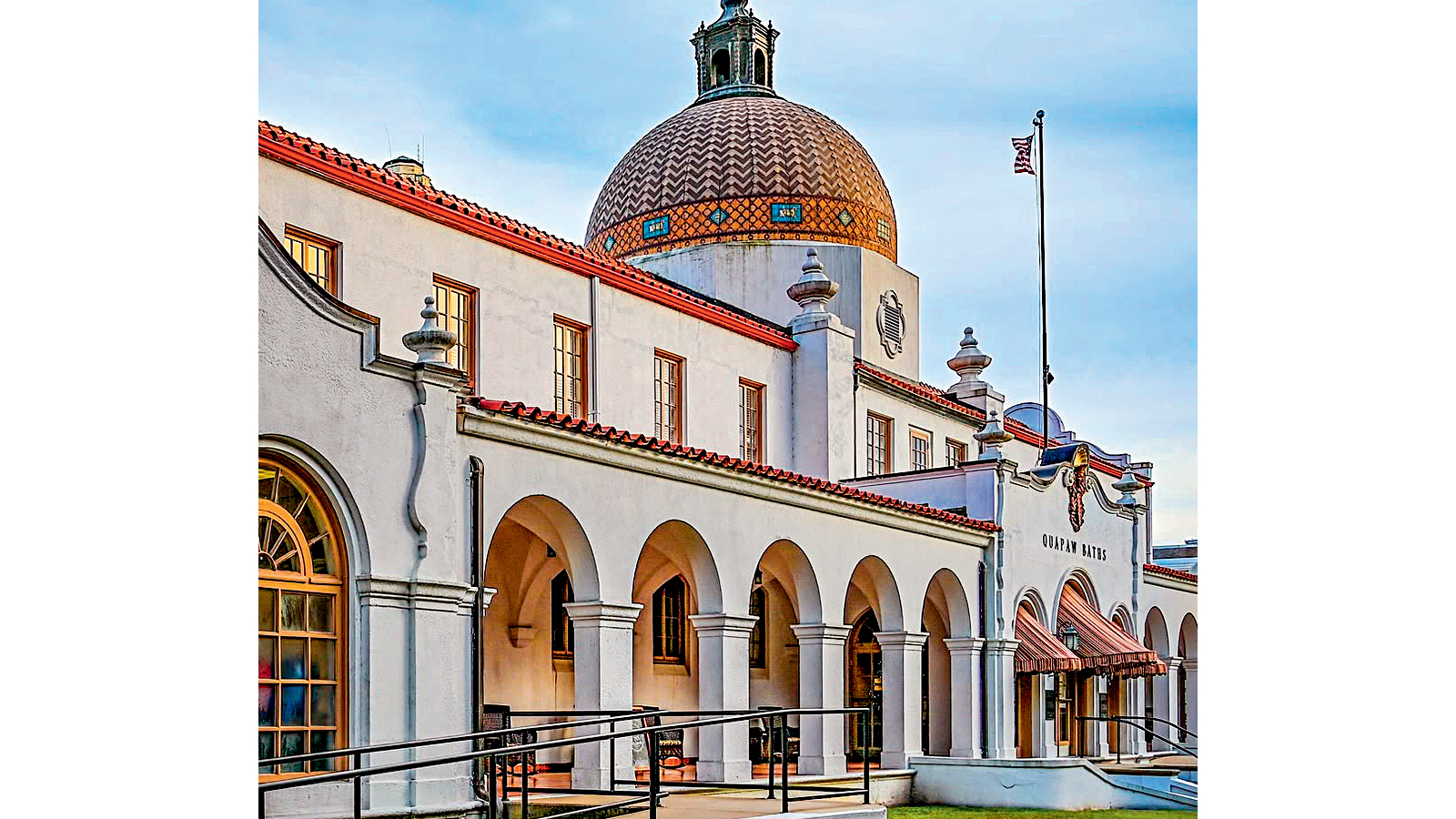
Bathhouse Row looks much like it did a century ago, though many of the bathhouses, including Quapaw (pictured here), have been renovated in recent decades with most reopening for different uses, including a museum, brewery, hotel and more.
COURTESY OF QUAPAW BATHS AND SPA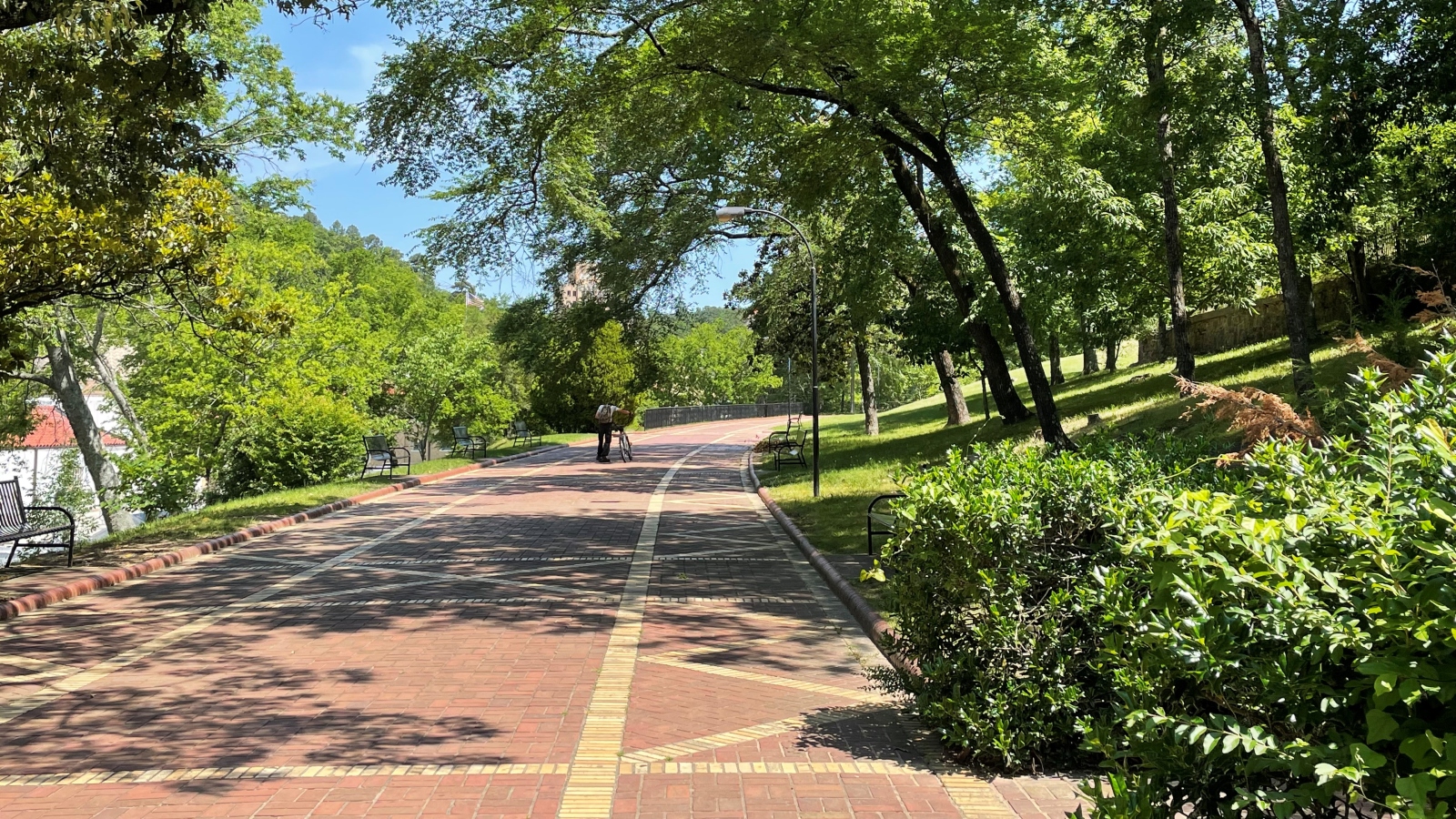
The Grand Promenade runs behind Bathhouse Row.
KATHERINE DEGROFF/NPCAThe park’s 5,500 acres of gentle green mountains enfold the commercial and residential heart of town. By design, the bathhouses lie within the park boundary; the busy street they front, with its opposing row of businesses, does not. I found the juxtaposition of town and park oddly dissonant, as if I’d popped into a jazz bar only for the musicians to switch to Taylor Swift’s greatest hits halfway through the set. On the park side, arching magnolias, elegant bathhouses and a promenade of red brick harken back to an earlier era. Along the other, a hodgepodge of kitschy museums, new age shops, clothing boutiques and ice cream parlors jockey for attention, while the occasional darkened storefront speaks to present hard times.
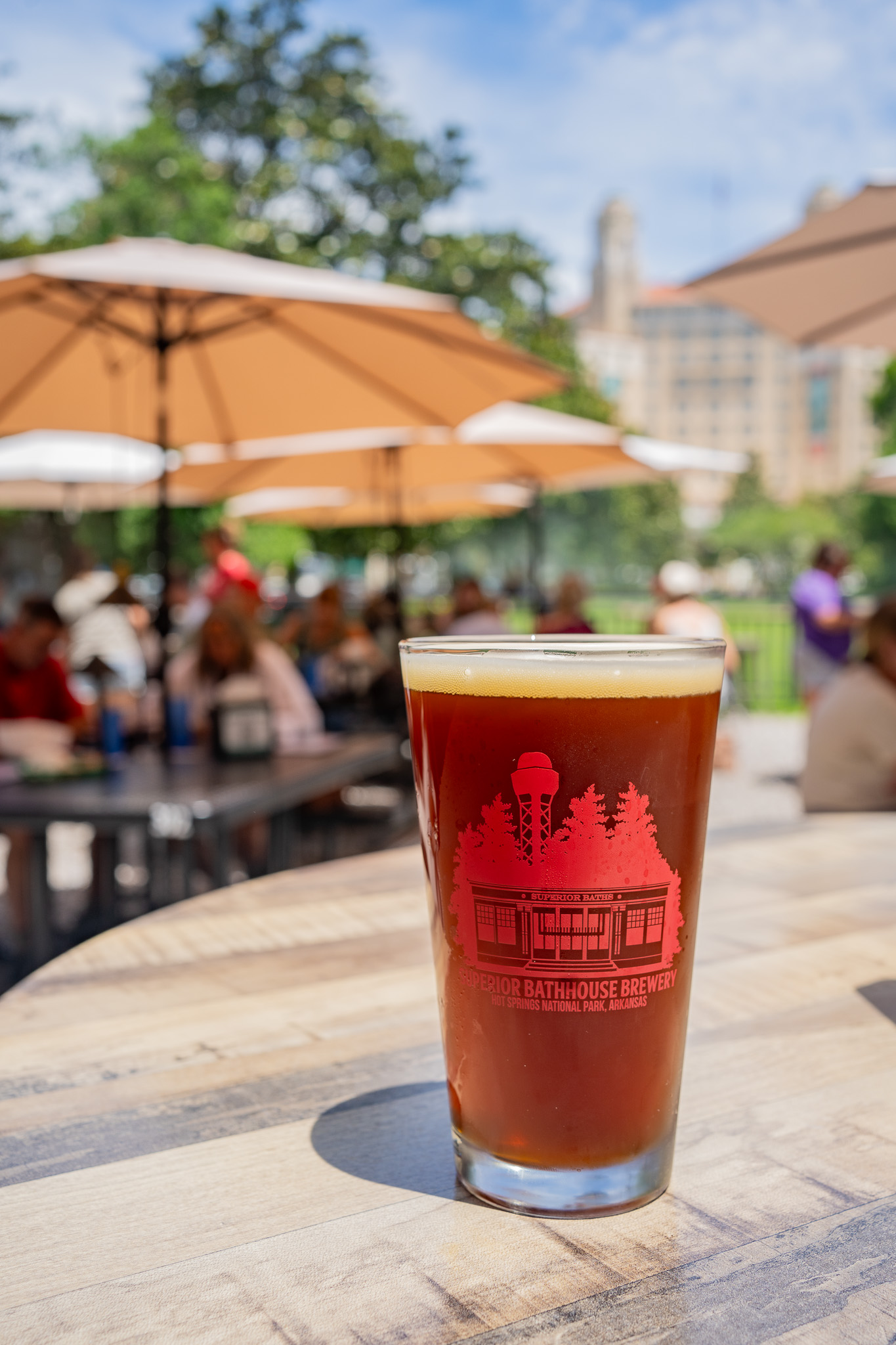
Superior Bathhouse Brewery is one of two breweries in the National Park System. The smallest of the bathhouses on Bathhouse Row, Superior welcomed spa guests from 1916 until the early 1980s.
COURTESY OF SUPERIOR BATHHOUSE BREWERYDuring our time in Hot Springs, Andrea and I managed to visit several of the bathhouses and stay in one, Hotel Hale, which is run by the town mayor and his wife. We discovered an underground bookstore, climbed 306 stairs for an impressive view from atop the privately operated observation tower and ate our fair share of tourist-town treats. We also whiled away an al fresco happy hour sipping jalapeño- and watermelon-flavored creations at Superior Bathhouse Brewery, which claims to be the only brewery in the world to use thermal spring water in its offerings. I enjoyed our urban — and decidedly decadent — wanderings, but after a while, I found myself yearning for some semblance of a more traditional park experience. My search paid off on the trails.
We spent two days traipsing across Hot Springs’ forested slopes, stepping onto the prowlike viewpoint of Goat Rock and scrambling over colorful outcrops of novaculite to Balanced Rock. On our journey around North, West and Sugarloaf mountains — which Andrea’s phone told us involved ascending the equivalent of 110 flights of stairs — we often paused amid our panting to nerd out on the life around us.
Lizards of all sizes skittered by, some with stripes, some with splotches. Birds flitted, chipmunks scurried and flowers bobbed. We hiked beneath a canopy of oaks, pines and hickories, a pair of turkey vultures surfing currents overhead. At some point, Andrea began using the Merlin app to identify the trilling, seesawing calls around us. Among our avian neighbors were Carolina chickadees, great crested flycatchers and red-eyed vireos.
I countered her Merlin with my Seek, using it to identify unfamiliar plants. Here was the purple fringe of the endemic Ouachita blazing star, there a large-flowered tickseed. I knew sedges and ferns and irises, but used the app to help with goat’s rue, heartleaf skullcap and plantain-leaved pussytoes. I picked up a small, oblong nut the color of young leaves and brought it to my nose. The smell was both spicy and floral.
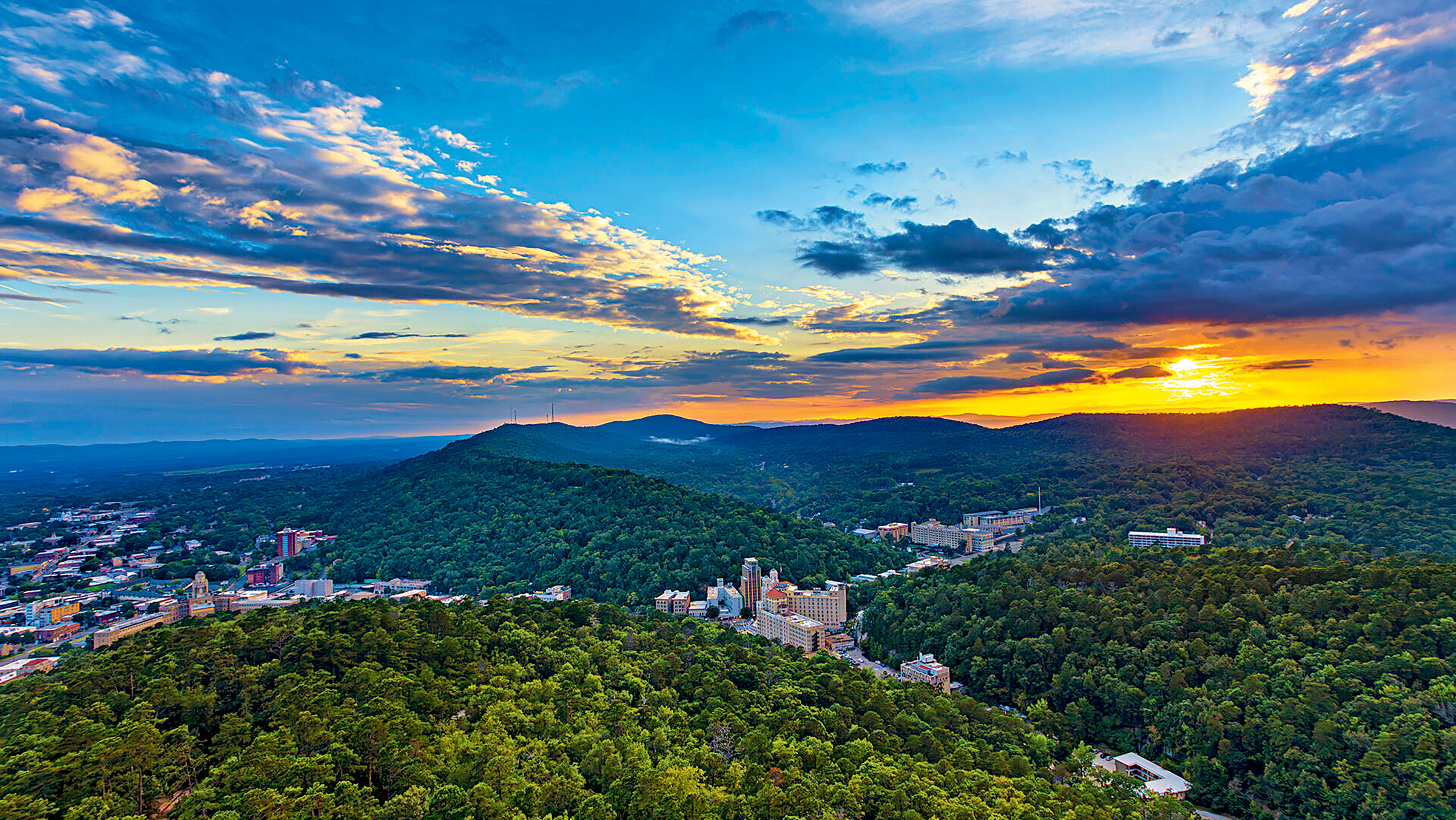
Visitors can see both town and park from Hot Springs Mountain Tower.
COURTESY OF VISIT HOT SPRINGS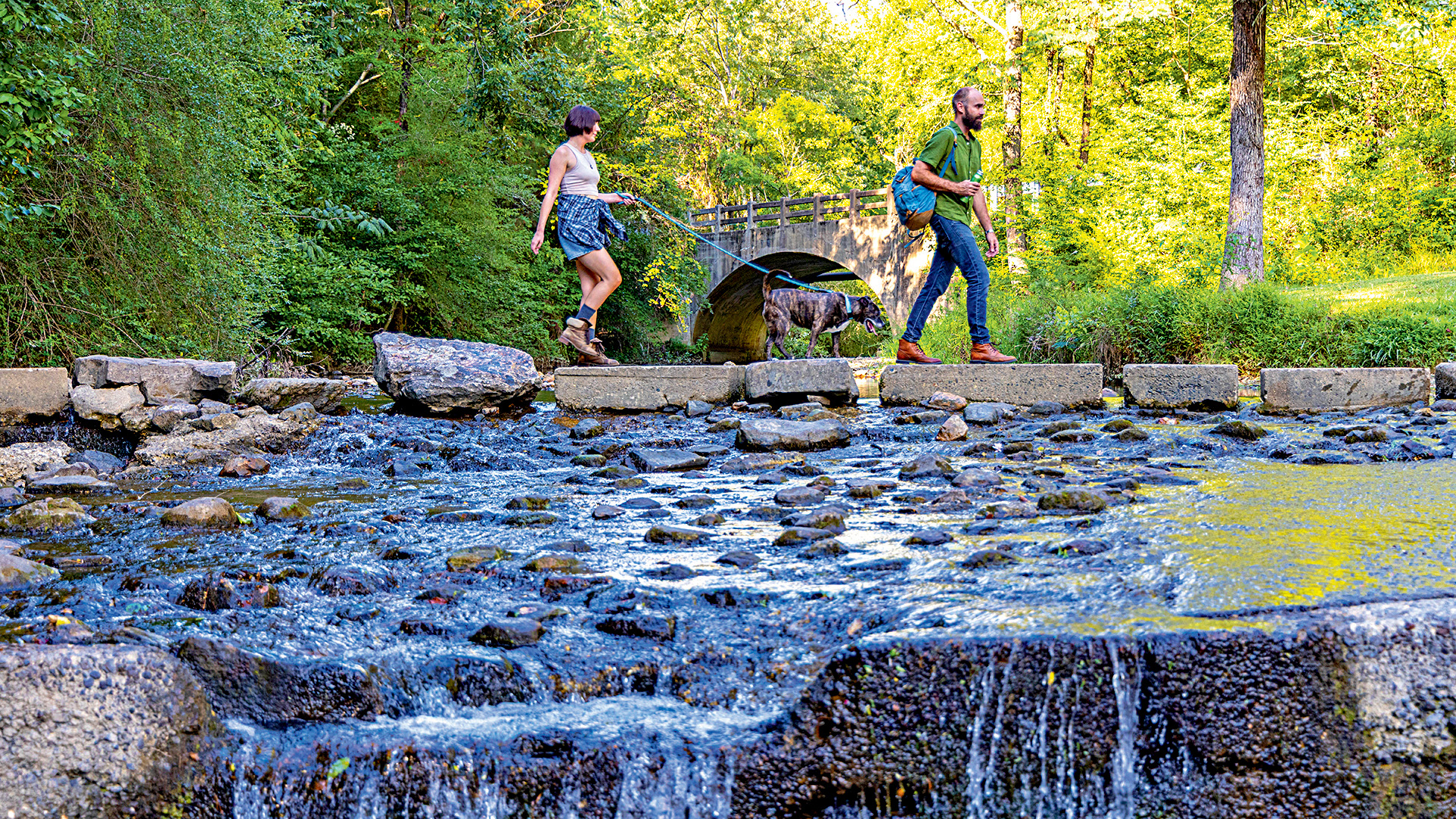
Gulpha Creek flows beside the park’s sole campground. Crossing it affords access to many of the trails east of town.
COURTESY OF VISIT HOT SPRINGS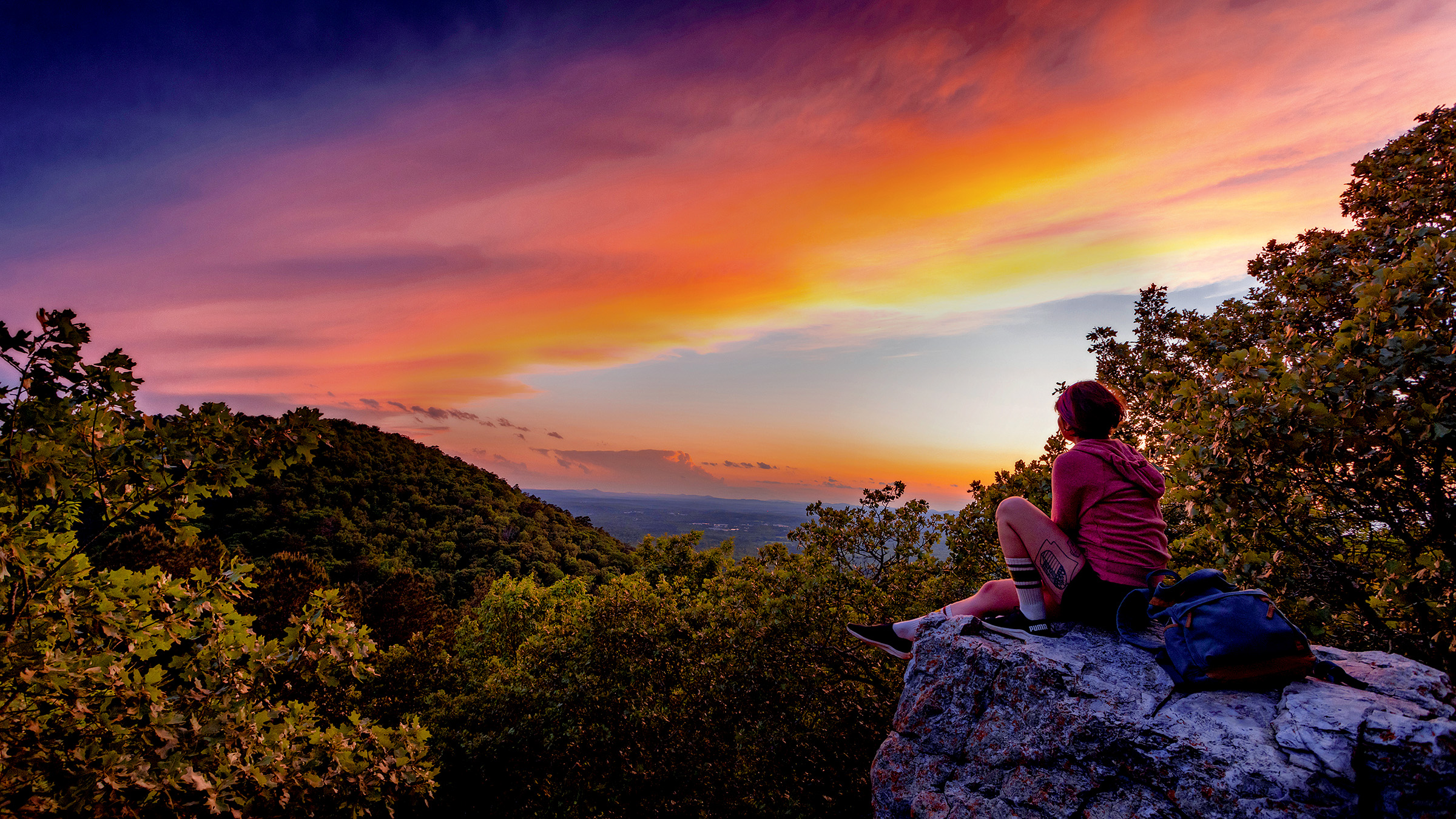
A hiker takes in the view from Balanced Rock in Hot Springs National Park.
COURTESY OF VISIT HOT SPRINGSOur first day, we passed only a handful of people and one black Lab along 7 miles of trail. As we hiked, we alternated between comfortable silence and rambling conversation. Andrea, that envious combination of kind and brilliant, was one of the first people I met when I moved to Virginia more than 15 years ago, and she’s seen me through job, life and relationship transitions. Boots scuffing, we talked of neighbors and work, parents and partners, her son and my pets. We shared the land and scent memories of our childhoods and debated the perils of AI — and the concomitant explosion of data centers in our area.
When our water bottles got low, we simply refilled at one of the public, spring-fed fountains that dot the town. My favorite of these installations was one we visited on our last day. Not only did it serve up cold spring water rather than thermal, but it also was situated a stone’s throw from the sweetest little pocket of park I’d ever seen. A family picnicked on the magnolia-lined green; a twosome crunched through leaves with their caramel-colored pup. It was idyllic: enmeshed in small-town life, yet part of the national park.
Our final night, Andrea and I sat in rocking chairs on Fordyce’s porch and watched the evening unfurl along Central Avenue. Swifts swooped above, while cars, trucks and a clutch of motorcycles zoomed below. As the smell of waffle cones vied with that of diesel, passels of tourists ambled by. Now and then, a street musician plied his craft.
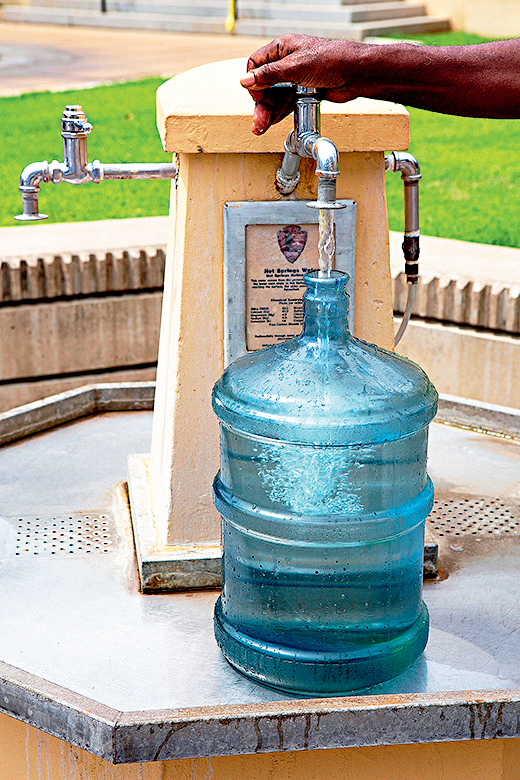
The park maintains multiple public fountains that pipe potable water from dozens of thermal springs.
©STEVEN FRAME/DREAMSTIME.COMI was musing on Fisher’s final piece of advice to me at the visitor center — “to drink the water, touch the water and learn about the water” — when I noticed a man holding the hand of a young girl. She approached the decorative fountain burbling up near me. He cautioned her not to touch it. “It’s one of the hot ones,” he said. And, indeed, when I looked closely, I could see the steam wafting above it. For the next 10 minutes or so, I focused on this octagonal pool and the stream of people who seemed compelled to tarry there. No matter their age, most couldn’t help testing the water.
I’d never been to a park like this, where the protected resource is so readily consumable. You can’t pocket a piece of fossilized wood from Petrified Forest or toss the cone of a giant sequoia in your pack in Yosemite. You certainly can’t touch the hot springs of Yellowstone. Yet here, the water was practically pushed on us, in the form of fountains, bath treatments, beer and more. I thought back to the people I’d seen filling carloads of jugs with the park’s water. The first time it happened, I wrote it off as an oddity. But then it happened again. And again. I finally interrupted someone replenishing a jumble of containers to ask how long she’d been using the spring water. “For years,” she replied.
Perhaps she preferred its taste to that of tap water. Perhaps she hoped for healing. Whatever the reason, the curious and the committed, the desperate and the dignified have been drawn to the town and its waters for centuries. Now as then, the springs gush forth. And the park does its part, faithfully meeting its unique mandate to share its primary resource with the public “in an unending and unaltered state.” In a world of near-constant change, it’s reassuring to know this, at least, has remained the same.
About the author
-
 Katherine DeGroff Associate and Online Editor
Katherine is the associate editor of National Parks magazine. Before joining NPCA, Katherine monitored easements at land trusts in Virginia and New Mexico, encouraged bear-aware behavior at Grand Teton National Park, and served as a naturalist for a small environmental education organization in the heart of the Colorado Rockies.
-
Press Release
Interior Turns Alaska Parks Into Game Farms with Outrageous Hunting Rule
“It’s as outrageous as it is disheartening to again see the Interior Department go along with the state of Alaska’s effort to turn national parklands into de facto game farms."
-
Press Release
NPCA Celebrates Staff Expert's New Book on Blackwell School National Historic Site
A groundbreaking new book co-authored by NPCA's Cristobal Lopez tells the history of Blackwell School National Historic Site, highlighting the experiences of the Mexican American students who attended the segregated…
-
Press Release
Trump Administration Continues to Unlawfully Bulldoze National Mall Parks
“This egregious destruction continues to show how the Trump administration operates as if laws don’t apply. They continue to move forward, disregarding the will of the American people for which…