Spring 2026
Native Naivete
A nightmarish eel is invading the Everglades and gobbling up native crayfish, a keystone species that is oblivious to the destructive fish.
There’s a new predator lurking in the wetlands of Everglades National Park. It’s a snakelike, voracious fish that can breathe air, survive out of water for days and even cross roads. It is saltwater-tolerant, drought-resistant and can change its sex. Meet the Asian swamp eel, one of the most insidious invasive creatures wreaking havoc across South Florida.
“They’re basically indestructible,” said Brandon A. Güell, who conducted his post-doctorate research on these eels at Florida International University. “They’re hardy and just super resilient, but in a terrible way. That’s why they’re such great invaders.”
The eels are native to Southeast and East Asia, where they are eaten and used in Buddhist rituals. In Florida, they were first detected in canals near Miami and Tampa in 1997; it’s possible they initially came from a live fish market. Two years later, they showed up near Homestead, just outside Everglades National Park. In 2007, the eels were discovered inside the park.
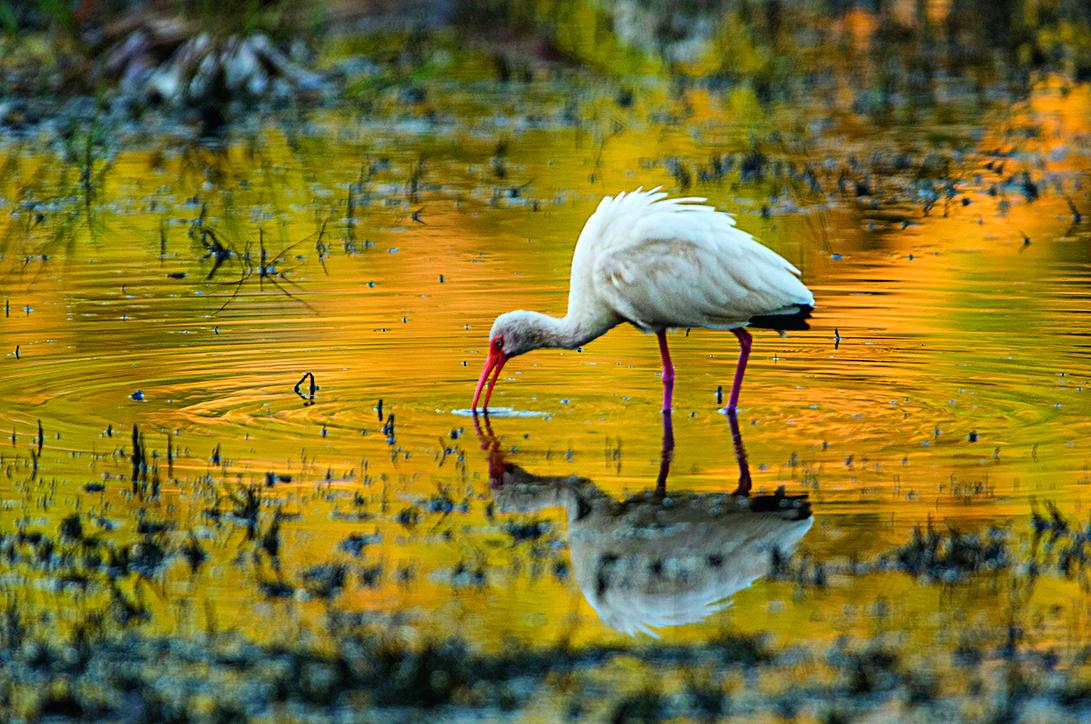
The eel invasion affects white ibises, which feed on crayfish.
©JOEL SARTOREAt first, some scientists downplayed the danger; populations were small and localized to canals, where the eels seemed to subsist on aquatic insects. But by 2014, the numbers of eels had exploded, and their reach had spread. By 2019, they were in the park’s Shark River Slough. Now ecologists are warning that the eels threaten to upend the food web of the entire Everglades.
The scale of the damage was revealed in a 2023 study that showed populations of native crayfish and small fish collapsed by as much as 99% after the swamp eel entered the ecosystem. This matters because these crayfish feed a whole suite of native species in the Everglades, including wading birds such as the white ibis.
Güell, a behavioral ecologist, wanted to understand how the eels were so effectively decimating a species called the slough crayfish. Güell guessed that because the crayfish did not evolve with the eels, they wouldn’t view them as predators, something ecologists call the “prey naivete hypothesis.”
“Responses are triggered by recognition,” Güell said. “You’re only going to respond appropriately if you recognize the threat.”
To collect his specimens, Güell zipped through the Everglades in an airboat, whipped by saw grass and cattails, and besieged by mosquitoes, spiders and biting alligator fleas. That’s not to mention the alligators themselves. Güell learned to keep an ear cocked for their warning bellows as he waded through the clear water, sieving crayfish from the swamp.
The eels were harder to collect because they’re so elusive. Güell caught them by electrofishing. From a boat, he dipped an electrified wand into the water and then scooped up the stunned eels with nets. The eels display a curious immunity to electricity, and stunning them requires higher voltage than for other fish of the same size.
Back in the lab, Güell started out with simple observation. He put an eel in a tank, then dropped in a crayfish and watched what happened.
Crayfish evolved to avoid predation through a combination of fighting, fleeing and freezing. They displayed no such reactions toward the eels. “The crayfish was not aware that there was anything else in the tank,” Güell said. “It would walk toward the eel.”
This species just went under the radar for 20 years. And now it’s a contender for possibly the most destructive aquatic animal ever introduced to South Florida.
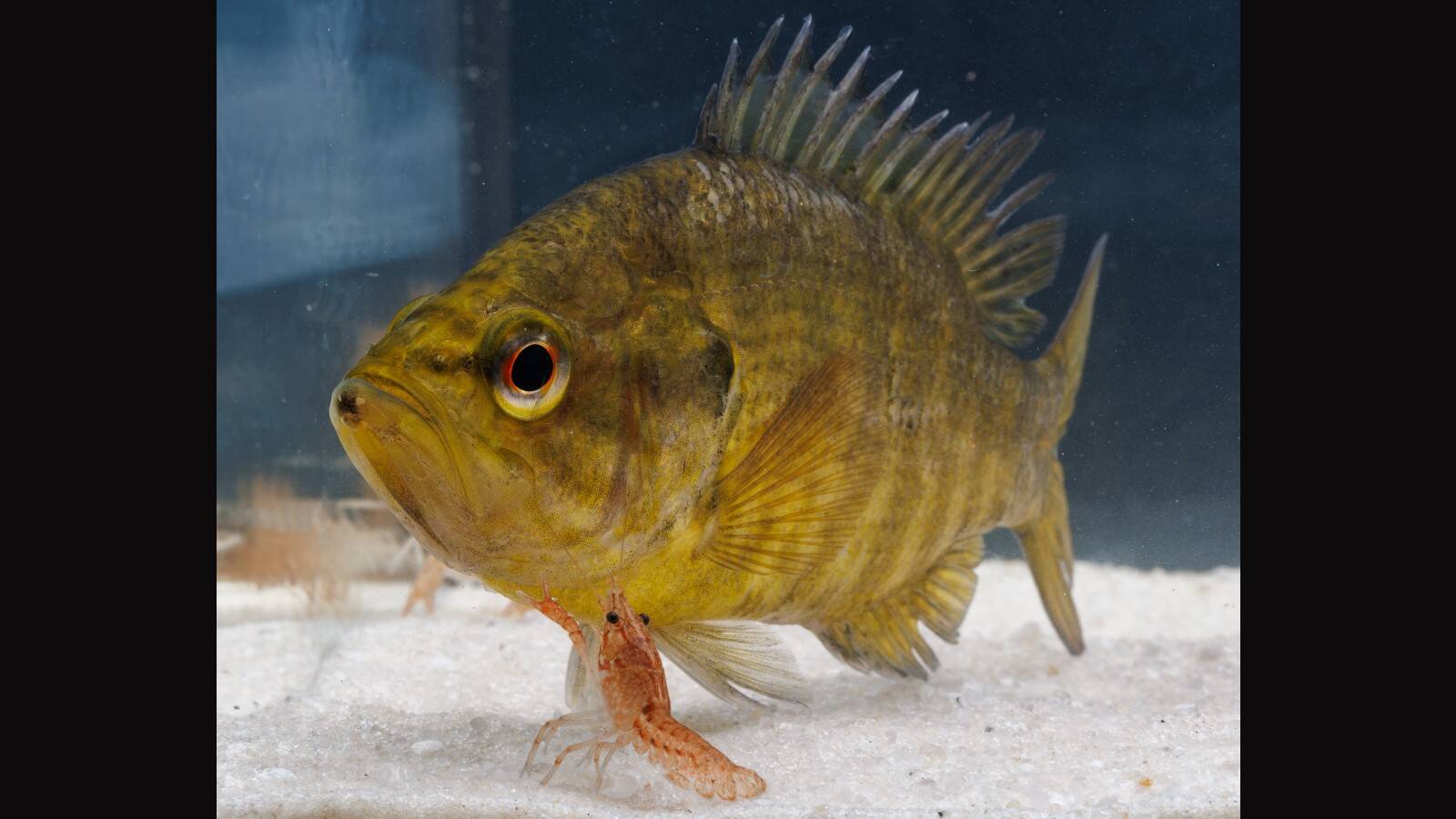
Later, Güell used photographs and videos to evaluate the crayfish’s behavioral responses to the eel and to a fish called a warmouth, a crayfish-eating sunfish native to the Everglades. Güell measured how active a crayfish was before and after he placed an eel or a warmouth in the same tank, on the other side of a clear, perforated partition. Then he observed how far away the crayfish stayed from each predator over an 18-hour period. Finally, Güell assessed how likely the crayfish were to feed after long-term exposure to the predators. (Typically, crayfish forage when they feel sufficiently safe.)
The results were stark. When exposed to the warmouth, the crayfish mostly scurried to a corner and stayed still, sometimes raising their claws in defense. They rarely ate. But when exposed to the eel, the crayfish barely responded at all.

Lizards on the Lam
Florida’s latest invasive species is a 4-foot-long South American lizard with a taste for eggs that threatens the Everglades’ ground-nesting animals.
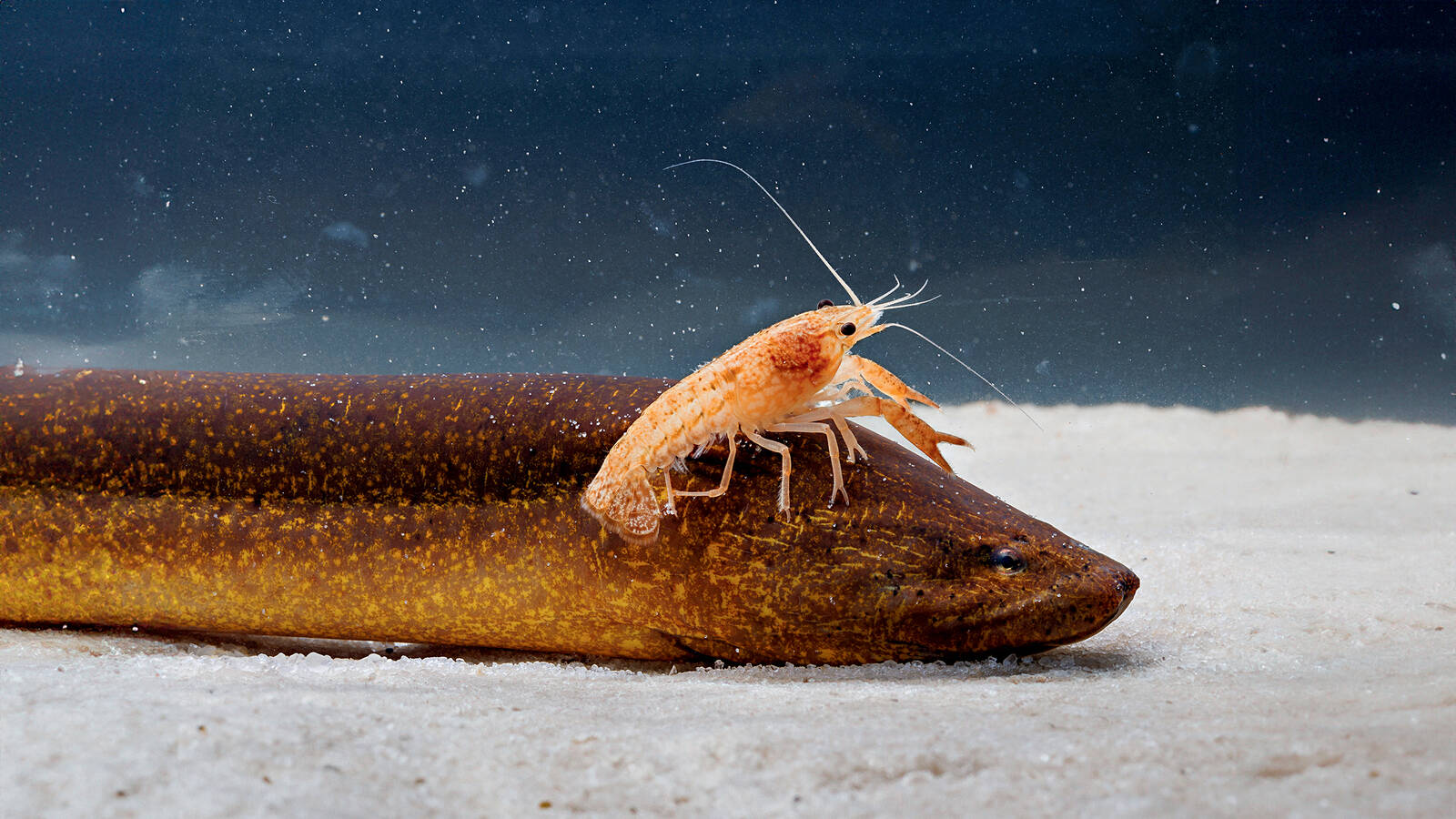
See more ›This lack of response was illustrated by a photograph Güell took early in his study, which showed a crayfish crawling atop an eel’s head, apparently oblivious to the mortal peril.
“Anyone looking at that might think, ‘Oh, this is so silly,’” Güell said. “But this is the equivalent of a cottontail sitting on top of a Burmese python. That just doesn’t happen. Zebras don’t hang out on a lion’s head. It’s this crazy naivete.”
The Burmese python, of course, is the poster child for invasive species in the Everglades. But the impact of the Asian swamp eel may be even worse, according to Mark Cook, an avian ecologist for the South Florida Water Management District. That’s because while pythons prey on midsize and large animals, eels are taking out the small, abundant species that create the food web’s foundation.
“This species just went under the radar for 20 years,” Cook said. “And now it’s a contender for possibly the most destructive aquatic animal ever introduced to South Florida.”
One of the eel’s most damaging attributes, Cook said, is its ability to survive in dry conditions. Crayfish use the dry season to rebuild their populations, burrowing in the mud and releasing their young when the bigger fish have moved to deeper water. This way, the juvenile crayfish can grow in a nursery-like environment largely free of predators.
“When the habitat dries down, instead of disappearing, the swamp eels just stay in place and burrow with the crayfish,” Cook said. “So, when the crayfish emerge, the swamp eels all feast on the young crayfish and basically wipe them out.”

National Parks
You can read this and other stories about history, nature, culture, art, conservation, travel, science and more in National Parks magazine. Your tax-deductible membership donation of $25 or more entitles…
See more ›Cook is especially concerned about how these eels will affect iconic Everglades denizens such as alligators, turtles, otters and wading birds. “If you’re cutting out crayfish and small fish, that’s it,” Cook said. “You’re having a major effect on the functioning of the aquatic ecosystem. Without that, so much of the Everglades disappears.”
Cook and Güell said it’s too late to eradicate the eels, and their adaptive traits make them difficult to control. Still, invasive species in the Everglades sometimes drop off unexpectedly, due to cold snaps, disease or predators learning to eat them. Indeed, Güell, Cook and others have documented ibises, storks, egrets, herons and even crows eating swamp eels in the Everglades.
Ironically, the very canals responsible for bringing the eels into the Everglades may also help mitigate their damage. Current Everglades restoration efforts are focused on channeling the right amount of water to the right places at the right times to help all native species, from white ibises to alligators to crayfish, making the latter more resilient to the eels’ effects. For Güell, that offers a glimmer of hope.
“We can see pulses in crayfish numbers seasonally when management is pushing water in certain places in certain ways,” he said. “Hopefully that can play tug of war with the negative impacts we’re seeing from the eel.”
About the author
-
 Jacob Baynham Contributor
Jacob Baynham is a National Magazine Award winner. He teaches journalism at the University of Montana.

-
Press Release
Proposed Arctic Mine, Ambler Road Threatens America’s Largest Park Landscape
“All Americans should be outraged that our taxpayer dollars are being wasted to fund international companies that seek to destroy our country’s largest park landscape" -- NPCA Alaska Campaign Director…
-
Press Release
Atrocious Reported Changes to the ESA Could Threaten Extinction to Park Wildlife, Wild Nature
"This memo appears to suggest that it’s no longer the purpose of the ESA to ensure animals such as grizzly bears, North Atlantic right whales, or Florida panthers are protected"…
-
Press Release
First Mining Claims Filed in Lands Cut from Bears Ears National Monument
"National park units and their surrounding landscapes are no place for energy development, but outdated laws elevate mining above all other uses on these lands. We will continue to fight…