Lawmakers have until Jan. 30 to reach a long-term spending agreement to fund national parks so they can remain open, staffed and protected. A new documentary shows one retired ranger’s effort to galvanize public support for park funding and staffing.
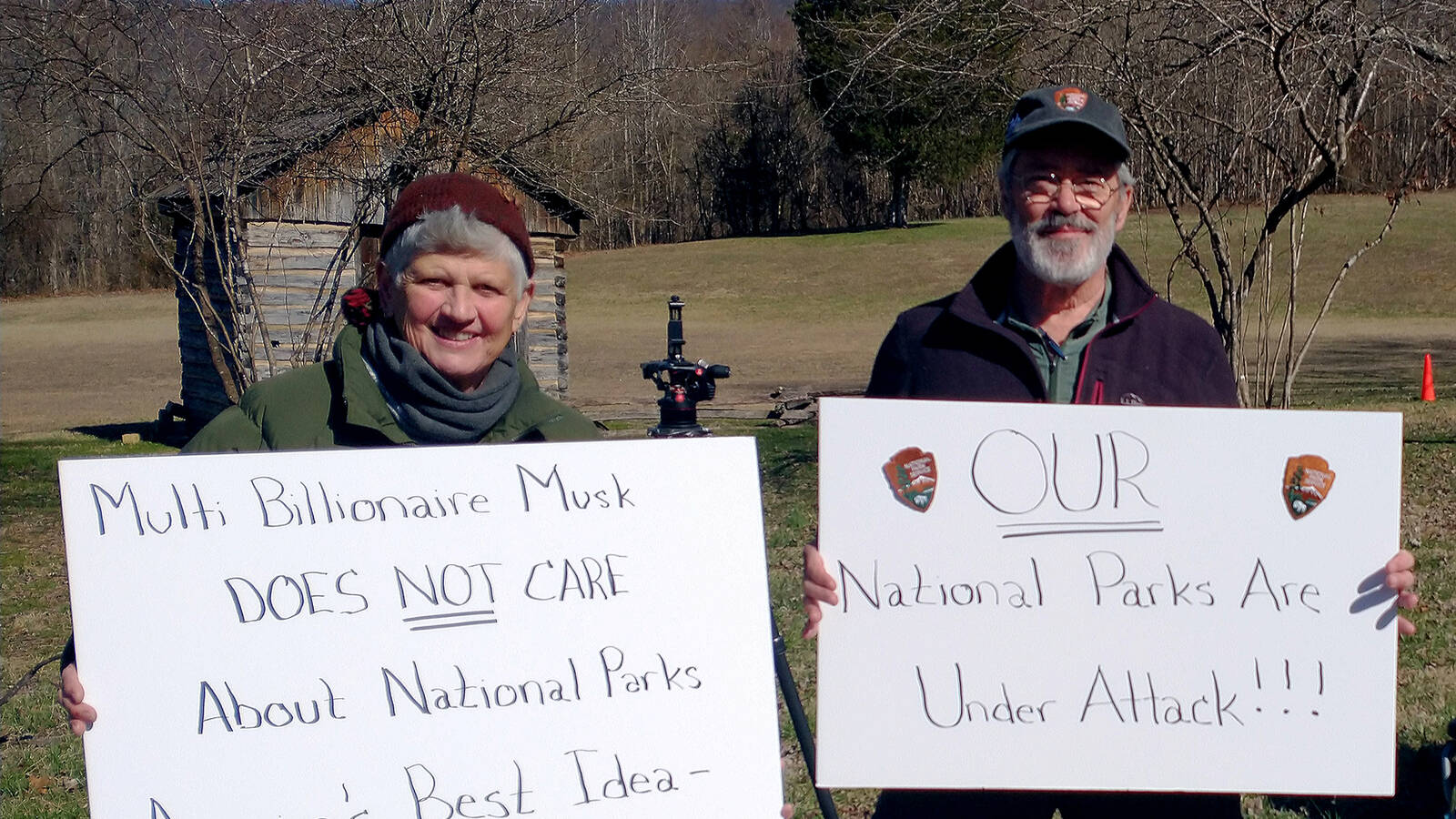
It started in February 2025 with a 37-year-veteran of the National Park Service holding a sign and a ranger Barbie doll. Soon, a few others joined retired ranger Carol Borneman as she rallied each week at the entrance of Cumberland Gap National Historical Park to raise awareness of threats to national parks.
Having served as Cumberland Gap’s chief of interpretation and education before retiring in 2021, Borneman had felt dismayed when the Department of Government Efficiency (DOGE) cut 1,400 National Park Service jobs that Valentine’s Day and then followed up by pressuring additional staff with buyouts. She continued rallying at regular intervals as parks took more staffing hits and threats of funding cuts from the administration.

Watch “How We Fight”
This 13-minute documentary follows a series of support rallies at Cumberland Gap National Historical Park in the first months of the Trump administration.
See more ›Leaning on well-researched information and good humor, she drew a bigger crowd each time. More and more participants, exceeding 100 people in June, waved signs alongside her and chanted “Save our parks!” When she wasn’t leading a rally, Borneman visited the park every day to talk about threats facing parks to anyone who would listen.
Soon into this effort, retired law enforcement ranger Dirk Wiley, who had worked with Borneman for 14 years at Cumberland Gap, decided to start filming.
“Carol has boundless energy, enormous love for the park and is so inspiring,” said Wiley, who retired in 2013 after 23 years with the Park Service.
His recently completed documentary, “How We Fight,” chronicles Borneman’s effort to single-handedly galvanize support for a local park as she also underscored the ongoing threats to the entire National Park System: not enough staff, insufficient funding, backlogged maintenance and executive orders attempting to sanitize history.
“The initial goal of the documentary was to show that one person can make a difference and maybe encourage other folks to make their own difference,” Wiley said. “The long-term message is that anything you can do matters. Think of yourself as not just one person, but one voice among many. The trick is, you have to make your voice heard.”
Impacts of Lost Staff
Since January, the Park Service has lost nearly 25% of its permanent workforce — with Cumberland Gap having lost more than 20%, according to Borneman and Wiley.
“There are five maintenance folks for 20,000 acres, 85 miles of hiking trails, 30-plus historic buildings at Hensley settlement, a 160-site campground,” Borneman says in the film. “On most days there might be three maintenance folks on staff. On weekends, there is one maintenance person on staff, cleaning all those public restrooms.”
In a recent phone interview with NPCA, Borneman recounted how a 12-person crew from the Amish community that volunteers for a month each spring to maintain historic buildings could not come this year because the seasonal employee who was to coordinate their work had their job offer rescinded as part of DOGE policies. “All those free work hours lost,” Borneman said.
The initial goal … was to show that one person can make a difference and maybe encourage other folks to make their own difference. The long-term message is that anything you can do matters.
Alongside Borneman, the film features other retired Park Service leaders speaking out about the National Park System crisis. Many current Park Service employees aren’t allowed to talk publicly or fear retribution if they do.
At the time of Walt Dabney’s interview, the retired superintendent and chief law enforcement officer said that between 100 and 150 national park superintendents and five out of seven regional directors had left the Park Service, a loss NPCA has documented as having occurred through staff cuts, hiring freezes, buyout offers and rescinded job offers.
“The people with the great experience and background in managing parks, they’re gone,” Dabney says in the film. “This is an absolute, direct threat to being properly able to operate these areas.”
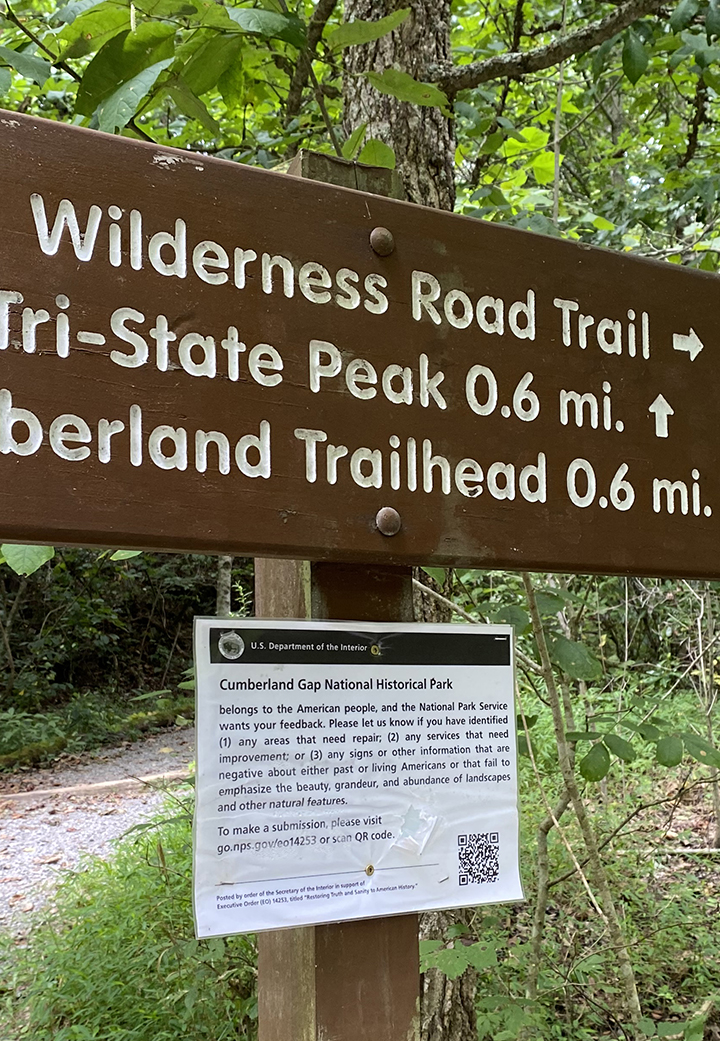
Trailhead signage at Cumberland Gap National Historical Park in August 2025, with an added sign related to the administration’s “Restoring Truth and Sanity to American History” executive order.
© NPCA/Linda Coutant“Our natural and cultural resources are at risk,” Russell Galipeau, retired superintendent of Channel Islands National Park, says in the film. “We live in the wealthiest country in the world. If America can’t protect its heritage, if it can’t tell its people’s stories — and I mean all its people’s stories — about conservation and through history and cultural natural resources, then who can?” Galipeau said.
“The public needs to rise up and speak out that their parks are important,” Margie Steigerwald, retired chief ranger of interpretation and education at Wrangell-St. Elias National Park and Preserve, says in the documentary.
“National parks are such a good return on the investment of your taxes. We provide $55 billion, with a ‘b’, to the U.S. economy, and that includes in gateway communities and the employees of the parks and the concessions employees — and we only cost about three and a half billion of tax dollars to manage these places.”
Keeping Up the Drumbeat
Production of “How We Fight” wrapped up this fall. While the camera has stopped, Borneman has not.
She continued monthly support rallies into October. During the 43-day federal government shutdown when Cumberland Gap’s visitor center closed, she stood outside the closed doors with brochures in hand to help visitors navigate the park she knows so well — and explain how decisions in Washington, D.C., impact local parks and their visitors.
“Not being in a uniform, I could speak openly about what’s happening at parks,” Borneman said in a phone interview with NPCA.
The 2025 documentary How We Fight
When visitors pose by the Cumberland Gap entrance sign, she said she offers to take their photo, talks about the park and eventually interjects, “Did you know our national parks are under threat?” Whether at a coffee shop, the post office or standing in line at the grocery store, Borneman finds a way to strike up a conversation about issues facing national parks.
“Every single opportunity I get, I talk about parks and how important they are,” she said. As “How We Fight” points out, Cumberland Gap draws 800,000 visitors each year. With an annual budget of $3.2 million, it brings in $24 million to the regional economy of rural, and often low-income, areas of Kentucky, Tennessee and Virginia.
If the Park Service’s funding and staffing issues aren’t resolved this winter, Borneman and Wiley said they plan to start holding support rallies again in March.
In the meantime, Borneman — always an educator — maintains the Support Cumberland Gap National Historical Park Facebook page with help from Wiley’s daughter, Emma Kelly, and his wife, Martha. She hands out park brochures as she talks to friends and strangers, and sports NPCA’s “I stand with park rangers” gear. Wiley has organized local screenings of the film and submitted applications to film festivals.
Both retirees encourage park lovers to write their elected officials in support of parks — and not to give up.
“You got to keep that drumbeat up,” Wiley said. “Individuals need to do something and do it right now.”
Stay On Top of News
Our email newsletter shares the latest on parks.
About the author
-
 Linda Coutant Online Editor
As a member of the Communications team, Linda Coutant manages the Park Advocate blog and other web content, and also coordinates the monthly Park Notes e-newsletter for NPCA members and supporters. She lives in Western North Carolina.