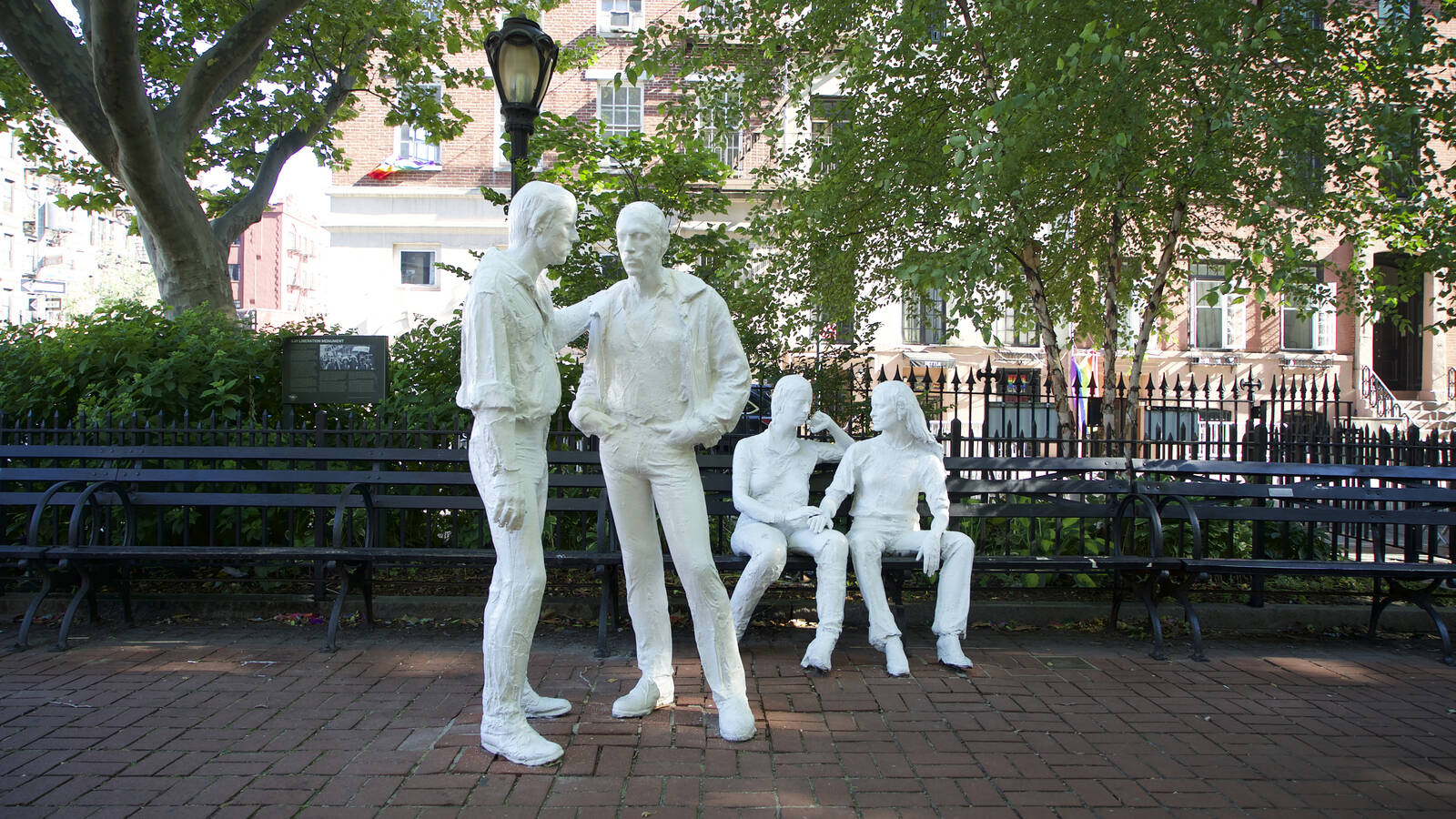
Five of this year’s list includes national park sites, including Stonewall National Monument, the President’s House site at Independence National Historical Park, and the Women’s Rights National Historic Park.
The National Trust for Historic Preservation, the national advocate for historic places, released their annual list of America’s 11 Most Endangered Historic Places. Five of this year’s list includes national park sites, including Stonewall National Monument, the President’s House site at Independence National Historical Park, and the Women’s Rights National Historic Park.
Two hundred and fifty years ago, the United States of America was founded on the principle that all people are created equal. This year, the National Trust’s annual list of America’s 11 Most Endangered Historic Places honors that self-evident truth. The histories of these places, and the efforts being made to preserve them today, represent the resilience of remarkable individuals who believe in America’s great promise of equality.
The 11 Most Endangered program uplifts and catalyzes community-led preservation work through a high-impact public awareness campaign resulting in increased visibility, public attention, and new resources to save historic places for the public good. This year, in honor of the 250th, each site featured on the list will also receive a one-time grant of $25,000 from the National Trust.
The places featured on the 2026 list of America’s 11 Most Endangered Historic Places span the country, from rural areas to densely populated city centers. Each of these places has different challenges and needs, but they are all united in how they illuminate stories of remarkable individuals who fought to bring our country closer to its founding aspiration of equality for all. These historic places, and the inspiring stories they preserve, are necessary so that America may learn from its past in the hopes of building a more perfect union.
Below are statements from NPCA staff about the National Park sites included on the 2026 list of America’s 11 Most Endangered Historic Places.
- Tule Lake Segregation Center, Modoc County, CA.
“It’s especially significant that Tule Lake is recognized as a threatened site during Asian American and Pacific Islander Heritage Month, as it is steeped in AAPI history. Nearly 19,000 Japanese Americans were incarcerated here without due process during World War II, an injustice the government would later admit was driven by racial prejudice. This national park site calls us to reckon with our history and learn from it. We owe it to the survivors and descendants of those imprisoned here to make sure this site is preserved for the generations that come after us.” Dennis Arguelles, NPCA’s Southern California Director
- Greater Chaco Cultural Landscape in New Mexico, Colorado, Arizona and Utah
“Chaco Canyon is an extraordinary cultural landscape that preserves over a thousand years of history. Pueblos continue to maintain deep cultural ties to the canyon and visitors from around the world can experience the dwellings, kivas, and ancient routes protected here. The value of this place extends beyond the park boundaries, where countless cultural resources across the Chaco region are actively being threatened and destroyed by encroaching oil and gas development. This place has lasted for millennia, and it is up to us to make sure it endures for the generations that come after us.” Alex Johnson, NPCA’s Southwest Regional Director
- Women’s Rights National Historical Park, Seneca Falls, N.Y.
“Women’s Rights National Historical Park tells the stories of struggle, perseverance and the power of what we can achieve when working together. The women that organized and overcame won the right to vote and paved the way for supportive equal rights we still benefit from today. Ensuring their full story is told and celebrated is essential to know how far we’ve come and how this journey continues even today.” Kristen Sykes, NPCA’s Northeast Regional Director
- Stonewall National Monument, New York City, N.Y.
“The events at Stonewall changed our history forever and continue to inspire us today. As we celebrate the 10th anniversary of Stonewall National Monument, we remain steadfast in our efforts to ensure the full, factual story continues to be represented here for all to learn and know. Censorship in our national parks is wrong. It goes against the very values of our democracy and ideals our parks represent. We will continue to make sure the Stonewall story is known, its significance celebrated and its legacy carries on.” Kristen Sykes, NPCA’s Northeast Regional Director
- The President’s House Site, Philadelphia, PA
“Few stories are more integral to the fabric of this country than the story of American independence, and there is nowhere better to learn that story than Independence National Historical Park. The President’s House brings the founding of our nation to life, teaching us about our early life here and the complexities of and contradictions of our past. National parks bring people together through these stories. Telling the truth is the foundation of our democracy and the ideals our parks represent. Every American should support the factual stories of our history and science shared in our parks.” Ed Stierli, NPCA’s Mid-Atlantic Senior Director
- Ben Moore Hotel, Montgomery, Ala.
- Angel Island Immigration Station, Tiburon, Calif.
- Swansea Friends Meeting House, Somerset, Mass.
- Detroit Association of Women’s Clubs, Detroit
- Hanging Rock Revolutionary War Battlefield, Heath Springs, S.C.
- El Corazón Sagrado de la Iglesia de Jesús, Ruidosa, Texas
###
For More Information
-
Issues
-
Blog Post
Fat Bears at a Crossroads
As Fat Bear Week 2026 begins, a proposed mining project in Alaska threatens the future of brown bears.
-
Press Release
Proposed Arctic Mine, Ambler Road Threatens America’s Largest Park Landscape
“All Americans should be outraged that our taxpayer dollars are being wasted to fund international companies that seek to destroy our country’s largest park landscape" -- NPCA Alaska Campaign Director…
-
Press Release
Atrocious Reported Changes to the ESA Could Threaten Extinction to Park Wildlife, Wild Nature
"This memo appears to suggest that it’s no longer the purpose of the ESA to ensure animals such as grizzly bears, North Atlantic right whales, or Florida panthers are protected"…