Fall 2026
Blood on the Prairie
A deadly conflict over slavery that played out at Fort Scott and across territorial Kansas served as a bloody prelude to the Civil War.
It was a cold dawn in December 1858 when James Montgomery, a blue-eyed former preacher from Ohio, led a group of armed men into the town of Fort Scott to attempt a prison break. The territory of Kansas was just 4 years old and bitterly divided between settlers who wanted it to be a slave-owning state, like neighboring Missouri, and those who wanted it to be a free state, aligned with the North.
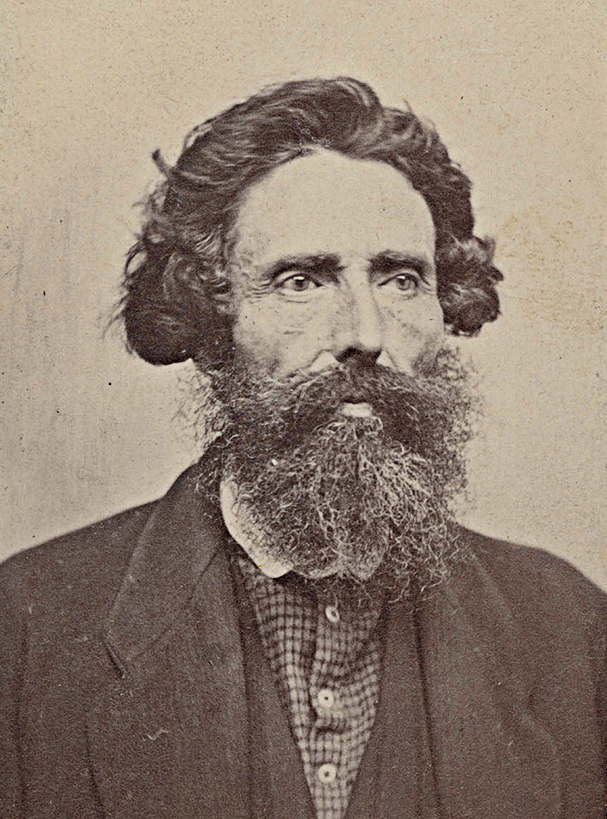
James Montgomery, an abolitionist.
KANSAS HISTORICAL SOCIETYMontgomery had recently become an abolitionist after slave owners burned down his house, just north of Fort Scott. He and his posse — they called themselves “Jayhawkers” — were riding into Fort Scott to bust out two of their comrades being imprisoned by local deputies inside one of the town’s hotels.
Once in town, the Jayhawkers forced the citizens into a large circle in the plaza, while a group stormed the Fort Scott Hotel and rescued the prisoners. The whole escapade might have ended without bloodshed but for a pro-slavery resident and former deputy marshal named John Little who fired into the melee outside his father’s store, wounding two of Montgomery’s men. Then he made a mistake that cost him his life.
“He stands on a box to look out the transom glass above the door,” said Arnold Schofield, a former historian at Fort Scott National Historic Site. “And he’s backlighted by the lamps in the building. He’s an easy target. So, they take aim, they fire, and he drops to the floor.”
After the Jayhawkers escaped with the freed prisoners, Sene Campbell, Little’s grieving fiancée, wrote Montgomery a scathing letter, calling him a “minister of the devil.”
“Remember this,” Campbell warned. “I am a girl, but I can fire a pistol and if ever the time comes I will send some of you to the place where there’s ‘weeping and gnashing of teeth.’”
The incident is just one of many deadly episodes that transpired during the turbulent period historians call “Bleeding Kansas.” From 1854 to 1861, the new territory was a crucible in which America’s division over slavery boiled over. Marked by tit-for-tat violence between diametrically opposed groups, these years in Fort Scott and the rest of Kansas sowed the seeds for one of the most devastating chapters of American history.
“I believe that our Civil War started out here in Kansas,” Schofield said, “between 1856 and 1860.”
The U.S. Army built Fort Scott in 1842 on the edge of Indian territory, home to the Osage and to relocated Eastern Tribes after the Indian Removal Act of 1830. A line of similar forts ran from Fort Snelling in Minnesota to Fort Jesup in Louisiana.
Named for Gen. Winfield Scott, the commanding general of the U.S. Army, Fort Scott was home to infantrymen and dragoons — horse-mounted troops who escorted settlers traveling on the Santa Fe and Oregon trails. Detachments from Fort Scott fought in the Mexican-American War from 1846 to 1848. They also kept the peace along what was then considered the “permanent Indian frontier.”
Manifest destiny had little regard for frontiers, however, and eventually westward expansion made Fort Scott obsolete as a border post. The military abandoned it in 1853 and subsequently sold the buildings, which became the town of Fort Scott.
Around that time, legislators in Washington were trying to create two new Western territories, Kansas and Nebraska, out of an unorganized portion of the Louisiana Purchase. The question of slavery in these new territories had seemingly been settled by the Missouri Compromise of 1820 — because they were above the 36 degrees 30 minutes north latitude line, Kansas and Nebraska would be free states. Southern congressmen, however, were loath to create states that would oppose them in Washington. To win their support, Stephen Douglas, a fiery senator from Illinois, proposed that the slavery issue be settled in the new territories by way of popular sovereignty — in other words, a vote — and the Kansas-Nebraska Act was signed into law on May 30, 1854.
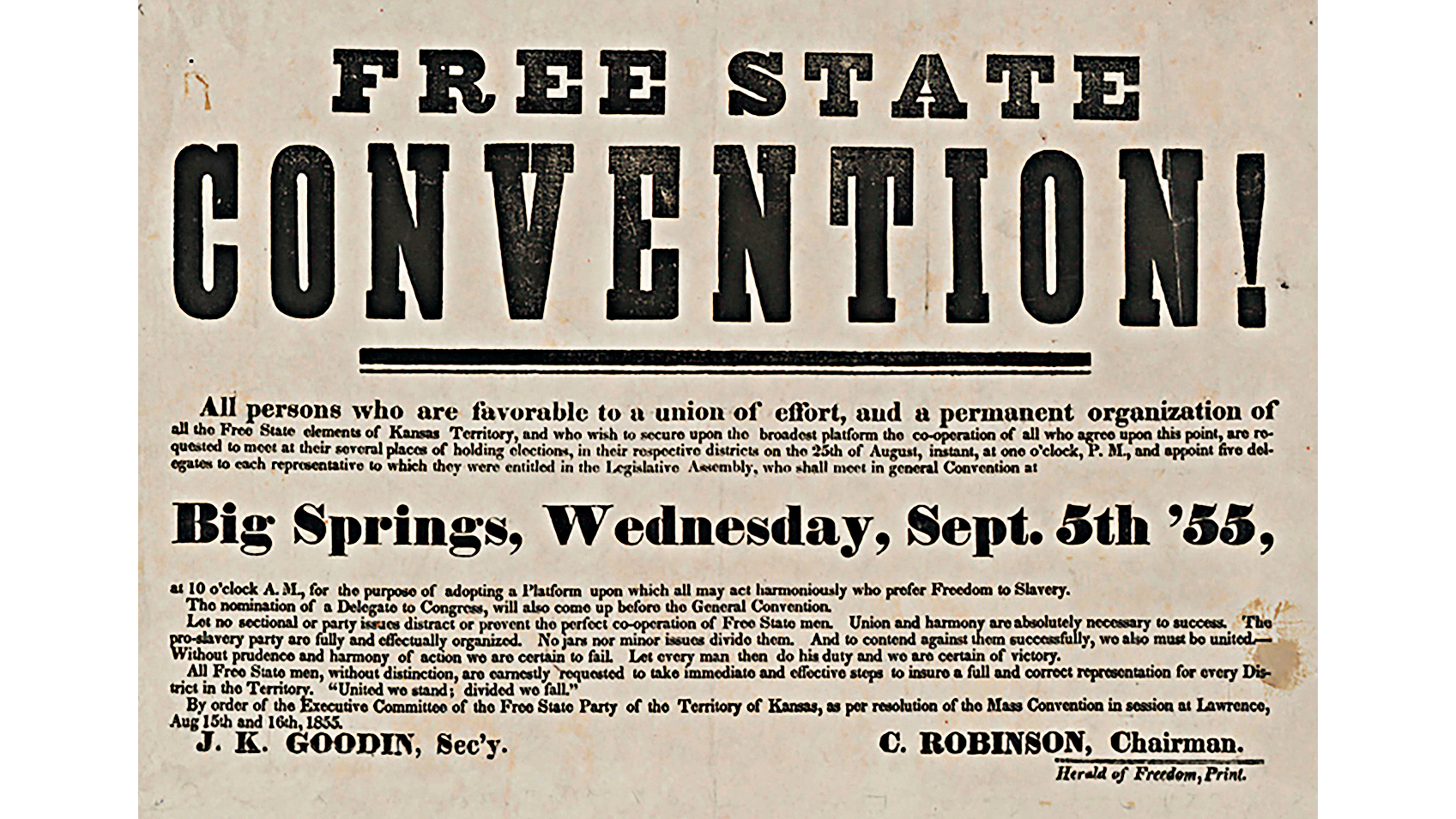
An 1855 ad for a Free State convention. (Click image to enlarge.)
KANSAS HISTORICAL SOCIETY“When they were established, part of the thought was, OK, Nebraska comes in as a free state, and Kansas comes in as a slave state, and you keep the balance,” Schofield said.
Still, slave-owning farmers in neighboring Missouri feared that if popular opinion didn’t swing their way, the new Kansas Territory could become a haven for escaped slaves, said Nicole Etcheson, a history professor at Ball State University and the author of “Bleeding Kansas: Contested Liberty in the Civil War Era.” “There’s a lot of talk by some Missouri leaders,” she said, “that we’re surrounded by all sides and we’re not going to be able to keep slavery in Missouri.”
Pro-slavery migrants from Missouri poured into Kansas. Then anti-slavery settlers started arriving from Midwestern states and as far away as New England, where idealists organized societies to send abolitionists to the new land. Similarly, “dark lantern societies” cropped up in the South to flood Kansas with pro-slavery migrants. In 1856, about 30 pro-slavery agitators from South Carolina arrived in Fort Scott.
With so much at stake, early elections in Kansas — for territorial governors, legislative representatives and eventually a constitution — were fraught affairs, full of fraud, fighting and whiskey. “Parties came over the river from Missouri, and they voted,” Etcheson said. “These parties were organized. They were sent out to different polling places. There were threats.”
Thanks to these so-called border ruffians, pro-slavery candidates often won by thousands more votes than there were eligible voters. When Midwestern migrants realized they were being disenfranchised by pro-slavery Missourians, they coalesced to ensure Kansas became a free state.
“This whole process radicalizes the Midwesterners,” Etcheson said. “It makes them abolitionists, when they hadn’t been before.”

John Brown’s Soul
John Brown hoped to end slavery when he raided a federal armory at Harpers Ferry in 1859. His plan failed, but he still changed the course of history.
See more ›Eventually, this tinderbox caught fire. In 1856, after pro-slavery forces sacked the anti-slavery town of Lawrence, the famous abolitionist John Brown gathered a small group and attacked several families near Pottawatomie Creek, about 50 miles north of Fort Scott. Using pistols and broadswords, they murdered five pro-slavery men, just one of a litany of violent acts from both sides that marked the next few years.
The divide ran directly through the tidy grass parade grounds of Fort Scott. On the north side sat the Fort Scott Hotel, an establishment operated by and for people who opposed slavery in Kansas. On the south side was the Western Hotel, run by those supporting slavery in Kansas.
Schofield, the retired historian, said the psychological terror of these times was enough to send some newcomers back to where they came from. Settlers sometimes woke up in the dead of night to a knock on their door and a note tacked to it telling them that if they weren’t gone in 24 hours, they would be killed.
“I would not want to be living in eastern Kansas Territory during this time,” Schofield said. “It’s just a very tense, violent atmosphere.”
The town of Fort Scott escaped some of the early bloodshed. Because it’s only 5 miles from Missouri, most early settlers there were pro-slavery. By 1858, though, the demographics had changed. As in the rest of Kansas, most new arrivals were now from Midwestern and Northern states and opposed slavery. The shift ruptured Fort Scott’s fragile peace, and Army troops were periodically dispatched from Fort Leavenworth to quell the unrest.
I would not want to be living in eastern Kansas Territory during this time.
One of the main instigators was Montgomery, the guerrilla fighter who led the prison break in Fort Scott. Montgomery was a charismatic leader and the kind of folkloric bandit who rode his enemies’ horses and torched their homes and always slipped away unscathed when lawmen set out to arrest him.
In May 1858, Montgomery and his free-state fighters evicted pro-slavery forces from Linn County, north of Fort Scott. In response, pro-slavery guerrillas dragged 11 free-staters away from their families and shot them dead in a ravine. That incident, called the Marais des Cygnes massacre, was allegedly plotted in Fort Scott’s pro-slavery Western Hotel. To avenge the killings, Montgomery and his men rode into Fort Scott one summer night and set fire to the Western Hotel. Shots rang out but no one died, and the hotel was spared major damage thanks to its hardwood siding.

Promised Land
After the Civil War, more than 26,000 African Americans left the South to homestead the Great Plains, carving out farms, free lives and community on the prairie.
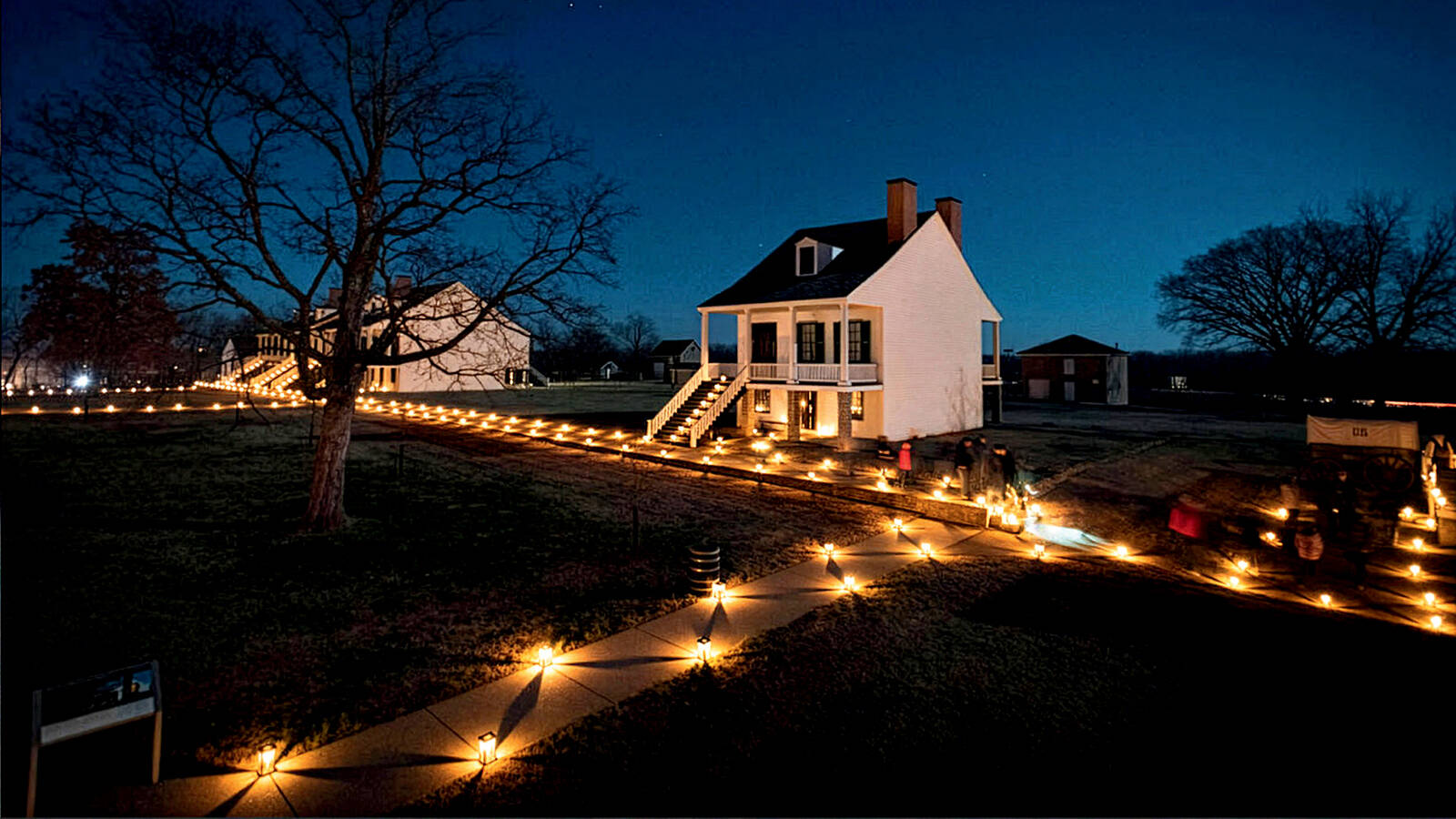
See more ›Today, several of these buildings still stand, and the stories they tell about different chapters of American history are part of what makes Fort Scott National Historic Site unique, according to Carl Brenner, a ranger there. Within Fort Scott’s neat complex of renovated and reconstructed buildings, visitors can walk through the site’s various iterations as a frontier outpost, a focal point of the “Bleeding Kansas” strife, a Civil War military base, and later the garrison from which the U.S. Army protected workers expanding the railroad. Fort Scott, Brenner said, is a time capsule of our country’s evolution.
“This space is truly the story of America growing up,” Brenner said. “The fort is really an onion with all these layers of history woven into each other.”
By the time the anti-slavery faction won out and Kansas entered the Union as a free state in 1861, the violence was spilling over into the rest of the country. Two months after Kansas became a state, the Civil War began with a Confederate attack on Fort Sumter in South Carolina that would lead to four years of bloodshed and the death of some 750,000 soldiers. The Army returned to Fort Scott, a strategic position to protect Kansas from Confederate invasion, and the first Black troops ever to join the Northern armies were mustered on Fort Scott’s parade grounds, 12 days after the Emancipation Proclamation was issued.
The local issues that divide Fort Scott (estimated population 7,500) these days are less explosive. People debate whether to pave over the brick streets, for example, or how best to attract businesses. Nationally, though, political divisions feel wider than ever, and Etcheson, the history professor, sees troubling parallels to Kansas’ past.

National Parks
You can read this and other stories about history, nature, culture, art, conservation, travel, science and more in National Parks magazine. Your tax-deductible membership donation of $25 or more entitles…
See more ›“What makes it all so volatile and makes it pertinent today,” Etcheson said, “is that the two sides don’t accept each other’s legitimacy.”
Etcheson has been teaching the Civil War for more than 30 years. Each semester she asks her students why they’re interested in this era of history. She used to get answers like, “My boyfriend is really interested in it,” or, “My father took me to the battlefields growing up.” More recently, Etcheson started hearing something that lends the “Bleeding Kansas” period a chilling new relevance.
“In the fall of 2016,” she said, “I started getting, ‘I think we’re going to have another Civil War, and I want to understand what caused the first one.’”
About the author
-
 Jacob Baynham Contributor
Jacob Baynham is a National Magazine Award winner. He teaches journalism at the University of Montana.

-
Press Release
Interior Turns Alaska Parks Into Game Farms with Outrageous Hunting Rule
“It’s as outrageous as it is disheartening to again see the Interior Department go along with the state of Alaska’s effort to turn national parklands into de facto game farms."
-
Press Release
NPCA Celebrates Staff Expert's New Book on Blackwell School National Historic Site
A groundbreaking new book co-authored by NPCA's Cristobal Lopez tells the history of Blackwell School National Historic Site, highlighting the experiences of the Mexican American students who attended the segregated…
-
Press Release
Trump Administration Continues to Unlawfully Bulldoze National Mall Parks
“This egregious destruction continues to show how the Trump administration operates as if laws don’t apply. They continue to move forward, disregarding the will of the American people for which…