Summer 2026
Of Ice & Heart
Braving Maine’s cold waters with Mount Desert Island’s intrepid dippers.
The first time I experienced cold-water dipping, I had the urge to submerge. Years of entering chilly pools, lakes and oceans have taught me that immersing my whole body after psyching myself up is less torturous than being halfway under. But I’d never before been in water quite this frigid. So my rationale about taking the plunge was at odds with my body’s distress signal, which insisted that a full-fledged dunk was off the table.
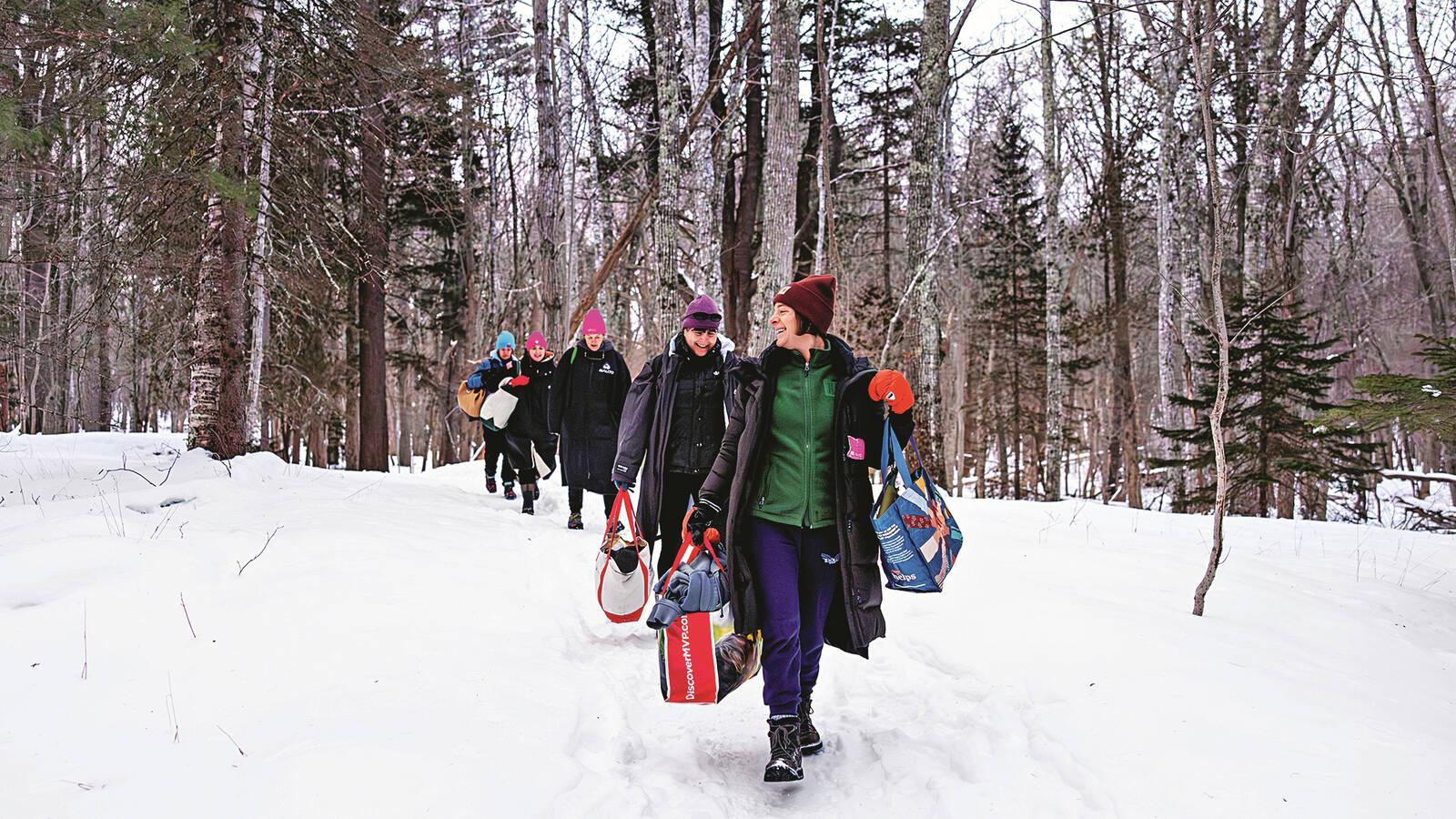
I was with four other women, three of whom I’d just met, at Compass Harbor, on the eastern coast of Acadia National Park. It was early February, just before sunrise, and we’d arrived at the water’s edge after a short hike through snowy woods. We’d spread towels and yoga mats on the rocky beach to protect our feet, kicked off snow boots and — though it was just 9 degrees — stripped down to swimsuits. On the beach, ice-encased rockweed, a plump and spongy seaweed, covered the boulders. Someone pointed out a loon in the water, between us and the Porcupine Islands. The sky turned from pink to purple to deep blue.
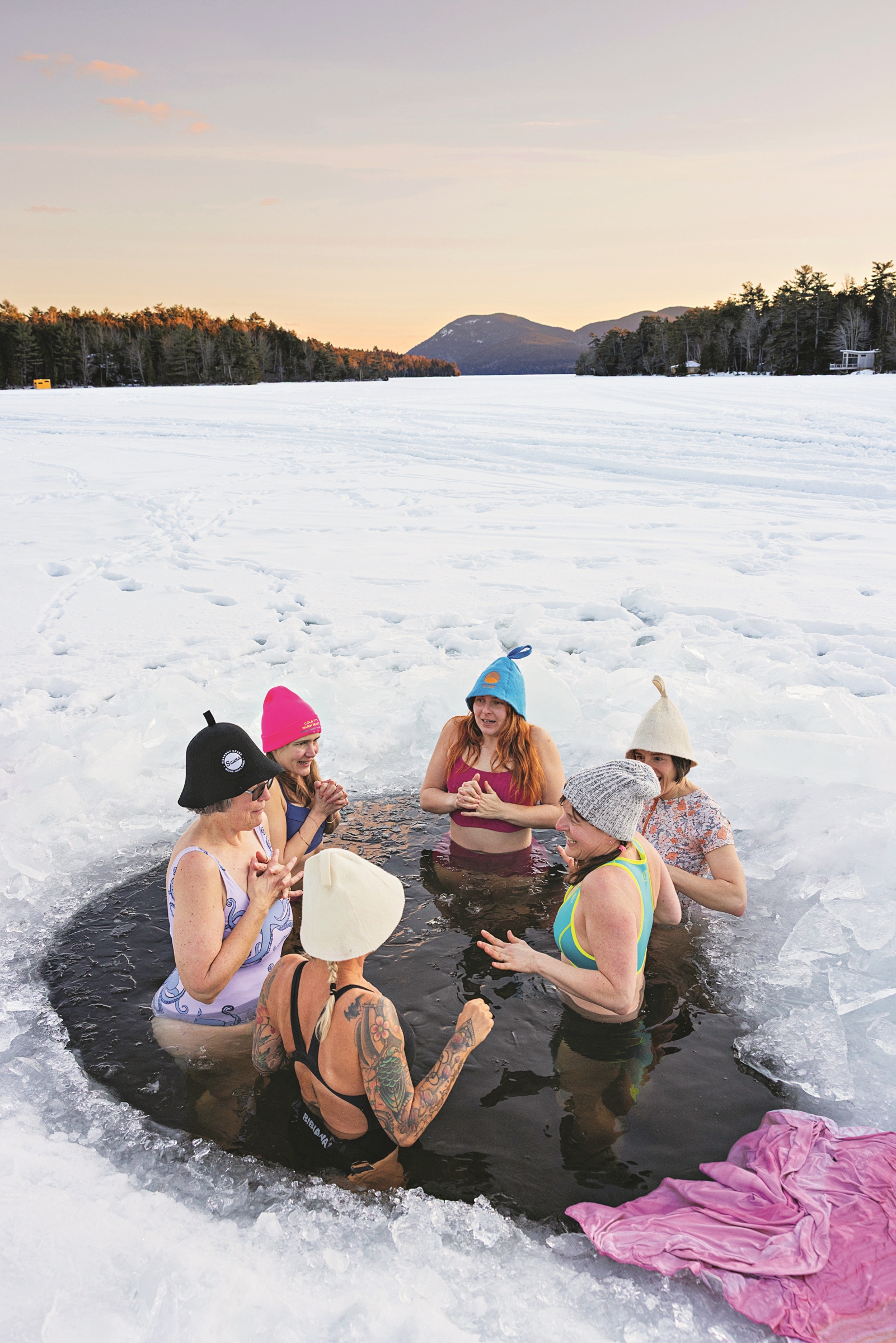
A sunset dip at Long Pond. The author is in the gray hat.
©KATHERINE EMERYMy friend Shanna Merrill and I had driven to Bar Harbor to experience cold-water dipping in Maine — an idea equally exciting and dreadful to us both. The night before, at an Irish pub a couple of blocks from our hotel, we had clinked glasses before dinner. “To not dying,” we said, and laughed nervously.
At the beach, we followed the lead of veteran dippers, pulling neoprene boots and gloves from our bags and staging clothes — cozy fleeces, sweatpants and bulky swim coats — for après-dip. One by one, the other women began walking toward the gentle waves. I knew these dips were brief; if I didn’t summon some courage quickly, I might miss the whole experience. I forced myself down to the icy water, amazed at how well the booties protected my feet. Then the cold hit my calves. Knees. Thighs. I sucked in air and pulled my shoulders to my ears, as if to lift my body away from the cold. I felt an unfamiliar sensation in my legs, like a faint electrical current zipping under my skin. The veterans walked even deeper into the water. Someone yelled out “Wait till you get up to your Georgia O’Keefe!” followed by hoots and cheers.
Before wading into the water, the women had told me to listen to my body and figure out what was comfortable for me. They said simply being there with gear and excitement and intention — even without dipping a toe — was enough. So I listened. And after a couple of minutes, I turned around. I hadn’t dunked. But also, I hadn’t died.
I first heard of this dipping collective in 2025. I was seeking tips for my own cold-water training for a 5-kilometer springtime swim in the Chesapeake Bay and came across the cheeky and aptly named group, Cold Tits, Warm Hearts. (The Associated Press style guide, my editors pointed out, describes the anatomical reference as “impolite,” but we agreed I could use it — sparingly.) I connected with one of the founding members, eco-artist and Maine native Mariah Reading, who had recently competed in the Ice Swimming World Championship. She offered some advice on swimming in chilly waters. And then I had a zillion questions about her dipping group, including: Can I join you sometime?
Cold-water dipping isn’t new. George Dorr, who helped establish Acadia and was its first superintendent, used to swim daily in the frosty waters of Compass Harbor. But dipping (and other similar frigid-water activities) are definitely having a moment. Many credit the recent trend to Dutch extreme athlete Wim Hof (aka The Iceman), who has broken records related to cold exposure — including standing in a container while covered with ice cubes for nearly two hours. He says the many health benefits of exposing your body to cold, whether ice baths or cold showers, include improved quality of sleep, better focus, stronger immune response and reduction of inflammation, swelling and sore muscles. The scientific consensus on Hof’s method is mixed: A 2024 study of his claims backed only some of them and said further research into the health effects is needed. The Mayo Clinic says cold plunging or cold water immersion may help build resiliency, restore balance to the nervous system and improve cognitive function and mood, but warns about the hazards of cold water shock. Yet there are many wholehearted proponents: Some athletes use cold plunges to speed up muscle recovery. Actor and comedian Amy Poehler cold plunges for 11 minutes a week and says it helps with anxiety, depression and inflammation. “It will change your life,” she said in a social media clip.
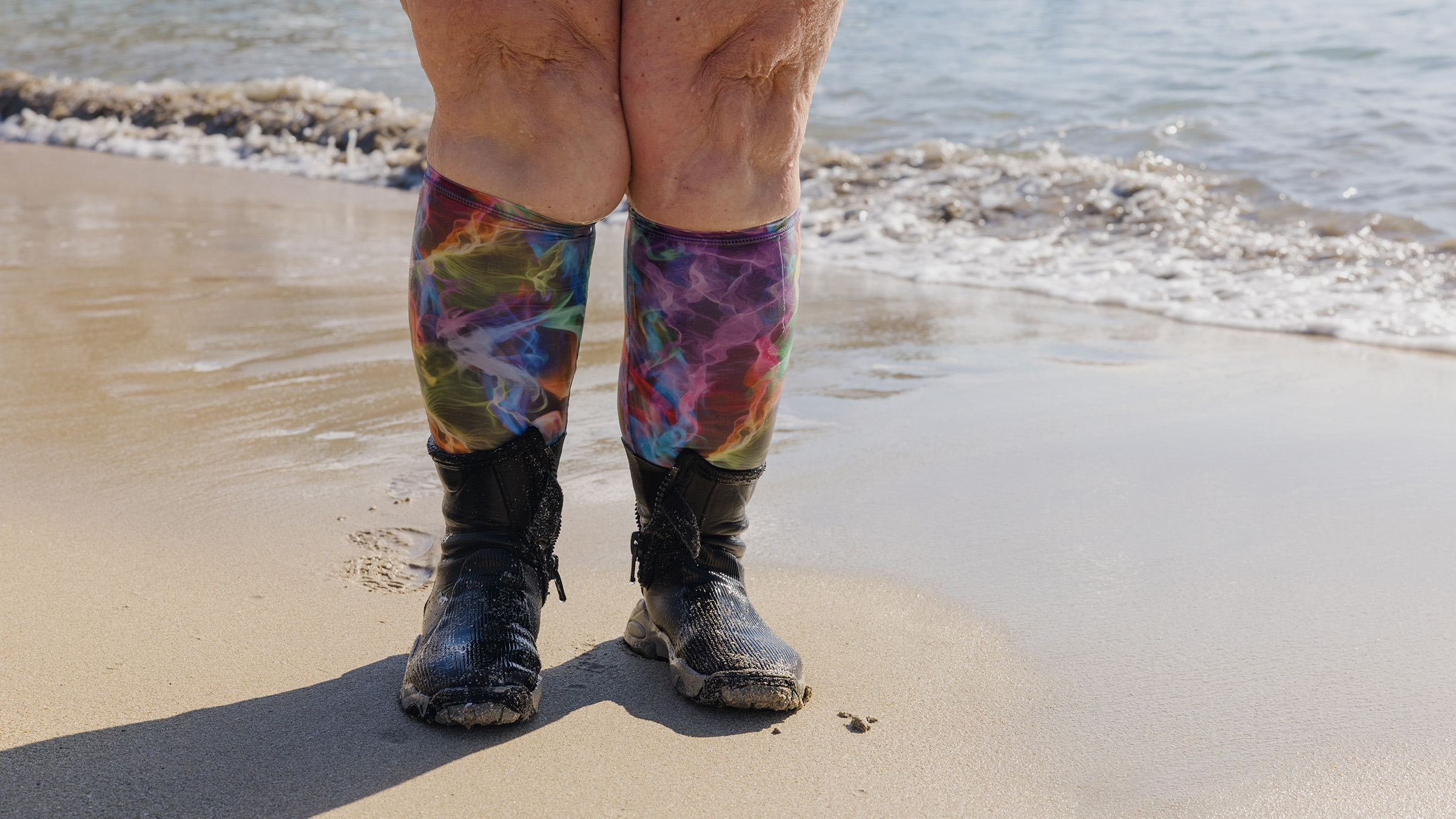
The dippers only had bathing suits and towels when they first started. Now, they have all the right gear, including neoprene mittens and boots.
©KATHERINE EMERYWherever there’s cold water, it seems, people are inspired to dip. The Bluetits Chill Swimmers in the U.K. counts 150,000 members. In South Portland, Two Maine Mermaids dips monthly around the full moon and in March hosted an event that attracted more than 1,600. In West Seattle, the Coldwater Collective holds weekly plunges at Alki Beach. This year, New Year’s Day plunges took place at many national park sites, including Acadia, Olympic National Park, Glacier National Park and Cape Hatteras National Seashore. In national parks, dipping is permitted any time of year, as long as the parks are open and allow swimming.
There is no shortage of dipping spots on Mount Desert Island, or MDI as locals call it, the largest island off the coast of Maine. Acadia encompasses about half of the island, which counts four towns, including Bar Harbor on the east coast. In the summer, more than 4 million visitors flock to the park, but only about 10,500 people — including the women I met — live on MDI year-round. In the winter, the island is quiet and serene.
When the temperature drops, swimming enthusiasts tend to pack it in and hibernate. But in the late summer of 2020, Puranjot Kaur, who was training to circumnavigate MDI (44 miles in waters that only warm up to 50-something degrees in the summer) had a wacky thought: What if the water season didn’t come to an end?
Other local women, she quickly learned, were also fantasizing about continuing to swim outdoors into fall and winter. They were going stir-crazy with pandemic pods and quarantines, and some were really struggling. Reading, who was wrapping up her work as a seasonal ranger at Acadia, said she had recently left an emotionally abusive relationship and was seeking connection. She, Kaur and two other women met up for a cold-water dip on December 20 in Somes Sound, a sheltered spot with views of the Acadia mountains.
“We look back at that first time and laugh, because we just had bathing suits and towels,” Kaur said. “Now we have all the gear and systems.” The women stayed in the water, amid bobbing chunks of ice, for a few invigorating, thrilling minutes.
“We were all depressed and sad, but it was empowering to put ourselves in physical pain and experience glee — and also the beauty of where we’re all so privileged to live,” Reading said. “The timing of it was really spectacular and necessary. We all needed each other. We all immediately bonded.”
This group has changed my life.
The women started dipping every weekend, exploring new waters and inviting dip-curious friends. In late January of 2021, a half dozen women gathered at Seal Harbor Beach, a crescent-shaped stretch of soft sand just outside the park. As they came out of the water, Martha Stewart — who has a house on MDI — happened to drive by. “She had her driver pull over so she could take a picture, which she later posted on Instagram,” Kaur said. As Stewart was leaving, a dipper shouted out to her, “Cold tits, warm hearts!” And immediately, Kaur recalled, “We were like, ‘Ohmygod, that’s the name of the group! And now we need a logo! And hats!’” (Spoiler: They came up with a clever logo that now graces their stickers, hats, sweatshirts and long swim coats.)
Within a few months, there were so many dippers that the founders set up a WhatsApp group that now includes nearly 100 people, ranging in age from 20s to 70s. Although some refer to the group as a sisterhood and men are rare, all are welcome; after all, as Reading pointed out, men have nipples too.
Throughout the winter, the dippers — sometimes 20, sometimes two — meet several times a week. There are birthday dips, lunchtime dips and spur-of-the-moment dips. Sometimes they dip in tutus. They dip under full moons, under umbrellas, under sunny skies or under Andrew Wyeth skies — as one member described an overcast day. Once, a pair dipped in windchills of minus 20.
Dip Tips
After my inaugural dip, we moved quickly to change into warm clothes. My hands were so cold, I had trouble pulling up socks and lacing boots. At the parking lot, we said goodbye, till our next dip at lunchtime. (Reading had set up a trio of dips specifically for our visit, but multi-dip days are not unusual. On her 27th birthday in 2021, Reading spent 27 minutes in the water, which she spread over three dips.) Shanna and I blasted heat in the car, and I tucked my hands in my armpits until my fingers thawed. “You know how after you go to the dentist and your mouth feels so clean and fresh and tingly?” Shanna said. “That’s how my legs feel.”
We warmed up with tea at the Acadia Hotel and then walked around an eerily quiet Bar Harbor. Shops that sold ice cream, fudge and lobster rolls were closed for the season. We wandered into Sherman’s bookstore (I was drawn to a section featuring “Women on the Water” and “Danger at Sea”) and then to the chamber of commerce across the street, where a National Park Service desk serves as Acadia’s wintertime visitor center.
“Thanks for coming to see us,” said Matthew, a young ranger in his first season at the park. He spread out a map and showed us a section of Park Loop Road that was open for the winter. I told him we’d dipped that morning with a group of local women. “My job is just to tell you: Please be safe,” he said. “The current can move very quickly. The water is very cold.”
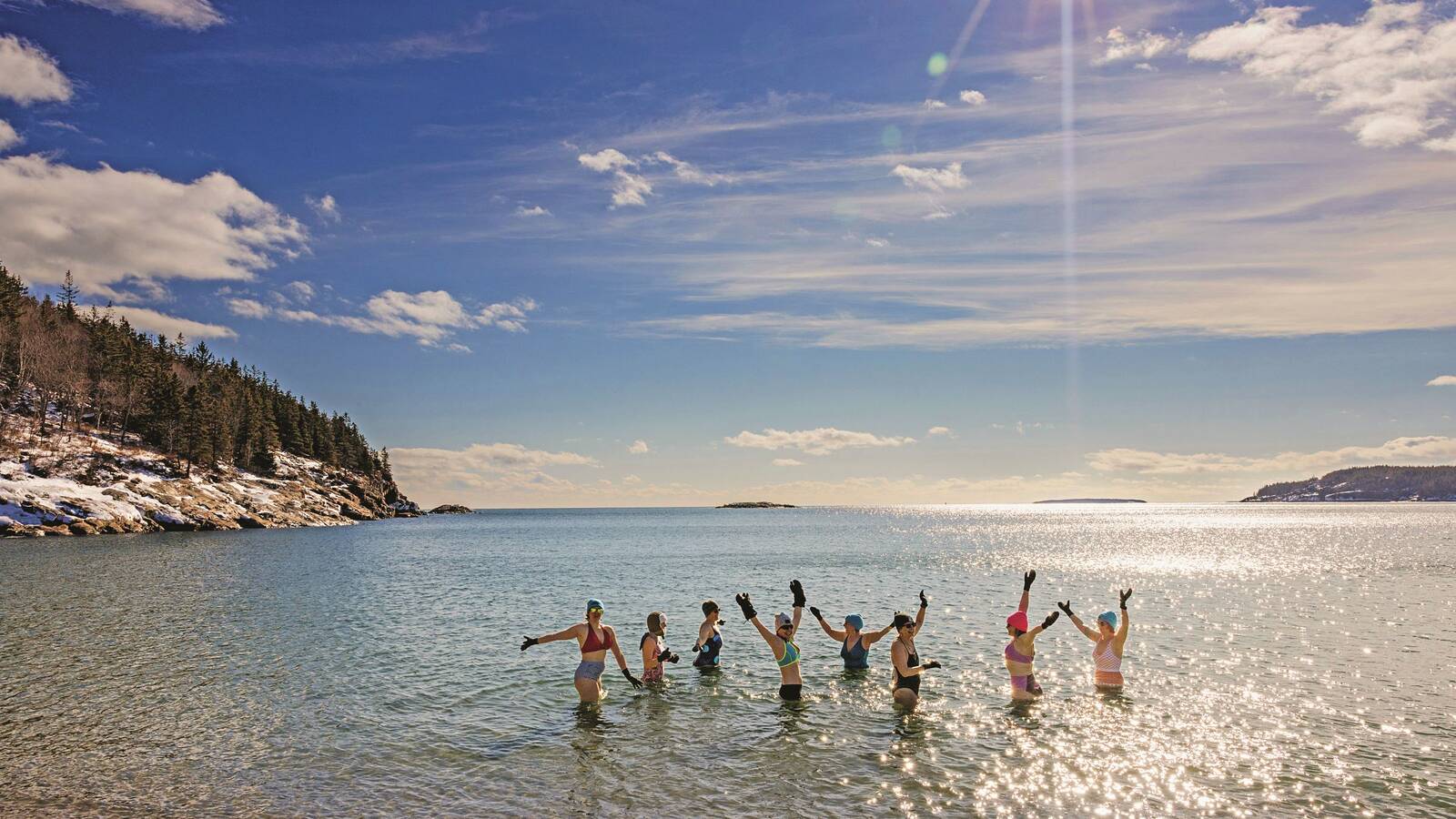
Midday, at high tide, Shanna and I met the morning dippers plus three more women near Acadia’s largest sandy beach (fittingly named Sand Beach). The sun was strong overhead and sparkled in the water. But the air temperature had inched up to only 25 degrees, and we were surrounded by signs of winter: The sand was flecked with bits of snow, and on the cliffs hugging the water, ice spilled over rocks like white frosting dripping down the side of a cake.

9 Perfect Parks for a Winter Workout
Are you determined to get outside, even if the air is brisk? These nine parks allow you to stay active outdoors and work up a healthy sweat, even — or…
See more ›As we set out our gear, I chatted with Sue Aripotch — a fine jewelry maker who spends time in the park almost daily. At her first dip, on New Year’s Day 2021, she watched Kaur and other women swimming past the breaking waves. She planned to follow, but when the water was thigh-high, her bones throbbed with pain. She turned back, disappointed in herself. “All of a sudden, I hear applause from beyond the breakers, and that just made me feel so good — people celebrating my attempt to do something,” she said. “This group has changed my life.”
On Valentine’s Day that year, Brenda Beckett, a scuba diver and physician assistant at the local hospital, joined a Sand Beach dip. She learned that the stress she carried from working as essential medical personnel during the pandemic ebbed when she stood in the icy water. She’s generally not a joiner, but she felt energized being in the water with others — even though she’d just met them. “I was hooked,” she said. “I felt so alive.”
Paula Huntsman, a seventh-generation Mainer and a school nurse, told me that the first time she dipped, she charged in and charged out — and felt such a burst of energy that she went home and organized all her knitting needles. “I felt really badass,” she said. She also began looking at her own body differently. “I grew up with a mother who was pretty body shaming. So I never ever felt good about my body.” Now, when she strips to the barest of clothing and walks into the water with women of all body types, she feels an acceptance she’s never felt before.
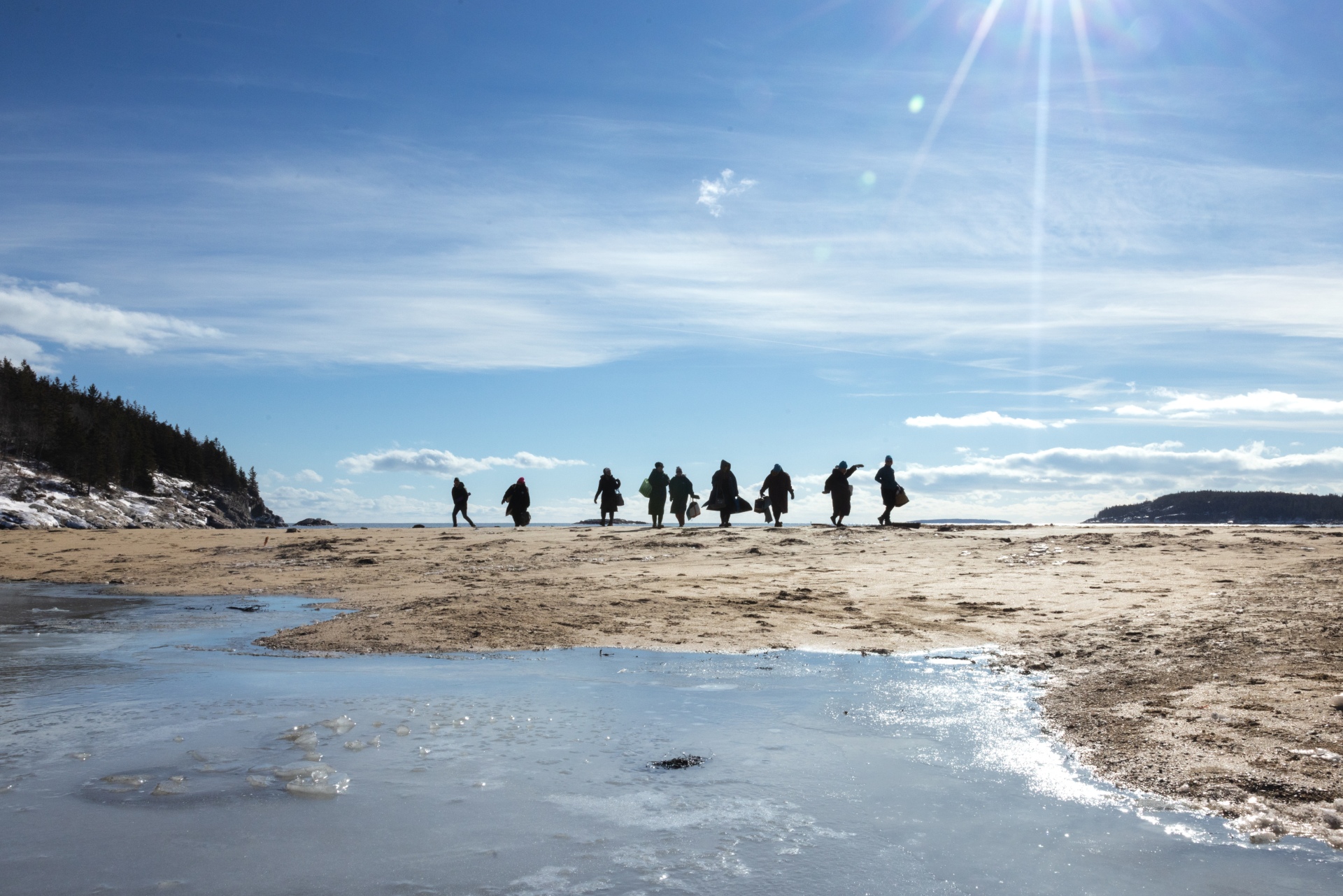
A group of dippers returns from a wintry plunge in Acadia.
©KATHERINE EMERY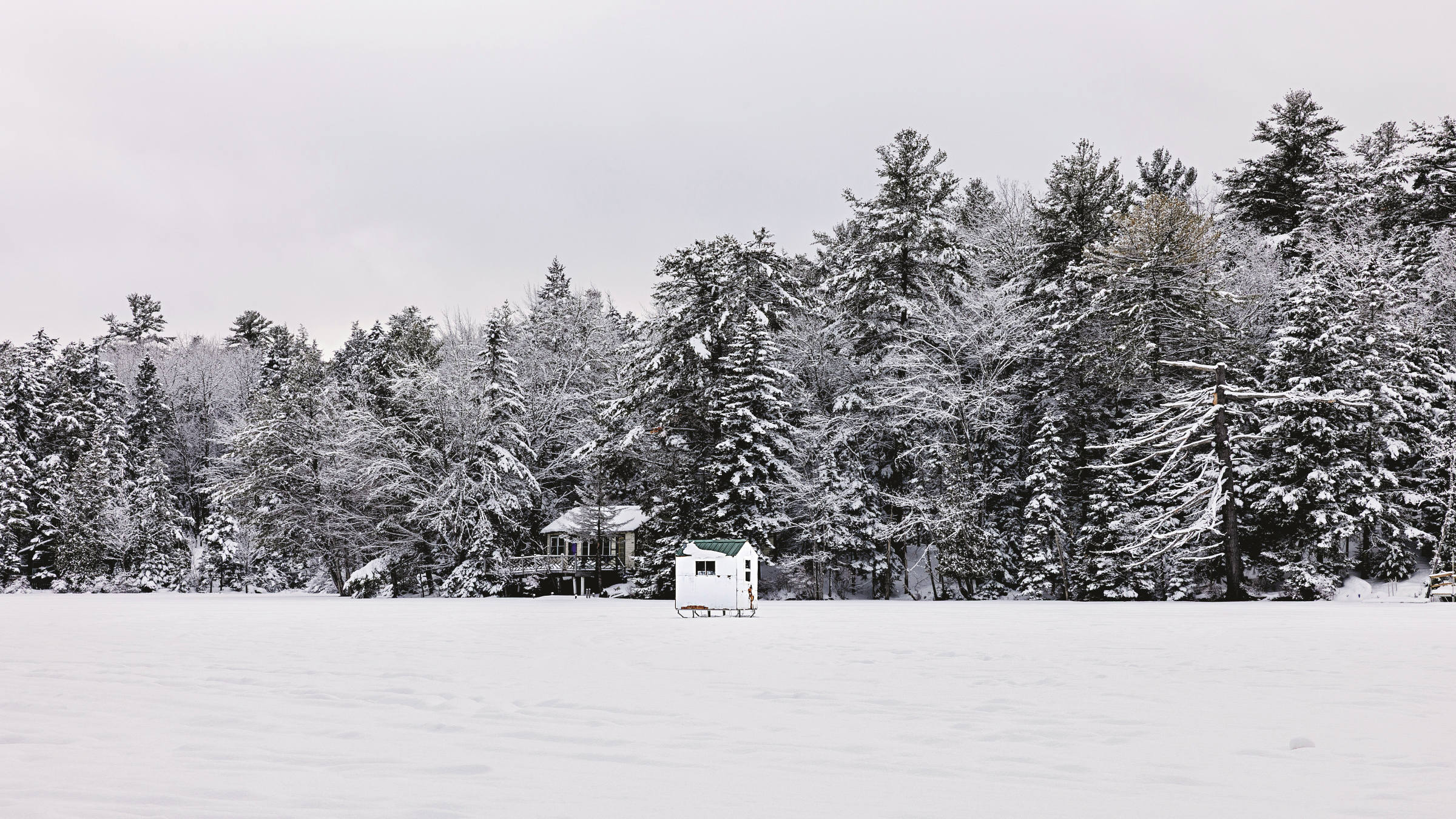
An ice fishing shack on Long Pond.
©KATHERINE EMERY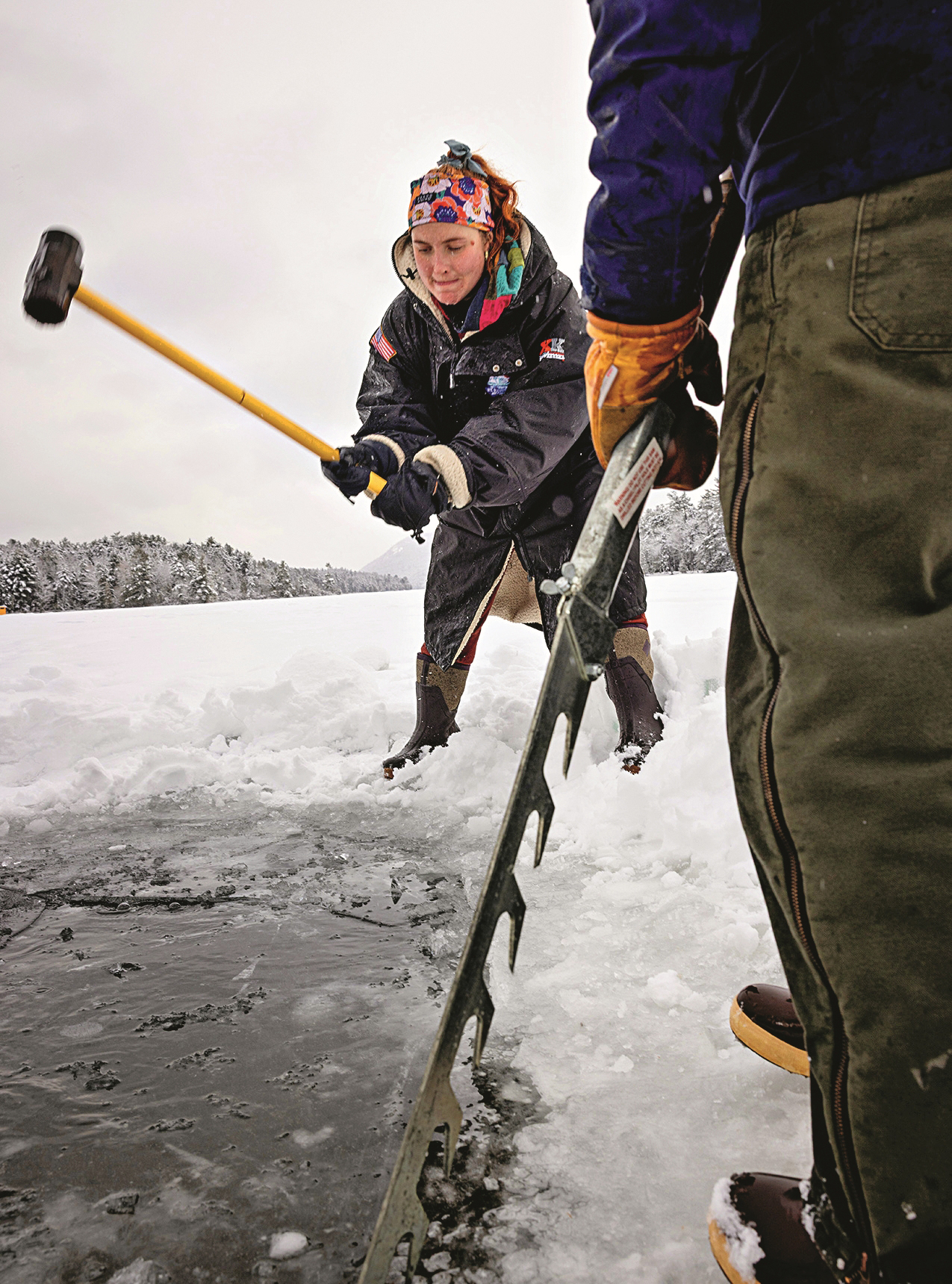
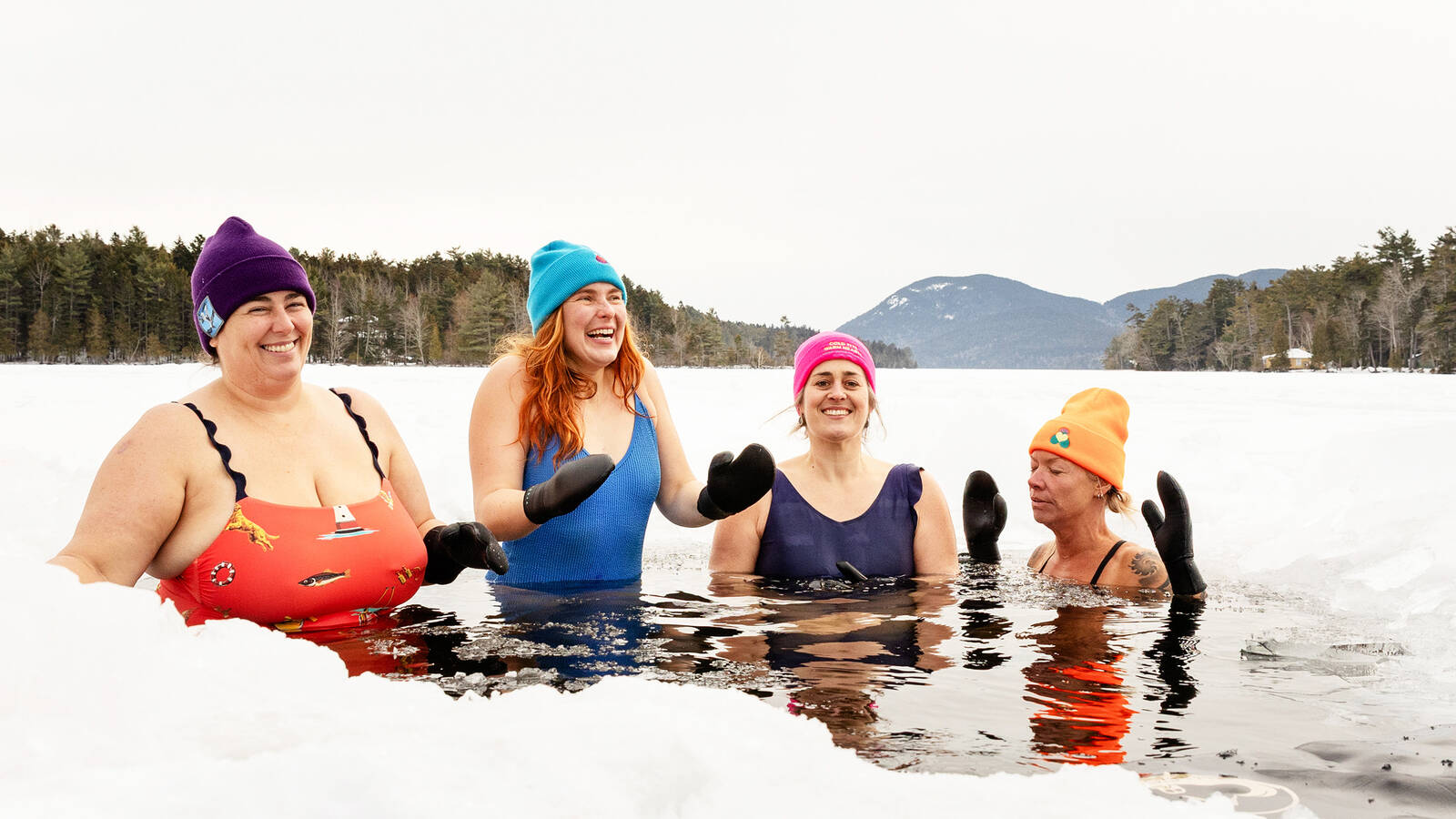
Mariah Reading and Gail Gladstone, two of the group’s founders, use a sledgehammer and an ice saw to create an ice hole for dipping at Long Pond.
© KATHERINE EMERY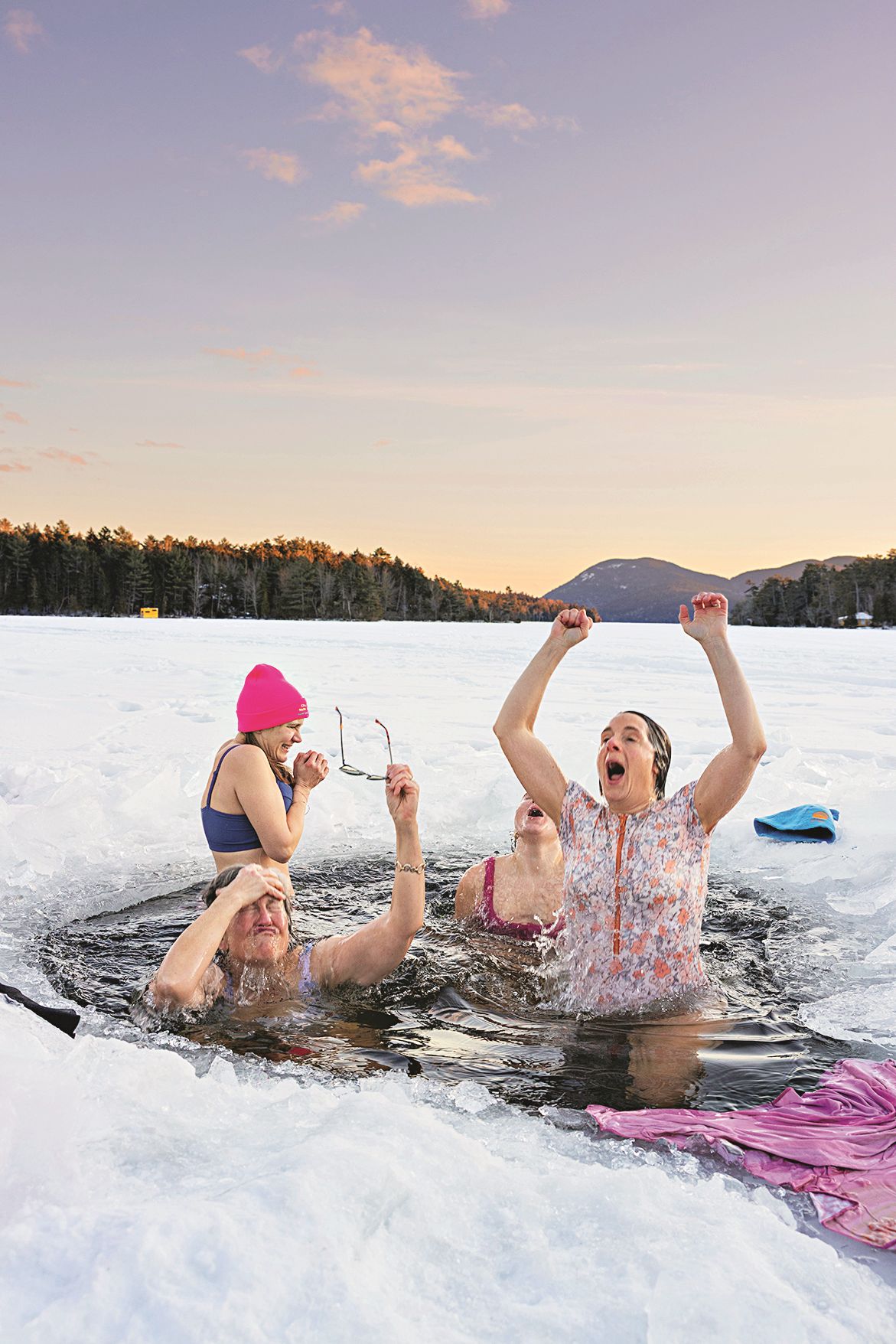
Taking the plunge at Long Pond.
©KATHERINE EMERY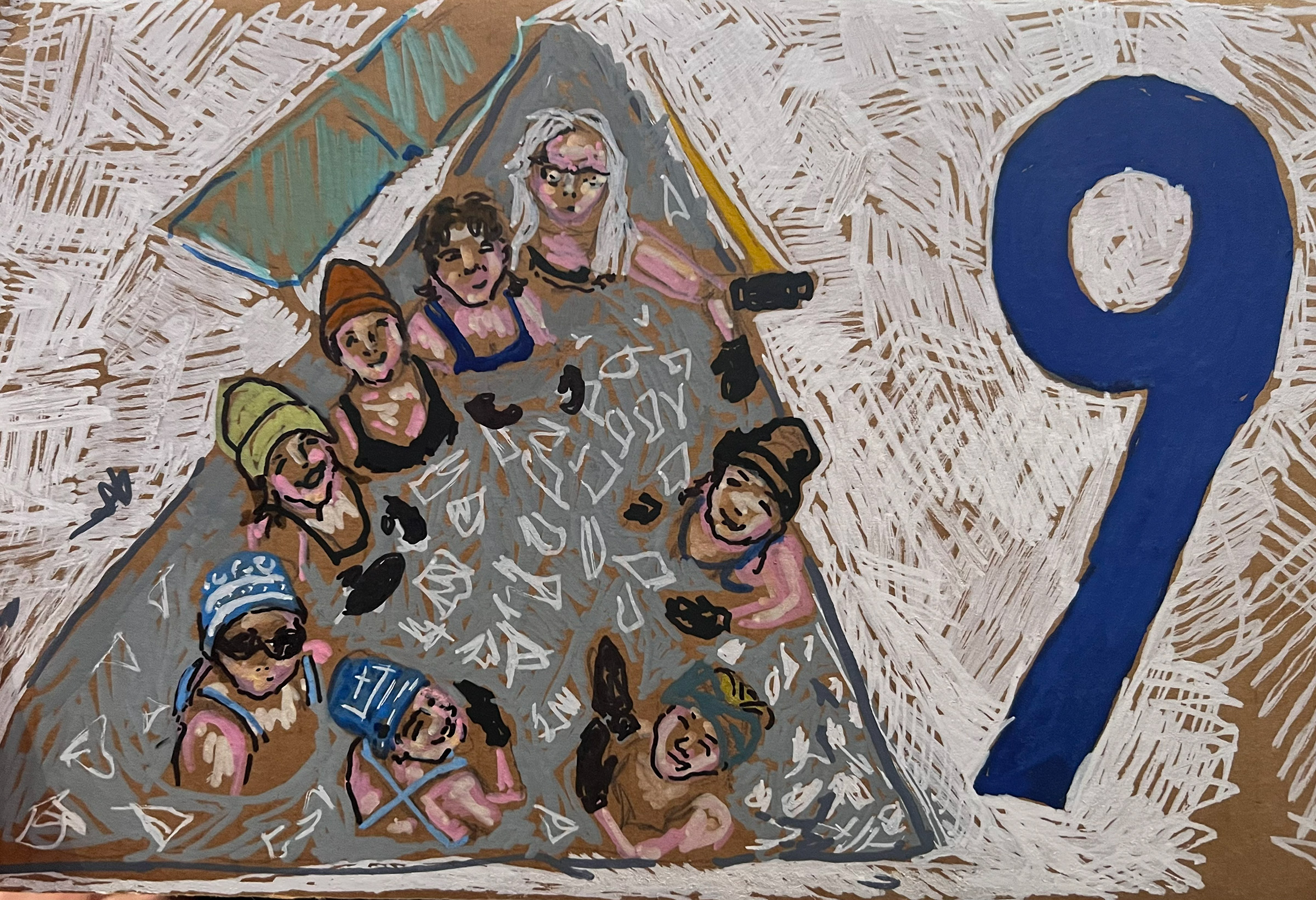
Some years, the group has dipped every day in March. Heidi Turner has documented those daily outings with a series of original artworks.
COURTESY OF HEIDI TURNERA group of dippers returns from a wintry plunge in Acadia.
©KATHERINE EMERYAn ice fishing shack on Long Pond.
©KATHERINE EMERYMariah Reading and Gail Gladstone, two of the group’s founders, use a sledgehammer and an ice saw to create an ice hole for dipping at Long Pond.
© KATHERINE EMERYTaking the plunge at Long Pond.
©KATHERINE EMERYSome years, the group has dipped every day in March. Heidi Turner has documented those daily outings with a series of original artworks.
COURTESY OF HEIDI TURNERAs we walked into the surf at Sand Beach, I couldn’t help but feel — with all the squealing and laughing — like we were a group of giddy schoolgirls playing hooky. At one point, standing and facing the Atlantic Ocean, we all raised our gloved hands to the sky and cheered. A couple of women dunked completely underwater. And then did it again. I looked at them with wild eyes, in awe of their confidence. I walked out to my waist and stood for maybe a few minutes. Then once again, I headed back before the others.
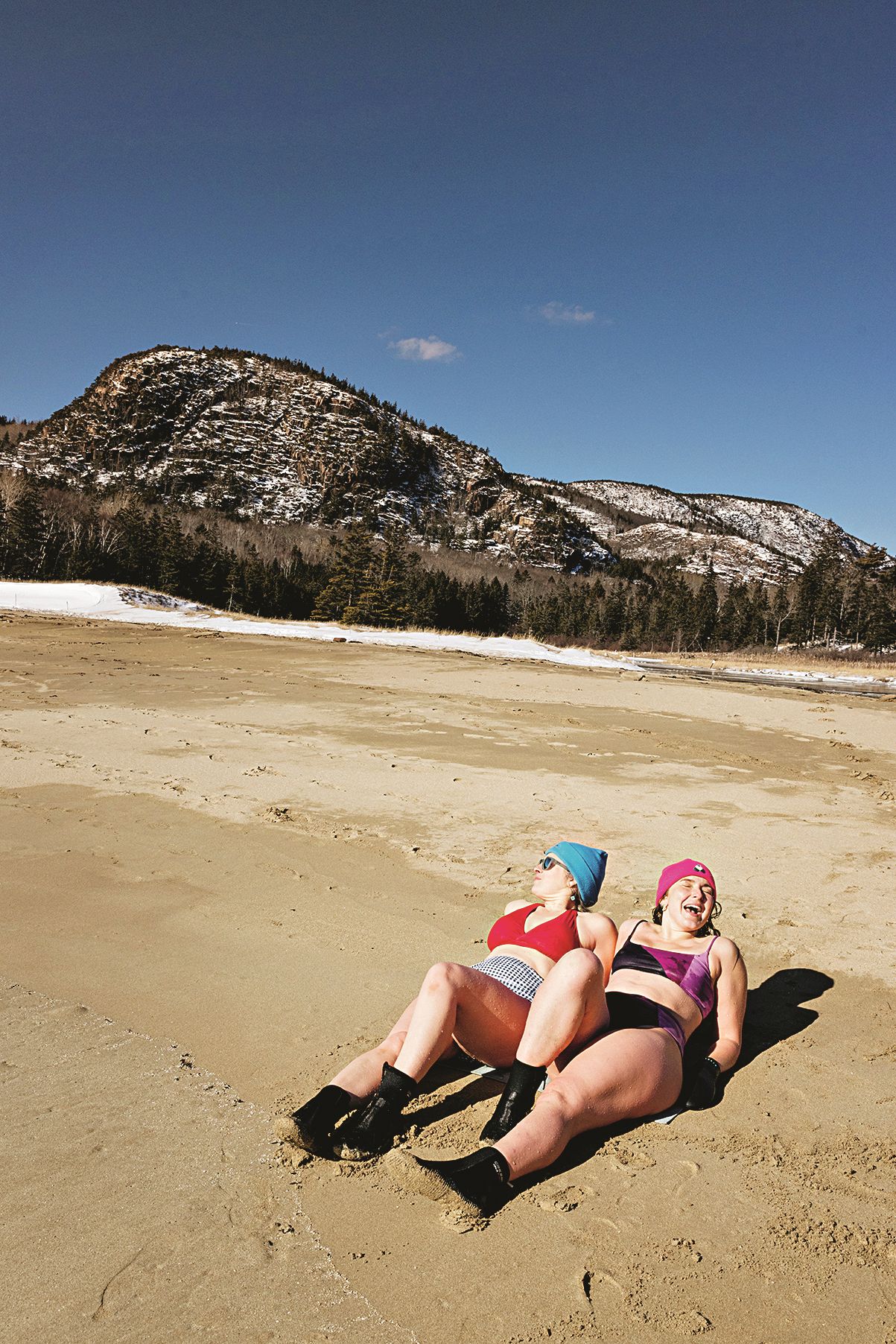
Warming in the sun after a midday dip at Acadia’s largest sandy beach, fittingly called Sand Beach.
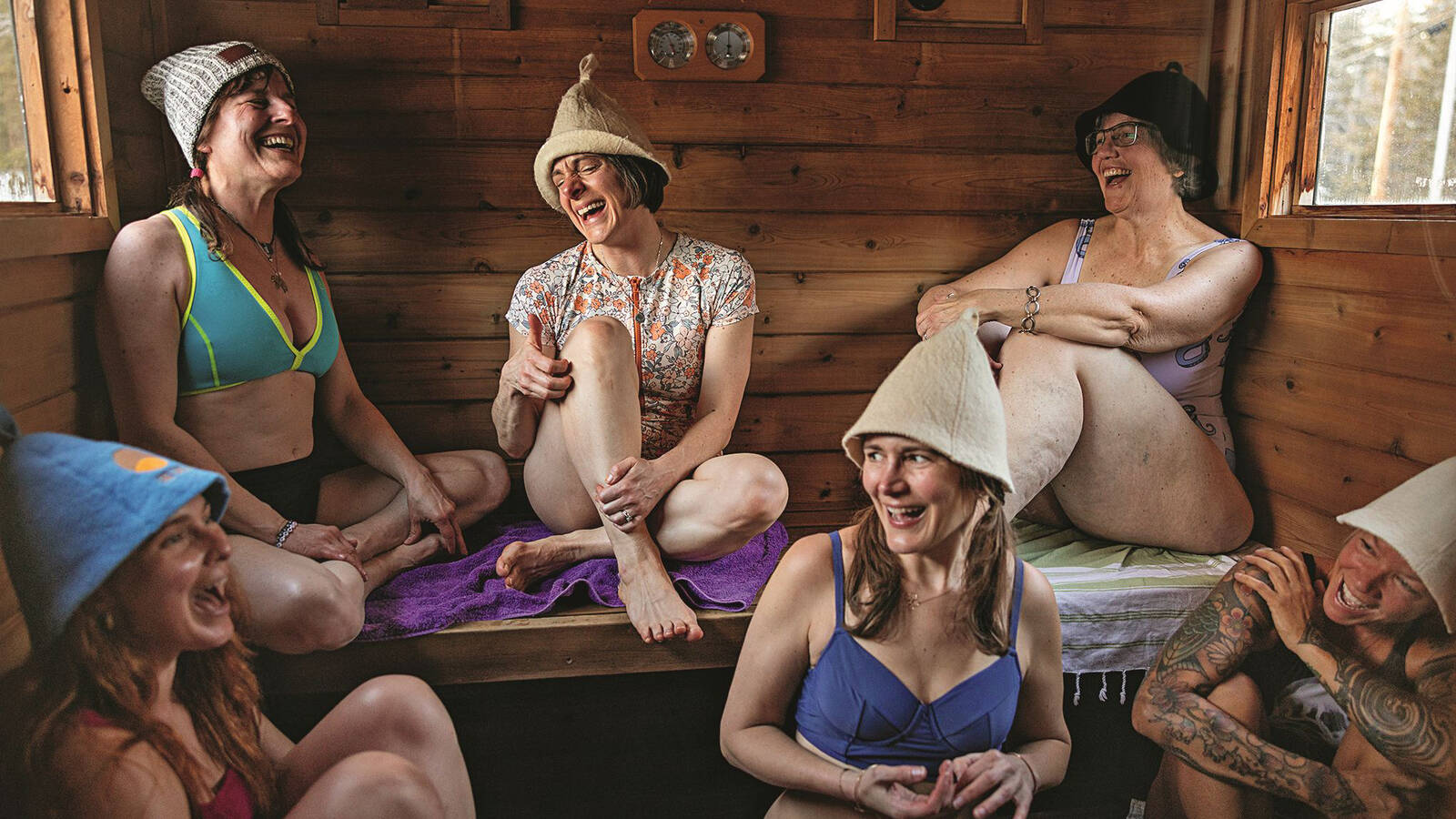
©KATHERINE EMERYOn the beach, under towels or parkas or ponchos, we peeled off our bathing suits, pulled on dry clothes and then drove to Huntsman’s house for a late lunch. She’d made a red lentil curry soup, Beckett brought a salad, and Aripotch brought brownies made from sweet potatoes, each with two tiny pink nonpareils on them. (They were on theme; use your imagination.) The sunlight-filled home was cozy, and nine of us sat around a long dining table, engaged in a meandering conversation. After lunch, we drifted to the living area, where Beckett sat on the sofa knitting herself a gray sweater. I learned that some dippers have formed splinter groups — birders, writers, readers, sewers and felters. I kept hearing that the winters are so cold in Maine, and the days so short, that everyone has to have a winter project. These women had many.
In the late afternoon, some of the lunch crowd and a few others drove to Long Pond. The 4-mile-long glacial lake, which sits mostly inside the park, is a popular spot for summer swimming and paddling. By this point, my body felt exhausted, as it does after a hard workout. But I had my eyes on the prize: A group of women, including some dippers, had purchased two mobile saunas — to extend their time together after dips and also to rent out to folks in the community — and one would be parked at our final destination, steps from the lake. The thought of immediate heat after our last dip of the day made the idea of freezing water much more palatable.
There are birthday dips, lunchtime dips and spur-of-the-moment dips. Sometimes they dip in tutus.
Long Pond, which was frozen over, was dotted with bright green and yellow fishing shacks. We hit the sauna first, and when we were sufficiently steamy, we ventured out to the water. The day before, a few women had made a hot tub-sized hole in the ice near the shore with a sledgehammer and an ice saw. Shanna, who had taken to cold water like the Mainer she is, entered first and had to break up a thin layer of ice that had formed overnight. I followed, cautiously lowering half my body into the ice hole. In the water, we held hands and made noise, and it felt like a party. But every second, I was thinking about the moment I’d return to the sauna. After the first person made a move to exit, I scrambled onto the ice and toward the warmth, steam rising off my body. We barely had time to shiver before pulling off our booties and stepping inside.
ABOUT THE PHOTOGRAPHER
Enveloped by dreamy heat, we chatted about travel and dogs and significant others and bathing suits. As my body warmed, I realized how much I’d enjoyed the day of dipping and laughing and freezing and thawing. I’d been accepted and supported almost immediately — not because of the length or depth of my dips, but because I was there, being me. And that felt good.
Yet I could also tell I’d been holding back. I consider myself pretty adventurous, but I tend to be sensible and deliberate in my risk-taking. (Dunking in near-freezing water? Not sensible.) The part of me that’s silly and impulsive often gets overruled. Plus, I’m an introvert — motivated more by a force on the inside than anything outside.
As the conversation started to wind down and the women talked about heading home shortly, I realized I wasn’t quite ready to call it a day. I enlisted Shanna, and we walked back to the water hole, glowing in the setting sun. She waited on the ice as I slipped into the water one last time. Before I knew what I was doing, I quickly went under, still wearing my winter hat, and sprung up frantically. I gasped for air and shrieked and pulled myself out of the hole, exhilarated and freezing.
When we walked back into the sauna, the conversation stopped for a moment. One of the women turned to me and said, “Oooh, the braids are wet!” Another: “Woohoo!”
Reading added sage oil-infused water to the rocks on the sauna stove, and a light mist swirled into the room. After dipping and recovering over the course of 12 hours, my shoulders finally fully relaxed, and a sense of calm washed over me. With nothing left to psych myself up for, I closed my eyes and took in a deep breath of steamy air. Then I exhaled, slowly, feeling happy and brave and warm.
About the author
-
 Melanie D.G. Kaplan Author
Melanie D.G. Kaplan is a Washington, D.C.-based writer. Her first book, "Lab Dog: A Beagle and His Human Investigate the Surprising World of Animal Research," was published in 2025. Learn more at melaniedgkaplan.com.

-
Press Release
Atrocious Reported Changes to the ESA Could Threaten Extinction to Park Wildlife, Wild Nature
"This memo appears to suggest that it’s no longer the purpose of the ESA to ensure animals such as grizzly bears, North Atlantic right whales, or Florida panthers are protected"…
-
Press Release
First Mining Claims Filed in Lands Cut from Bears Ears National Monument
"National park units and their surrounding landscapes are no place for energy development, but outdated laws elevate mining above all other uses on these lands. We will continue to fight…
-
Press Release
Groups File Injunction to Stop Development at West Potomac Park
“West Potomac Park is treasured green space and we will not stand for the unlawful destruction of public lands that belong to all of us."