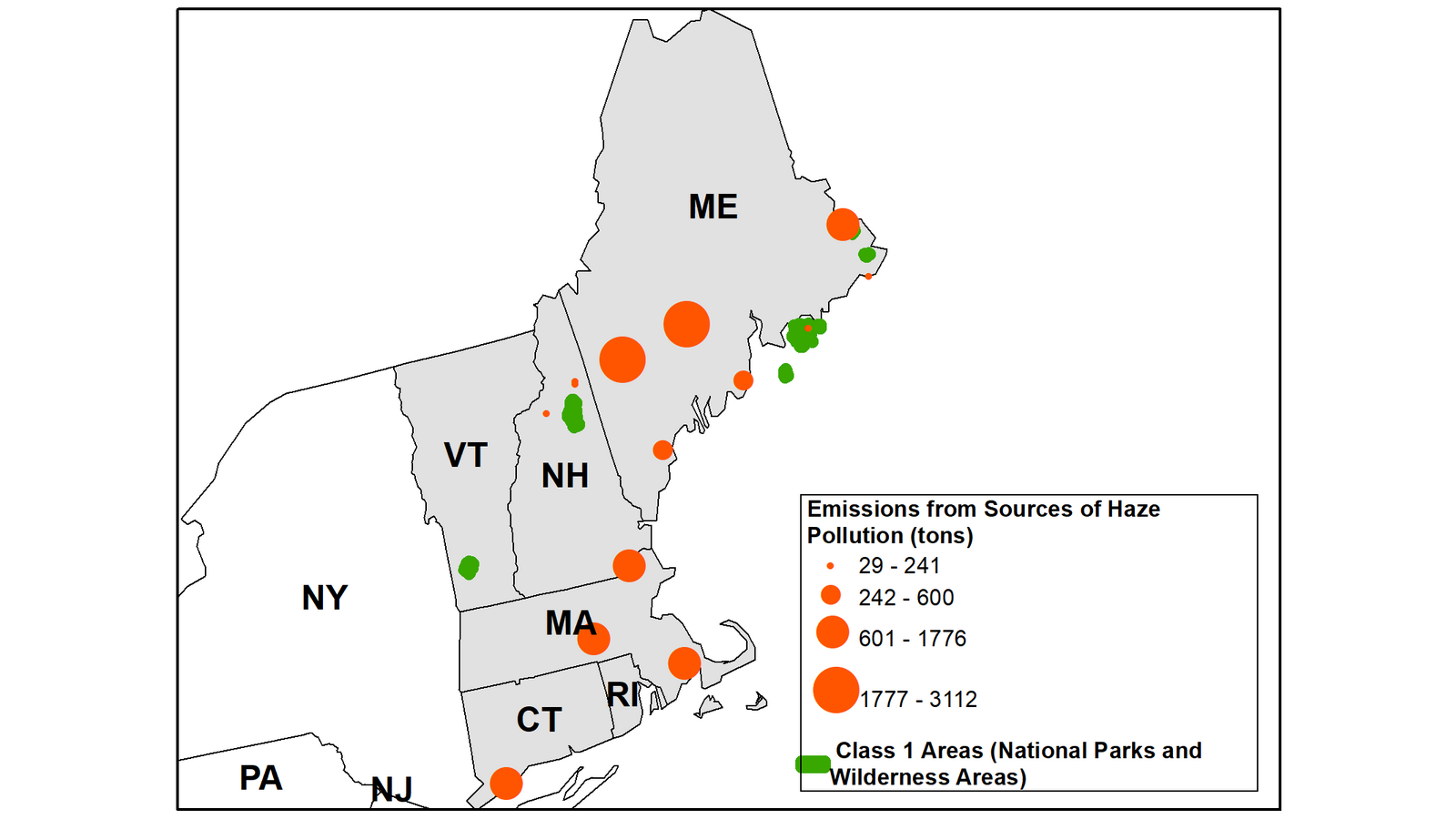
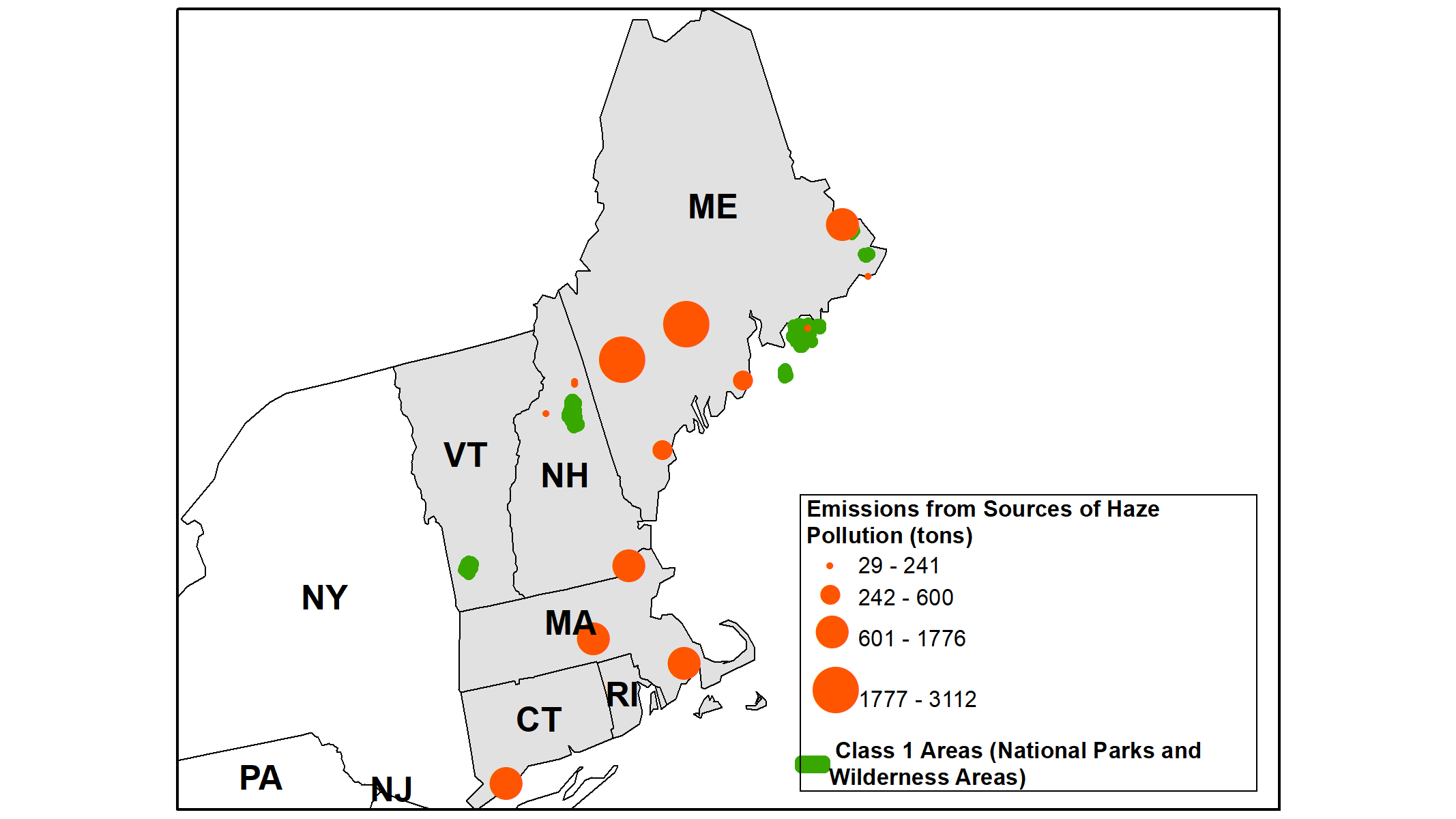
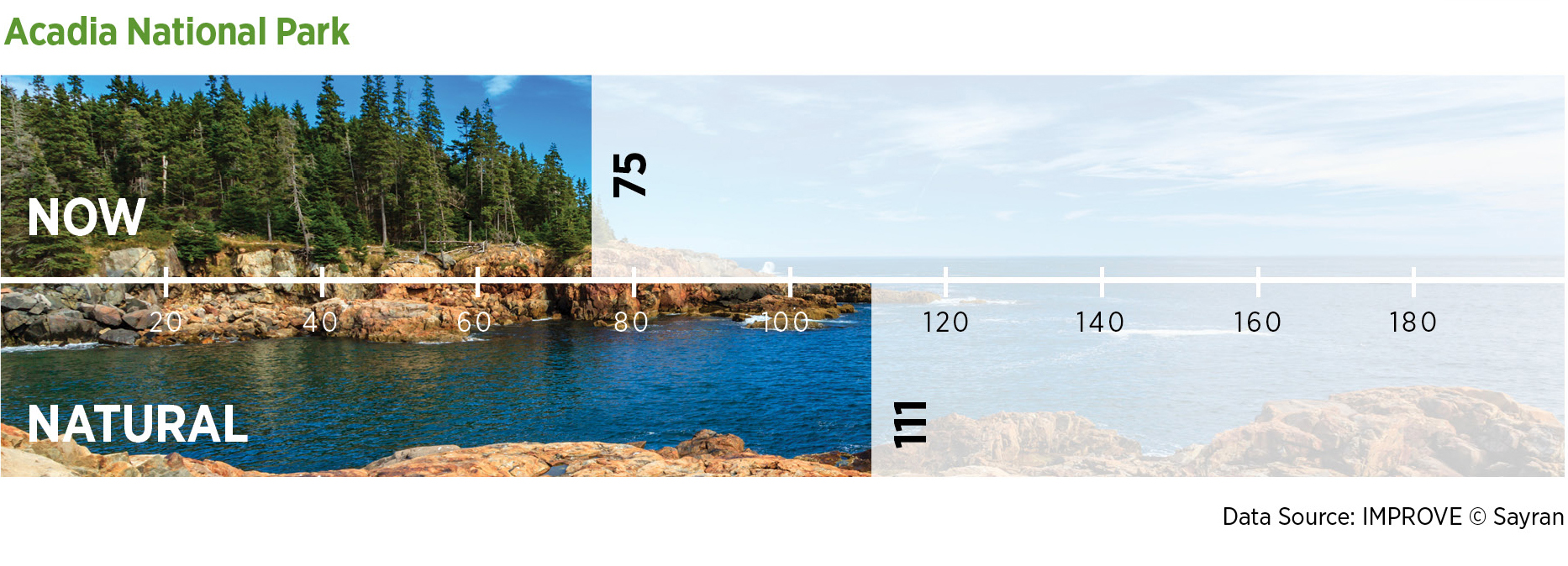
Strong state regional haze plans are critical to restoring clean air and clear skies for beloved places in the Northeast including Acadia National Park, Moosehorn Wilderness Area, Great Gulf Wilderness Area, Lye Brook Wilderness, and the Presidential Range – Dry River Wilderness Area.
Average Visibility in Miles
There are 156 national parks and wilderness areas designated under the Clean Air Act as “Class 1 areas,” meaning they have specific air quality protections. However, most national parks experience poor air quality and diminished visibility from industrial facilities, coal-fired power plants and vehicle pollution.
The Regional Haze Rule is intended to cut pollution harming skies in these special places. Every ten years, each state must develop a plan to reduce haze-causing emissions from pollution sources within their state. The state agencies then send these plans to the U.S. Environmental Protection Agency (EPA) for approval or disapproval.
WHAT’S POSSIBLE
In the first round of regional haze planning over fifteen years ago, significant emissions reductions were achieved thanks in large part to advocacy efforts for strong state plans. 1.4 million tons of haze pollution (nitrogen oxides, sulfur dioxide, and particulate matter) each year were eliminated, along with 79 million tons of other air pollution (carbon dioxide, methane, and nitrous oxide) as park-polluting facilities cleaned up or retired.
WHAT’S AT STAKE
The second round of haze planning is currently in progress, and many states around the country have proposed haze plans that do not cut emissions or fail to make reasonable progress in reducing haze pollution in our parks. Haze plans that allow polluters to go unchecked jeopardize our parks and wilderness areas, along with sensitive ecosystems, public health, and local tourism economies.
ENVIRONMENTAL JUSTICE
Haze pollution is also an issue of environmental justice, as many haze polluters are near already overburdened and disproportionately harmed communities. NPCA advocates to states and the EPA that haze plans ought to mutually benefit both parks and communities that have long suffered from the brunt of unhealthy air pollution.
-
General
-
- NPCA Region:
- Northeast
-
-
Press Release
Tribal Nations and Conservation Groups Sue To Protect Mojave Desert Water from Cadiz Project
The Cadiz project, also known as Mojave Groundwater Bank, is a proposed groundwater mining project that would privatize, pump and unsustainably export billions of gallons of water a year for…
-
Press Release
Advisory Council on Historic Preservation Proposes Weakening Protections for Parks, History, Tribal Resources
Gutting Section 106 regulations would weaken protections for public lands, weaken Tribal consultation requirements, and limit public input on development impacting…
-
Press Release
New Poll Shows American Public, Hunters Largely United on National Park Wildlife Protection
The NPCA poll, conducted by YouGov among 1,000 Americans and 300 hunters, examined perspectives on issues including the Endangered Species Act, Congressional investments to reduce wildlife-vehicle collisions in park landscapes,…