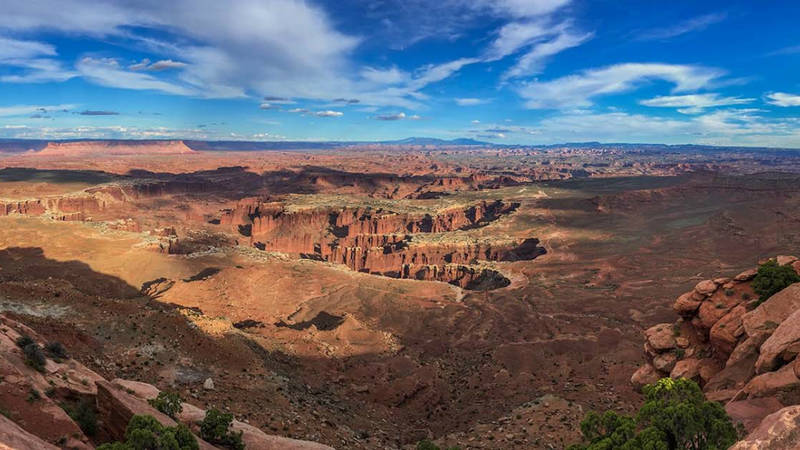
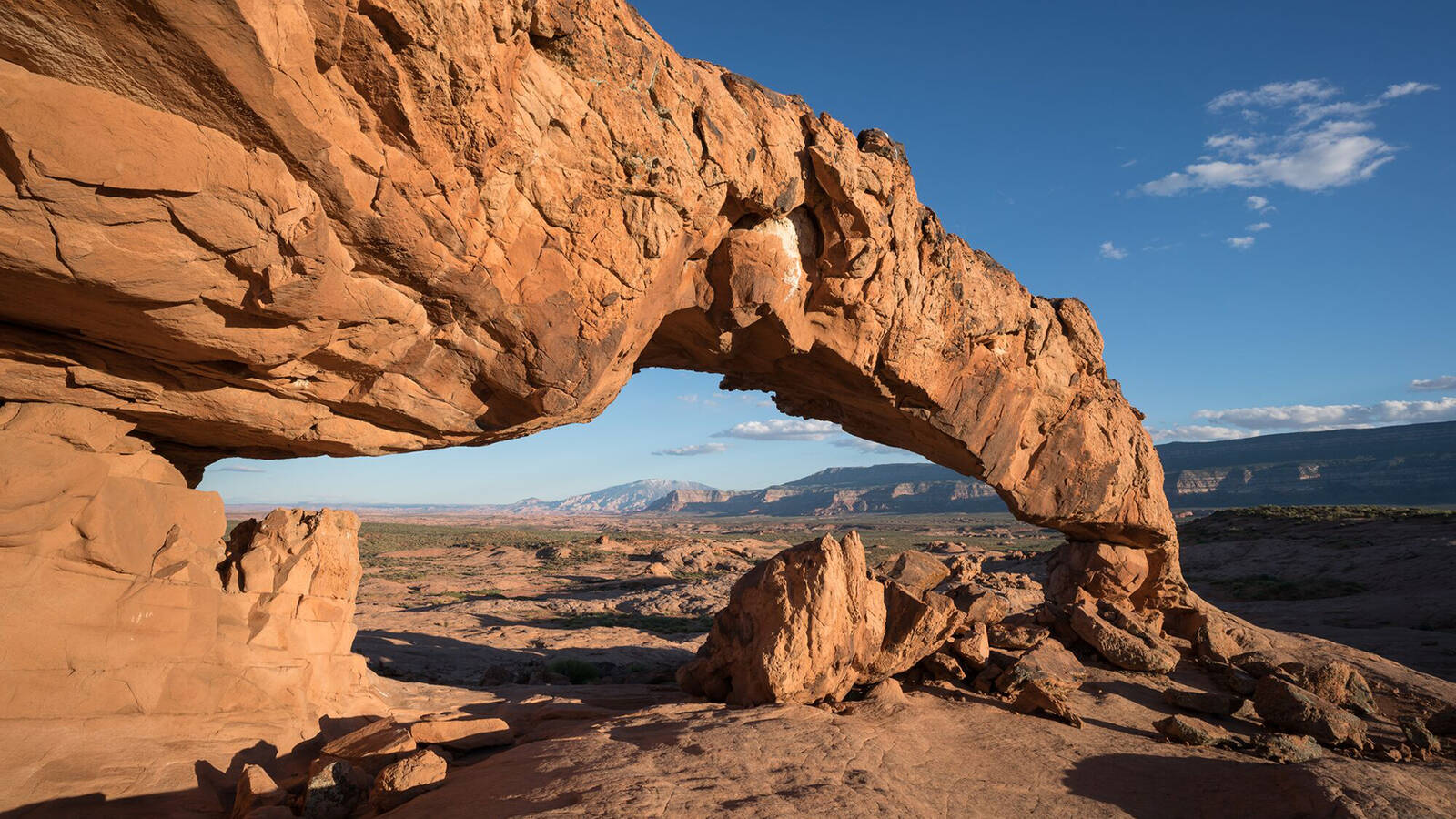
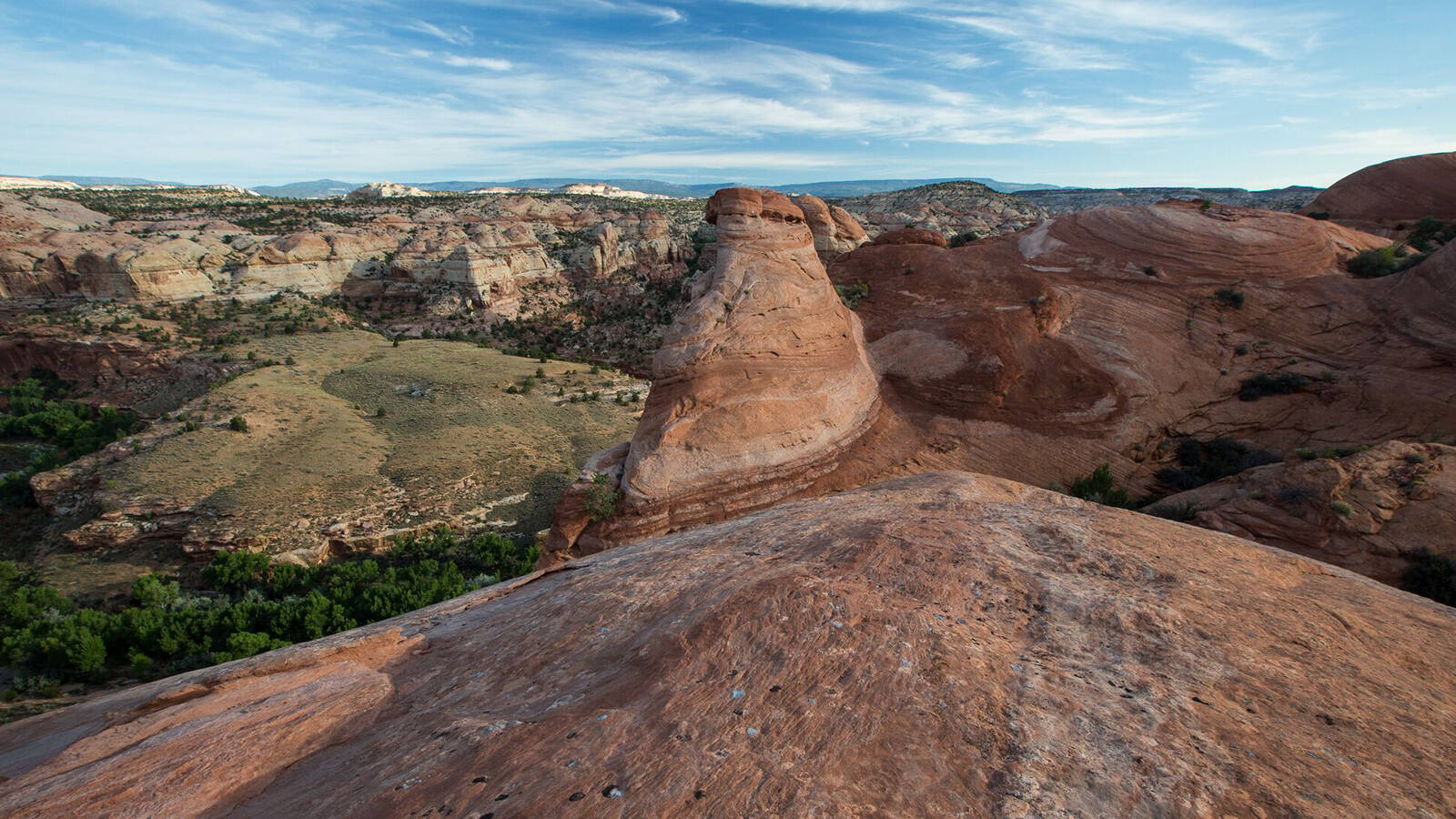
With few signs and no detailed map to guide us, we drove down the geologic Grand Staircase — which is no longer fully protected, putting treasured natural and cultural resources at risk.
In September, we drove out to visit Grand Staircase-Escalante National Monument, to see what has changed since the monument’s boundaries were slashed by over 90% earlier this summer. We wanted to understand what was happening on the ground.
As campaign directors for NPCA’s Southwest Region, we’ve spent years learning about the landscape of Southern Utah, including the incredible features protected in this monument. Grand Staircase-Escalante was designated in September 1996, so we should have been celebrating its 30th anniversary.
Cases Moving Through the Courts
Specifically, we should have been applauding three decades of protection of geologic wonders and sacred cultural sites, dark night skies and deep quiet that visitors come from across the country to experience. We should have been clapping for the restoration of a vital river corridor through the desert that helps sustain elk and mule deer — or the scientific discovery of over 600 bee species and paleontological wonders of dinosaur bones found here. We could have celebrated the growth of a sustainable tourism economy in one of the most remote places in our country — one that is also part of a larger connected landscape that ties together five national park sites: Capitol Reef, Bryce Canyon, Glen Canyon, Natural Bridges and Canyonlands.
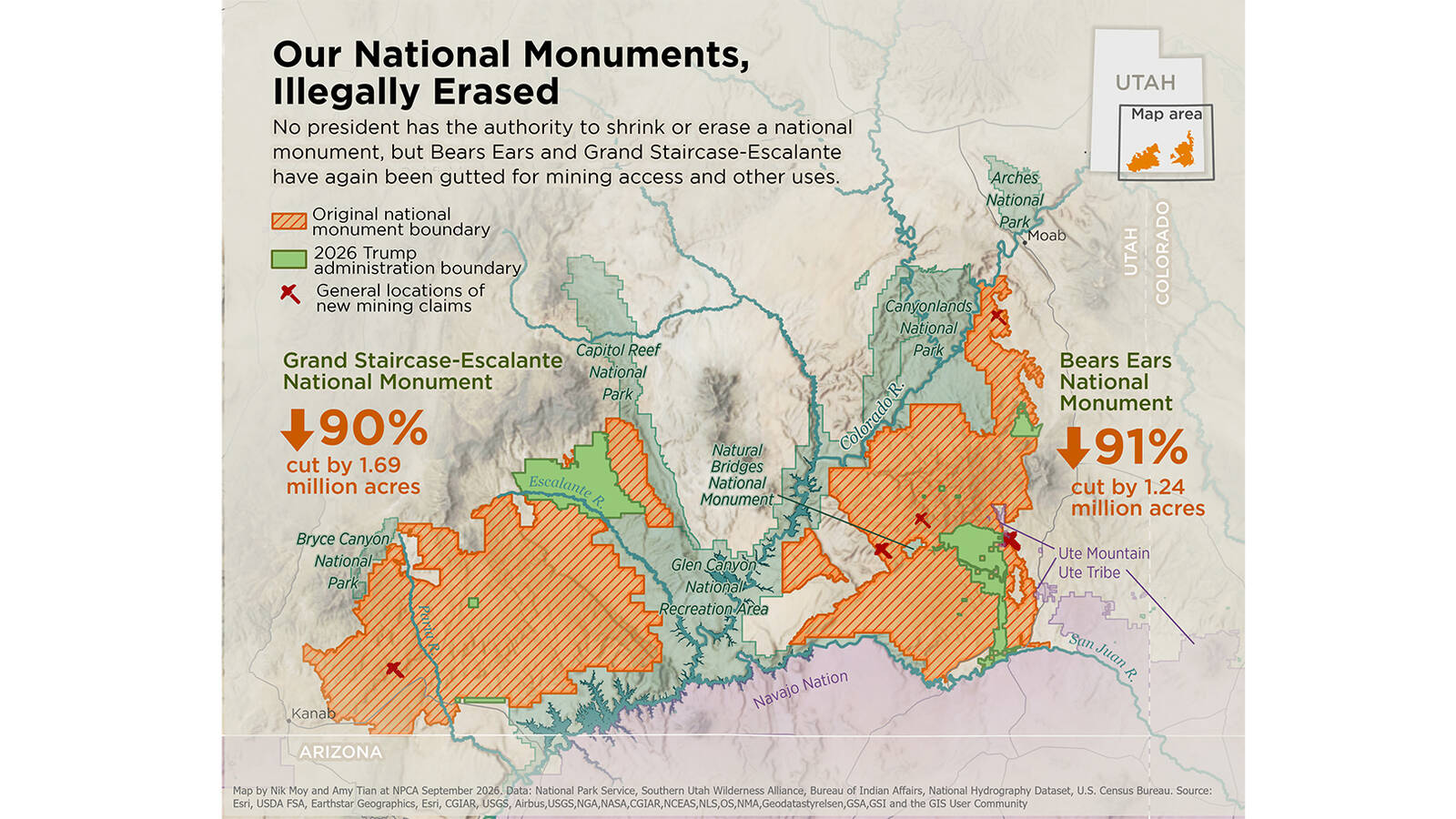
Instead, we traveled through a landscape caught in an ideological tug-of-war. On Sept. 11, 90% of Grand Staircase-Escalante National Monument was opened to new mining claims and oil and gas leasing. This is the land that President Trump illegally removed from the monument two months prior with a stroke of his pen.
In a proclamation signed July 13, Trump slashed approximately 1.87 million acres from Grand Staircase-Escalante National Monument. After the reduction, only 181,541 acres remained in two units: the Canyons of the Escalante Unit and Kaiparowits Horizon Unit.
To the east, Bears Ears National Monument roughly lost 1.36 million acres in a similar proclamation and was reduced to 121,100 remaining acres. The proclamation also attempted to dismantle the groundbreaking Bears Ears Commission and co-stewardship structures for Tribal Nations to have a leading role in managing their ancestral lands.
These proclamations set a 60-day clock on new mineral development, after which withdrawn lands previously protected from development became eligible for new mining claims.
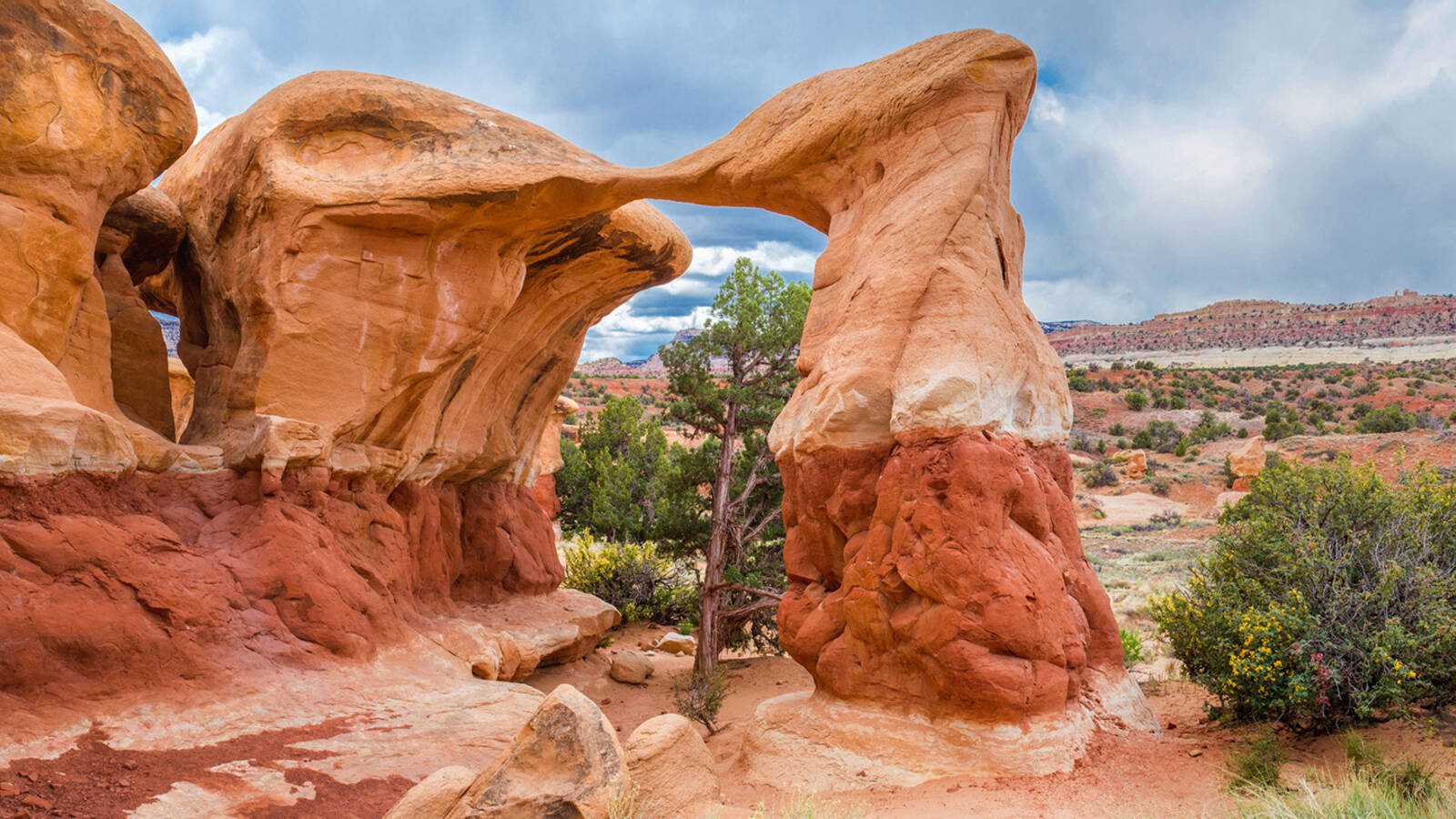
Behind those numbers of acres are the geologic treasures, irreplaceable cultural sites, fossils and intact ecosystems with rare plants and bees — some found nowhere else on earth — that are now at risk.
No president has the authority to do this. NPCA remains firm on this fact: The Antiquities Act of 1906 authorizes presidents to designate national monuments, but it does not give them the power to shrink or erase them. NPCA continues to challenge the proclamations in court, but the threats are already underway.
What’s In, What’s Out
At Grand Staircase-Escalante, we wanted to see for ourselves where the new lines had been drawn. This wasn’t easy, because the first challenge was finding a map with enough detail to navigate our way. We stopped at the Interagency Visitor Center in Escalante where we learned there are few staff to help visitors, after cuts to the federal agencies last year. The Cannonville Visitor Center is closed indefinitely. So, we drove on, realizing we were journeying through land on the edge of change.
As we traveled miles through the national monument’s namesake geologic feature, a series of five “steps” made of colorful sedimentary rock layers rising about 5,500 feet to create a Grand Staircase, we noted that this stony layer cake of earth’s history was now almost entirely outside the current boundaries. The Grand Staircase extends 100 miles, stretching from the plateau and pink hoodoos of Bryce Canyon and stepping down across the land removed from the monument toward the Grand Canyon.
What is Grand Staircase-Escalante National Monument without its Grand Staircase? What will become of the view beyond Bryce’s hoodoos? Will it become riddled with coal mines and industrial development?
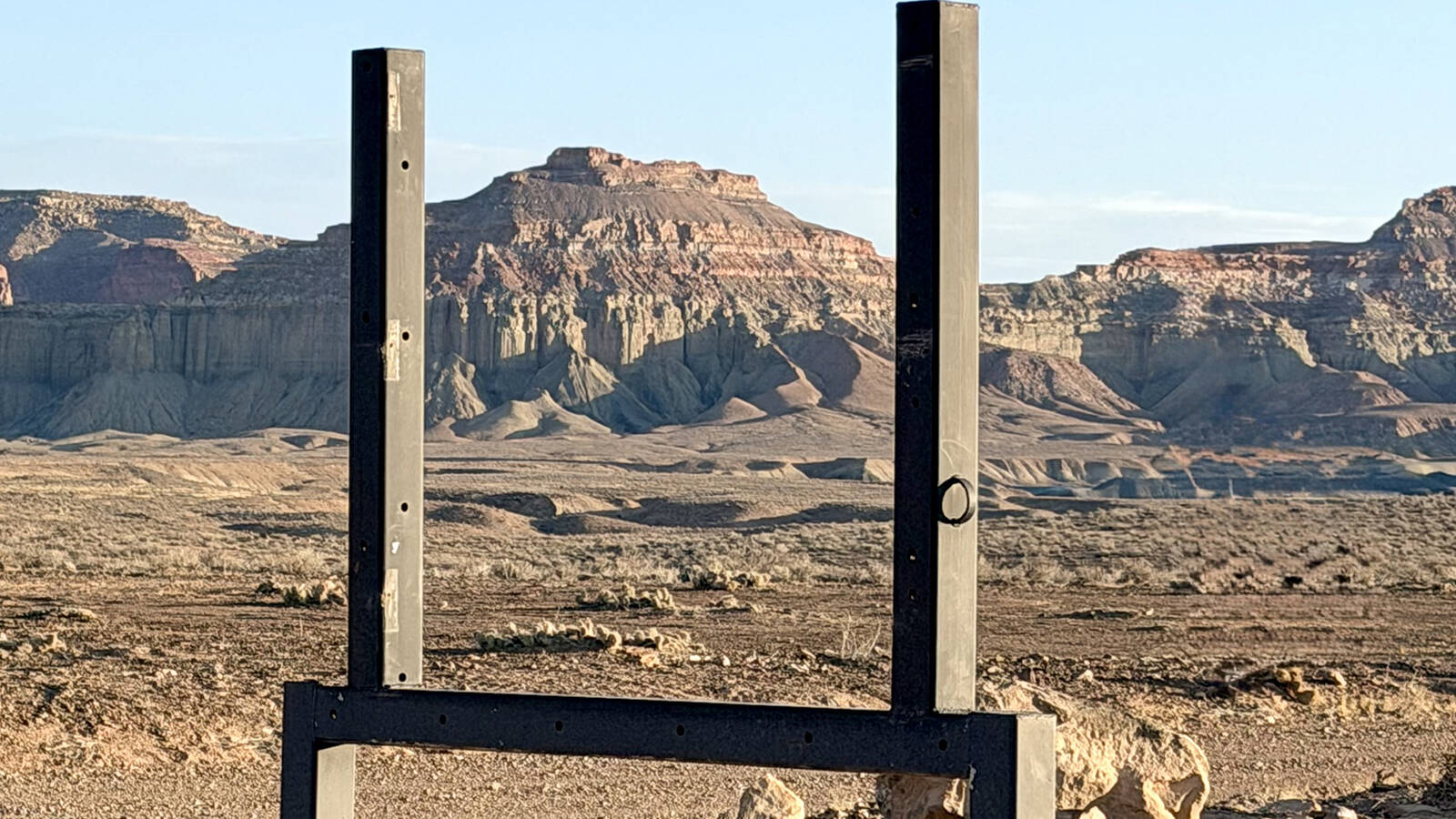
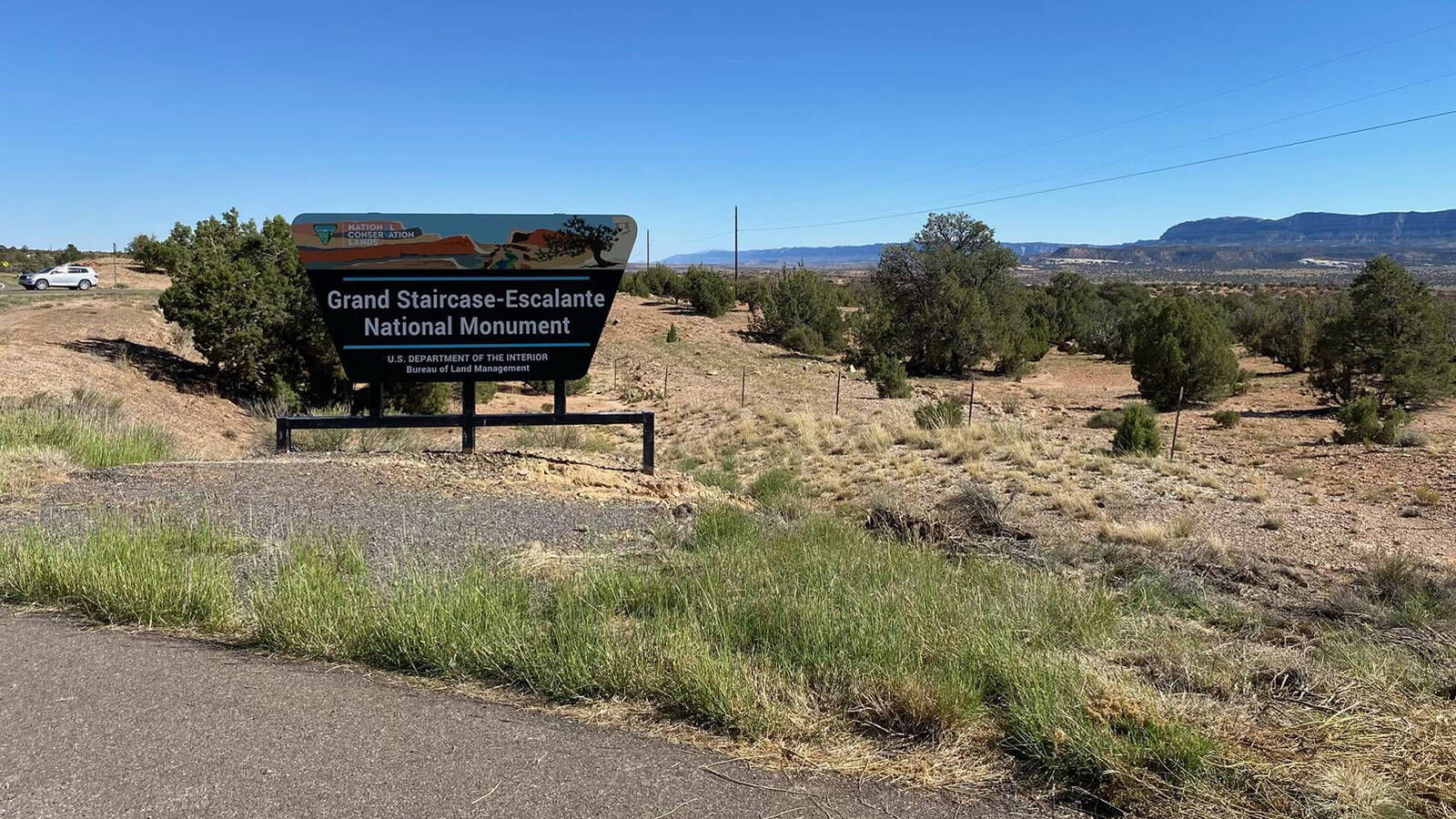
As we continued, we were surprised to see a sign for the monument standing alongside the road near the turnoff to Hole in the Rock Road. Most of the area to the south is no longer within the monument, having been reduced to the Kaiparowits Unit, a small square of land encompassing a paleontological site and two disconnected slivers of land added to the monument by Congress.
It was the first signage we had seen, and it struck both of us as unusual, given how quickly the Bureau of Land Management took down monument signs at Bears Ears, including those displaying the seals of the five Tribes of the Bears Ears Commission that the proclamation attempted to abolish.
As we drove by, we wondered what would become of this place. We reminisced about past family trips, squeezing through the sinewy red slot canyons — aptly named Spooky and Peek A Boo — and sloshing through the striped magnificence of Zebra Slot Canyon in early spring.
We’ve each seen similar treasures at Bears Ears — and they, too, are at risk of destruction by the mining operations being considered for these landscapes.
Quickly Emerging Mining Threats
On Sept. 11, nearly 3 million acres of land formerly protected under these two national monuments were opened up to mining and oil and gas drilling.
That very day, 16 new mining claims were filed on lands withdrawn from Bears Ears. Less than a month later, more than 70 new claims have been staked, including in Lockhart Basin, a rugged landscape known to contain Indigenous cultural and historic artifacts and that directly borders Canyonlands National Park. Other claims are located to the north and west of Natural Bridges National Monument, Utah’s first national park unit and the world’s first International Dark Sky Park.
In the lands now removed from Grand Staircase-Escalante, two valuable types of deposits sit below the surface — but extracting one poses great risk to the other.
Once a swampy, wet habitat where dinosaurs lived, Grand Staircase-Escalante’s Kaiparowits Plateau is a fossil hotspot. It’s no surprise, then, that the area holds massive coal deposits. That combination is precisely why advocates have long sought to protect these irreplaceable fossil beds and public lands from extraction. The Alton coalfield sits just outside Bryce Canyon National Park, and has coal deposits suitable for strip mining, which would be highly destructive to the natural environment. Hardrock mining has always been a boom-and-bust industry. The rugged landscape of Grand Staircase-Escalante and lack of road infrastructure to access and transport equipment and minerals has meant this landscape has so far been largely shielded from mining.
However, that may be changing.
The current administration’s support of fast-tracked, irresponsible mining means they are unlikely to block industrial development near newly staked claims in both monuments. That could include drilling, bulldozing and clearing land of vegetation, creating waste piles, and building and widening roads for increased truck traffic.
We’ve seen just how quickly new speculative claims were staked, and a claim doesn’t have to be fully developed to do harm. Mining claims effectively lock up land and close it off from other uses, unless the monument lands are reinstated and the claims invalidated.
NPCA remains firm on this fact: The Antiquities Act of 1906 authorizes presidents to designate national monuments, but it does not give power to shrink or erase them.
In the lands just removed from Bears Ears, 20 of the new claims were filed by Kimmerle Mining, a company that also attempted to file seven illegal claims on lands withdrawn from Bears Ears just one day after the downsizing. Kimmerle Mining also filed claims within Bears Ears during the first Trump administration’s reduction of the monument in 2017, undertaking exploratory drilling in search of uranium and vanadium.
The ability to do this can be attributed to the 1872 Mining Law, written more than 150 years ago when mining was primarily carried out with a pickaxe and shovel, a far cry from today’s more destructive industrial processes. NPCA is working to reform this law.
A New Threat in Congress
Mining claims aren’t the only threat right now. Some members of Congress have been working on parallel plans to open the landscape to more destructive uses, such as off-road vehicles or grazing, and development.
There have been controversial efforts in Congress to use the Congressional Review Act to try and overturn both the management plans for Bears Ears and Grand Staircase-Escalante. These plans determine how the landscapes are used and protected and, if overturned, would cause uncertainty for the landscape and prevent the Bureau of Land Management from developing similar plans in the future. Years of public and Tribal input shaped those plans. Overturning them could permanently erase those efforts and their resulting decisions.
But there is good news. NPCA, Tribes and partners worked to mobilize advocates when a resolution was introduced to throw out Grand Staircase-Escalante’s management plan. That resolution did not pass Congress — meaning the management plan remains intact for now, a victory for public land advocates across the country.
If a similar threat to the Bears Ears management plan is introduced in Congress, NPCA and advocates will be prepared to fight it.
A Journey’s End with Renewed Commitment
We ended our journey through Grand Staircase-Escalante at Hell’s Backbone Grill & Farm in Boulder, Utah. There, we sat down with two of Grand Staircase-Escalante National Monument’s most dedicated supporters — Blake Spaulding, one of the owners of the restaurant and Boulder Mountain Lodge, and Jackie Grant, executive director of Grand Staircase Escalante Partners.
The four of us recommitted to fighting for the monument’s future, alongside the Tribes and Indigenous communities who have been connected to these landscapes since time immemorial.
Nothing about these monuments is settled, and NPCA will continue to defend them in the courts and in Congress. And we know we aren’t alone — we stand with a chorus of determined voices from coast to coast and right here in Utah, where two-thirds of voters surveyed in a recent poll said that greater protections should be restored to all of the area that was previously included in the two monuments. We’ll continue to follow the lead of the five Tribes of the Bears Ears Inter-Tribal Coalition and the six Tribes of the Grand Staircase-Escalante Inter-Tribal Coalition, working alongside our partners and local residents to advocate for the protection of these valued monuments and the connected national parks.
About the authors
-
 Cory MacNulty Campaign Director, Southwest Region, Southwest
Cory MacNulty’s role as Campaign Director for the Southwest Region of National Parks Conservation Association (NPCA) is to serve as a lead strategist in protecting the scenic views, air and water quality, natural quiet, dark night skies and visitor experiences in the national parks of the Southwest Region with an emphasis on the 13 national parks in Utah.
-
 Erika Pollard Campaign Director, Southwest Region, Southwest
Erika is a campaign director in the Southwest region. She focuses primarily on issues concerning the national parks in Utah.


-
Blog Post
FAQ: Sell-Off Efforts at Yosemite
We answer frequently asked questions about the administration’s proposal to sell off a piece of the park for private development.
-
Press Release
In Less Than a Month, Mining Claims Filed in Bears Ears Already Triple the Total Number Filed During Previous Trump Reduction
“With 72 mining claims staked on lands withdrawn from Bears Ears over the last three weeks alone, the threat of a modern-day mineral rush has arrived at one of our…
-
Blog Post
Postcards from Roadless Areas
What do designated roadless areas look like and what do they mean to national parks? NPCA colleagues share their experiences from walks through three roadless woods.