- State: CA
- NPCA Region: Pacific
- Est. Date: 1908
Air Quality Conditions
View the Polluted Parks ReportVisibility
Unsatisfactory
Health
Unsatisfactory
Nature
Unsatisfactory
Climate Change Threats
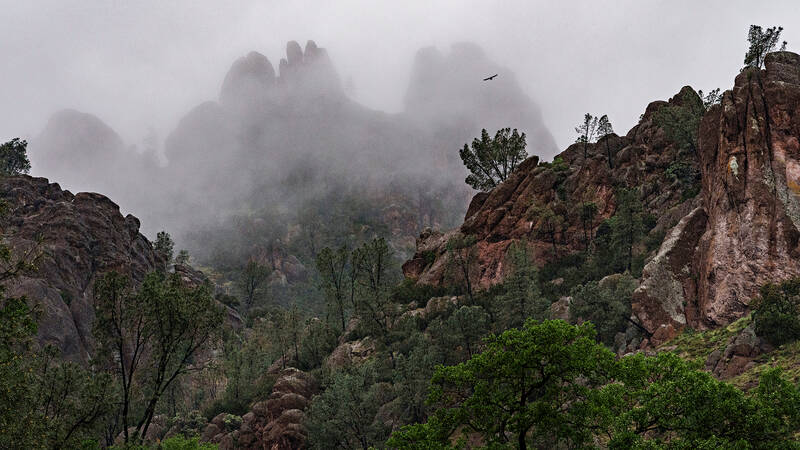
The jagged rocks at this park formed from the remains of an ancient volcano. This volcano used to be located about 200 miles south of its current location, but tectonic forces along the San Andreas Fault moved these rocks at a pace of a little more than half an inch per year over a period of 23 million years to what is now the national park. Today, these towering spires attract hikers and climbers, as well as falcons, golden eagles and California condors. The park also features grasslands, chaparral, forests and rare talus caves.
The Bee's Knees
Pinnacles is home to nearly 400 different types of bees, a higher density of bee species than any other known place in the world.
-
Magazine Article
Peak Parenting
The joys of hiking in Pinnacles National Park with — and without — a baby in tow.
-
Blog Post
9 Not-So-Cute Endangered Animals That Live in Our Parks
Celebrate Endangered Species Day with these curious critters

My Park Story
Greetings from Pinnacles National Park
My trip to Pinnacles was the first time in a long time I seized the opportunity to be out in nature, and I'm glad I had the chance. We spent the better part of our day on the main hiking trail up to the crest. We followed the trail at…
More about Pinnacles
-
Read more about Learning to Fly
Podcast Episode Learning to Fly Raptors such as peregrine falcons and California condors made the endangered species list decades ago, but thanks in part to monitoring and recovery programs in national parks, things have been looking up.
-
Read more about Your Favorite Park Photos and Stories
Blog Post Your Favorite Park Photos and Stories People around the country have shared some of their most poignant and intriguing moments in national parks on NPCA’s recently relaunched MyParkStory site.
-
Read more about Rock On: 11 Lesser-Known Geologic Wonders in National Parks
Blog Post Rock On: 11 Lesser-Known Geologic Wonders in National Parks From mysterious gliding rocks in Death Valley to fossils of some of the most ancient life forms in Glacier, here are 11 lesser-known geologic wonders—including a few personal favorites from Bruce Heise of the Park Service’s Geologic Resources Inventory program.
-
Read more about 9 Wildlife Success Stories
Blog Post 9 Wildlife Success Stories National parks provide critical habitat for a variety of animals—in some cases, they are the only places that threatened or endangered species have left to call home.
-
Read more about Getting the Lead Out
Magazine Article Getting the Lead Out Lead bullets still threaten the California condor, an icon at Pinnacles and Grand Canyon.
-
Read more about New Law Elevates Pinnacles National Monument to Become 9th National Park in California
Press Release New Law Elevates Pinnacles National Monument to Become 9th National Park in California Statement by Neal Desai, Pacific Region Associate Director, National Parks Conservation Association
Donate
Preserve Our Parks
Make a tax-deductible gift today to provide a brighter future for our national parks and the millions of Americans who enjoy them.
Donate Now