- State: FL
- NPCA Region: Sun Coast
- Est. Date: 1947
Air Quality Conditions
View the Polluted Parks ReportVisibility
Unsatisfactory
Health
Unsatisfactory
Nature
Significant Concern
Climate Change Threats
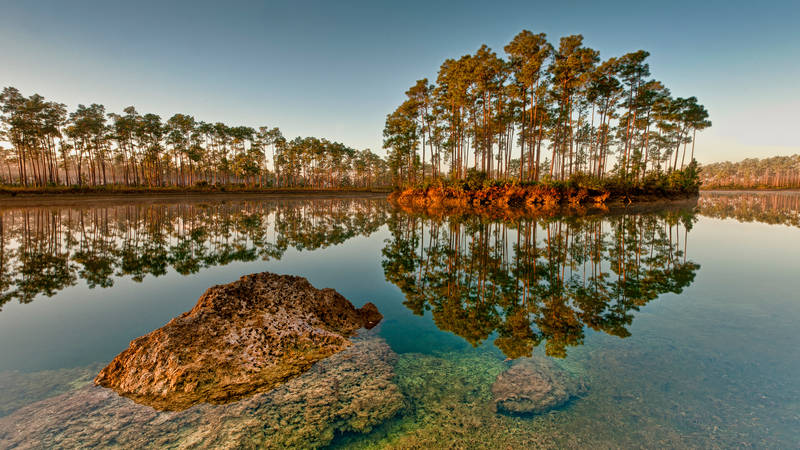
One of the largest wetlands in the world, this iconic "River of Grass" protects 1.5 million acres of subtropical wilderness in South Florida.
Its rare mix of salt and fresh water provides critical habitat for a variety endangered plants and animals, it serves as one of the most significant corridors for migrating species, and it is home to the largest mangrove ecosystem in the Western hemisphere. Visitors can access this marshy wilderness in short hikes off of the main park road or explore the western coast of the park by paddling along the stunning 99-mile Wilderness Waterway Trail. Though it may feel like a world away, this world-famous park is an easy drive from Miami.
Creature Feature: American Alligator
It's no secret that alligators are big. But did you know that an adult male can be up to 15 feet long and tip the scales at half a ton? In its lifetime, it might go through as many as 3,000 teeth, with new teeth replacing worn ones!
-
Magazine Article
Native Naivete
A nightmarish eel is invading the Everglades and gobbling up native crayfish, a keystone species that is oblivious to the destructive fish.
-
Press Release
Parks Group Opposes “Alligator Alcatraz” Detention Center in the Everglades
Floridians of every political stripe, including members of the Trump administration, have fought to make the Everglades the greatest environmental success story of all time. We must not risk all…

My Park Story
Greetings from Everglades National Park
Have you ever slogged through a slough? Until recently, we hadn't either. In fact, we hadn't ever really heard of doing that. Around the new year, my husband and I were longing for another National Park experience and thinking back on recent trips to the "more notable" parks like our…
More about Everglades
Filter By
-
Read more about Restore Fresh Water to Florida Bay in Everglades National Park
NPCA at Work Restore Fresh Water to Florida Bay in Everglades National Park Florida Bay is an estuary protected in large part by Everglades National Park. It has been plagued by problems from development upstream and starved for clean water. Now, years of work to save the bay could fall short if we don’t act to demand a better water management plan.
-
Read more about Protect Biscayne from Nuclear Expansion
NPCA at Work Protect Biscayne from Nuclear Expansion Plans to expand Turkey Point by adding two new nuclear units would make Turkey Point one of the largest nuclear power facilities in the country, in an area that is ground zero for sea level rise. The proposed expansion threatens our national parks, endangered wildlife, Everglades restoration, and the health of park water resources.
-
Read more about Fighting Florida's Untenable Alcatraz
Podcast Episode Fighting Florida's Untenable Alcatraz Should officials site an immigration detention center in the Everglades? Advocates say no way to Alligator Alcatraz and are working to close the destructive facility.
-
Read more about Parks After Dark
Magazine Article Parks After Dark National parks are offering a growing number of nighttime programs for visitors looking for novel experiences or those eager to avoid daytime crowds and rising temperatures.
-
Read more about Park Advocates, Community Leaders Applaud Release of Florida Keys National Marine Sanctuary Restoration Blueprint
Press Release Park Advocates, Community Leaders Applaud Release of Florida Keys National Marine Sanctuary Restoration Blueprint Bordering three iconic national parks, Everglades, Biscayne, and Dry Tortugas, the Florida Keys National Marine Sanctuary is home to the third largest barrier reef in the world.
-
Read more about Parks Group Lauds Historic Tribal Costewardship Agreement At Everglades National Park
Press Release Parks Group Lauds Historic Tribal Costewardship Agreement At Everglades National Park The Miccosukee Tribe of Indians of Florida are among the earliest stewards of the Everglades, and this agreement honors their profound relationship with this landscape.
-
Read more about Poetry in Place
Magazine Article Poetry in Place With a series of poetic park installations and a new anthology, the U.S. poet laureate hopes to remind visitors and readers of their stake in the natural world.
-
Read more about After the Storms: 9 Signs of Hope on the Coast
Blog Post After the Storms: 9 Signs of Hope on the Coast Above-normal hurricane activity is predicted for this summer. What does this mean for national parks? See how sustainable practices and technology-based solutions are strengthening them amid climate change.
-
Read more about A Renaissance in Flamingo
Blog Post A Renaissance in Flamingo Thanks to NPCA’s decades-long work, a new visitor center has opened at Flamingo in Everglades National Park and the area’s namesake birds are returning.
-
Read more about Florida National Parks Polling
Report Florida National Parks Polling A new poll from the Business and Economics Polling Initiative at Florida Atlantic University and NPCA confirms Floridians’ exceptional support for national parks, Everglades restoration, and climate change solutions.
-
Read more about Legal Lifeline
Magazine Article Legal Lifeline Celebrating 50 years of the Endangered Species Act
-
Read more about Righting a Wrong
Magazine Article Righting a Wrong A massive new project will send fresh, clean water to Everglades National Park.
-
Read more about A Disastrous Time for National Parks: Congress Must Act Fast To Rebuild Them Stronger
Storymap A Disastrous Time for National Parks: Congress Must Act Fast To Rebuild Them Stronger In recent years, we’ve witnessed record floods, severe and more frequent storms and hurricanes destroy communities, shutting down businesses and ripping through our parks and the landscapes, wildlife and life-changing experiences they hold. Take a deeper dive to see the devastation of these disasters and what you can do to help.
-
Read more about Building Resiliency Against Disasters
Blog Post Building Resiliency Against Disasters Hurricanes and other disasters are harming our parks. NPCA is advocating for more resources to help staff prepare before emergencies strike.
-
Read more about Lizards on the Lam
Magazine Article Lizards on the Lam Florida’s latest invasive species is a 4-foot-long South American lizard with a taste for eggs that threatens the Everglades’ ground-nesting animals.
-
Read more about Marine Programs in the Sun Coast Region
Resource Marine Programs in the Sun Coast Region NPCA’s Sun Coast Region approaches our marine work with an eye toward ecosystem conservation, restoration and resilience. We work strategically to identify, assess and proactively address the evolving threats to marine ecosystems and all species and resources within them.
-
Read more about Climate Change and Florida’s National Parks
Resource Climate Change and Florida’s National Parks Florida is among the most climate change-threatened states in the United States. Florida’s treasured national parks—spanning the Greater Everglades ecosystem northward into Gulf Islands National Seashore and beyond—are being impacted by our changing climate.
-
Read more about NPCA Comment on Florida Crystals Lease
Letter NPCA Comment on Florida Crystals Lease The National Parks Conservation Association (NPCA) writes in strong objection to yesterday’s action by the South Florida Water Management District SFWMD Governing Board to execute a new contract with Florida Crystals on public land designated for Everglades restoration.
-
Read more about A Legacy Threatened
Report A Legacy Threatened NPCA's photo book shows the damage to parks caused by the 2017 hurricanes.
-
Read more about Modifying Tamiami Trail: A Solution for the Everglades
Fact Sheet Modifying Tamiami Trail: A Solution for the Everglades Tamiami Trail is an unnatural barrier that cuts the Everglades in two in the center of its body.
-
Read more about Water for America’s Everglades
Fact Sheet Water for America’s Everglades Florida’s waters are in crisis. Everglades National Park and Florida Bay are starved for freshwater, while the northern Caloosahatchee River and St. Lucie River are inundated with polluted Lake Okeechobee discharges. The solution to this crisis is to send clean water south to the Everglades, restoring some of the historic “River of Grass” that once dominated this unique ecosystem.
-
Read more about Polluted Parks: How Dirty Air is Harming America’s National Parks
Report Polluted Parks: How Dirty Air is Harming America’s National Parks “Polluted Parks” graded the pollution-related damage in the 48 national parks required by the Clean Air Act to have the highest possible air quality.
-
Read more about Turkey Point Expansion
Fact Sheet Turkey Point Expansion Turkey Point Power Plant is located directly along the shores of Biscayne National Park, one of America’s largest marine national parks.
-
Read more about Sugar Hill Sector Plan
Letter Sugar Hill Sector Plan Sugar Hill Sector Plan Letter
Donate
Preserve Our Parks
Make a tax-deductible gift today to provide a brighter future for our national parks and the millions of Americans who enjoy them.
Donate Now