- State: WI
- NPCA Region: Midwest
- Est. Date: 1970
Air Quality Conditions
View the Polluted Parks ReportVisibility
Unsatisfactory
Health
Unsatisfactory
Nature
Significant Concern
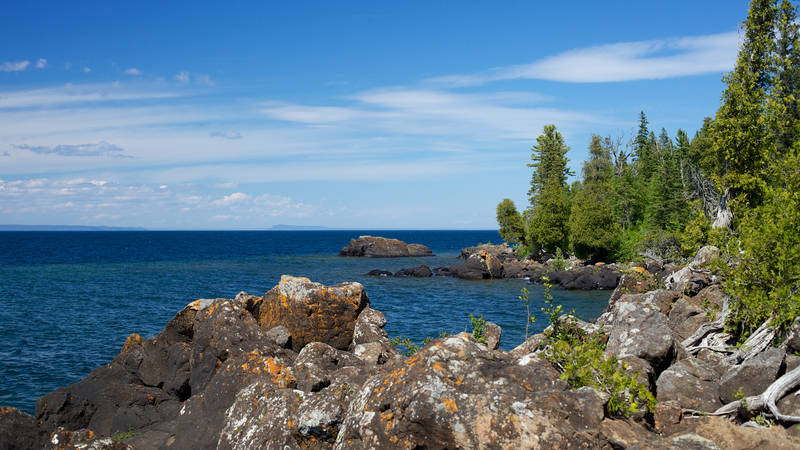
During the Ice Age, huge glaciers advanced and retreated through this region of Wisconsin, sculpting the sandstone bedrock and enlarging channels between what would become the park's 21 islands in Lake Superior. Today, the lakeshore lies within a transitional zone where boreal and northern forests meet, offering visitors ample opportunities to hike and paddle among the beaches, cliffs, caves, islands and woods.
-
Magazine Article
Free Wheeling
Dedicated advocates and innovative technology are taking national park access further than ever before.
-
Blog Post
10 Great Lakes National Parks to Know and Love
The Great Lakes make up the largest freshwater system in the world. Can you name the national parks found near and along their shores? They preserve natural phenomena and cultural…

More about Apostle Islands
-
Read more about Great Lakes National Parks Lead in Restoration, Benefits Largest Fresh Water System on the Planet
Press Release Great Lakes National Parks Lead in Restoration, Benefits Largest Fresh Water System on the Planet New NPCA report highlights successful restoration efforts in and around 10 national parks and the need for increased federal funding.
-
Read more about A Sound Investment: Restoring the Great Lakes in Our National Parks
Report A Sound Investment: Restoring the Great Lakes in Our National Parks These success stories highlight the important role our national parks play in restoring the Great Lakes – the largest source of fresh water on the planet.
-
Read more about Great Lakes Restoration Initiative
Fact Sheet Great Lakes Restoration Initiative The Great Lakes Restoration Initiative (GLRI) is a federal funded program that was launched in 2010 to accelerate efforts to restore and protect the Great Lakes – the largest fresh water system in the world.
-
Read more about On Thin Ice
Magazine Article On Thin Ice As the climate warms, Lake Superior’s ice coverage shrinks — and opportunities to visit Apostle Islands’ ice caves and experience other winter rites of passage along the shore are slowly disappearing.
-
Read more about Your Mileage May Vary: 9 Parks to Explore Without a Car
Blog Post Your Mileage May Vary: 9 Parks to Explore Without a Car Spend time off the beaten path — literally. These 9 national park sites offer slower, quieter, human-paced alternatives to automobile-powered excursions.
-
Read more about Love Is in the Parks
Blog Post Love Is in the Parks 5 NPCA staff members share their national park love stories.
-
Read more about 11 of America’s Best National Park Beaches
Blog Post 11 of America’s Best National Park Beaches Need some sun and surf in your travel plans? NPCA staff highlight top beach vacation spots at national parks around the country.
-
Read more about The Indian Chief and the President
Magazine Article The Indian Chief and the President In 1852, a 93-year-old Ojibwe chief traveled to Washington to stop the president from forcing his people off their ancestral lands.
-
Read more about The National Park with the Most Lighthouses
Blog Post The National Park with the Most Lighthouses There are nearly 50 lighthouses preserved in the National Park System, and one park accounts for the most by far, with nine.
-
Read more about Historic 'Parks Package' Passes Congress
Blog Post Historic 'Parks Package' Passes Congress An FAQ with details on today's enormous bipartisan win for national parks.
-
Read more about Protecting and Connecting Our Nation's Treasured Park Landscapes
Fact Sheet Protecting and Connecting Our Nation's Treasured Park Landscapes National parks are key to protecting and connecting our most revered places.
-
Read more about Restoring the Great Lakes in our National Parks
Report Restoring the Great Lakes in our National Parks This report highlights the successful and critical role that the National Park Service plays in restoring the Great Lakes, safeguarding public health, creating jobs, and protecting these special places belonging to all Americans.
Donate
Preserve Our Parks
Make a tax-deductible gift today to provide a brighter future for our national parks and the millions of Americans who enjoy them.
Donate Now